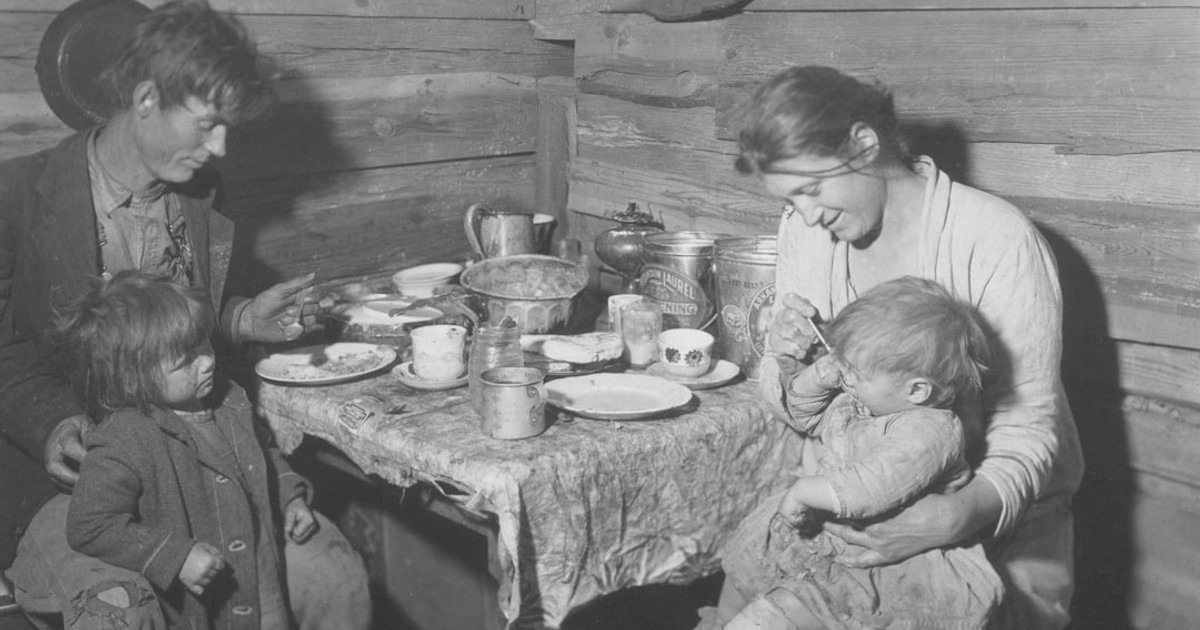

Real GDP shrank 29 percent between 1929 and 1933, and the unemployment rate peaked at 25 percent. The American spirit Great Depression era produced was not the kind written about in speeches or stitched onto throw pillows. It was a woman turning flour sacks into dresses because she had to, then teaching her neighbor how to wash out the company logo so the dresses looked halfway decent. It was a farmer bidding a quarter for a neighbor’s repossessed horse and handing it straight back when the auction ended, in a room where everyone had silently agreed to the same plan.
Nearly a century later, that survival gets framed as rugged individualism. The lone American pulling herself up. The self-made man. But the actual record from people who lived through the 1930s tells a different story, one that is less about individual toughness and more about the specific, unromantic ways that communities refused to let each other drown. The Depression lasted a decade. Nobody gets through a decade on grit alone.
Between 1929 and 1933, the income of the average American family fell by 40 percent, nine million savings accounts were wiped out, and 273,000 families were evicted from their homes in a single year. By the time Franklin Roosevelt was inaugurated in March 1933, the banking system had collapsed, nearly 25 percent of the labor force was unemployed, and consumer prices had fallen 25 percent while wholesale prices had plummeted 32 percent from their 1929 levels. There was no unemployment insurance, no federal food assistance, no framework that acknowledged the government had any obligation to break the fall. What Americans built to survive had to be built from scratch, mostly by people who had never expected to need it.
The Collapse Was Personal Before It Was Statistical
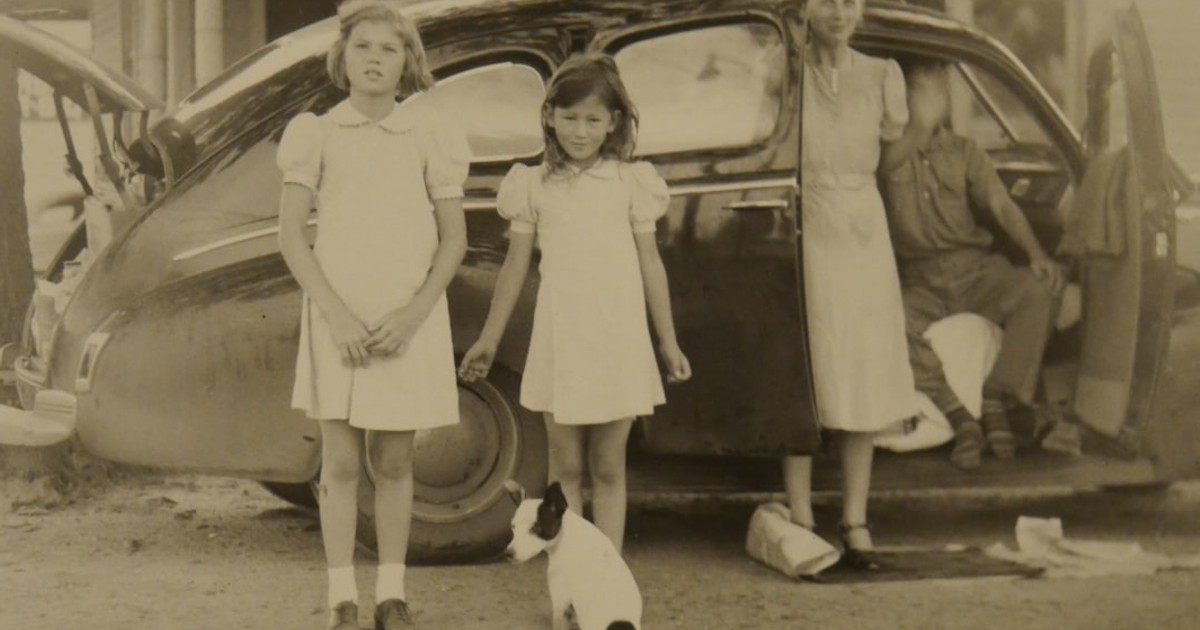
Between 1929 and 1933, over 9,000 American banks failed, wiping out savings across the country, and by early 1933 more than 15 million Americans had been unable to find work. According to Wikipedia’s Great Depression in the United States article, in Cleveland the unemployment rate reached 50 percent, and in Toledo, Ohio, it hit 80 percent. Factories that had run three full daily rotations were suddenly shuttered. Farms that had fed regions were being foreclosed by banks that were themselves failing. Hundreds of thousands of families lost their farms during the early 1930s.
Displaced workers took to the rails, drifting from job to job or settling in makeshift camps on the edges of towns. Within a few years, the idea of the American Dream, once defined by home ownership and stable work, had been replaced by a more urgent goal: survival. The camps on the edges of cities were called Hoovervilles, a mordant tribute to the president who insisted recovery was imminent. Hoovervilles made visible the human consequences of mass unemployment, while also demonstrating how displaced individuals reassembled social life under conditions of extreme scarcity.
What the Depression did to daily domestic life was equally total. Families traded services instead of cash, repaired broken tools with scrap metal, and reused materials others had thrown away. In cities, tin cans and cardboard became valuable resources. On farms, old seed sacks doubled as curtains, rags, or clothing. This wasn’t a lifestyle trend. It was what you did so your children ate that week.
Women Held the Whole Thing Together
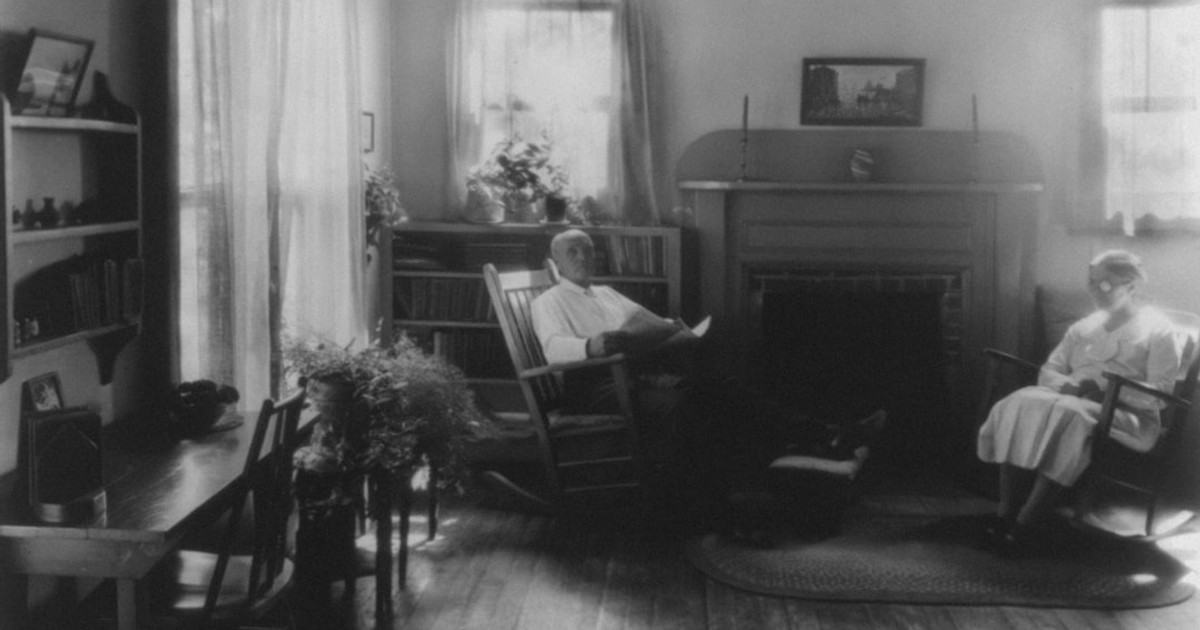
The story of how the American spirit survived the Great Depression runs directly through the women who ran the households, and their role tends to get underplayed in the broader historical narrative. While men stood in breadlines, many women became the backbone of survival, mending clothes, taking in laundry, and stretching meals to feed families of six on pennies a day.
The Depression accelerated changes in gender expectations that had already been shifting before the crash. Massive unemployment disrupted the husband-as-sole-breadwinner ideal, and women entered the paid labor force at higher rates than ever before, including married women and mothers. The woman who took in a boarder to make rent, who bartered sewing skills for vegetables, who kept the household from going under while her husband searched for work, was carrying most of the weight – and the official unemployment figures didn’t account for any of it.
In farming communities, mothers who bought flour, sugar, or animal feed inspected the designs of the fabric sacks carefully before purchasing, because those sacks would become their children’s clothes. Some store owners even allowed women to exchange plain sacks for printed ones with colorful patterns. Once women began sewing the fabric into dresses and aprons, the companies responded by using softer cotton, introducing brighter dyes, and stamping their logos with washable ink. The companies eventually started marketing directly to them. That’s how thoroughly women had rewritten the rules of what counted as material.
The Community Was the Safety Net
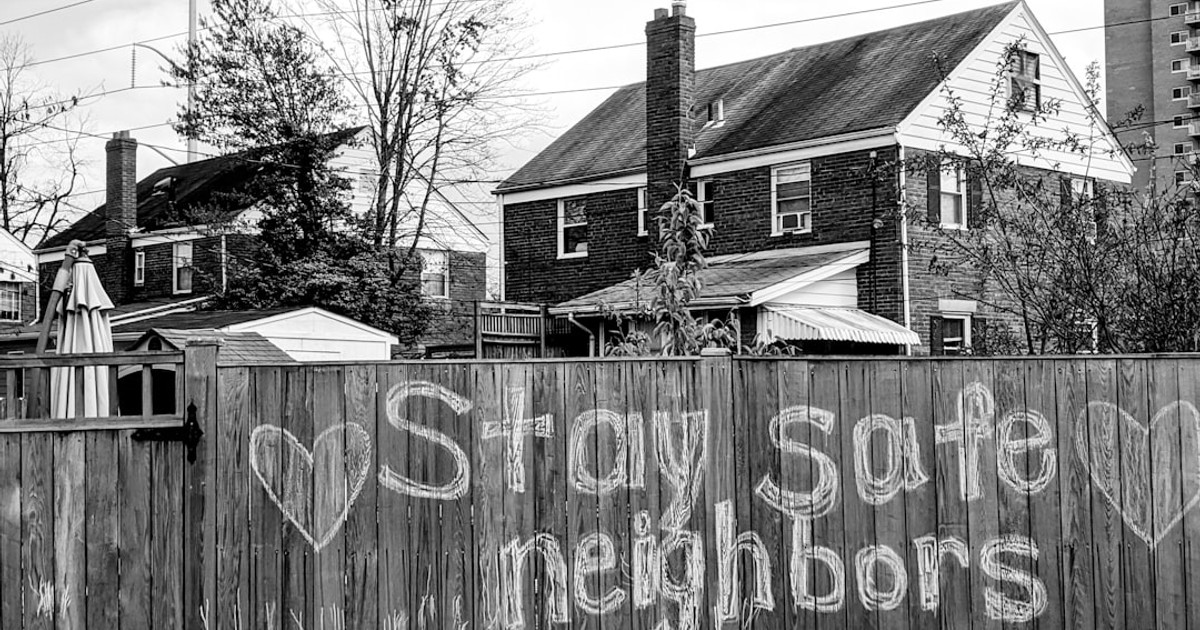
When the Depression began in late 1929, there was virtually no government assistance – no food stamps, no unemployment money, no subsidized housing. Families had to rely on their own ingenuity, family, friends, and community.
That community turned out to be more durable than the banking system. The families who made it through usually had a network around them – neighbors who organized when a farm or family faced bankruptcy and eviction, sometimes a town council that kept track of who needed what. In farming communities across Iowa and the Great Plains, when banks started foreclosing on neighbors’ land, communities organized what became known as “penny auctions.” According to The Real News Network’s history of the practice, neighbors arrived at foreclosure sales already committed to keeping prices minimal – bidding only pennies per item, then returning everything to the original owner when the sale concluded. It was technically legal. Nobody bid against it twice.
Some communities organized what they called “surprise parties,” collecting food, necessities, and cash, then designating a particular family to receive the collection at each gathering. In other communities, people who had just a little more than others created work for their neighbors – small wages for odd jobs, the kind of work that preserved a man’s pride. Nobody called it charity. It was just what you did for your neighbors, if you could.
The distinction between charity and mutual aid mattered enormously during the Depression. Charity came from above. Mutual aid was horizontal. The community that helped a family this month expected nothing back except that the family would help someone else when it could. That ethic did not require a program, a form, or an administrator. It required only proximity and enough social trust that people still knocked on each other’s doors.
Race and the Limits of Collective Resilience
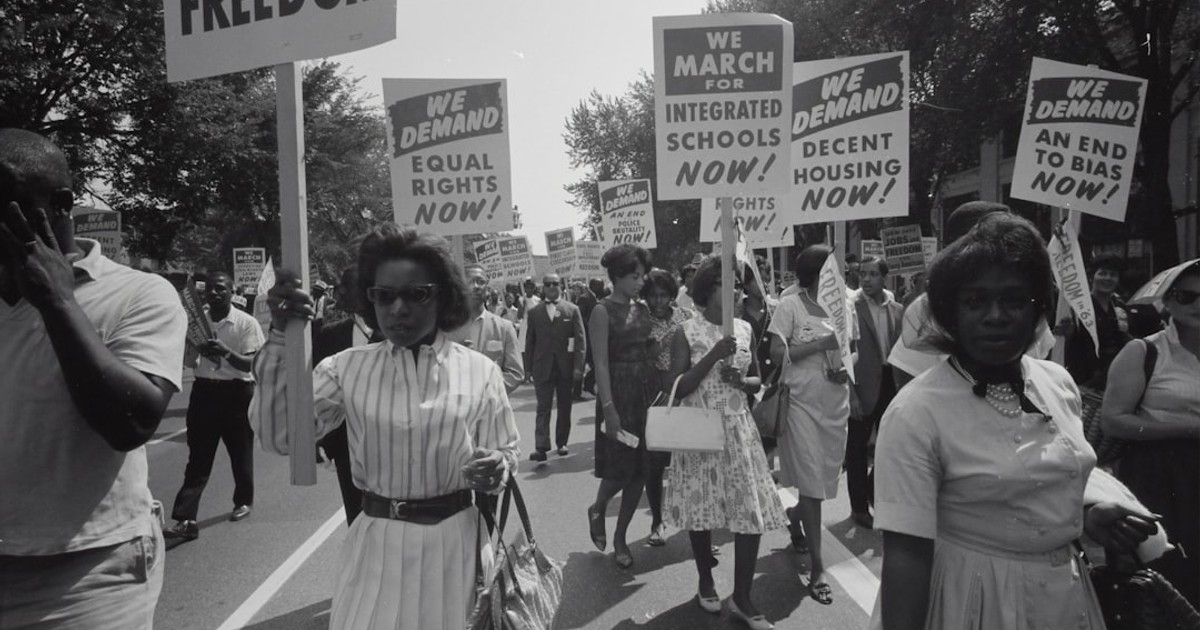
The American spirit Great Depression survivors passed down has to be told honestly, which means acknowledging that it was not equally available to everyone. For Black Americans, survival during the Depression was shaped not only by economic collapse but by entrenched racial exclusion. Public relief programs were frequently segregated, administered discriminatorily, or denied altogether. Local relief boards often prioritized white applicants, and Black families were routinely offered lower-quality aid or fewer work opportunities.
Mutual aid, church-centered relief, and informal economies compensated for discriminatory systems while reinforcing collective identity. But these strategies also carried heavy burdens, as communities were forced to solve problems created by systemic injustice. Survival in Black America during the Great Depression exposes the limits of resilience when inequality is built into the very institutions meant to provide relief.
Across Black communities, mutual aid societies served as early examples of grassroots resilience. According to Encyclopedia.com’s entry on mutual aid societies, the Great Depression severely strained these organizations, as it left many members unable to pay dues – yet the societies continued functioning as the primary social safety net for communities excluded from formal relief. A new kind of civil rights activism grew visible in cities like Seattle, centered in African American and Filipino American communities, as documented by the University of Washington’s Great Depression Project. As that project documents, the Depression’s impact fell unevenly across race, class, and industry, deepening existing inequalities even as it occasionally disrupted assumptions about who could do what kind of work.
When the Government Entered the Picture

The New Deal work programs beginning in 1933 gave people jobs, not handouts, and many Americans were too proud to take even those. Direct assistance programs like unemployment insurance and Social Security didn’t exist until 1935, six years into the crisis.
What Roosevelt’s administration built was enormous in scale and significant in design. Rather than writing checks, it put people to work. Early New Deal programs aimed to employ millions of unemployed Americans on public projects through three flagship relief agencies: the Civilian Conservation Corps, the Works Progress Administration, and the Public Works Administration. By 1936 the WPA employed nearly 3 million workers each month, and over its lifetime the program built or repaired an estimated 650,000 miles of roads, along with thousands of bridges, schools, and other public structures. The WPA also funded artists, writers, muralists, and theater directors, in part because the Roosevelt administration understood that a nation’s morale was also a resource that could be depleted.
The programs helped workers develop useful skills, but more significantly, the people who held CCC or WPA jobs felt useful again. The psychological weight of prolonged unemployment – of having no answer to the question “what do you do?” – was a crisis layered inside the economic one. Government work programs did not end the Depression, but they interrupted the freefall of human dignity in a way that mattered.
The frugality those years produced became a generational habit, the kind where you find your grandmother has saved every rubber band, every glass jar, every piece of foil, long past the decade when she had any reason to. The Depression generation did not throw things away. Not food, not fabric, not people.
Culture as a Way Through
The arts in the 1930s were not escapism in the trivial sense. They were the way a generation processed something that had no language yet. Literature, music, visual arts, and films from this era reflected the struggles of everyday life and the refusal to be erased from history. John Steinbeck captured the plight of displaced families in works like “The Grapes of Wrath,” highlighting themes of hardship, community, and the quest for dignity.
Visual arts saw a decisive turn with the emergence of Regionalist and Social Realist movements. Dorothea Lange documented the stark realities of life through her work, and her iconic photograph “Migrant Mother” became a symbol of the era. Blues and jazz spoke of a specific kind of pain and refusal in the same breath. Woody Guthrie walked the same routes as the Dust Bowl migrants and wrote what he saw. The culture that came out of the Depression was not cheerful. It was honest, and honesty turned out to be something people needed as badly as bread.
Despite the economic hardship, the 1930s saw the introduction and broad adoption of several innovations: refrigerators, masking and cellulose tape, color photography film, sulfa antibiotics, and Alcoholics Anonymous, among other things. Crisis is not incompatible with invention. People find problems to solve when they have to.
What Actually Survived
The American spirit Great Depression survivors shaped is not a museum piece. It’s a posture toward uncertainty that says: figure out what you actually have, find out who around you needs it, and do not wait for a formal structure to tell you it’s time to help.
How long the Depression lasted is easy to underestimate in retrospect. Unemployment rose from 3.2 percent of the labor force in 1929 to 24.9 percent in 1933. It fell to 14.3 percent by 1937, then climbed again to 19 percent in 1938, and was still nearly 10 percent in 1941. There was no clean arc. Recovery was uneven, repeatedly interrupted, and the economy didn’t fully return to pre-Depression levels until World War II pulled it there. People lived inside uncertainty for twelve years.
The real thing that survived was a set of habits and instincts: grow what you can, repair what breaks, ask for help before things are completely gone, be present for your neighbors without making a production of it. Those habits were forged not in a single moment of crisis but through years of simply having no other option. Whether the American spirit Great Depression survivors passed down holds under the specific pressures of 2026 depends on whether the conditions that created it – the proximity, the mutual dependence, the forced ingenuity – can be recreated without the catastrophe that originally produced them.
Some of those conditions are being tested right now. The Depression generation didn’t volunteer for twelve years of collective improvisation. But they found their way into it anyway.
The Part That Doesn’t Go Away
Twelve years is a long time to hold a community together with no guarantee it will ever get easier. The record of the 1930s is full of people who did exactly that – not because they were extraordinary, but because the alternative was letting go entirely, and most of them couldn’t bring themselves to do it.
What the Depression generation left behind isn’t really a lesson. Lessons imply there’s a tidy takeaway, a principle you can apply. What they left is closer to a demonstration: that ordinary people, under conditions of sustained and genuine loss, are capable of building something that functions in the absence of the systems that were supposed to catch them. The neighbor who arrived with a casserole, the farmer who bid a penny at an auction, the woman who turned a flour sack into a dress – all were doing the same thing: refusing to accept that the collapse of formal institutions meant the end of obligation to each other.
None of that required heroism. It required only the decision to keep paying attention to the people around you, even when your own situation was precarious. Some of those patterns – the flour-sack economy, the penny auctions, the surprise parties, the church-run relief operations – dissolved when the New Deal arrived and the government finally assumed some of the weight. But the instinct underneath them didn’t vanish. It went underground, surfaced in the habits of people who grew up watching adults navigate scarcity, and passed forward in ways that still occasionally show themselves when the floor drops out. The American spirit Great Depression survivors handed down was never really about toughness. It was about paying attention to who was next to you, and deciding that mattered.
AI Disclaimer: This article was created with the assistance of AI tools and reviewed by a human editor.