

AI voice-cloning tools can replicate a person’s voice from as little as three seconds of audio – enough from a single public social media clip. Criminals now use AI to clone voices from short audio clips, generate photorealistic faces, and deploy deepfake video calls, erasing the warning signs older adults were once taught to spot. The technology has moved fast and gotten cheap enough that it no longer requires expertise or expensive hardware. Dark web scamming software is available for as little as $20, and the minimum cost of generating a convincing deepfake video has dropped to just a few dollars per minute.
Americans over 60 are the primary target. In 2025, people age 60 and older filed more than 200,000 fraud complaints with losses totaling $7.7 billion, according to the FBI’s Internet Crime Complaint Center data reported by the NCOA. These numbers reflect a population disproportionately targeted because of perceived wealth concentration in retirement assets, relative unfamiliarity with AI-generated content, and higher susceptibility to tech support fraud, government impersonation scams, and romance fraud – all now significantly enhanced by AI voice cloning and deepfake video.
Deepfake fraud attempts have surged 2,137% in the last three years, with a new attack attempted every five minutes as of 2024. Free and low-cost tools have made deepfake production accessible to non-technical actors, and the scams keep getting more convincing. The 12 signs below are what stand between a family and a very expensive phone call.
1. The Face That Won’t Turn Its Head

During a video call, ask the person to turn their head so they’re looking completely to the side. Most deepfakes are created using portrait photos and videos, so a sideways turn will cause the image to float, distort, or even break up. This is one of the most reliable live tests available to a regular person without any detection software.
Deepfake models are trained primarily on front-facing images because that is what social media and video calls produce. The AI has very little data about what someone looks like in full profile, so when it tries to render that view in real time, it struggles. The image may blur, the face may appear to slide, or the video may freeze and recover. Any of these reactions to a simple “can you look to your left for a second” request is a significant warning sign.
This test works even on convincing, high-quality deepfakes. If the person hesitates, makes an excuse about their camera angle, or the image distorts when they attempt the turn, that is a meaningful red flag. A real person can turn their head. A deepfake will struggle.
2. Lighting That Defies the Room

Deepfakes often ignore the physics of light. The direction of shadows on the face and in the background may not match, and glares on the skin may look unnatural or absent entirely. A person may be half-turned toward a window, but their face is lit by what looks like studio lighting.
Real light behaves consistently. If a window is to the left of the person, their right cheek should be in shadow. If they appear evenly lit from both sides in a room with one obvious light source, something is wrong. The deepfake generator applies its own lighting model to the face and frequently fails to account for the actual environment in the background.
Watch also for the hairline, which is a particular weakness of deepfake technology. Blurring, flickering, or unnatural color transitions along the hairline are common tells. The edge where the generated face meets the real video background is computationally difficult to render convincingly, and it is often where the technology frays first.
3. Eyes That Don’t Blink Right
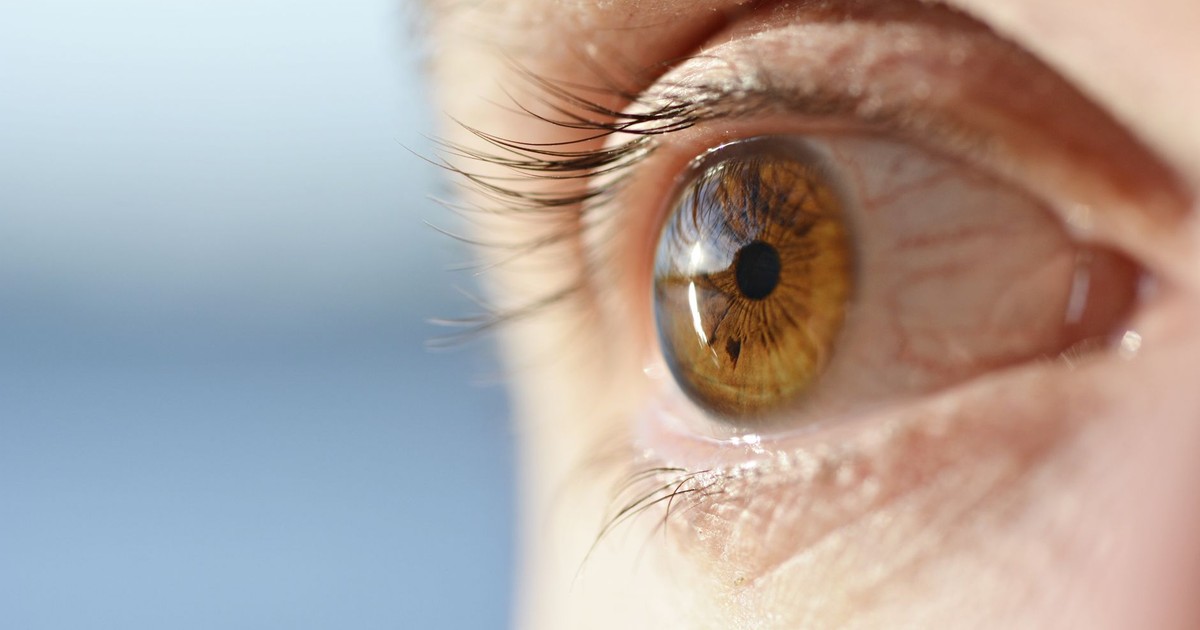
The eyes can look wrong in a deepfake: strange blinking, an unfocused gaze, odd reflections in the pupils, or a lack of natural micro-expressions. A deepfake character’s eyes may feel “dead” or produce that unsettling “uncanny valley” sensation.
Normal human blinking is irregular and unconscious. People blink at different rates depending on whether they are thinking, anxious, or relaxed. Early deepfake models produced faces that barely blinked at all, because training data tended to be video footage where subjects kept their gaze fixed. Newer models blink more, but the rhythm is often wrong – too regular, too slow, or occurring at moments that don’t correspond to natural physiological triggers.
Real people naturally move their eyes when thinking, shift their gaze briefly, or glance away when recalling something. A deepfake tends to hold eye contact with an unusual rigidity, or its gaze follows programmed arcs rather than the spontaneous, unpredictable movements of a real person.
4. Lips and Words That Don’t Quite Line Up

The synchronization of audio and video is computationally demanding, and deepfake models often show signs of strain. A noticeable drift of 100 to 300 milliseconds can appear between the speaker’s lip movements and the words being heard.
Generating realistic video and realistic audio at the same time, in real time, requires enormous processing power. Even with good hardware, tiny delays creep in. You may notice the mouth completing a word a fraction of a second before or after you hear it, or the lip shape during certain consonant sounds not quite matching what you’d expect.
This effect is hard to catch on a small screen – a phone held at arm’s length, or a shrunken video window in the corner of a laptop. Moving to a larger screen and making the image as big as possible can help. If a call feels strange and you’re watching on your phone, ask to continue it on a tablet or computer.
5. A Voice That Sounds Flat or Emotionally Wrong

Audio deepfake warning signs include a voice that sounds slightly flat, robotic, breathless, or emotionally mismatched. The speaker may avoid spontaneous conversation, repeat certain phrases, interrupt awkwardly, or refuse to answer personal questions.
This is the red flag most relevant to deepfake scams seniors encounter, because the grandparent scam rarely involves video at all. The criminal calls on the phone, and the only signal is the voice itself. A cloned voice can reproduce pitch, accent, and general timbre surprisingly well, but it tends to flatten the emotional texture of speech. A person who is genuinely crying and frightened sounds different from a voice model generating the word patterns of someone crying and frightened.
If the voice sounds right but something in the emotional register is off – too controlled, too performative, or simply hollow in a way you can’t place – that sensation is worth acting on. Real fear has a physical quality. Synthesized fear is a pattern that approximates fear.
6. Awkward Pauses and Strange Pacing

Awkward pauses are often one of the first giveaways in a deepfake. Because the fake voice is generated in real time, you might notice elongated silences, strange pacing, or sudden breaks in conversation.
When a caller uses voice-cloning software during a live call, the system has to receive what you said, process it, generate a scripted response in the cloned voice, and play that audio back – all within a conversational window. That chain of steps introduces latency. The pauses feel slightly too long, come at the wrong moments in a sentence, or occur after simple questions that a real person would answer immediately.
One practical test: interrupt the caller mid-sentence. A real person adjusts naturally, backtracks, or laughs it off. A voice-cloning setup often fumbles, goes silent for a beat too long, or completes its scripted sentence as if you hadn’t spoken. That inability to adapt in real time is a consistent weakness.
7. A Background That Looks Like a Green Screen

Deepfake video calls frequently use virtual backgrounds. Watch for edges around the person’s head and shoulders that look too clean or that flicker when they move. Real blurred backgrounds have a natural depth-of-field quality. Virtual backgrounds have a cut-out quality, and the line between the person and the background can fray when they move quickly.
A scammer who knows their deepfake isn’t perfect may deliberately introduce a “bad connection” to provide cover. Grainy video, choppy frame rates, and audio that cuts in and out can all be genuine technical problems – but they can also be intentional camouflage. If the caller both looks slightly off and blames the quality on their connection, that combination is worth noting.
Deepfakes often rely on compression and lower resolution to hide flaws. The artifacts that compression conceals become visible at full resolution, so if a video looks suspiciously grainy or stays mostly front-facing, try viewing it at the highest quality your device allows.
8. Urgency That Forecloses All Thinking

Some of the fastest-growing scams targeting older adults use fear and urgency to override good judgment. There is a grandchild in jail and bail must be posted before the courthouse closes. There is a bank account being drained and the only way to save the money is to move it right now. There is a medical emergency and the hospital requires a cash transfer immediately.
The manufactured crisis is the oldest tool in the confidence scammer’s toolkit, and AI has made it dramatically more effective because the voice delivering the crisis sounds like someone you love. The emotional realism of a cloned voice removes the mental barrier to skepticism – if it sounds like your loved one, rational defenses tend to shut down.
Any call that demands immediate action, instructs you not to tell anyone else, and presents a deadline that conveniently prevents you from verifying the situation is designed to exploit that shutdown. The pressure itself is the signal.
9. Payment in Gift Cards, Cash, or Cryptocurrency

Unusual payment requests are a behavioral red flag alongside the visual and audio tells: sending gift cards, transferring money by wire, requesting cryptocurrency, or demanding payment through prepaid cards.
No legitimate legal system, hospital, bail bondsman, bank, or government agency asks for payment in iTunes gift cards or Bitcoin. A “lawyer” who calls immediately after your “grandchild” to explain the process and provide wiring instructions is part of the same scam. The Department of Justice has documented how scam ring operations send a “closer” to follow up a distress call pretending to be the grandchild’s attorney. The two-call structure is a recognized pattern.
If someone calls asking for cash to be handed to a courier who will arrive at your door, that is also a documented tactic. The physical courier makes the scam feel real and time-pressured simultaneously, while bypassing any bank intervention that might flag a suspicious wire transfer.
10. A “Family Member” Who Can’t Answer a Personal Question

Ask questions about personal, private details that only your real loved one could answer – a childhood nickname, your child’s beloved first-grade teacher, or what the family dog’s name was in 1987. An AI voice-cloning system, no matter how sophisticated, cannot generate information it has never been given. It can reproduce vocal characteristics, but it cannot tell you what you served for Thanksgiving three years ago.
A family code word is widely considered the most effective low-technology defense against deepfake scams targeting seniors. A code phrase that only relatives know is the strongest single defense, because no AI can generate something it has not heard. The code word should be established calmly, in advance, with every family member who might ever need to make an emergency call – and it should not be something derivable from social media, birthdays, or publicly known family information.
11. The Same Face Appearing Across Social Media Scams

Scammers post fake investment ads on social media platforms using the names or images of well-known financial personalities without their consent. These ads often promise exclusive investment opportunities and guaranteed high returns. When the face is a real person – a celebrity, a news anchor, a well-known financial figure – the deepfake carries credibility it hasn’t earned.
Watch for a video appearing in a paid advertisement or a shared post, featuring a trusted face making an investment offer or medical claim that you have never seen that person make on their official channel. If you see a video of a well-known figure endorsing a specific product in a Facebook ad, and you can’t find any trace of it on that person’s verified channels, it is almost certainly not real.
Scammers increasingly use AI to copy the faces and voices of real doctors without their permission, promoting questionable supplements, counterfeit weight-loss products, and other remedies. The deepfake doctor scam is particularly effective against seniors, who are more likely to trust a medical authority and less likely to cross-reference what they’re seeing against the doctor’s verified public presence.
This pattern extends to family circumstances as well. Scammers specifically target new widows and widowers, with con artists presenting themselves as financial advisors doing significant damage in the first months after a bereavement, when someone is confused, isolated, and desperate to feel like someone trustworthy has a handle on things.
12. Any Contact That Tells You to Keep It Secret
The grandparent scam involves a caller claiming to be the victim’s grandchild in the middle of a crisis, with an instruction to tell no one. The secrecy instruction is not incidental. It is the engine that makes the scam run.
A real family emergency does not require secrecy. A real lawyer does not tell a grandmother not to call her daughter. A real bank does not call you and ask you to move money immediately without telling your spouse. Any communication – voice, video, or text – that includes an explicit or implicit instruction to keep the situation between you and the caller is designed to prevent the one action that would expose it: picking up another phone and calling the person who supposedly contacted you from a number you already have saved.
What to Actually Do

The social architecture of these scams will not change even as the technology improves: the urgency, the secrecy, the emotional lever, and the request for untraceable payment are constants. The most protective things a family can do are establish a code word and use it, set social media videos of family members to private so scammers can’t scrape audio for cloning, and agree that any emergency call asking for money gets verified by a second call to a number you already have saved before a single dollar moves.
Victims of these scams report feelings of betrayal, fear, and helplessness, along with shame – particularly older victims who feel they should have known better. The technology was built specifically to defeat the instincts that have protected people for decades. The scam works not because the target was foolish, but because a voice that sounds exactly like your child triggers something older and deeper than skepticism.
Having a plan in place before the phone rings is the closest thing to a real defense that exists right now.
AI Disclaimer: This article was created with the assistance of AI tools and reviewed by a human editor.