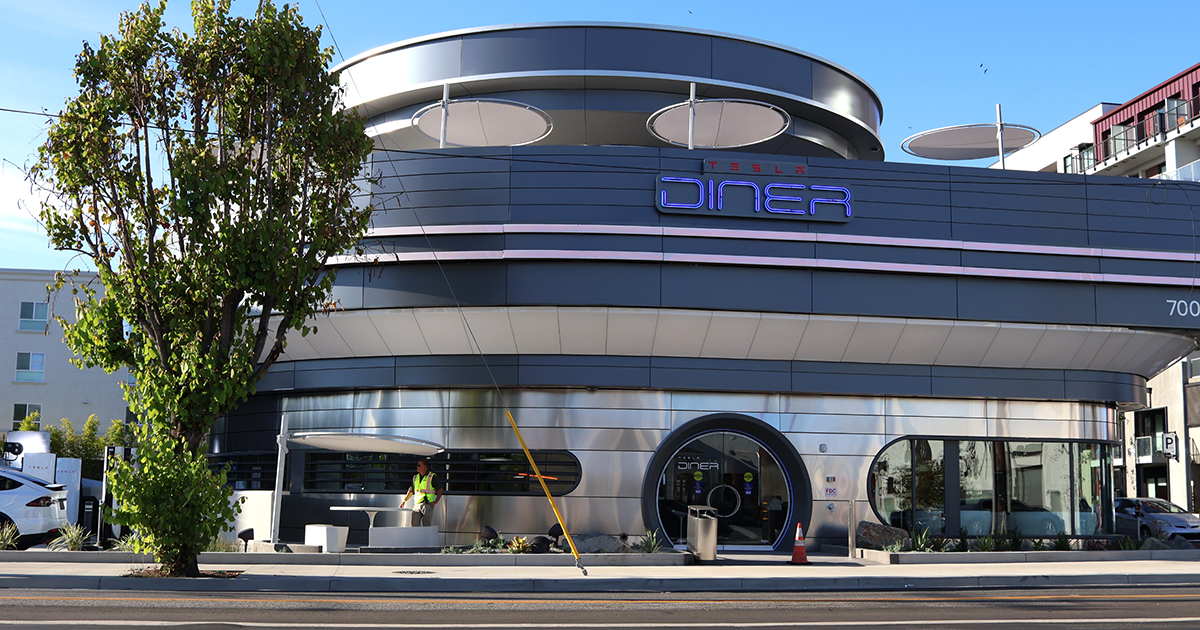

Seven years after Elon Musk first floated the concept on social media, describing it as “Grease meets the Jetsons with Supercharging,” the Tesla diner Los Angeles has officially opened on Santa Monica Boulevard in Hollywood. It is exactly as maximalist, as divisive, and as strangely compelling as that original pitch suggested.
The Tesla Diner and Drive-In restaurant and Supercharger opened at 4:20 p.m. on July 21, 2025. The launch time was not accidental. The timing reflects Musk’s well-documented fondness for cannabis-related humor, which tells you most of what you need to know about the register of the whole enterprise: part genuine innovation, part extended inside joke, executed at the scale of a Hollywood film set.
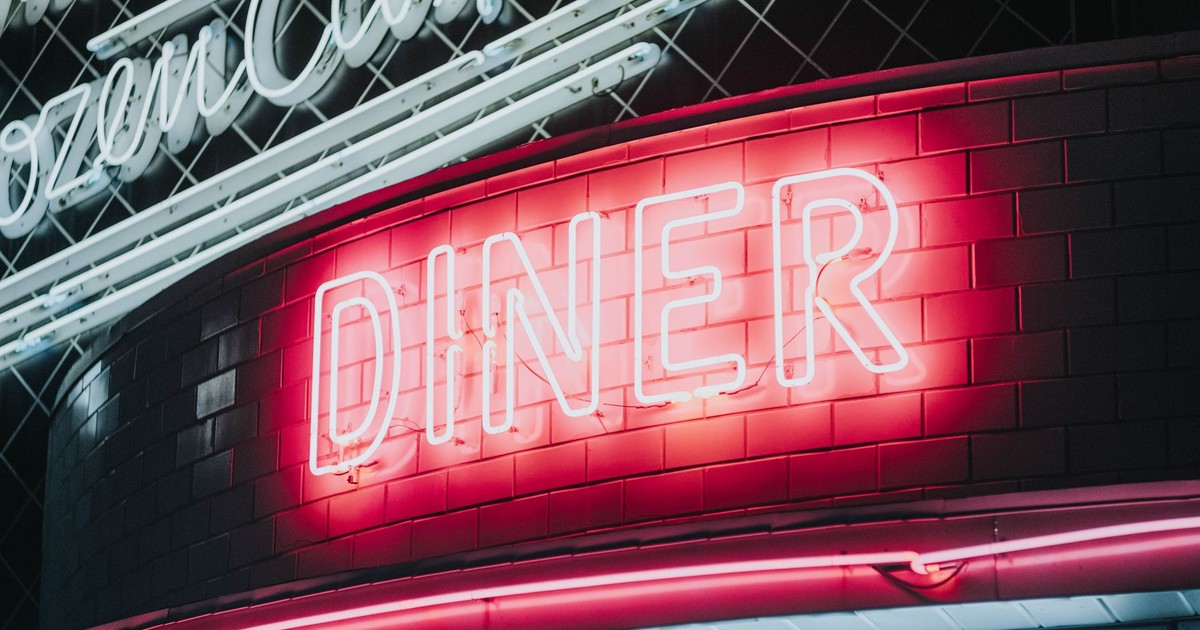
Construction started in September 2023, converting a former Shakey’s Pizza site on historic Route 66 into a two-storey chrome structure designed by architecture firm Stantec. It channels mid-century diner aesthetics with chrome siding, neon trim, curved metal booths, and roller-skating carhops delivering ice-cream samples. After dark, vibrant red and blue LED strips trace the building’s curves while the “TESLA DINER” sign glows in electric blue lettering.
The Chrome Saucer on Santa Monica Boulevard
The building spans 9,300 square feet, with 3,800 square feet of enclosed lower level and 5,500 square feet of outdoor seating and food prep area. The interior features futuristic 1950s-style white chairs and tables, chrome finishes, a curved staircase decorated with robots in display cases, and spaceship-themed restrooms. Upstairs, the diner offers outdoor balcony seating and a rooftop “Skypad” lounge.
Human servers work on roller skates, a robot serves popcorn from the Skypad, and two enormous LED screens play movies in the parking lot. From the rooftop deck, there’s a clear view of the Hollywood sign and both theater screens. It’s a lot. It’s entirely on brand.
Located at 7001 West Santa Monica Boulevard, the Tesla Diner operates 24/7 with indoor and outdoor seating for up to 250 guests. The soft opening was reserved for first responders and Tesla Club members, which, depending on your perspective, is either a genuinely generous gesture or a calculated piece of brand PR. Probably both.
The Optimus Robot in the Room
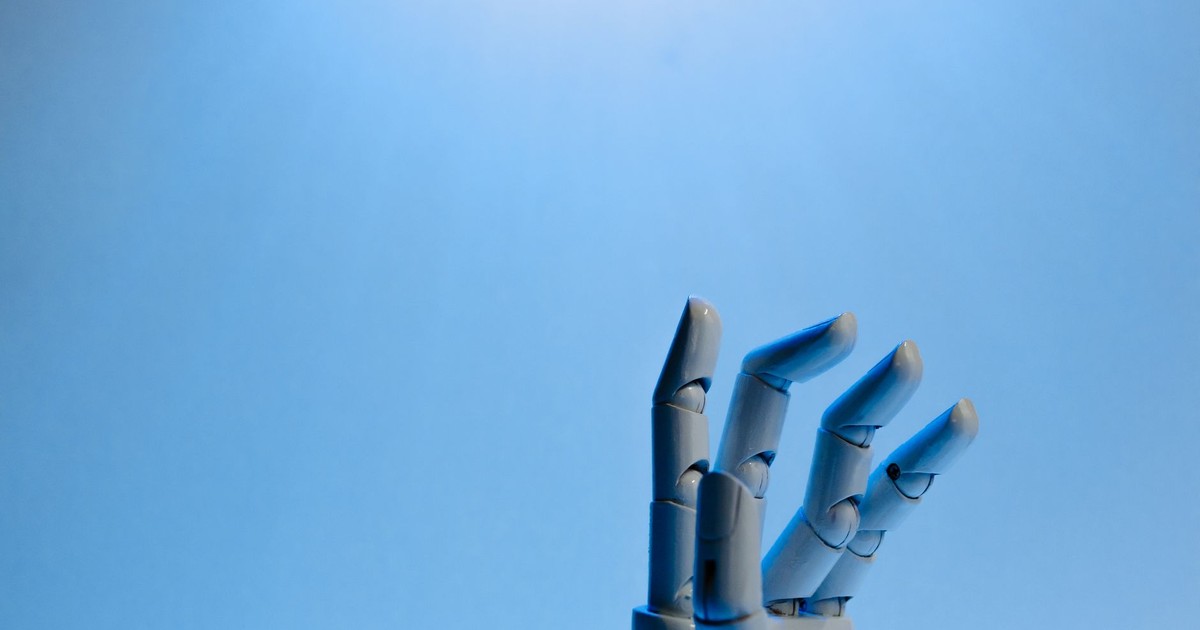
The Optimus robot stationed in the diner generated more social media footage than any other feature at opening. It serves popcorn from the rooftop Skypad, though it was reportedly “out” during some midweek operations.
The robots are teleoperated by humans from within nine metres, and alongside serving popcorn, they answer questions and give fist bumps. The remote control setup means the interactions serve as training data to help Optimus eventually perform the tasks independently. It’s a glimpse of what the technology might eventually do, wrapped in the theatre of what it’s doing right now. Whether that counts as deceptive marketing or transparent beta-testing depends entirely on how charitable you’re feeling about the enterprise.
Musk posted on X that “Optimus will bring the food to your car next year” and suggested the robot might wear “cute” retro outfits. For now, the in-car ordering experience is already partially automated. You can order food from inside your Tesla via a sub-app called Tesla Diner, with payment handled automatically through your Tesla account. The app connects your vehicle’s display and sound system to whatever is playing on the main screens.
Two Giant Screens and the World’s Largest Urban Supercharger
Two 66-foot LED megascreens show movies at the restaurant, viewable from the upper-level Skypad or from inside vehicles in the parking lot. Short features play on both screens, programmed to fit within a typical charging window. Programming during opening week included classic TV episodes, SpaceX launch footage, and extended Cybertruck advertisements.
The LED screens are visible to west-facing apartments across Orange Drive, whose residents now receive that programming at all hours, a detail that has not endeared the diner to its immediate neighbors.
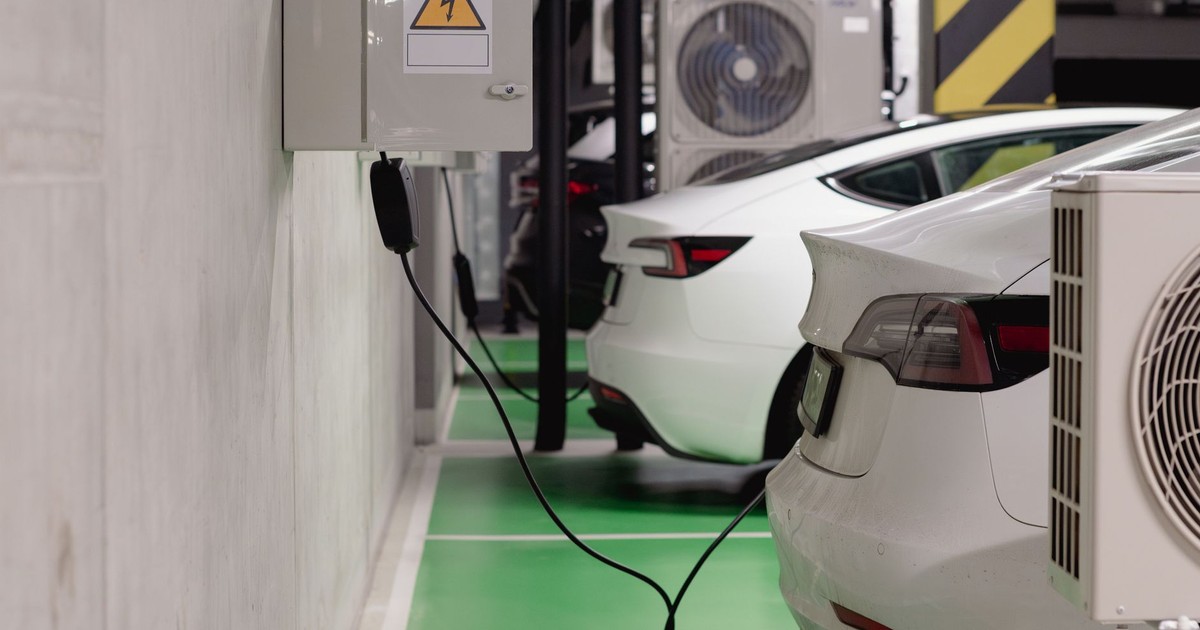
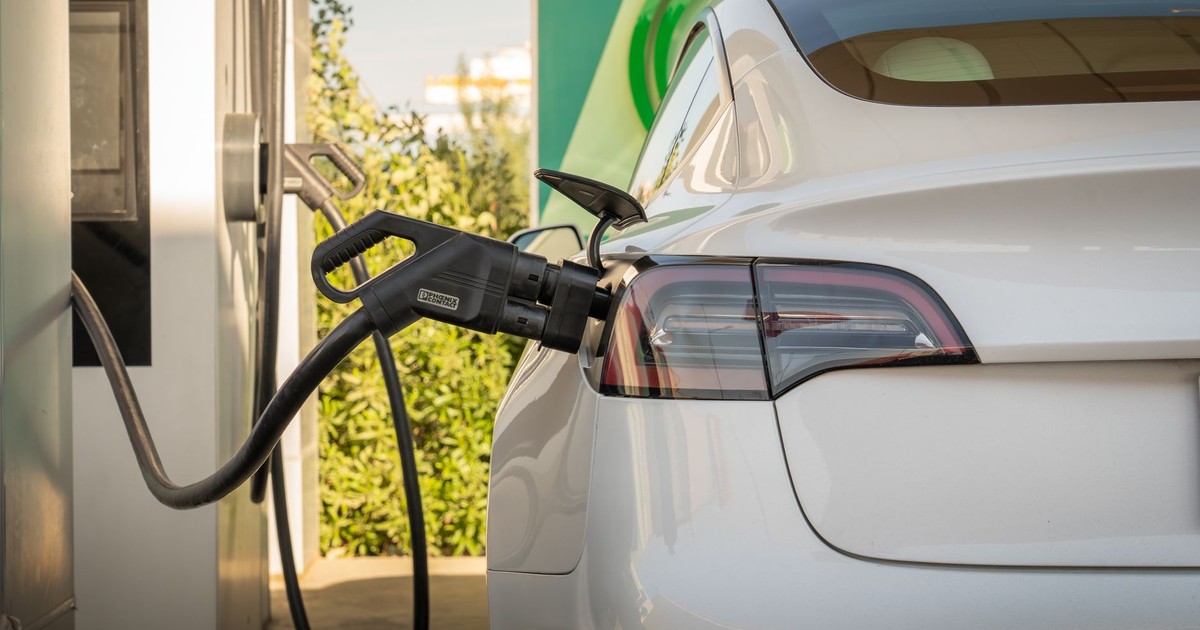
Tesla describes the site as the “largest urban supercharging station in the world.” Solar canopies shade the west charging lot and, according to Tesla, reduce the site’s carbon emissions by about 26.6 million pounds of CO2 per year. The charging station is open to all NACS-compatible electric vehicles, not just Teslas, though in-car ordering and synchronized movie audio are exclusive to Tesla owners.
What’s Actually on the Menu
The menu was developed with Los Angeles chef Eric Greenspan and restaurateur Bill Chait. It leans into diner staples: tuna melts, hot dogs, hamburgers, club sandwiches, chicken and waffles, egg sandwiches, and breakfast tacos. Items include “Epic Bacon” alongside avocado toast, matcha lattes, and a kale salad served in cardboard Cybertruck containers.
Tesla stated that “the overwhelming majority of the ingredients sourced for the Tesla Diner are rooted in responsibly sourced, sustainable local products available within a full charge of a Tesla.” Early visitors were largely surprised by the pricing: $14 for a tuna melt, $13 for a hot dog, $13.50 for a burger. For California, where a breakfast burrito at a midrange café runs $18 before tax, that is genuinely not bad.
Burgers and sandwiches arrive in Cybertruck-styled boxes. Orders can be placed via the Tesla vehicle touchscreen in advance or at the counter inside. Desserts include apple or pecan pie a la mode and a chocolate chip cookie. Drinks run from drip coffee, nitro cold brew, iced nitro matcha, and espresso through to cappuccinos, lattes, fountain drinks, and iced tea.
The Controversy That Arrived With the Opening
Nothing involving Elon Musk in 2025 opens without a protest, and the Tesla diner Los Angeles was no different. Within its first weekend of operation, anti-Musk protestors assembled outside, holding signs opposing the billionaire, as reported by CNN. Nearby residents said living next to the diner is “absolute hell” due to loud construction, traffic jams, and giant movie screens blocking the view from their balconies.
Just two weeks after opening, the diner downsized its menu. Chef Eric Greenspan told Eater LA that the menu would be “forever evolving” and that “unprecedented demand” led to cuts for efficiency. Separately, a patio covering on the diner’s roof struck a woman in the forehead and nearly hit her baby; the 21-year-old and her husband said they plan to file a lawsuit against Tesla over the incident.
The Guardian reported that by December 2025, the diner had the “feel of a ghost town” and that the “novelty of eating at a restaurant owned by the richest person in the world seems to have worn off.” A July that couldn’t seat people fast enough had, within five months, become a place you could apparently walk right into.
What Comes Next
Musk has said that if the first location succeeds, Tesla plans to expand with restaurants in major cities globally, including a rumored SpaceX Starbase spot in Texas. The underlying logic is practical: a typical EV charging session is too long to just sit in a parking lot, and too short to justify driving somewhere for a meal. A diner attached to a supercharger solves a real problem, dressed up in a chrome saucer ship.
A standard gas station is designed around the two minutes it takes to fill a tank. A charging station operates on a different time scale entirely, and when a Tesla battery can take as little as 15 minutes for a supercharge, a drive-in theater and diner is a reasonable response to that wait. Whether the food, the experience, and the brand association hold their appeal long enough to make the model work globally is a different question.
A Prototype, For Better or Worse
The Tesla diner Los Angeles is a supercharger with a theme park bolted on top, a genuinely novel use of charging downtime, a photo opportunity shaped like a flying saucer. It’s also a place where a robot might hand your kid a box of popcorn, operated by a human in a motion-capture suit, in a building that glows blue from three blocks away and has already been the site of protests, a lawsuit, and a menu that shrank in its first two weeks.
The December 2025 reports of a quieter dining room, after a July that couldn’t seat people fast enough, tell a familiar story about novelty and staying power. Musk’s stated benchmark is clear: if this location does well, more will follow. What “doing well” actually requires, including sustainable foot traffic, a neighborhood that doesn’t hate it, and food quality that holds month after month, is still being determined. The chrome saucer on Santa Monica Boulevard is exactly what it says it is: a prototype.
AI Disclaimer: This article was created with the assistance of AI tools and reviewed by a human editor.