

The generation that rewrote the rules of marriage in the 1970s and 1980s is now, in its 60s and 70s, rewriting the rules of divorce. Baby Boomers are ending long marriages at a rate that surprises researchers and that most people inside those marriages didn’t see coming. The divorces often don’t arrive with a dramatic incident. One person does the math on the years remaining and makes a decision. Not angry, not betrayed. Just done.
That moment is happening across America in numbers that researchers didn’t anticipate. The generation that came of age demanding self-fulfillment now applies that same standard to whether a marriage is worth keeping.
Baby Boomers are ending long marriages at a rate that defies the broader national trend. While divorce overall has fallen steadily for two decades, the split rate for adults 50 and older has moved sharply in the opposite direction, and for those 65 and over, the numbers are stark. This is gray divorce, and it is not a minor statistical blip. It is a generational phenomenon that researchers say is largely unique to Boomers, and it is reshaping what the second half of American life looks like.
The Numbers That Don’t Fit the Narrative

The conventional story about American divorce is that the country has been pulling back from it. That’s true, but only for younger Americans. Although divorce is falling among young adults, it has accelerated among middle-aged and older adults. Baby Boomers and older adults are three times more likely to be divorced these days than they were in the 1990s, a study by Bowling Green State University found.
The rapid acceleration in gray divorce coupled with the aging of the married population means that a growing share of divorces in the U.S. now occurs to middle-aged and older adults. Whereas only 8% of all persons divorcing in 1990 were aged 50 or older, today the share is nearly 40%. To put that in plain terms: walk into any divorce proceeding in America today, and there’s almost a coin-flip chance the couple on either side of the table has gray hair.
The most significant increase has been among people 65 and older, whose divorce rate tripled from 1990 to 2021. At these older ages, rates of divorce among women nearly quadrupled. These are not people leaving bad first marriages in their 30s. These are people walking away from decades of shared life – often 25, 30, even 40 years of it – in the final chapters.
Why Boomers, and Why Now

The research is fairly consistent on one point: this is not a permanent change in American marriage culture. As the youngest of the Boomer generation approach 60 and older Boomers close in on 80, researchers say this gray divorce trend doesn’t show signs of slowing. But younger generations are likely to avoid similarly high rates of late-life divorces. Sociologist Susan Brown, who has tracked this phenomenon for years at Bowling Green State University’s National Center for Family and Marriage Research, put it bluntly: she’s increasingly confident the gray divorce revolution is being driven by Baby Boomers and is likely to be a phenomenon largely unique to them.
Why Boomers specifically? Several forces converged on this generation in ways that haven’t quite repeated. Boomers married earlier than later generations, and marriage at a young age is a risk factor for divorce. Many of them married someone at 21 or 22 who seemed like a good match, then spent the next 35 years becoming an entirely different person inside a marriage that no longer fit. Their distinctive marital biographies, marked by exceptionally high levels of divorce and remarriage, presaged elevated levels of gray divorce during the second half of life.
There’s also the remarriage factor, which doesn’t get enough attention in casual coverage of this trend. Many people divorcing after 50 are in second or later marriages, and remarriages carry significantly higher divorce rates – roughly 60% for second marriages and 73% for third. Because a substantial share of the 50+ population has remarried, this built-in instability contributes meaningfully to the overall gray divorce trend.
And then there’s the question of what people now expect marriage to actually do. The modern conception of what a marriage should be has changed. “Now we’re expecting our partners to be our best friend, someone we want to have private moments with, someone who’s hopefully going to share in household labor, be our main emotional support,” said Dana Weiser, a human development and family sciences professor at Texas Tech. “So we just are having higher expectations for our relationships, which means there’s more opportunity to fall short of those expectations.”
Retirement has its own particular role in pushing couples toward a decision they’d been deferring. Many clients wait until their kids are grown and out of the house to separate. For others, retirement can bring long-simmering resentments to a head once spouses are spending significantly more time together. The structural scaffolding of a shared life – the kids, the jobs, the routines that kept two people in parallel motion without having to actually meet – disappears, and suddenly there’s nothing left but the two of them in a house that echoes. Some couples discover they like each other. Others discover they don’t know each other at all. And among Boomers, the latter is proving remarkably common.
The Women Who Are Walking Out
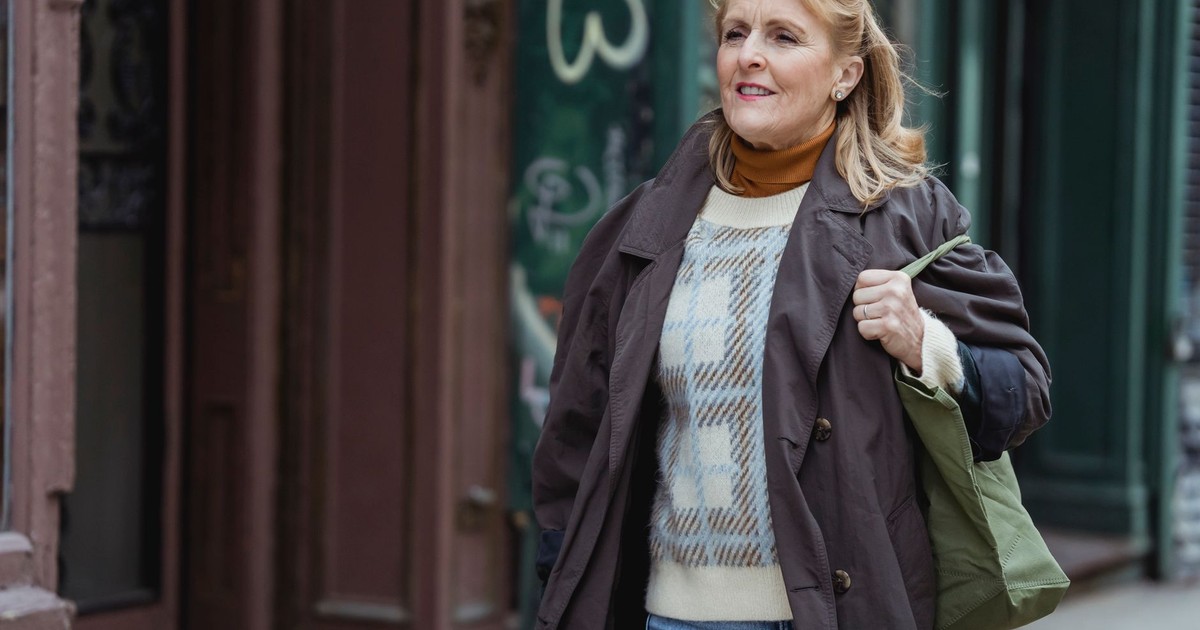
Research consistently shows that women initiate the majority of gray divorces. Women file for divorce in roughly two-thirds of cases among couples over 50, a notable disparity that highlights how long-term marriages can be experienced differently by each partner.
This is not accidental. Women are more likely than men to initiate a gray divorce, research shows. Boomer women are generally more financially independent than their mothers were, giving them more options to support themselves later in life. A woman who is 62 in 2026 came of age professionally during the 1980s and 1990s. She may have built a career, saved independently, and developed a sense of her own financial identity that her mother never had. For a woman in that position, the question of whether to leave a long marriage is no longer purely one of survival – it becomes one of how she wants to spend the decades she has left.
These changing divorce rates are largely due to longer life expectancies, cultural changes, and society’s evolving views on the benefits of marriage. “It’s not the 18th, 19th, or even the 20th century anymore, and staying in a marriage that’s unfulfilling is no longer necessary,” said psychologist Chivonna Childs, PhD, of the Cleveland Clinic. “Women have a lot more financial stability and flexibility in their lives, and we’re paying more attention to our mental health than ever before.”
One possible reason for the increase is simply that people are living longer. “People are less willing to endure unhappy marriages for so long and are more optimistic that they will find another partner. And so older adults are more willing to divorce than they were in the past,” explained psychology professor Rosie Shrout of the University of British Columbia. A woman who turns 60 today has, statistically, another 25 or 26 years ahead of her. Framed that way, “staying in it for the long haul” means something entirely different than it once did.
Understanding the common reasons marriages end helps explain why many of these late-life splits don’t arrive with a dramatic incident. They arrive as a slow accumulation of disconnection – years of one person feeling unseen, unheard, or simply like a roommate with a shared mortgage.
The Financial Cliff Nobody Talks About

Here is where the story stops being just about relationship dynamics and starts being about something harder. Gray divorce is expensive in ways that divorce at 35 simply isn’t, and the financial consequences fall disproportionately on women.
Divorce at any age will lead to emotional and financial fallout, but it can be particularly devastating to older Americans. Not only is the process likely to be more complicated because of decades of accruing assets together, but each spouse has far less time to rebuild their finances before retirement. A 36-year-old who divorces has thirty years of earnings and savings ahead of her. A 58-year-old does not. The math is genuinely pitiless.
On average, women experience a 45% decline in their standard of living after a late-in-life divorce, compared to a 21% decline for men. The gap is not incidental. Many older adults who divorce today adhered to the traditional notion of a man as a household’s sole breadwinner. “We’re seeing women in divorce today who are of the generation where they just didn’t work their entire life,” said Natalie Colley, a certified financial planner at Francis Financial.
Poverty levels among women old enough to qualify for Social Security retirement benefits are almost twice as high for women who divorced after age 50 as those who divorced before age 50, sociologists Susan Brown and I-Fen Lin found. The Social Security rules compound this. Divorced women can claim a Social Security benefit based on their own earnings or a former spouse’s earnings history, but the latter option is generally worth only up to half of an ex’s benefit. For a woman who spent fifteen years out of the paid workforce raising children, that cap is not a safety net so much as a floor made of paper.
For older couples, the splitting of retirement accounts – 401(k)s, IRAs, pensions – can be a messy and expensive financial hit. The way 401(k)s and pension plans are split is governed by a qualified domestic relations order (QDRO), while IRAs are distributed depending on whether they were opened before the marriage or during. Resolving decades of documentation across dozens of pages costs money and time that younger divorcing couples simply don’t face at the same scale.
Divorcing near or after retirement presents unique challenges, especially if a couple created a retirement strategy together. This risk is important to consider as 56% of married Americans say that a divorce would derail their financial retirement strategy.
What Comes After

The picture of life after gray divorce is more complicated than either of its popular versions – the liberated fresh start, or the lonely cautionary tale. Both are real, and often they’re the same person in different years.
Many Boomers embrace this time as an opportunity for personal growth. They’re traveling more, pursuing hobbies, and even starting new careers. Research has documented genuine improvements in well-being for people who leave chronically unhappy marriages, regardless of age. The relief of no longer managing a relationship that wasn’t working is a real thing, and it tends to register quickly.
The harder piece is the social isolation. About 50% of people live alone in the first couple of years after a gray divorce. Friend groups that were built around a couple often fracture or drift. Adult children are sometimes forced into uncomfortable loyalty negotiations. And older men, research has consistently found, struggle more with solitude than older women do, despite the fact that women carry the heavier financial burden after the split.
Read More: 8 Things That Predict Divorce, According to Science
What the Numbers Don’t Capture

The most striking thing about gray divorce is the gap between how it looks from the outside and how it arrives from the inside. These are not, for the most part, marriages that ended in a fight or a betrayal. In a so-called silent marriage, “things aren’t horrible, but they’re not great,” as psychologist Chivonna Childs describes it. “These couples are living separate lives, almost like they’re roommates. And they may not want to leave at first because of financial reasons or a fear of being alone.”
That’s the version that the statistics can’t measure: two people in a house, living parallel lives, not unhappy enough to leave and not happy enough to stay, until one of them does the math on the years remaining and makes a decision. It’s a very Boomer story, in the sense that this is a generation that was told, at every stage of life, that self-fulfillment was a legitimate goal. They believed it at 22. They still believe it at 68.
Whether the rest of the country agrees with that calculus is a separate question. The safety net wasn’t designed for a country where more than a third of divorcing adults are over 50. It was designed for lifelong marriages, modest life expectancies, and a workforce in which one spouse earned the income while the other managed the home. That world is gone. The rules haven’t caught up.
What’s left is a generation figuring this out without a manual, often with fewer financial resources than they planned on, and with whatever years remain ahead. Some of them will be fine. Some of them won’t. And most of them, on both sides of the split, will spend considerable time wondering how they arrived at a place they never imagined being.
The archive of a long marriage doesn’t just close when it ends. It keeps accumulating. That’s not a reason to stay or to leave. It’s just the actual weight of the thing, which the word “divorce” – tidy, legal, final – never quite covers.
AI Disclaimer: This article was created with the assistance of AI tools and reviewed by a human editor.