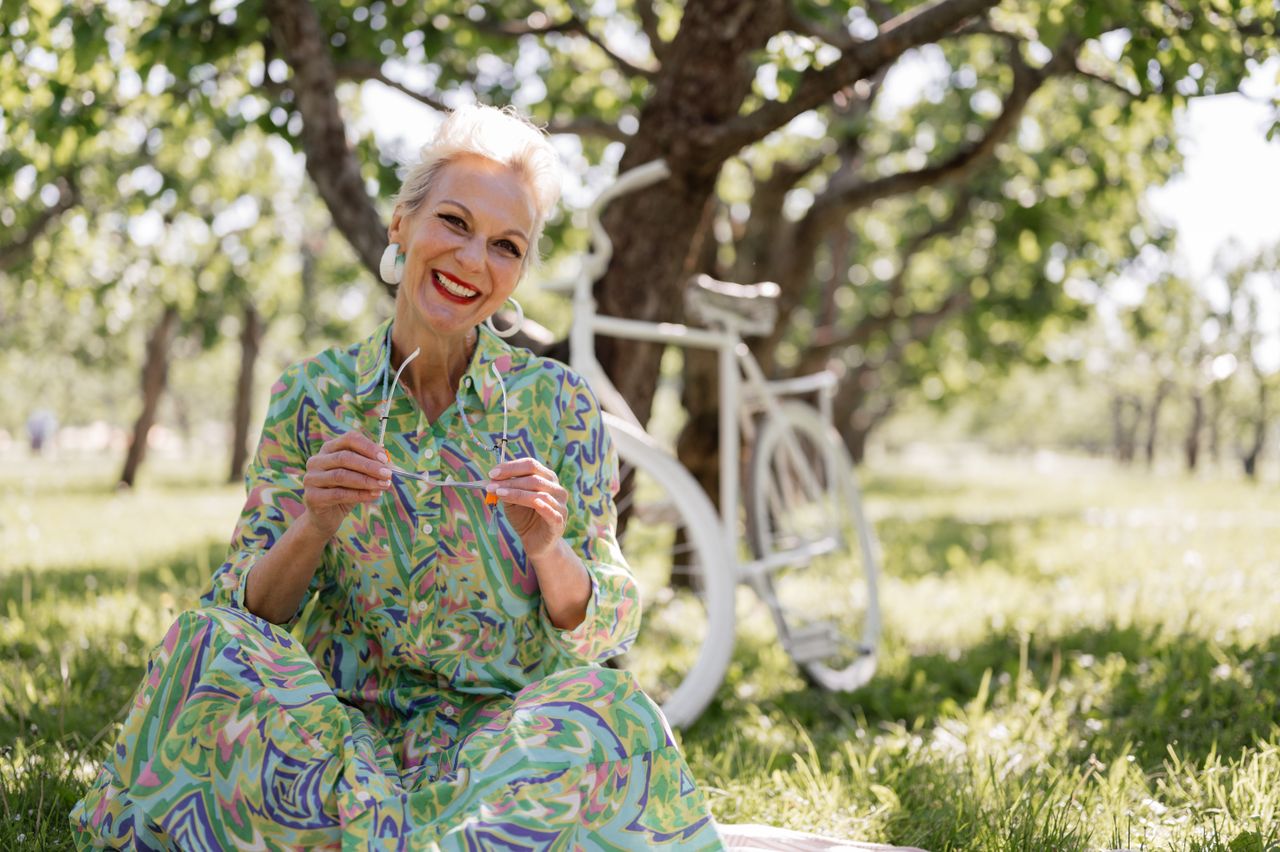

There is a specific moment many women describe, usually somewhere in their early fifties, when they realize they have been following a rulebook nobody handed them and nobody enforced, but that somehow controlled everything anyway. The rule about not being “too much.” The rule about keeping the peace. The rule about what their hair should look like, what their ambitions should sound like, and how much space they were permitted to occupy in a room. The rules were invisible, which made them harder to argue with. You can’t fight a thing that was never officially announced.
What’s changing now is that women over 50 are not only noticing the rulebook – they’re setting it down. Not with a dramatic ceremony. Not with a manifesto. Just with the accumulated certainty of someone who has lived long enough to know exactly what the rules were actually protecting, and for whom. The answer, usually, is not her.
The list below isn’t exhaustive – a complete inventory would run to several volumes – but these are thirteen of the most commonly discarded ones. Some will sound trivial. The trivial-sounding ones tend to be the ones with the deepest roots.
1. Hiding the Gray
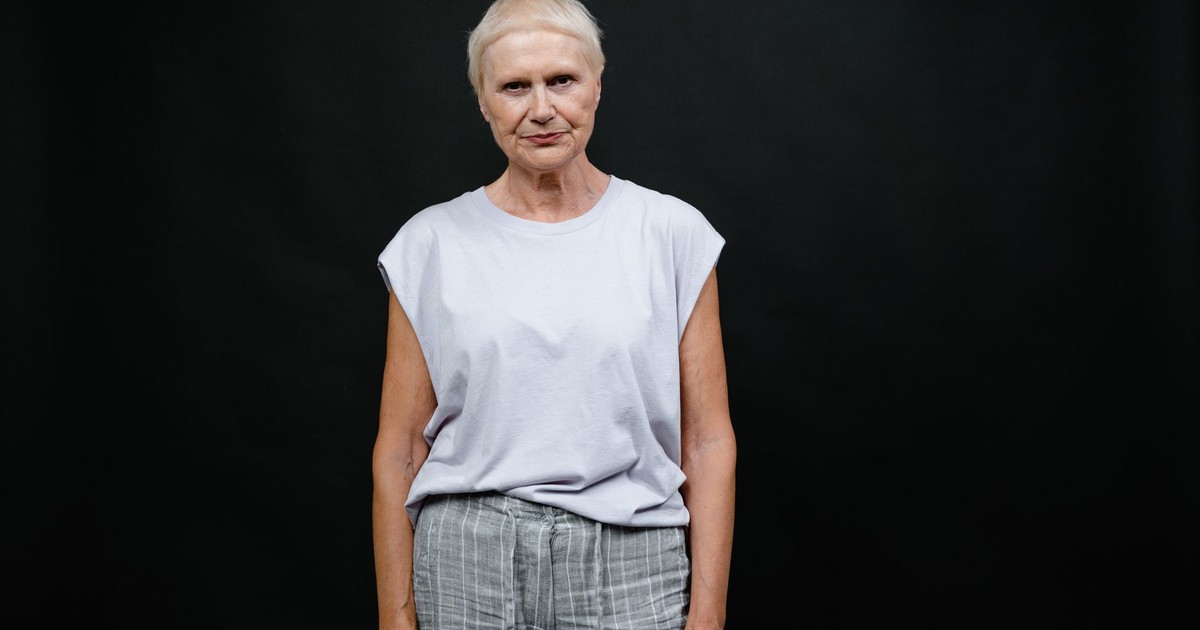
The social pressure to dye gray hair isn’t subtle, and it didn’t come from nowhere. Research published in the Journal of Women & Aging has noted the societal double standard in which aging is culturally accepted as natural for men while women face pressure to retain youthful appearances indefinitely – with characteristics like gray hair frequently framed as signs of defeat. That framing took hold early and held on for decades.
But women over 50 are increasingly letting it go. A 2024 study on women’s perceptions of appearance in the second half of life found that some participants who stopped dyeing their hair reported feeling relief and a genuine sense of freedom, describing the decision as a way of embracing change and avoiding self-criticism. That’s not a minor shift – that’s a woman deciding that her hair color belongs to her, not to the expectations of a room she hasn’t even walked into yet.
What’s interesting is that the research also captures the complexity. That same Journal of Women & Aging study found two opposing themes at the center of the gray hair decision: competence and authenticity. Despite wanting to avoid the social assumption that gray equals incompetent, many women chose natural gray in order to feel authentic – though some still employed other beauty practices to manage the gap between how they felt inside and how they feared they’d be perceived. That tension is real. Letting go of the rule doesn’t mean the pressure disappears. It means you’ve decided it doesn’t get to decide anymore.
2. Dressing “Age-Appropriately”
The phrase “age-appropriate” has never actually meant appropriate. It has always meant “less visible,” “less expressive,” “less you.” The rule arrived in specific, bossy ways – no above-the-knee hemlines after forty-five, no bright colors after fifty, no sleeveless after whenever someone decided your arms had a sell-by date. Nobody could ever explain what harm, exactly, would befall the world if a woman in her fifties wore something she liked.
Women over 50 are increasingly abandoning this rule with the same energy they’d bring to throwing out a garment that never fit right but that they kept around out of guilt. The freedom here isn’t just aesthetic. When a woman dresses for herself rather than in preemptive apology for her age, she is doing something that has effects well beyond her wardrobe. She is practicing the belief that her own preferences count, which turns out to be a useful belief to have.
The cultural signals are moving in the same direction. The pro-aging movement that has been gaining momentum through the mid-2020s – visible in advertising, fashion campaigns, and the mainstreaming of older models – represents a genuine shift in what “dressing for your age” even means. The new answer, for a growing number of women, is: whatever you actually want to wear.
3. Apologizing for Taking Up Space

This one runs deeper than most people realize. The apology isn’t always verbal. It’s in the way a woman makes herself smaller at a table, qualifies every opinion with “I might be wrong, but,” volunteers to leave a seat for someone younger, or frames her own needs as an inconvenience before anyone else has even weighed in. It’s a habit that starts early and calcifies if nobody names it.
Women over 50 tend to have more practice at naming it, because they’ve had more time to notice what it costs. The energy spent continuously minimizing, pre-empting criticism, and softening the edges of your own presence is energy that could go almost anywhere else. A woman who has spent thirty years cushioning her own existence has usually done the math by her fifties, and it doesn’t add up in her favor.
The shift isn’t aggression. It’s just the removal of a layer of unnecessary apology. Taking up the space you’re actually in. Finishing a sentence without hedging the end of it. Saying a thing directly and then waiting, without panic, for the reaction.
4. Staying Small to Keep the Peace

This rule is the close relative of number three, but it deserves its own entry because the underlying pattern is different. Staying small to keep the peace isn’t about apologizing for who you are. It’s about actively suppressing who you are because the alternative is conflict, and somewhere along the line you were taught – explicitly or not – that conflict was your fault and your problem to prevent.
The cost is significant. A woman who has spent years pre-emptively adjusting her opinions, biting back her reactions, and engineering her behavior to prevent other people’s discomfort has essentially outsourced her own preferences to whoever she’s afraid of upsetting. The relationship gets maintained. The woman inside it gets smaller.
Women over 50 are dropping this one in growing numbers, partly because the math becomes undeniable. Fifty-plus years of a life have clarified, for many of them, that keeping the peace rarely produced actual peace. It produced an absence of the particular argument they were dreading, in exchange for a permanent, low-grade tension between who they are and who they were performing.
5. Performing Happiness
The rule about always seeming fine is one of the most exhausting ones, and it lasts the longest because it’s so well rewarded. The woman who holds it together, processes everything privately, and emerges composed is praised for her strength. The woman who says “actually, this has been a really hard year” makes people uncomfortable, which they don’t hide particularly well. So most women learn early that the performance is just easier.
The problem is the performance requires energy, and the energy is borrowed from actual wellbeing. Contemporary research on women’s midlife experience highlights the biological, social, professional, and psychological changes that converge during this period – a convergence that makes performing equanimity particularly costly precisely when the pressures are highest. The fifties often bring a particular cluster of demands – aging parents, children leaving or returning, relationship recalibrations, health changes – that make sustained performance genuinely unsustainable.
Women over 50 are, in increasing numbers, simply deciding to be honest about how they’re actually doing. Not performatively, not as a demand on others, but just as a baseline. The relief is usually mutual. The people worth keeping around almost always prefer the real thing.
6. Putting Everyone Else First, Every Time

This one has cultural, generational, and often gender-specific roots that run very deep. The idea that a good woman is a self-effacing woman – that her worth is measured by her service, her sacrifice, her bottomless availability for other people’s needs – didn’t come from nowhere. It was transmitted specifically, through mothers and grandmothers who had fewer options, through institutions that rewarded women’s compliance, through relationships that took self-sacrifice for granted because it had always been there before.
By their fifties, many women have been first in line for everyone else’s needs and last in line for their own for three or four decades. The toll is real. The Gender and Body Image (GABI) study, a qualitative study of 1,849 women over age 50, found that how women related to their own bodies and sense of self was deeply shaped by the accumulated weight of how they’d been seen, valued, and positioned throughout their lives. The women in that research were dealing not just with aging bodies but with the compounded effects of years spent defining themselves through their usefulness to others.
The rule being discarded here isn’t “care about other people.” It’s “care about other people instead of yourself.” The revision is just: and. Care about other people and yourself. Simultaneously. Routinely.
7. Needing a Partner to Be Complete

There is a version of this rule that is so old it barely registers as a rule anymore – it just seems like a fact about the shape of a life. You find a partner, you build a life together, and the measure of whether your life worked is largely determined by the presence and quality of that partnership. A woman without a partner, by this logic, is a woman with an incomplete life, regardless of what else that life contains.
Women over 50 are increasingly refusing this framing, and the refusals are coming from all directions: from women who divorced and discovered that living alone was nothing like what they’d been warned, from women who chose not to partner in the first place and have grown tired of having that choice treated as a wound, and from women in partnerships who have simply decided that their completeness exists independently of anyone else’s presence in their home.
The data on wellbeing and marital status is more complicated than the cultural rule would suggest, and women are living in that complexity rather than accepting the oversimplified version. A full life at fifty-five, sixty, or seventy doesn’t require a particular domestic arrangement. It requires attention to what actually makes it full.
8. Shrinking Ambition After 50

The assumption that ambition is a younger person’s game – that the fifties are for consolidating what you have, not reaching for more – is one of the most peculiarly specific pieces of cultural programming women receive, and it starts landing earlier than people usually admit. The message is rarely direct. It comes in the form of surprised reactions when a woman in her fifties changes careers, starts a business, goes back to school, or announces a plan that doesn’t involve winding down.
The surprise is the tell. Nobody frames it as discouragement; they frame it as concern. “Are you sure? At this point?” The implication is that the window has closed. Women over 50 are discovering, in greater numbers, that this implication is wrong.
The data on midlife reinvention doesn’t support the cultural story. Women in their fifties and sixties are starting businesses, changing careers, and pursuing entirely new directions with increasing frequency. The skills, the clarity about what counts, and the experience accumulated over decades turn out to be assets, not liabilities. The rule about ambition expiring at fifty is a rule invented by people who benefited from women believing it.
9. Being the Family’s Emotional Manager
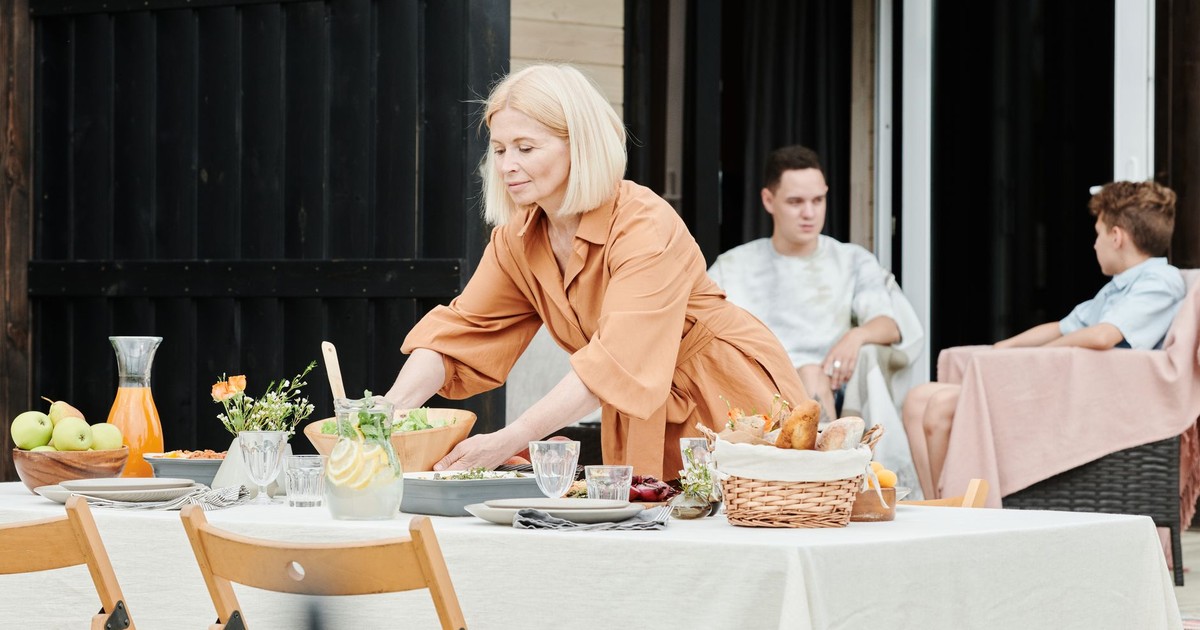
This is the invisible labor that doesn’t make it onto most lists, which is ironic because it is the most exhausting item on the actual list of things women in families do. Managing emotions in a family means tracking everyone’s mood, anticipating conflict, smoothing over tensions before they surface, being the person everyone calls when something goes wrong, facilitating the apologies that wouldn’t otherwise happen, and maintaining the memory of every fractured relationship so you can try to repair it at the right moment. It is, functionally, a second job, and it goes entirely uncompensated.
Women over 50 are naming this pattern in ways previous generations mostly didn’t, partly because the language for it is newer and partly because the cumulative fatigue of doing it for thirty years makes it harder to ignore. The rule being dropped isn’t “care about your family.” It’s “be solely responsible for whether everyone in your family is okay, at all times, regardless of what that costs you personally.”
The redistribution of this labor is not easy and not fast, but the first step is the decision that the current arrangement is a choice – not just the natural order – and that it can be renegotiated. Women over 50 are making that decision with more frequency than they used to.
10. Tolerating Friendships That Cost More Than They Give
Every woman over 50 has at least one friendship in her archive that she maintained well past the point where it made sense, out of history, guilt, shared memory, or simple inertia. The friend who leaves every conversation having deposited a layer of her own anxiety onto you, without noticeable interest in how you’re doing. The one who only calls when something is wrong for her. The one whose company you dread slightly, then feel guilty for dreading.
The rule said: you keep these friendships. Because you have history. Because ending a friendship is cruel. Because you have been friends since you were twenty-three and there is presumably some loyalty owed to your twenty-three-year-old self for having made that choice. The rule had very little to say about your fifty-three-year-old self, who has lived three decades and would, if she were choosing now, choose differently.
Women over 50 are letting friendships quietly expire, and they are also sometimes having the more direct conversation. Both are valid. What they are mostly not doing anymore is maintaining relationships that leave them feeling worse simply because those relationships predate the current version of themselves.
11. Apologizing for Their Bodies
The rule about women’s bodies and aging goes like this: the changes that come with age are failures, and a woman who fails to fight them is letting herself go. Gray hair is failure. Wrinkles are failure. Weight redistribution is failure. Visible skin is failure. The entire apparatus of anti-aging is built on this rule, monetizing the anxiety it creates and then monetizing the products that promise to address it.
Women over 50 are dismantling this one, some gradually and some all at once. The mid-2020s have marked what observers are calling a cultural inflection point, with a pro-aging philosophy increasingly challenging anti-aging industry dominance – gray hair becoming a fashion statement rather than a biological failure, menopause gaining visibility as a defined cultural and market conversation, and mature women becoming the faces of major campaigns rather than afterthoughts.
The deeper shift is the one happening privately. Women who stop apologizing for their bodies in public settings, who stop prefacing photos with disclaimers, who stop treating their own physical existence as something that requires justification – that’s the rule being dropped in real time, one small decision at a time.
12. Keeping Quiet About Money

This rule has two faces. One is the social prohibition on women discussing their own financial situations – how much they earn, what they own, what they owe, what they worry about. The other is the internal rule that says financial decisions should defer to a partner, a father, a financial advisor, or essentially anyone who is not the woman herself. Both versions leave women less financially informed, less financially confident, and frequently less financially secure.
Women over 50 are pushing back against both versions. Conversations about money, retirement gaps, the specific financial aftermath of divorce or widowhood, and the realities of earning less over a lifetime are happening with more frankness than previous generations permitted. The rule about not discussing money has always been most costly to the people least able to afford the silence. Women over 50 are figuring that out and talking anyway.
The financial self-determination piece is equally significant. A woman in her fifties who takes full ownership of her financial decisions – who understands her accounts, her retirement plan, her estate documents – has often done something she was subtly discouraged from doing for most of her adult life. Doing it is not just a practical move. It’s a refusal of one of the most consequential rules on this list.
13. Waiting Until They Feel Ready

This one is last but it might be the most universal. The rule says: wait until you’re confident enough. Wait until the timing is better. Wait until you know more, or earn more, or have more energy, or have cleared the current pile of obligations. Wait until it feels right. The rule presents waiting as prudence when it is often, in fact, just fear with a more respectable name.
Women over 50 are giving up on waiting. Contemporary research on women’s midlife experience consistently finds that this life stage involves a reckoning with biological, social, professional, and psychological changes simultaneously – and what many women discover in the middle of that reckoning is that the right time was always going to be a myth. There is no version of things where all conditions are favorable and readiness arrives fully formed. There is only now, and the choice of what to do with it.
The things that get started after fifty – the businesses, the moves, the degrees, the books written in the guest room at ten o’clock at night – tend to have a particular quality. Not the anxious energy of someone trying to prove themselves, but the focused energy of someone who knows exactly what they want and has stopped holding back for a readiness that was never going to arrive on cue.
Read More: This 57-Year-Old Follows A Strict Diet, Exercises 4 Days A Week, And It Obviously Pays Off
What’s Actually Happening

The thirteen rules above are not random. They share a common architecture. Each one either makes a woman smaller, asks her to perform something she doesn’t feel, delegates her own interests to someone else’s comfort, or keeps her waiting for a readiness that never arrives on schedule. Together they form a pretty complete picture of how a woman can arrive at fifty having spent most of her life in service to a version of herself that was designed by committee.
What is actually happening, in the aggregate, is not a midlife crisis. A crisis implies something has gone wrong. This is something going right, slowly, in ways that don’t always announce themselves. A woman dropping one of these rules on a Tuesday afternoon, alone, without anyone watching, is doing something real and worth doing. The archive of the rules she’s kept doesn’t get smaller – it’s there, it has weight, it took years to accumulate. What changes is the decision about whether to keep following them. That decision, once made, tends to stick.
Some of these rules have been in place since she was a girl. Dropping them doesn’t erase the years spent following them, and it doesn’t mean the pressure vanishes entirely – the pressure is still out there, still arriving in the form of a comment at a family dinner or a magazine cover or a well-meaning question about her plans. What changes is the relationship to it. The rule used to feel like an obligation. Now it just looks like someone else’s idea of who she should be.
Disclaimer: This information is not intended to be a substitute for professional medical advice, diagnosis, or treatment and is for information only. Always seek the advice of your physician or another qualified health provider with any questions about your medical condition and/or current medication. Do not disregard professional medical advice or delay seeking advice or treatment because of something you have read here.
AI Disclaimer: This article was created with the assistance of AI tools and reviewed by a human editor.