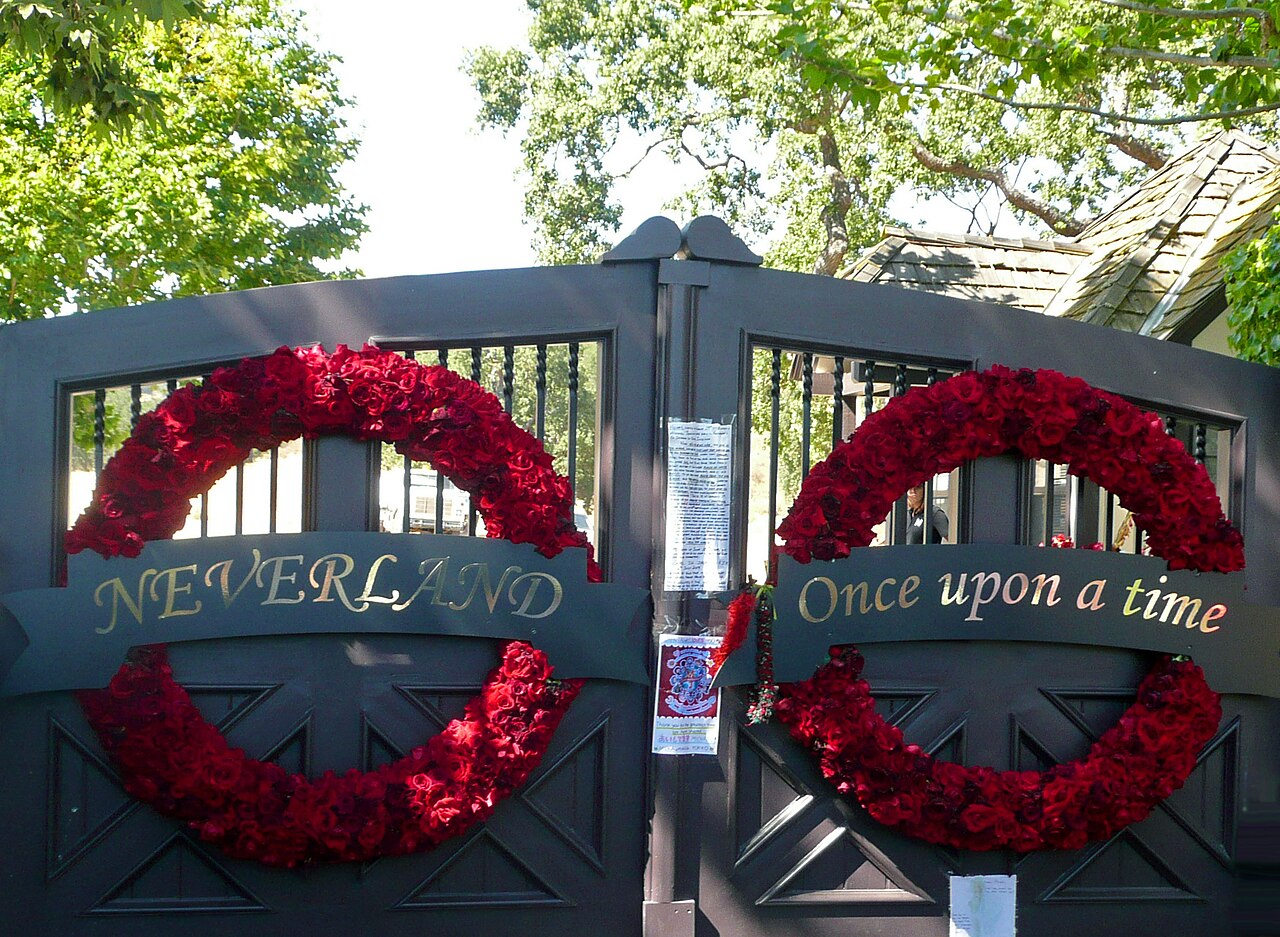

Few raids in modern law enforcement history generated as much public fascination, legal complexity, and unresolved controversy as the searches carried out at Michael Jackson’s Neverland Ranch. What investigators found – and what they ultimately could not prove – sits at the center of a case that continues to divide opinion two decades after it concluded in a courtroom in Santa Maria, California. In June 2025, a three-part Netflix documentary revisited that evidence in granular detail, prompting a fresh wave of analysis, outrage, and fierce defense from those who insist the record has always been clear. The renewed public attention makes a full accounting of what actually happened, what was actually seized, and what the evidence actually established more necessary than ever.
The story of the Michael Jackson Neverland raid is not a single event. It is a sequence of searches spanning more than a decade, carried out by different law enforcement agencies under different sets of allegations, producing evidence that prosecutors and defense attorneys interpreted in ways that could not have been more opposed. Understanding what the raids found requires understanding who was looking, what they were looking for, and why the legal outcome was what it was.
This is not a case where the facts are hidden. Court records, FBI files released under the Freedom of Information Act, trial transcripts, and contemporaneous reporting all exist in the public domain. What has been lacking is a coherent, sourced account that places those facts in order and resists both the impulse to convict on the basis of disturbing optics and the impulse to exonerate on the basis of a jury verdict alone.
Background: What Was Neverland Ranch?
From 1988 to 2005, Neverland Ranch served as both the private home and private amusement park of Michael Jackson. The property is located approximately five miles north of the unincorporated community of Los Olivos in Santa Barbara County, California. Jackson purchased the ranch in 1988 and renamed it after Neverland, the fantasy island in the story of Peter Pan, a boy who never ages.
The property functioned as Jackson’s residence as well as an entertainment complex, with numerous garden statues, amusement rides, and a petting zoo. It included three railroads, one of which was a narrow-gauge line named the “Neverland Valley Railroad,” equipped with a steam locomotive named Katherine after his mother. The grounds also contained a Ferris wheel, carousel, zipper, octopus, pirate ship, wave swinger, Super Slide, roller coaster, bumper cars, and an amusement arcade.
At trial, the prosecution argued that Jackson used Neverland, his “fantasy hideaway” with candy and theme park attractions, to lure boys and groom them, and flattered their parents with gifts. The defense countered that the estate was simply the home of an eccentric global celebrity who had an unusually close relationship with children – one that was irregular but not criminal. The distinction between those two interpretations was never definitively resolved in court.
The 1993 Raids: Jordan Chandler and the First Investigation

The Allegations That Triggered the Initial Searches
In 1993, Jackson was accused of child abuse by 13-year-old Jordan Chandler. The alleged abuse took place at Jackson’s Neverland Ranch home in Santa Barbara, California. In 2003, the documentary Living with Michael Jackson would later show Jackson holding hands with a different accuser and defending his practice of sharing his bed with children – but the first crisis came ten years earlier, triggered by the Chandler family’s accusations.
Between August and November 1993, authorities searched Jackson’s Neverland Ranch in the Santa Ynez Valley, his Century City condominium, a Las Vegas suite where Jackson had stayed, and his parents’ home in Encino. Among the items seized were the books Boys Will Be Boys and The Boy: A Photographic Essay, both containing photographs of boys.
The book Boys Will Be Boys reportedly contained a handwritten inscription by Jackson himself: “Look at the true spirit of happiness and joy in these boys’ faces, this is the spirit of boyhood, a life I’ve never had and will always dream of. This is the life I want for my children.”
Following the search at Neverland and Jackson’s condominium, a high-ranking police source stated that no medical or taped evidence was found and nothing that would warrant a criminal filing. The investigation continued nonetheless.
The Strip Search Warrant
One of the most significant developments of the 1993 investigation was not the search of the ranch itself but the search of Jackson’s body. On December 13, 1993, as part of the Santa Barbara Sheriff’s investigation, a search warrant was obtained authorizing the taking of photographs of Jackson’s genitals. That warrant was executed at Neverland Ranch on December 20, 1993, and the resulting photographs were retained by the Sheriff’s Department under tight security.
Jordan Chandler had verbally described areas of discoloration on Jackson’s lower torso, buttocks, and genitals – including a dark blemish on his penis – to prosecutors in September 1993. Jordan was subsequently asked to produce a sketch depicting the underside of Jackson’s erect penis, noting the approximate location of the blemish.
The question of whether that description matched the photographs became one of the most contested factual disputes in the entire decade-long case. Ian Halperin, in his 2009 book Unmasked: The Final Years of Michael Jackson, reported that Jordan depicted Jackson as circumcised when he was not; Jackson’s autopsy report confirms that his “penis appears uncircumcised.” Prosecutors and investigators on the other side of that argument maintained that the description was substantively accurate on other points of identifying detail.
The 1993 Civil Settlement
In January 1994, Jackson settled the civil lawsuit for $23 million – equivalent to approximately $51.68 million in 2026 – with $5 million going to the family’s lawyers. The settlement was not an admission of guilt; Jackson said he had settled to prevent the lawsuit from interfering with his career, which he later regretted. Prosecutors pursued the criminal case and presented the evidence to two separate grand juries, neither of which indicted.
The 2003 Raids: The Arvizo Investigation and the Criminal Charges
The Trigger: Living With Michael Jackson. The 2003 documentary Living with Michael Jackson showed Jackson holding hands with Gavin Arvizo and defending his practice of sharing his bed with children, triggering a new investigation. Prior to the November 2003 raid, 13-year-old Gavin Arvizo had accused Jackson of touching him inappropriately.
The November 18, 2003 Search: On November 18, 2003, police searched Neverland Ranch with a search warrant. Jackson and his three children were in Las Vegas, where Jackson was shooting a music video for his single “One More Chance.” Jackson was arrested two days later, on November 20, and released an hour after posting a $3 million bond.
The November 18 search produced a large catalog of physical and digital materials – books, magazines, videotapes, hard drives, diaries, photographs, and other personal items – that prosecutors later described as containing imagery of children and other provocative material.
The charges came after police seized more than 80 video recordings and computer hard drives, as well as notes, diaries, documents, photographs, and audiotapes.
The Bedroom Suite and Its Locks: Authorities were specifically looking for a bedroom that featured a king-size bed and several locks, which Arvizo’s brother had testified about. Upon searching the home at the end of a hall, police reportedly found a bedroom suite that featured many locks, and one of the door locks was specifically only able to be opened from the outside with a combination keypad.
Prosecutor Ron Zonen stated in the Netflix docuseries Michael Jackson: The Verdict: “There’s a separate entrance into the bedroom suite. There’s a combination lock. The kids knew the combination to the combination lock – their mother didn’t.” After entering the bedroom, police reportedly found a loft that featured a king-size bed where Arvizo’s brother alleged he had witnessed Jackson molesting his sibling.
The Grooming Material: The police report repeatedly stated that the materials found in Jackson’s home “can be used as part of a ‘grooming’ process by which people seeking to molest children are able to lower the inhibitions of their intended victims and facilitate the molestation of said victims.”
Among the material found at Neverland, one of the notable pieces that prosecutors used in the 2005 trial was a magazine titled Hustler Barely Legal Hardcore, which prosecutors noted “depicted young-looking women.” Sgt. Robert Spinner of the Santa Barbara County Sheriff’s Department testified at trial that fingerprint experts identified both Jackson’s and Arvizo’s fingerprints on a copy of that magazine, according to The New York Times reporting at the time.
In addition to the material found at Neverland, prosecutors also produced two books about young boys during the trial. One was titled Boys Will Be Boys and the second was The Boy: A Photographic Essay – both coffee table books seized during the first search in 1993.
Police stated in the report that images found at Neverland Ranch did not meet the “legal requirements” to be considered “illegal images” but that police found photos of children as well as photos of children in various states of undress.
Other Items Found at the Property: Among the more unusual items documented at the property was a reproduction resembling Leonardo da Vinci’s The Last Supper, but with Jackson in the place of Jesus Christ at the head of the table. The painting also featured Abraham Lincoln, John F. Kennedy, Albert Einstein, Walt Disney, and Elvis Presley, according to The Guardian.
The FBI’s Digital Analysis: What the Hard Drives Revealed

The digital dimension of the Michael Jackson Neverland raid investigation produced arguably the most definitive single finding in the entire case. FBI files covering the analysis of Jackson’s computers confirm that 16 hard drives were confiscated during the 2003 raids. The FBI’s Computer Analysis Response Team (CART) produced a report addressed to Sheriff Jim Anderson, dated April 5, 2004. The FBI found nothing incriminating on the drives, and the computer history contained no record of accessing or searching for illegal material.
CART forwarded four DVDs to the Forensic Audio Video Image Analysis Unit (FAVIAU) with file formatting problems and requested they be converted to a readable format. After conversion, it was noted there were no “outstanding leads or evidence items.”
The FBI’s Broader Involvement and Conclusion
The Federal Bureau of Investigation kept records on Michael Jackson, which were released under the Freedom of Information Act on December 22, 2009, following Jackson’s death. The FBI files comprise over 600 pages, of which 351 pages were released publicly, divided into eight parts.
Between 1993 and 2005, Jackson was investigated by California law enforcement agencies due to allegations of child abuse, with the FBI providing technical and investigative assistance. The FBI also investigated threats made against Jackson by third parties. The FBI found no evidence of criminal conduct on Jackson’s part.
A VHS tape had previously entered the investigative record through a separate channel. A multi-generational, poor-quality VHS tape was seized by US Customs in West Palm Beach, Florida, in 1995. The tape was labeled “Michael Jackson’s Neverland Favorites An All Boy Anthology,” but the files do not mention that Jackson owned the tape or had any connection to it. The investigation of whether it contained illegal images was concluded on January 24, 1997, and no charges were filed.
The 2004 Search: DNA Evidence

A year after the primary 2003 search, detectives found themselves at the Neverland property once more, this time in search of DNA samples ahead of Jackson’s trial. The second search did not produce the kind of sweeping seizure that the November 2003 operation had, but it formed part of the prosecution’s broader effort to establish a physical evidentiary record connecting Jackson and his accusers to specific locations within the property.
The 2005 Trial: How the Evidence Was Used
Prosecutors sought to introduce numerous picture books, videos, and magazines seized from Jackson’s home as circumstantial evidence of intent, motive, and method, arguing the materials showed preparation and a pattern relevant to the molestation charges. The prosecution framed some of the material as part of an alleged grooming strategy, a theme echoed in press coverage of the police reports.
On December 18, 2003, Jackson was charged with seven counts of child molestation and two counts of administering an intoxicating agent for the purpose of committing a felony.
Judge Melville allowed prosecutors to introduce testimony about past allegations against Jackson, including the 1993 case, to establish whether Jackson had a propensity to commit such crimes. The prosecution hoped to show that Jackson had engaged in a pattern of abuse with boys.
The Defense Challenge and the Verdict
Jackson’s defense challenged the weight and interpretation of the physical and digital material, and Jackson was ultimately acquitted on all counts after the 2005 trial. The FBI technical summary and defense arguments were part of the larger evidentiary contest about whether seized items proved criminal conduct.
In June 2005, a jury acquitted Jackson on all counts, including child molestation charges. The verdict ended the criminal case but not the questions surrounding the ranch or Jackson’s legacy. Jackson died just four years later.
Jackson never returned to Neverland Ranch after the trial, saying it had been despoiled by the police searches.
The Netflix Documentary and Renewed Scrutiny in 2025
The evidence found in the raids was re-examined in detail in the Netflix docuseries Michael Jackson: The Verdict, which premiered on the platform on June 3, 2025. Before and after the arrest, police had conducted raids on the property, and the documentary brought those searches back into sharp focus.
Prosecutor Ron Zonen, speaking in the documentary, explained the investigative logic: “When you’re investigating an allegation of child abuse, you rarely have witnesses to it. We’re looking for anything we can find that tells us that this child is giving us accurate information.” During the raid, police had found several pieces of evidence that were later used during the 2005 trial.
Jackson’s lead trial attorney, Thomas Mesereau, responded to the documentary’s release with pointed criticism. Mesereau asked: “So why do we need a documentary in the middle of this that goes back 21 years in a case where he was completely exonerated?” He repeatedly emphasized that his client was cleared by the jury after “five months of testimony.”
The documentary arrived in a particularly charged cultural moment for Jackson’s legacy. The Michael Jackson biopic Michael, starring the singer’s nephew Jaafar Jackson as the titular character, had premiered in theaters on April 24, 2026. Days before the biopic’s release, director Antoine Fuqua revealed to The New Yorker that the film had originally opened with the 1993 police raid on Neverland Ranch, following the abuse allegations from Jordan Chandler. Both scenes referencing the Chandler allegations were removed from the final cut because the settlement between Jackson and the Chandler family reportedly included a legally binding agreement that the Chandlers could never be mentioned or dramatized in a film.
What the Property Became After Jackson
Jackson left Neverland Ranch in 2005, shortly after his acquittal, and never returned, though he owned it until his death in 2009. After the property had depreciated for several years, American billionaire Ronald Burkle, a friend of the Jackson family, purchased it in 2020 for $22 million. Neverland Ranch had a central role in the allegations against Jackson; it is one of the main sites where his accusers alleged the abuse took place. The ranch’s association with those allegations was cited as a possible reason for the significant depreciation in its value.
Key Takeaways

The Michael Jackson Neverland raid remains one of the most documented and most debated law enforcement operations in entertainment history, precisely because what was found does not lead cleanly to a single conclusion.
On the physical side of the ledger, investigators seized a substantial volume of adult material, books containing photographs of children, more than 80 video recordings, and 16 computer hard drives. The police themselves noted in their reports that the images of children found at the property did not meet the legal standard of a crime.. Police reports and later media summaries described a “considerable stash” of adult imagery at Neverland, including books and magazines featuring children or children in states of undress, while other reporting noted that some items were arguably art photography and that police concluded many images did not meet the legal standard.
On the digital side, the finding is unambiguous. The FBI found nothing incriminating on the drives, and the computer history contained no record of accessing or searching for illegal material. The agency that spent more than a decade investigating Jackson, with access to resources no local law enforcement body could match, closed its files without a single criminal finding against him.
Publicly surfaced police reports and property lists concretely document what investigators seized and how prosecutors intended to use those items, but they do not, by themselves, establish criminal guilt. Official forensic summaries found no incriminating digital material on seized drives, while prosecutors emphasized other physical materials and witness testimony.
What the Evidence Left Behind

What the raids produced, in the end, was a body of evidence that told two entirely different stories depending on who was telling it, and a jury that, after five months of testimony and weeks of deliberation, declined to convict. That outcome did not erase the questions embedded in the physical record. It simply placed them in a legal category called “not proven beyond a reasonable doubt,” which is a very specific bar, not an answer.
The physical record from Neverland sits in that gap – available to anyone who wants to read it and resistant to anyone who wants it to resolve cleanly in either direction. Twenty years of documentaries, including the 2025 Netflix series, have not changed that. Neither has the biopic, nor the court of public opinion, which has relitigated these facts on an approximate four-year cycle ever since the first search warrant was served. The archive from those searches keeps accumulating new audiences. It does not accumulate new conclusions.
AI Disclaimer: This article was created with the assistance of AI tools and reviewed by a human editor.