

A meteorite sitting in storage for years will not announce what it is. Most of the roughly 80,000 meteorites in the global catalog spend decades in drawers and display cases, fully catalogued and almost entirely unstudied beyond their initial classification. NWA 12774 was one of those rocks. Recovered from the Sahara Desert in 2019, it was identified as an angrite, a rare class of meteorite, and then it waited. What nobody yet knew was that the chemistry locked inside its crystals pointed to a world that no longer exists – a planetary body that formed in the first few million years of our solar system and was later destroyed, leaving behind almost nothing but a handful of meteorites and a pressure signature so extreme it took a brand-new analytical tool to read.
That tool was built by a research team at the University of Colorado Boulder. Their 2026 study, published in the journal Earth and Planetary Science Letters, presents the first definitive physical evidence that a planetary embryo of substantial size once orbited our sun before being shattered in a catastrophic collision billions of years ago. The lost planet Sahara Desert connection is not metaphorical. The meteorite is the evidence. And the implications of what the team found inside NWA 12774 reach far beyond a single unusual rock.
The solar system’s earliest epoch was not a calm arrangement of orbiting bodies settling into predictable paths. It was a demolition derby operating at astronomical scale, with rocky embryos accreting, colliding, fragmenting, and occasionally vanishing entirely. Planets we will never see left their traces in unexpected places. NWA 12774 is one of those traces, and the story it tells is about a world that was erased before it had the chance to become anything recognizable.
What Angrites Are, and Why So Few Exist
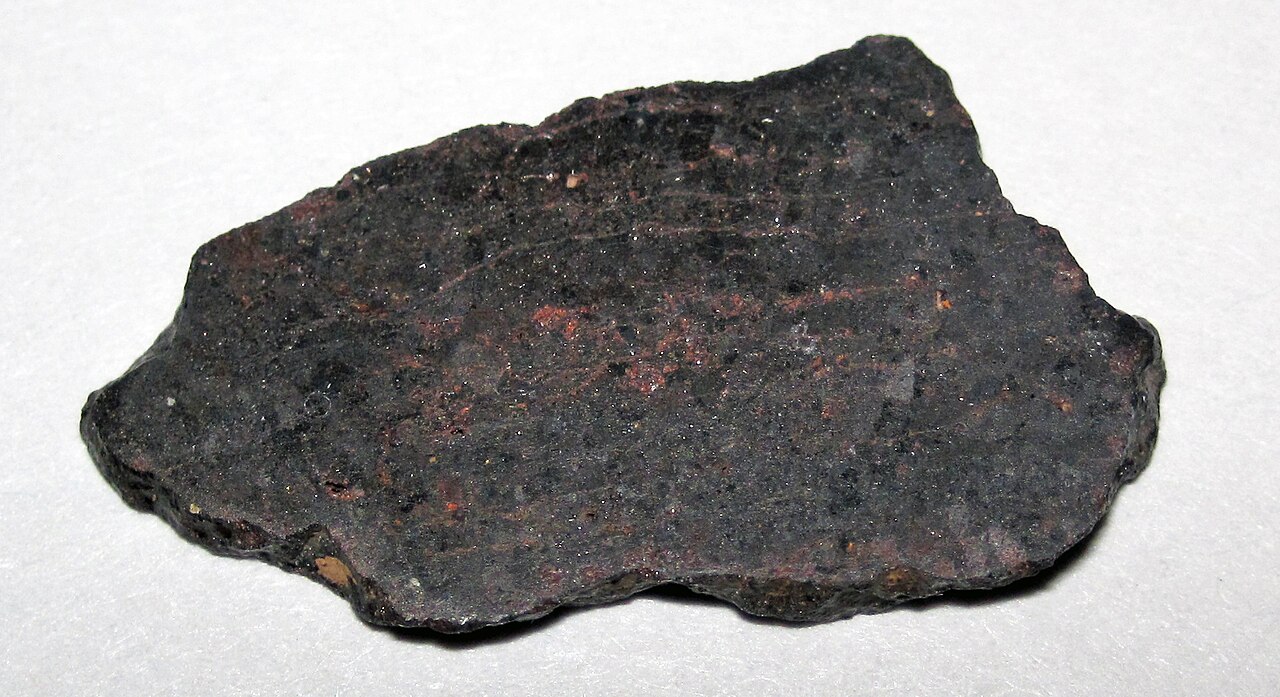
To understand why NWA 12774 matters, it helps to understand the class of meteorite it belongs to. Angrites are among the oldest known materials in the solar system, forming only about four million years after the first solids condensed from the cloud of gas and dust that gave birth to the sun. They are, in geological terms, inconceivably ancient – volcanic rocks crystallized at the very moment planetary bodies were first differentiating into cores, mantles, and crusts.
Of the roughly 80,000 meteorites discovered on Earth so far, only 68 are angrites. That scarcity is not incidental. It reflects the near-total destruction of whatever body produced them. Most meteorite classes are well-represented in our collections because they originate from asteroid families that are still largely intact. Angrites, by contrast, appear to come from something that no longer exists in any coherent form. Isotopic studies date them at around 4.56 billion years old, and their chemical composition sets them apart from other basalts found on Earth, the Moon, or even Mars. Angrites have low levels of silica and a distinctive mineral chemistry that makes them chemically alien relative to every rocky world we know.
For years, most scientists assumed the world angrites came from was modest in size, roughly comparable to the asteroid Vesta. A competing idea proposed something far grander: a moon-to-Mars-sized protoplanet that formed early and was later shattered by collisions. Until the current study, that idea lacked hard physical proof. What changed the picture was a single specimen with an anomalous interior, and a research team willing to build the tools necessary to interrogate it.
The Meteorite: NWA 12774

NWA 12774 was discovered in the Sahara Desert in 2019. The NWA designation is given to every meteorite found in the Northwest Africa region, a stretch of desert that has proven extraordinarily productive for meteorite recovery due to its flat, light-colored terrain that makes dark space rocks relatively easy to spot. The specimen was catalogued as an angrite, confirmed by its low silica content and distinctive mineralogy, and its rarity was noted. What it contained, however, would not be fully understood until Aaron Bell, an assistant research professor in the Department of Earth Science at the University of Colorado Boulder, and his colleagues began a systematic chemical investigation.
Astronomers had long assumed that angrites always originated in asteroids no larger than about 124 miles wide. The reasoning was circular but understandable: angrites lack the silica-rich chemistry associated with large, differentiated rocky planets, so the assumption was that their parent body must have been small. NWA 12774 challenged that assumption from the moment its crystal chemistry was examined closely.
When Bell and his colleagues studied NWA 12774, they found the meteorite contained clinopyroxene, a mineral crystal commonly found in Earth’s crust and mantle. NWA 12774’s clinopyroxene was exceptionally rich in aluminum, a telltale sign that the rock formed under enormous pressure deep underground. On Earth, aluminum-rich clinopyroxene of this type is a hallmark of rocks called eclogites, which form tens of kilometers beneath the surface under crushing conditions. Finding it in an angrite was, as Bell described, the “flashing red light” that something unusual was happening.
The team’s new geobarometer was trained on that clinopyroxene, which in NWA 12774 contains nearly twice the aluminum found in the same mineral from any other angrite meteorite. That aluminum excess was the chemical fingerprint of an extreme pressure environment – one that simply cannot exist inside a small asteroid.
The Geobarometer: A New Tool for an Ancient Problem
Measuring the pressure at which a mineral crystallized inside a body that no longer exists requires an indirect approach. To answer the question, researchers built what amounts to a pressure gauge for ancient rocks. Called a geobarometer, it calculates the pressure a mineral experienced when it crystallized, based on its chemical makeup.
Aluminum-rich clinopyroxene is a direct indicator that the rock it is embedded in formed under massive pressure. But to determine exactly how much pressure, the researchers had to develop a novel technique. According to Universe Today’s coverage of the study, the team called it the CaTs-liquid geobarometer, which used a thermodynamic model to analyze how the aluminum-rich clinopyroxene could have crystallized from molten rock. The development of this tool was not trivial. It took approximately a year of building and vetting the computational model before the team felt confident enough to apply it to NWA 12774.
Crunching the chemistry of how that crystal grew from molten rock, the team arrived at a formation pressure of about 17.56 kilobars, roughly what exists more than 60 kilometers beneath Earth’s surface. The aluminum-rich clinopyroxene needed at least 17.5 kilobars of pressure to form. For comparison, the crushing pressure at the bottom of the Mariana Trench, the deepest point on Earth, is only around 1 kilobar. The meteorite’s crystals, in other words, formed under pressure more than seventeen times greater than the most extreme environment found anywhere in Earth’s oceans.
The geobarometer cannot convert crystallization pressure into a definitive planetary radius, because the exact depth at which the crystals formed inside the parent body remains unknown. Temperature uncertainty in the calculations adds a pressure uncertainty of roughly plus or minus 2.0 kilobars. That caveat is scientifically important and the team is transparent about it. But even the lower bound of the pressure estimate eliminates any possibility that NWA 12774 originated in a small asteroid.
The Size of the Lost World
That level of pressure could not have existed inside a small asteroid. Instead, the calculations indicate that the body from which angrites came must have been at least 1,000 kilometers (621 miles) in radius. For context, the largest asteroid in the solar system today, Ceres, has a mean radius of approximately 473 kilometers. The minimum size suggested for the angrite parent body is more than twice that.
The upper bound is more striking still. The crystals inside NWA 12774 preserved sharp edges and delicate chemical patterns that would have been erased if they had formed deep underground. This indicates that the crystals likely formed at relatively shallow depths inside the parent body, which means the world had to be even larger than the minimum estimate.
Under that scenario, the angrite parent body might have stretched beyond 1,800 kilometers in radius, making it comparable in size to Earth’s moon and possibly approaching a Mars-sized world, which has a radius of 3,300 kilometers. Additional calculations indicated that the angrite must have come from a parent body with a radius of at least 621 miles (1,000 kilometers). For comparison, the Moon’s mean radius is about 1,080 miles (1,738 km).
Francois Tissot, a geochemistry researcher at the California Institute of Technology who was not involved in the study, described the discovery’s implications: “This means that, within four million years of the solar system’s formation, you’re making things that are the size of the moon.” That timeline – a moon-sized world assembled and potentially destroyed within the solar system’s first four million years – reframes how quickly the early solar system could both build and demolish large planetary bodies.
A Different Evolutionary Path
One of the most consequential findings of the study is not about the size of the lost world but about its composition. Angrites are chemically alien relative to the rocky planets we know. As Bell stated directly in a press release from Sci.News: “The materials that formed the angrite parent body are fundamentally different from the ingredients of Earth and Mars. It points to a distinct and separate evolutionary path in planetary formation in the early history of our Solar System.”
If the angrite parent body was truly that large, NWA 12774 and its relatives could represent the first recognized physical samples from what planetary scientists call a first-generation protoplanet – one of the original building blocks of the inner solar system. The implication is that the solar system’s early period contained planetary embryos following genuinely different chemical and geological trajectories, some of which were eliminated entirely before they could leave any record beyond meteorite fragments.
According to the CU Boulder team, the massive protoplanetary body collided with another object four and a half billion years ago, shattering it completely. Exactly what happened to this ancient world remains uncertain, but researchers believe it was likely destroyed in a massive collision early in the solar system’s history. Fragments of that lost protoplanet may have later contributed material to other bodies, potentially including Earth itself.
What It Means for Planetary Science
The study’s implications extend well beyond NWA 12774. For decades, scientists have built models of solar system formation around the planets and asteroid families that survived. The possibility that a Moon-to-Mars-sized body existed and was completely destroyed introduces a variable that was previously unquantified: how many such worlds may have come and gone without leaving any recognizable trace?
The solar system’s earliest era featured multiple embryonic protoplanets with the potential to grow together into additional cosmic neighbors. The remnants of these long-gone celestial bodies are scarce, but traces still exist. NWA 12774 may be among the most informative of those traces precisely because its anomalous chemistry preserved a pressure signature that most meteorites do not carry.
If the angrite parent body was truly that large, NWA 12774 and its relatives could represent the first recognized physical samples from a first-generation protoplanet – one of the massive early worlds that formed fast, collided violently, and ultimately provided the raw material for rocky planets like Earth. That framing suggests the lost planet was not simply an astronomical curiosity but a genuine precursor to the terrestrial planets we inhabit. Its destruction may have been a prerequisite, not a footnote.
The study also has methodological significance. The CaTs-liquid geobarometer developed by Bell and his colleagues is a new tool with potential applications beyond this single meteorite. As Bell has noted, “Angrites, in particular, preserve a record of processes that occurred at the very beginning of planetary formation.” Applying the geobarometer to other angrite specimens – and other chemically unusual meteorite classes – could yield additional pressure signatures pointing to additional lost worlds.
The Case for Unstudied Meteorites
Perhaps the most practically significant aspect of Bell’s conclusions concerns where future discoveries are likely to come from. “There are many meteorites sitting in drawers that haven’t been thoroughly studied, so there were likely more of these protoplanets we don’t know about,” Bell said.
The study rests on a single meteorite, NWA 12774, with a companion specimen, NWA 7812, noted but unavailable for detailed analysis. That limitation is both a constraint on the current findings and an argument for expanding the scope of analysis. The known angrite catalog numbers only 68 specimens out of more than 80,000 total meteorites on record. Most of those 68 have not been subjected to the kind of pressure analysis that Bell’s geobarometer makes possible.
The broader argument Bell makes is a case for redirecting scientific attention toward collections that already exist. Remote expeditions to collect fresh meteorites in Antarctica and the Sahara have been productive for decades, but the less glamorous work of re-examining museum drawers and university storage may be equally important. A rock pulled from a collection shelf, run through the right analytical tools, might contain pressure signatures as significant as anything retrieved by a dedicated space mission. The lost planet Sahara Desert story is, in this sense, a proof of concept: the answer was already here, waiting for someone to build the right tool to read it.
Limitations and Open Questions
The study is careful about what it can and cannot establish. The new geobarometer cannot convert crystallization pressure into a definitive planetary radius, because the exact depth at which the crystals formed inside the parent body remains unknown. Temperature uncertainty in the calculations adds a pressure uncertainty of roughly plus or minus 2.0 kilobars. The size range – from 1,000 to 1,800 kilometers in radius, and possibly larger – reflects that genuine uncertainty. The minimum is well established by the pressure calculation; the upper bound depends on the interpretation of the crystal preservation evidence.
It remains uncertain what led to the demise of the protoplanet. One possibility is a catastrophic event in the early solar system that shattered it – but the timing, and the identity of any impacting body, are currently unknown. The fate of the debris is equally speculative. Some fragments may have been incorporated into Earth, Mars, or other terrestrial planets; others may have been expelled from the solar system entirely. The meteorites reaching Earth represent a tiny and possibly unrepresentative sample of whatever material the original collision produced.
The study also rests on chemical evidence from a single specimen. The CaTs-liquid geobarometer was a new instrument applied to a single meteorite. Independent verification – either from additional angrite specimens run through the same analysis, or from a different analytical approach yielding consistent results – would strengthen the conclusions considerably. Bell and his colleagues acknowledge this; the paper is framed as the first definitive evidence of a planetary embryo-sized angrite parent body, not the last word.
Key Takeaways
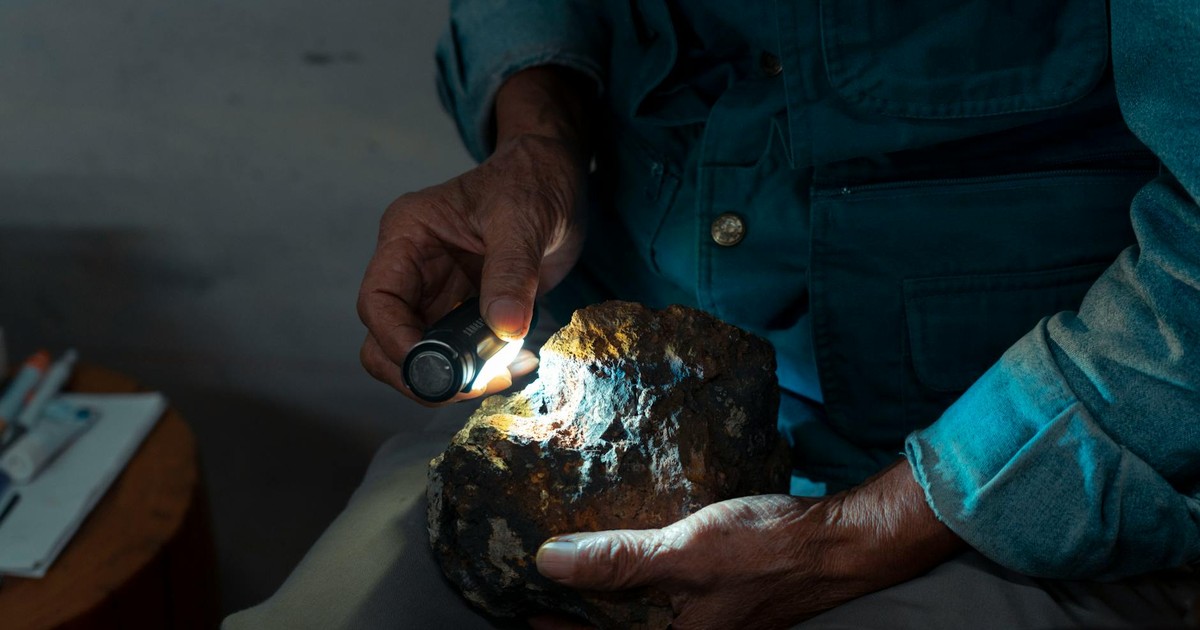
The discovery of what appears to be a fragment from a lost protoplanet in the Sahara Desert, published in 2026 in Earth and Planetary Science Letters, marks a genuine milestone in planetary science. It is the first study to provide direct physical pressure evidence – rather than circumstantial chemical inference – that the angrite parent body was a planetary embryo rather than a modest asteroid. The key findings can be summarized as follows.
NWA 12774 is an angrite, one of only 68 such meteorites in the global catalog, and one of the oldest known types of volcanic rock in the solar system at approximately 4.56 billion years old. Its clinopyroxene crystals carry nearly twice the aluminum content of any comparable angrite, a chemical signature that demanded high-pressure formation conditions inconsistent with any known asteroid. The CaTs-liquid geobarometer, a new thermodynamic tool developed specifically for this analysis, calculated a crystallization pressure of 17.56 kilobars – more than seventeen times the pressure at the bottom of the Mariana Trench, and equivalent to conditions found more than 60 kilometers beneath Earth’s surface.
That pressure implies a parent body with a minimum radius of 1,000 kilometers. Crystal preservation evidence points toward a body stretching to at least 1,800 kilometers in radius, comparable to the Moon, and potentially approaching Mars-scale dimensions. The chemical composition of the angrite parent body was fundamentally different from Earth, Mars, and the Moon, indicating a distinct evolutionary trajectory in the early solar system. The protoplanet was almost certainly destroyed in a collision billions of years ago, and its fragments may have contributed material to the terrestrial planets we know today.
The study opens several avenues for follow-on research: applying the new geobarometer to other angrite specimens, re-examining under-studied meteorite collections for similar pressure signatures, and refining models of early solar system dynamics to account for the possible existence of multiple large protoplanets that were subsequently eliminated.
What the Desert Kept
The rock did not look like much. It had the same dark, fused exterior as every other space rock littering that stretch of Northwest Africa. It was smaller than a grapefruit. It sat in a collection for years before anyone looked at it closely enough to notice the aluminum content in its crystals. That is the part of this story that tends to get lost in the coverage of the science: the discovery was not made by a probe, or by a mission, or by any dedicated expedition to find it. It was made by researchers applying a new tool to a rock that was already here.
That matters beyond this single finding. There are 80,000 meteorites in global collections. Most have received a classification and not much else. Bell’s estimate that more such protoplanets may exist, unknown and undetected, is not speculation – it is a direct consequence of how little attention most of those rocks have received. What NWA 12774 contains is extraordinary. What it suggests about the rocks we have not yet studied carefully is harder to dismiss.
The lost world was not found in space. It was found in a drawer, in the chemistry of a crystal, by people who built the right instrument to ask the right question. The Sahara preserved a fragment of something the solar system stopped making 4.5 billion years ago, and we almost missed it entirely.
AI Disclaimer: This article was created with the assistance of AI tools and reviewed by a human editor.