

People who work in hospice for long enough tend to develop a particular quality of quiet resolve about the things they cannot explain. Not denial, not mysticism, just a careful willingness to hold what they’ve seen without demanding it make sense. A nurse with twenty years in palliative care has usually learned that some experiences don’t file neatly into any category she was given in training, and she stopped trying to force them there sometime around year three.
What those workers describe, when they’re willing to describe it at all, clusters into recognizable patterns. The same things happen, again and again, across different patients, different hospitals, different countries. They have names now – researchers have been studying them for decades – but the names don’t fully account for what it’s like to be in the room when they happen. The gap between what can be measured and what gets witnessed is the part that stays with people long after the patient is gone.
These aren’t ghost stories, and this isn’t a list of supernatural claims. What follows are five documented phenomena that hospice workers encounter with enough regularity that researchers across the world have spent considerable energy trying to understand them. Medicine has partial explanations for some. For others, the honest answer is still: we don’t fully know.
1. The Visions Nobody Else Can See
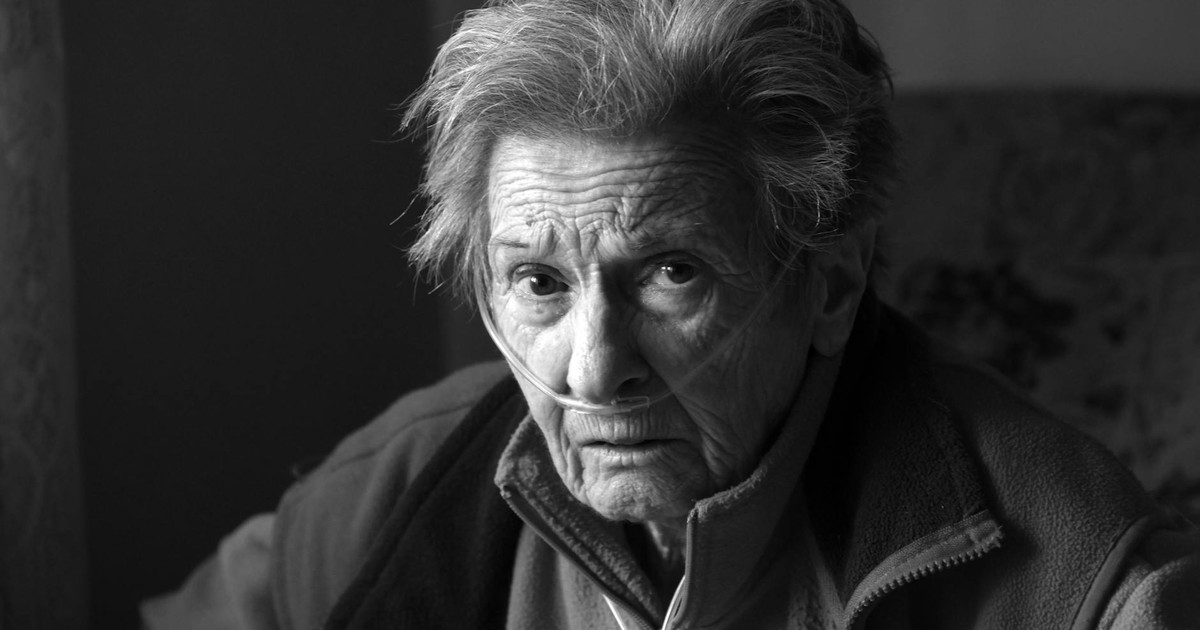
Ask almost any experienced hospice nurse what the single most common unexplained experience is, and you’ll hear a version of the same thing: dying patients see people in the room who aren’t there. Not strangers, as a rule. Almost always someone they loved who died before them. A parent, a sibling, a spouse. The patient isn’t distressed by this. They’re often relieved.
A 2025 systematic review found that the reported frequency of end of life phenomena – including dreams and visions – ranges from 28 to 87 percent of dying patients, depending on the study and how experiences were measured. That’s not a fringe finding from a single small study. The variability in that range comes down to how researchers ask the questions – many patients never mention what they’re seeing unless someone asks directly, partly because they’re afraid of being disbelieved.
Studies have found that these visions are commonly associated with a more peaceful death, and are generally under-reported by patients and families out of fear of embarrassment or disbelief from medical staff. That last part matters. The people who most need to hear about these experiences are often the people most likely to stay quiet about them. Hospice workers who have been through it enough times tend to ask the question anyway, and what they hear back is almost always the same: the person who appeared was someone the patient had been waiting to see.
2. The Rally Nobody Expected

A patient has been unresponsive for days. The family has been called in. And then, without warning, she opens her eyes, recognizes her daughter by name, asks for a glass of water, and has a coherent conversation for the first time in weeks. Families sometimes take this as a hopeful sign. Hospice workers know, with a certain heaviness, that it usually isn’t.
The Cleveland Clinic describes terminal lucidity as a surge of clarity and energy in a person who is dying. Although it doesn’t happen to everyone, it sometimes occurs in people with brain diseases that cause irreversible mental decline, like dementia. It also occurs in patients without any neurological condition at all. A 2024 case series in the Journal of Pain and Symptom Management documented terminal lucidity in hospice patients with advanced cancers and other non-dementia illnesses – confirming that the phenomenon isn’t confined to the populations where it has historically been studied. Despite the term dating back more than 250 years, there has been relatively little research on it in the hospice setting specifically.
While loved ones and even providers may consider this a sign of clinical recovery, patients often die soon after the terminal lucidity event. The episode might last minutes. It might last most of a day. And then it ends, the way it began, without warning. What it leaves behind for families is complicated – a chance to say something important that they thought they’d missed, wrapped in the particular grief of watching someone come back just long enough to leave again. Hospice workers describe it as one of the most profound things they witness, and one of the hardest to prepare a family for.
3. The Dreams That Come Weeks Before

End-of-life visions don’t only happen in the final hours. They can start weeks or even months before a person dies, arriving first as vivid dreams, and then bleeding into waking hours as death approaches. The content of these dreams is strikingly consistent across patients with no connection to each other – and that consistency is what makes researchers pay attention.
Research from Hospice & Palliative Care Buffalo found that dreams most commonly feature deceased loved ones, travel or preparing to go somewhere, living loved ones, and past meaningful experiences – and that as patients approached the end of life, there was often an increase in the frequency of comforting dreams. The “preparing to travel” theme comes up so often that some hospice workers have started to recognize it as a specific signal that death may be close. A patient who hasn’t left their bed in weeks will describe, in careful detail, packing a suitcase or waiting for a train.
These end-of-life experiences can happen hours, weeks, or even months before a person passes, may increase in frequency as patients approach death, and are recalled as extremely vivid and feeling real. Crucially, patients tend to distinguish them from ordinary dreams unprompted. They’ll say it wasn’t like a regular dream. That the person who appeared seemed genuinely present. That there was an emotional clarity to it that their waking life no longer has. Workers who have sat with enough dying patients say that they’ve stopped treating those descriptions as confusion.
4. The Moment They Seem to Wait For

Hospice workers will often tell you, when pressed, that people appear to choose the moment they die in ways that are hard to account for medically. A patient whose family has kept a constant vigil dies in the twenty minutes when everyone stepped out for coffee. Another patient holds on for three days past the point where the medical team expected death – until a son flies in from overseas and walks through the door, at which point she dies within the hour.
This pattern is documented often enough that it has a name in palliative care: nearing death awareness. The research on it is observational rather than experimental, which means it describes what workers and families report witnessing rather than a controlled finding from a laboratory. But the reports are consistent across cultures, across decades, and across the full range of religious and non-religious backgrounds. Patients who cannot communicate verbally will sometimes become agitated until a particular person arrives or a particular conversation happens, and then settle almost immediately after.
The family who steps out of the room often carries significant guilt about this. Hospice workers who have seen it many times will gently suggest a different way to hold it: that some people seem to need privacy for their dying in the same way they needed privacy for other intimate moments in their lives, and that no one in the family did anything wrong by stepping away. Whether that explanation fully accounts for the timing, nobody can honestly say. What they can say is that they’ve stopped being surprised by it.
5. End of Life Phenomena That Don’t Make the Clinical Summaries
This one tends to get left out of clinical summaries because it’s the hardest to categorize, but hospice workers bring it up with striking frequency when asked to describe the inexplicable: certain patients, in the hours or days before death, develop a very specific smell that experienced workers learn to recognize. It isn’t the smell of illness, or medication, or the physiological changes that accompany dying – or at least, it doesn’t match those. Workers who have been in the field long enough describe it as sweet, faintly floral, and distinct from anything they can point to in the environment.
This falls under the broader category of end of life phenomena that palliative care teams encounter but rarely discuss in formal settings – not because they doubt their own senses, but because the medical framework doesn’t offer a comfortable place to put it. The 2025 systematic review referenced in section one found that many of the experiences accompanying dying challenge conventional scientific explanations and have been increasingly documented in palliative care settings. The smell is one of them. Some workers describe family members noticing it independently of one another, without being prompted, in the same room.
Whether it has a biological explanation that simply hasn’t been identified yet, or whether it belongs to a different category of understanding entirely, depends entirely on who you ask. What most experienced workers agree on is that it arrives, reliably enough to function almost like a signal, and that they’ve learned to pay attention to it.
Read More: These 5 symptoms show up unexpectedly right before death
What Medicine Does With the Unexplained

The honest position of most palliative care researchers is not that these phenomena are supernatural, and not that they’re nothing. The dying process is often accompanied by profound subjective experiences that are deeply influenced by personal history, self-awareness, and interpersonal relationships. That framing allows for the reality of the experience without requiring a verdict on its origin – which is, probably, the most intellectually honest place any of us can stand right now.
What’s harder to dismiss is the consistency. The same dreams. The same figures appearing. The same timing of death around arrivals and departures. The same sudden clarity before the end. These aren’t isolated anecdotes from one culture or one era – they span centuries of documentation, and they’re still being studied by serious researchers publishing in peer-reviewed journals in 2025. The accumulation doesn’t prove anything metaphysical. But it does suggest that dying is a richer, stranger, more interior experience than the medical model has always allowed for.
For anyone who has sat in that room – whether as a worker, a family member, or both – this probably isn’t surprising. The surprise, maybe, is that it took so long for the clinical world to take it seriously enough to study it. What hospice workers have known for decades is only now beginning to find its way into the research literature, and what they know is this: the people they care for are not just bodies winding down.
AI Disclaimer: This article was created with the assistance of AI tools and reviewed by a human editor.