
What happened is not complicated, exactly, but it is layered. A lineup was announced. Artists started reading the fine print. Artists started dropping out. A president started posting. A federal judge was invoked. And somewhere along the way, a celebration of the entire United States of America became, inexplicably, a referendum on whether a concert hall should bear one man’s name. The Trump 250th birthday drama is its own kind of political performance art, and it has a lot of moving parts.
Here is everything that actually happened, in the order it actually matters.
1. Freedom 250 Announced the Great American State Fair
The two-week event, put together by White House initiative Freedom 250, was scheduled to take place from June 25 to July 10 on the National Mall. Construction was already underway, billed as a 16-day World’s Fair-scale celebration of America’s 250th birthday. The scope was genuinely ambitious: a sprawling public event with concerts, fair-style attractions, and a stated mission of bringing the whole country together to mark the semiquincentennial.
Freedom 250 is a public-private group working with the White House to organize the celebration of America’s 250th birthday. Trump launched Freedom 250 last year, and it is currently being run by former Trump State Department appointee Keith Krach. The group framed everything as a unifying, nonpartisan tribute to American history. That framing would become the central dispute of the entire story.
Freedom 250’s arrival created immediate confusion for celebrities and corporate sponsors who had intended to participate in the official semiquincentennial organization, America250, a separate nonpartisan group established by Congress in 2016 to organize events commemorating the 250th anniversary of the founding of the United States. So from the very beginning, there were two versions of the birthday party, and they were already stepping on each other.
2. The Lineup Was Announced – and the Exits Began Almost Immediately
The musical lineup was released Wednesday and met with sweeping criticism. At least six artists who were slated to headline the event backed out or said they never signed on: Morris Day and The Time, rapper Young MC, Jodie Rocco of Milli Vanilli, country singer Martina McBride, The Commodores, and former Poison frontman Bret Michaels.
The speed of the withdrawals was remarkable. Just hours after the lineup was unveiled on Wednesday, Morris Day said in a post on Instagram that “contrary to rumor,” the group would not perform at the event. Singer Jodie Rocco of the pop duo Milli Vanilli told the Associated Press that they “were shocked to see our name, ‘Milli Vanilli,’ as one of the performers.”
The common thread in almost every withdrawal statement was the same: they said they had been misled about the nature of the event. Martina McBride explained that she had been presented with an opportunity to perform at “a nonpartisan event but that turned out to be misleading.” Young MC wrote in a Facebook post that “the artists were never told about any political involvement with the event,” and despite the organizers’ claims that it was non-partisan, CBS News reported that Young MC cited SPIN magazine’s characterization of the event as “Trump-backed” as a reason he would not participate.
3. Trump Called Himself the GOAT – and Offered to Headline
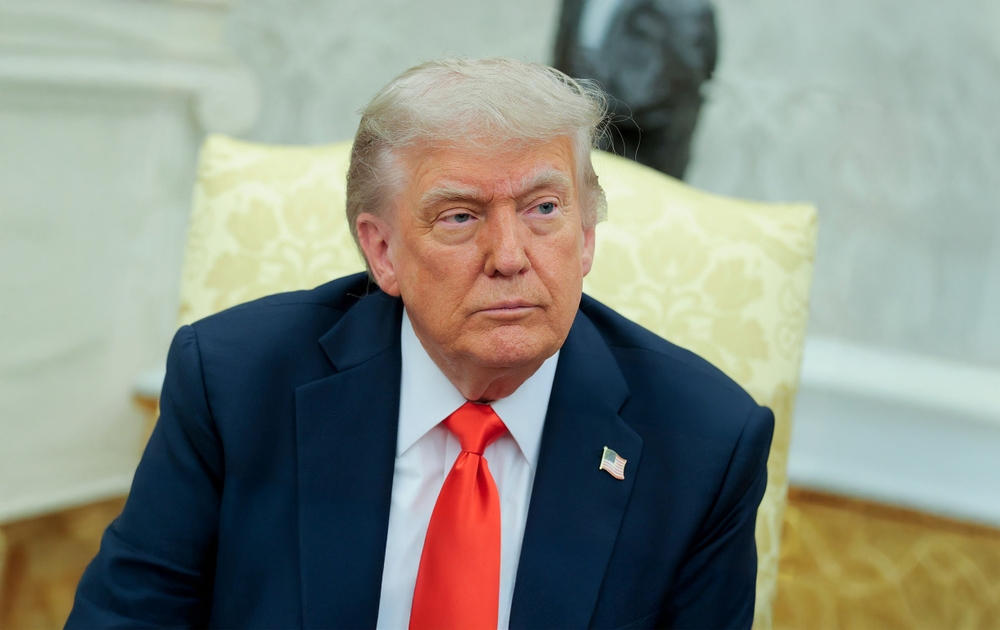
Before he called for cancellation, Trump briefly went in a different direction entirely. Trump referred to himself as “THE GOAT” on Truth Social and dubbed himself the “Number One Attraction anywhere in the World,” comparing himself to Elvis. Trump said that, unlike Elvis, who needed a guitar to wow his fans, he only needs a microphone and a good speech to draw “much larger audiences than Elvis in his prime.”
Trump lambasted the artists who pulled out as “Third Rate ‘Artists'” and said he would deliver a “major speech” instead. This was, briefly, the plan: the president of the United States would personally step in and save America’s birthday concert by performing at it himself. The concerts were not canceled yet. He was going to be the show.
He directed his representatives “to look at the feasibility of doing an AMERICA IS BACK Rally on Wednesday, Washington, D.C., same time, same location.” The word “feasibility” is doing a lot of work in that sentence. By Saturday evening, feasibility had apparently not panned out, and the post calling for outright cancellation followed.
4. The Kennedy Center Ruling Arrived at Exactly the Wrong Moment
This is where the story gets tangled, because the Freedom 250 implosion did not happen in isolation. U.S. District Judge Casey Cooper determined on Friday that the Kennedy Center “cannot bear any other formal name or public memorial based on the board’s unilateral say-so.” The judge also ordered that officials remove any of the signage at the Kennedy Center bearing Trump’s name within two weeks.
Trump was, to put it mildly, displeased. Trump remained fired up about the federal judge who had blocked his renovations at the historic performing arts venue, prompting Trump to call the judge “an anti-Trump Hater” and dub the Kennedy Center “dying.”
Judge Christopher Cooper was appointed by then-President Barack Obama in 2014 as a justice of the U.S. District Court for the District of Columbia. Trump went further in his Truth Social posts, calling for Cooper’s impeachment and attacking the judge’s wife by name. The Kennedy Center ruling and the Freedom 250 walkouts became, in Trump’s telling, the same story: a coordinated resistance to his vision for American culture.
5. Trump Posted “Cancel It” and Linked the Two Together
Trump made a second Truth Social post about the Freedom 250 event on Saturday evening, suggesting instead having a Make America Great Again rally, and sharing additional thoughts on the judge’s order that his name must be removed from the Kennedy Center.
The president tied the two issues together in a Truth Social post: “Cancel it,” he wrote about the music event, connecting it directly to his frustration about the Kennedy Center ruling, adding it “would have also been nice to see a Republican/Democrat union bring it back to life.” The rhetorical move was striking: a national birthday concert became collateral in a grievance about a courthouse ruling. Two entirely separate disputes, merged into one “Cancel it.”
For anyone keeping score at home, this meant the official position – as of Saturday evening – was that America’s 250th birthday concert should be replaced with a political rally, because the artists who dropped out were boring, and because a federal judge made a ruling about a concert hall. The connective tissue between those two things is not immediately obvious, but the posts were real and time-stamped.
6. Organizers Insisted the Event Was Nonpartisan – and Planned to Proceed
While the president was posting cancellation calls, the people actually running Freedom 250 were publicly saying the opposite. Interior Secretary Doug Burgum, who is involved with planning the celebration, said on Sunday that the events are “nonpartisan.” Earlier on Saturday, Freedom 250 had actually announced that Trump would “kick off” the state fair on June 24 with an opening ceremony, with spokesperson Danielle Alvarez calling it “this historic celebration.”
Democratic lawmakers and watchdog organizations, such as Citizens for Responsibility and Ethics in Washington, have also questioned where private donations for the 250th celebrations are coming from. The transparency question is one that organizers have notably not answered directly. When asked on CNN’s State of the Union whether donations should become public, Burgum said, “It’s not about the transparency of the donors.”
Flo Rida, Vanilla Ice, and Freedom Williams were still planning on performing if the event did not get canceled. The artists who had not pulled out – including Vanilla Ice and Flo Rida – were roundly criticized for their continued participation. So as of Sunday, the event existed, the president said it didn’t, the organizers said it did, and the remaining performers were catching heat regardless.
7. The Real Question Nobody Is Answering: What Happens to the Actual Celebration?
Here is the thing that gets lost in all the noise. America250, the official congressionally authorized anniversary organization, had been doing its job for years before Freedom 250 arrived on the scene – planning events around genuine national milestones, from the Rose Parade to the NFL Playoffs and Super Bowl – and the late arrival of a Trump-backed parallel group created confusion for everyone trying to participate in the original. America250 says it already has “incredible momentum,” having appeared in major cultural and sporting moments from the Rose Parade to the NFL Playoffs and Super Bowl.
The 250th anniversary of the United States is a genuine milestone – the kind that comes around once in a lifetime, and once in the country’s entire history. The concerts, the fair, the National Mall spectacle: those ideas were not bad ones. They became contentious because of how the planning unfolded, who was running what, and what the event was actually for. The Trump-backed celebrations drew criticism and concern that they were centered around the president himself instead of the country.
Read More: 10 honest reasons why some Americans aren’t proud to be American right now
The artists who walked away were not making a complicated political argument. Martina McBride spent her career playing state fairs. She wanted to play a state fair on the National Mall for America’s birthday. She wrote, “In my mind I thought this was a great way to celebrate the states and also bring people together in the way that only music can. I saw it as just a bigger version of so many state fairs I have performed at over the years, celebrating community and what makes each state special.” That framing, as it turned out, was not what was actually on offer.
The Party Isn’t Over – It Just Got Complicated

Whether a MAGA rally replaces the concerts, whether the concerts happen anyway, whether Vanilla Ice performs to a half-empty lawn while a legal dispute over building signage plays out a few miles away – none of that is settled as of June 1, 2026. What is settled is how the story got here.
A national birthday party got caught between two competing visions of what “nonpartisan” means, between a president who wanted to be the headline act and artists who thought they were playing a state fair, between a federal courthouse ruling and a Truth Social post that linked everything together in a single “Cancel it.” The Kennedy Center, the concert series, and the country’s 250th birthday did not have obvious connections to one another until they did, and now they are all part of the same story, which is a sentence that probably belongs in a history book someday.
The actual anniversary – July 4, 2026, 250 years since the Declaration of Independence – falls on a Friday this summer, regardless of what happens on the National Mall between now and then. America was going to turn 250 no matter what. The question of whether that birthday gets a worthy party is still, somehow, unanswered.
AI Disclaimer: This article was created with the assistance of AI tools and reviewed by a human editor.