
Bathroom cleanouts are one of those tasks that keeps getting pushed back because nothing in there ever feels quite urgent enough. The items are small, the room is small, and as long as the shampoo dispenses and the cabinet closes, the situation reads as fine. Meanwhile, the back rows of shelves quietly fill with bathroom items to discard, the expiration dates pile up, and what was supposed to be a functional room becomes something more like a storage unit with a shower in it.
The problem isn’t just aesthetic. A lot of what sits in a bathroom has a shelf life, a contamination window, or a simple date after which it stops doing the job it’s supposed to do. Some of those things are minor inconveniences. Some are actual health concerns. The range matters, and the categories are specific enough that most people, if they’re honest about what’s actually on their shelves, will find at least two or three items that have long since earned their place in the trash.
This isn’t about achieving some minimalist vision or buying a new organizational system. It’s about knowing what to look for, walking through the room with clear eyes, and making a few straightforward calls.
The Bathroom Items to Discard That Nobody Wants to Talk About First: Medications
Start here, because this one matters beyond tidiness. Most people store medications in the bathroom medicine cabinet, which is, as it turns out, one of the worst places to keep them. According to Cleveland Clinic, heat and humidity accelerate spoilage, and a bathroom used for hot showers exposes medications to exactly those conditions. A drug can begin losing potency before it ever reaches its printed expiration date if it’s been sitting through months of steam.
Beyond the storage problem, there is the expiration issue itself. The FDA warns against taking any expired medication because it may not work as intended or may even be harmful. Certain expired medications are at risk of bacterial growth, which can cause infection and irritation, while others simply lose potency. That last point is a particular concern with antibiotics, which can fail to treat an infection if they’ve degraded, potentially leading to antibiotic resistance. Pull everything out. Check every date. Anything expired, anything from a prescription you finished years ago, anything prescribed to someone who no longer lives in your home – all of it needs to go.
The best way to dispose of unwanted medications is to find a drug take-back location, often at a local pharmacy or police station, where many sites offer on-site medicine drop-off boxes or mail-back programs. According to CenterWell Pharmacy, you can also safely dispose of non-flush-list medications in household trash by mixing them with an unappealing substance like coffee grounds or dirt, sealing them in a container, and throwing them away – not just tossing an open bottle where a child or pet can reach it. Don’t flush medications down the toilet unless the FDA’s flush list specifically directs you to.
The Toothbrush You’ve Been Meaning to Replace
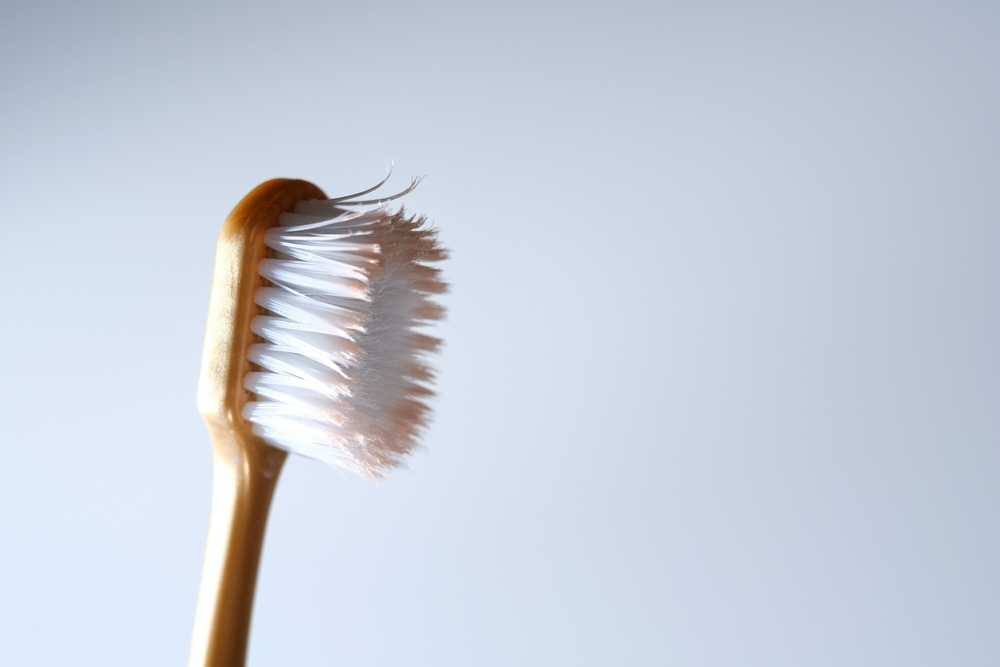
An old, worn toothbrush is a hazard to your teeth and gums and a breeding ground for germs and bacteria. This is the straightforward position of Cleveland Clinic and every dental organization with an opinion on the matter. The American Dental Association recommends replacing your toothbrush every three to four months, or immediately after recovering from any illness. Germs can continue to live and thrive on a toothbrush even after you recover from being sick, which means you could theoretically reintroduce the same viruses and bacteria that have been sitting on the bristles.
The bristles also degrade in ways that make brushing actively less effective. Bristles that aren’t standing upright can’t scoop away plaque and bacteria properly, which can leave teeth less clean and increase the risk of cavities and gingivitis. If you look at your toothbrush and the bristles are fanning out in every direction, that brush has been past its prime for a while. The same rule applies to electric toothbrush heads, which run on the same three-to-four month clock regardless of how much the device itself cost.
Check the holder while you’re at it. A toothbrush holder that hasn’t been cleaned recently is its own small ecosystem, and one that sits right next to the toilet is exposed to more than most people care to think about.
Expired or Separated Skincare and Makeup
Most beauty products last only six to twenty-four months after opening, yet they tend to sit in bathroom drawers far longer than that. The timeline varies by product type: mascara has the shortest window (typically three months), while thicker products like lipsticks and powders can last longer. Most products manufactured after 2005 carry a small symbol that looks like an open jar with a number inside it – that number, followed by “M,” tells you how many months the product is good for after opening.
What to check: any mascara that has started to dry out or smell different; foundation that has separated or changed color; moisturizers and serums that have gone grainy, rancid-smelling, or discolored. Bacteria can accumulate in opened products, particularly in anything applied near the eyes or on broken skin. Beyond bacteria, expired active ingredients stop doing what they’re supposed to do. A vitamin C serum that has oxidized and turned brown is no longer delivering vitamin C – it’s just a brown liquid taking up space on the shelf.
Products you bought for a specific purpose and then never used fall into a related category. If something has been sitting untouched for more than a year, it is almost certainly not going to get touched in the next one.
Sunscreen That Has Passed Its Window
Sunscreen gets its own section because people treat it differently than other products – they assume it lasts forever, or they forget about last summer’s bottle until the season is already half over. Sunscreen must remain stable for at least three years from the manufacturing date, or manufacturers are required to print an expiration date on the packaging. The active ingredients in sunscreen, including avobenzone, oxybenzone, and octinoxate, are chemically unstable compounds that break down when exposed to heat, humidity, and light – and that breakdown leads to reduced effectiveness and potential skin irritation.
If your sunscreen has passed its printed date, or if you have a bottle with no date that you genuinely cannot remember buying, it needs to go. Expired sunscreen does not just underperform; it can actively irritate skin while giving you a false sense of protection. The dates are usually embossed or printed on the bottom of bottles and the crimped tops of tubes, and they are easy to miss.
A container stored in a bathroom cabinet is fine, but one that’s been sitting in a beach bag in the trunk of a car all summer probably isn’t. The heat exposure alone accelerates degradation faster than the stated timeline. If your sunscreen survived last summer in your car’s cupholder, it did not survive unscathed.
Old Loofahs, Bath Sponges, and Washcloths
The loofah hanging in the shower is one of those objects that almost nobody replaces on any intentional schedule. It gets rinsed, it hangs to dry, and it gets used again – a routine that sounds reasonable until you remember that warm, damp environments are exceptionally good at growing bacteria and mold. Loofahs, particularly natural ones, should be replaced every three to four weeks, and plastic ones every two months. Any loofah that has developed any kind of mildew smell or visible discoloration needs to go immediately.
Stained or torn washcloths fall into the same category. A threadbare washcloth that’s been through the wash eighty times isn’t exfoliating anything. If the fibers are coming apart or the cloth has permanent staining that won’t wash out, it is not a cleaning tool anymore.
Check the condition of bath towels while you’re there. Towels that have developed a musty smell that doesn’t go away after washing – usually because they’ve been left damp too many times – have bacteria baked into the fibers and are not going to smell better with another cycle.
Hair Tools and Accessories That No Longer Work
The back of a bathroom drawer is a graveyard for hair ties that have lost all their elasticity, bobby pins that have lost their coating and are now leaving rust marks, and hair clips with broken hinges that are technically still closable if you hold them at a specific angle. None of these things are doing their jobs. The hair tie that snaps when you go to use it was going to snap on a day when you did not have time for it.
Broken or degraded hair tools fall into a similar category. A flat iron or curling wand that runs hot on one side, sparks occasionally, or has a frayed cord is not a styling tool – it is a fire hazard. Products like these tend to stay in bathrooms on the logic of “I’ll get it fixed” or “it still mostly works,” which are both arguments that eventually end badly.
While you’re checking tools: any electric device with visible damage to the cord, a cracked housing, or water exposure history should not be in a bathroom at all, regardless of whether it still technically turns on.
The Collection of Nearly-Empty Bottles
You know the ones. The shampoo bottle with about three uses left, sitting next to the new bottle that’s already open, sitting next to the travel-size bottle that has maybe two uses in it, sitting next to the sample from the salon. None of them are large enough to justify the counter space they’re occupying, and none of them are being used because the full bottle is right there.
Decluttering your bathroom and bedroom is much easier once you’ve dealt with the half-empty bottle problem, which is genuinely one of the most space-consuming categories in a bathroom. The practical move is to consolidate what can be combined (shower gels of the same type, for instance), use up what has only a few doses left before opening anything new, and give away sealed hotel-size products to a local shelter that accepts them rather than letting them breed in a drawer for the next three years.
Products You Don’t Use and Won’t Use
This is the broadest category and, often, the largest one. The face mask someone gave you as a gift two birthdays ago that you’ve never opened. The body scrub that’s been sitting on the edge of the tub since you went through a phase of caring about body scrubs. The three different brands of dry shampoo you bought while trying to find one you liked. Products you bought because of a trend, a recommendation, or an optimistic moment in a store aisle – and have not opened since.
The standard question is whether you’ve used it in the past year and whether you realistically will. For most people, the honest answer to the second part is the same as the answer to the first. Unopened products in good condition can often be donated; opened products that are still within their use-by window can be used up before buying replacements. But the mental category of “I’ll get to this eventually” is where bathroom clutter mostly lives, and the honest version of that phrase is usually “I won’t.”
Broken or Cracked Containers and Organizers
A cracked soap dish. A plastic organizer with a broken divider. A toothbrush holder that’s impossible to clean because the holes are too small for a brush to reach. These things stay because they are still technically functional, which is a lower bar than “actually useful.”
Broken or worn-out baskets, chipped plastic containers, and unnecessary organizers cause significant clutter. Taking a look at current storage options and tossing anything that’s no longer usable or visually appealing is a practical step that frees up more space than it looks like it will. A cracked organizer that’s collecting water and soap scum in the cracks isn’t organizing anything – it’s just an additional surface to clean.
Read More: 50 Things You Should Toss To Truly Declutter Your Home
The Room Doesn’t Stay Clean on Its Own
The most effective approach to a bathroom cleanout is not to do it all at once in one ambitious Saturday. Start with the highest-stakes category – medications, given the safety implications – and do that one thoroughly, right now. Then come back to the rest. The whole room does not need to be finished in a single session for the effort to count.
The bathroom accumulates things because it is a room where new products arrive constantly and old ones never quite have a moment where they feel officially finished. The mascara doesn’t announce when it’s done; you just keep using it until you notice it’s been in that drawer since the winter before last. Building the habit of checking dates when you put something new away, and actually looking at what you already have before buying a replacement, is what prevents the same cabinet from filling back up six months from now. The cleanout is useful. The habit is what actually changes the room – because neither the bathroom nor any other room you use every day will stay clear without it.
AI Disclaimer: This article was created with the assistance of AI tools and reviewed by a human editor.