

The first year of marriage is genuinely one of the most disorienting transitions two people can share, and nobody talks about it with any honesty. Not because the year is miserable – for many couples it’s wonderful – but because the cultural script goes straight from “we got engaged” to “we’ve been married five years” with almost nothing in the middle. The difficulty of that middle part, the actual daily work of becoming a unit, gets smoothed over in retrospect. The result is that most couples enter the first year assuming that whatever is hard is particular to them, a sign that something is specifically wrong, when in fact first year marriage challenges follow a remarkably consistent pattern across almost every partnership.
The first year is not a honeymoon extension. The honeymoon is already over. What you’re in now is the real thing: the negotiating and adjusting and daily-ness of two lives that are now, officially, intertwined. The challenges that arrive don’t come because the relationship is failing. They come because it’s working – because both of you are present enough, and invested enough, to find out what it actually requires. Knowing the terrain ahead doesn’t make the terrain disappear, but it does make it possible to stop reading every obstacle as catastrophe.
The distinction between a challenge and a failure matters enormously here. The first year is genuinely hard for almost every couple without being disastrous for most of them. These are the ten first year marriage challenges that nearly all couples encounter – not abstract ones, but the specific, daily, occasionally funny, and sometimes genuinely hard ones that feel like your problem alone until you realize they are everyone’s problem.
1. Money Becomes Suddenly, Intensely Visible

Before you got married, money was yours. Your paycheck, your spending habits, your slightly embarrassing subscription services, your private understanding that you would absolutely deal with that credit card balance eventually. The day you merge finances, or even just start making financial decisions together, all of it becomes a shared topic – and that adjustment is bumpier than most couples anticipate.
The Fidelity 2024 Couples and Money Study found that 45% of partners admit they argue about money at least occasionally, and 1 in 4 couples say money is their greatest relationship challenge – with more than a quarter reporting they feel left out of financial decisions and resentful about it. The numbers make sense when you consider how rarely most couples have truly detailed conversations about money before the wedding. You may know your partner is “good with money” or “a little spendy,” but you probably don’t know their exact relationship with debt, their feelings about a joint account, or how they think about financial security versus financial freedom.
What makes money fights different from other first year marriage challenges is their durability. Dr. Megan McCoy, a certified financial therapist and licensed marriage and family therapist at Kansas State University, has described money arguments as “qualitatively different” from other marital conflicts – noting they tend to last longer and are less likely to get resolved, creating ongoing tension that bleeds into other parts of the relationship. The first year is the time to develop shared financial language and habits, not because romance demands it, but because not doing so makes everything harder down the road.
2. Communication Styles Collide

You spent months or years talking to this person before you married them. You talked constantly, on the phone and over dinner and in the car. And then you moved in together and somehow communication got harder, not easier. That’s not a paradox – it’s just proximity. When you live together, there’s no defined start and end to a conversation. Everything is always potentially a conversation, which means a lot of things never get said properly.
Every person brings a communication pattern from their family of origin, and those patterns rarely match. One person processes out loud; the other needs time to sit with something before responding. One person reads silence as peace; the other reads it as distance. One person thinks the conversation is over when they’ve said their piece; the other has been cataloguing a list of follow-up thoughts for three days. None of these is wrong. All of them collide.
The gap isn’t always dramatic. It’s the small misses that build up: the offhand comment that landed worse than intended, the conversation that kept getting put off until it became a fight, the time you said you were fine when you were not fine at all. Learning how your partner actually processes information – not how you assumed they would – is real work that mostly happens in the first year, often by accident, through the misses rather than through the moments when everything clicks.
3. The Division of Labor Turns Into a Full-Time Negotiation

Before marriage, whoever cleaned the apartment cleaned it. Whoever cooked, cooked. There was no contract and no scoreboard. The moment you’re married and sharing a permanent home, the invisible contract appears – and both of you have different ideas about what it says.
Research suggests that almost 80% of couples report having disagreements about chores, with the three most common flashpoints being who does them, when they get done, and how well they’re done. This isn’t a small thing. The chore argument is rarely actually about the dishes. It’s about fairness, about who is seen and who is invisible, about whether the effort you put in is being registered by the person you share your life with.
The challenge in the first year is that no one inherits a template for this. You might both assume the other person’s habits will simply adapt to yours. They won’t. Left unaddressed, the imbalance calcifies quickly – one person handles more and resents it, the other doesn’t see it and can’t understand the resentment. The conversations feel petty in the moment and enormous in the aggregate. Having them early, before the patterns are set, is significantly easier than having them after two years of accumulated frustration.
4. Intimacy Changes Shape

The honeymoon is not a realistic preview of the marriage. Knowing that in theory doesn’t fully prepare you for the experience of watching your physical connection settle into something different from what it was in the giddy early months. That change is normal. It is also, for a lot of couples, the source of quiet anxiety.
Research on newly married couples finds that physical satisfaction in marriage is linked directly to overall relationship quality – and that the quality of love life among married couples is known to decline with time, with increased stress and the adjustments of married life cited as primary contributors. The key word there is adjust, not disappear. Intimacy in a long-term relationship requires attention in a way that early-stage intimacy didn’t. What felt effortless when the relationship was new becomes something that has to be chosen and protected from the other demands of daily life.
What complicates this in the first year specifically is that both partners often feel strange saying anything about it. The expectation is that newlyweds are wildly happy in this department, which makes any experience of mismatched desire or diminished frequency feel like a shameful outlier rather than a predictable chapter. A research review published in PMC found that the early years of marriage may feel difficult not because problems worsen, but because the positive aspects of the relationship – showing affection – tend to diminish as external stressors change relationship dynamics. It’s not the relationship breaking. It’s the relationship becoming real.
5. Your Families Come With the Package

You married your spouse. You also, whether you intended to or not, married into a whole system of people who have opinions, traditions, expectations, and holiday availability. The first year is when you discover exactly how complicated that is.
Every family has its own unwritten rules about how often you call, how you celebrate things, what the holidays look like, and what the proper response to advice is. Your family’s rules and your partner’s family’s rules will almost certainly conflict at some point, probably at Thanksgiving, possibly at Christmas, and definitely the first time someone makes a comment about when you’re having kids. These are the moments that require you to function as a unit – and you’re still figuring out what that unit looks like.
The challenge isn’t really the families. The challenge is the couple. Deciding together what your marriage looks like, separate from what your families expect it to look like, is genuinely hard when you love those families and don’t want to hurt anyone. The couples who handle this well in the first year tend to have one thing in common: they made decisions together before announcing them, rather than presenting a united front that was actually one person quietly caving to the other.
6. Your Sense of Self Needs Renegotiating

Marriage asks you to build something shared. It does not ask you to dissolve. But in the first year, those two things can feel surprisingly hard to separate, especially if you’ve moved cities, changed financial arrangements, or started building a life that looks quite different from the one you had before.
You’ll find yourself wondering whether you’re being a good partner or just disappearing into the relationship. You might feel guilty for wanting time alone, or for still caring about things that have nothing to do with your spouse. The loss of independent rhythm – your own schedule, your own social life, your own way of spending a Saturday – can be genuinely disorienting, even when you are happy in the marriage and wouldn’t trade it.
This is one of the first year marriage challenges that rarely gets named because it feels like ingratitude. It’s not. Wanting to remain a full person inside a marriage is not a threat to the marriage. The couples who figure that out early – who build in space for individual identities, friendships, and interests – tend to bring more to the relationship, not less.
7. Conflict Resolution Skills Get Stress-Tested Immediately

Most couples are reasonably good at arguing when the stakes are low and they’re well-rested. The first year of marriage is a prolonged experiment in what happens when the stakes are higher and you’re not as well-rested. You’re adjusting to each other’s rhythms, potentially navigating financial stress, and learning each other’s triggers, all at the same time.
How two people fight matters as much as what they fight about. Some people go quiet when they’re upset. Some people go loud. Some people need to resolve things immediately and find any open loop unbearable. Some people need twenty-four hours before they can engage with anything at all. When your style and your partner’s style are different – and they usually are – arguments become arguments about arguments, which is its own special kind of exhausting.
The first year is when you start learning the actual mechanics: whether you can pause a fight without it going cold, whether one of you is more likely to make repairs when things go sideways, and whether you can recover from a bad night without it meaning something permanent. The couples who have this article on how trust erodes in a marriage in the back of their minds – and who know how quickly unresolved conflict can compound – tend to take these early patterns more seriously than they might otherwise.
8. Your Social Life Restructures Without Anyone Announcing It

You don’t lose your friends when you get married. But the social infrastructure changes, and it changes faster than most people expect. The friends who were accustomed to calling you at 10pm on a Friday with a plan now aren’t sure if you’re available. Your partner’s friends are technically your friends but mostly still strangers with shared acquaintance status. The solo friendships you built over a decade are suddenly group friendships by default.
This is less a problem and more a transition, but it becomes a problem if neither person in the marriage acknowledges it. One partner might grieve their social life without saying so. One might feel guilty about still wanting it. Another might have married someone who expected the social activity level to drop considerably after marriage, while the other expected it to stay mostly the same. That mismatch – what each person thought “being married” would look like socially – goes unaddressed for a surprisingly long time in a lot of couples.
The first year is the right time to actually say what you want, not just wait and hope the other person figures it out. Do you want a couple’s social life, or do you still want time with your own friends without it being a logistical production? Both are fine. The answer just needs to be said out loud.
9. The Weight of Unmet Expectations
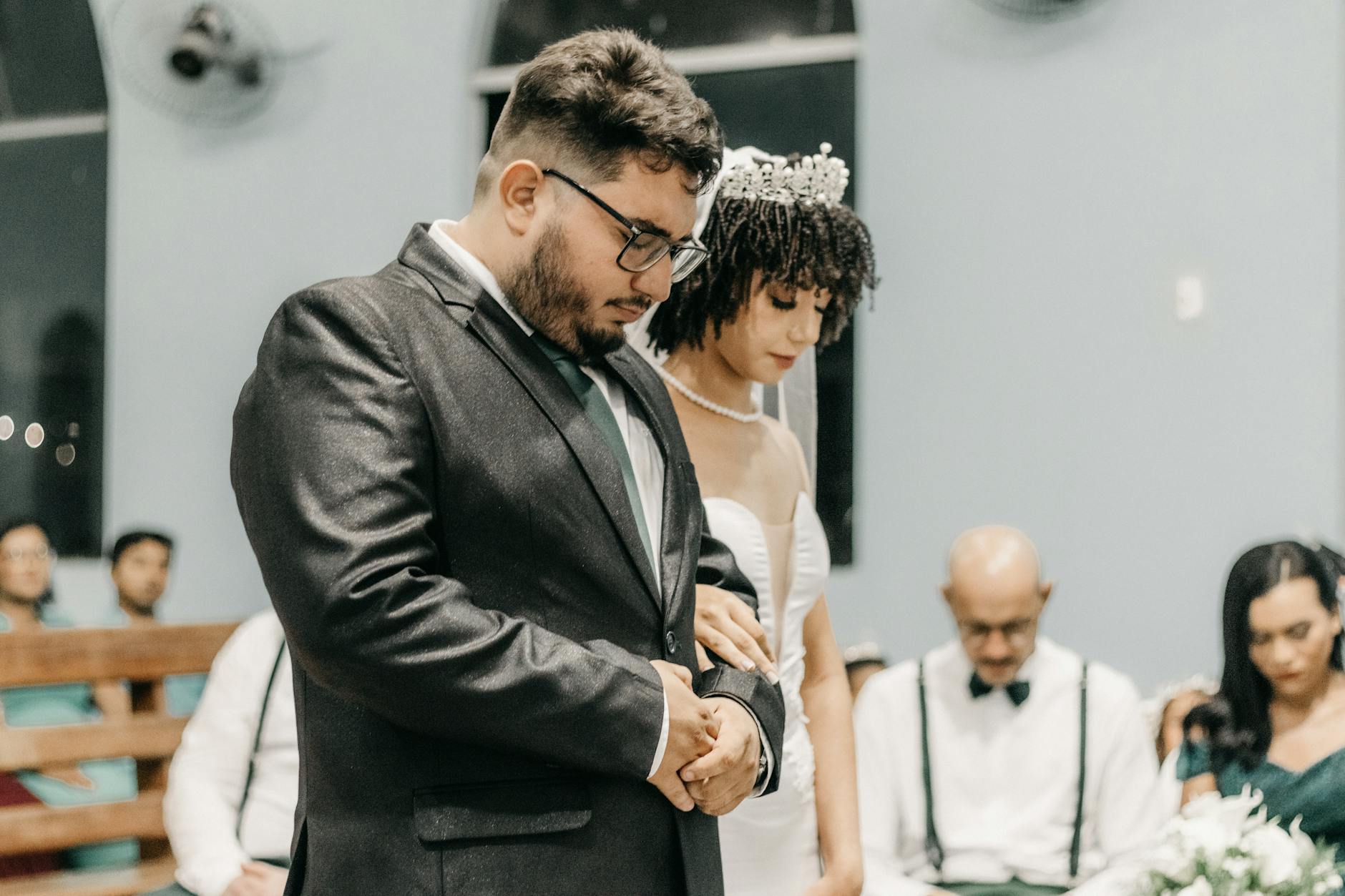
Nobody gets married without expectations. You have them about what married life will feel like, what your partner will continue to be like once the wedding is over, and what the daily-ness of it will actually look like. The first year is when the gap between the expectation and the reality becomes undeniable.
The expectations aren’t always big ones. It’s the medium-sized and small ones that do the most consistent damage: the expectation that your partner would intuitively understand your love language without having to spell it out, the assumption that conflict would be rare because you’re both reasonable people, the idea that married life would feel qualitatively different from the relationship you already had. When those assumptions don’t play out, there’s a period of disorientation before you figure out what you actually have – which is often better than the expectation, but different enough that it takes some adjusting.
The couples who move through this best are not the ones who had no expectations. They’re the ones who were willing to say them out loud and discover which ones were real and which ones were inherited from films and from watching other people’s marriages from the outside.
10. The Question of Children Arrives Whether You’re Ready or Not

Even if you discussed children before you got married – and you should have – the first year of marriage often brings that conversation into sharper, more concrete focus. Because now it’s not hypothetical. You’re married. The question is no longer “someday, do you want kids?” but “when, and what does that actually mean for the two of us right now?”
For couples who are aligned on wanting children, the first year often introduces a new kind of pressure: the timing question, which turns out to be genuinely complex. Careers, finances, family pressure, and competing timelines all enter the picture in ways that feel more immediate once there’s a ring involved. For couples where one person is more certain than the other, the first year can bring a reckoning that is much harder to defer.
Even the practicalities are more complicated than they looked. A pregnancy in the first year of marriage brings enormous joy and also reorganizes the entire relationship before the couple has finished building it. The household labor dynamics, the intimacy adjustments, the identity renegotiation – all of them accelerate at once. If you’ve read about how having a baby can upend a marriage’s balance, you know that the transition to parenthood is its own set of challenges, and arriving at it before the couple has found their footing in marriage adds a layer of complexity that takes time to work through.
What the First Year Is Actually For
The list above is long, and if you’re in the middle of the first year right now, it might feel uncomfortably familiar all at once. There is a real difference between a challenge and a failure, and that distinction is worth stating plainly: the first year is genuinely hard for almost every couple without being a disaster for most of them. Recognizing that the wall you’ve hit is the same wall everyone hits doesn’t make it less real, but it does make it less frightening.
The first year marriage challenges don’t disappear once you’ve encountered them. Money remains complicated. Communication keeps requiring maintenance. The question of who does what at home will come back around every time circumstances change. What the first year gives you, if you let it, is the beginning of a working vocabulary for all of it – a sense of how the two of you actually operate together, rather than how you imagined you would. That’s worth more than a year without friction. The friction is, in an annoying way, the point.
You don’t have to have any of this figured out by the first anniversary. The archive of the relationship is just beginning. All you’re doing right now is writing the early chapters, and early chapters are always the most turbulent ones to get through.
AI Disclaimer: This article was created with the assistance of AI tools and reviewed by a human editor.