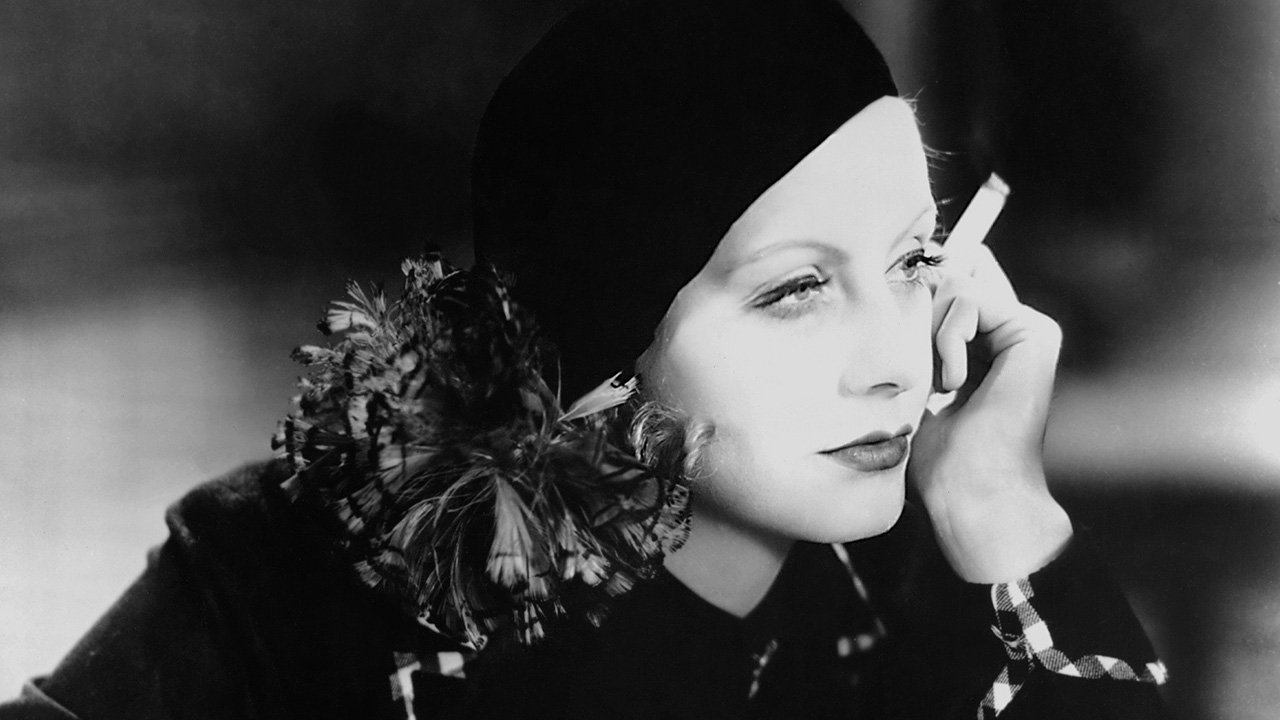

Long before celebrity was an industry, before publicists and social media and carefully curated brand deals, there were women whose faces alone could sell out a theater in a city they’d never visited. The silent film divas of the 1920s inhabited a fame that was genuinely new to the world – recognizable, almost incomprehensibly large, and built from nothing but a face moving across a screen. A woman could walk into a film studio in Brooklyn or Warsaw or a laundry above a Los Angeles dry-goods shop, and within a few years have her image plastered on postcards, magazine covers, and the sides of buildings in countries she couldn’t point to on a map.
What made these women genuinely extraordinary, beyond the mythology that tends to flatten them, was the specific difficulty of what they did. No voice. No dialogue. Just a face, a body, a gesture, an expression that had to carry every emotional register in a story – grief, desire, comedy, terror – with the house lights partially up and a pianist hammering along beneath them. The women who conquered that medium didn’t just learn to act. They invented a new visual language for feeling, and millions of people around the world learned to read it.
The decade they inhabited was cracking open in ways that made every move on screen feel charged with meaning. Women had only just won the right to vote in 1920, after decades of protest and the passage of the 19th Amendment. The first generation of women who could vote and work and go to the movies alone were watching these women on screen and finding, sometimes for the first time, reflections of their own appetites. These were not passive images. These were women who ran their own studios, invented their own personas, and rewrote what a female face could mean. Here are sixteen of them.
1. Mary Pickford
Born Gladys Louise Smith, known professionally as Mary Pickford, she was a Canadian American film actress and producer whose career spanned five decades. According to Britannica, she became Hollywood’s first millionaire by 1916 and, at the height of her career, had complete creative control of her films. Every list of silent film divas starts here because it has to. Pickford didn’t just become famous – she invented the conditions that made modern fame possible.
In 1919, she and three other industry heavyweights – fellow movie stars Charlie Chaplin and Douglas Fairbanks, and director D.W. Griffith – formed United Artists, a joint venture company that would allow creatives in the film industry more control over their output, independent of the major commercial studios. That’s not a footnote in film history. That’s a woman in her late twenties restructuring an entire industry because the terms being offered weren’t good enough. On June 24, 1916, Pickford became the first movie actress to negotiate a million-dollar contract.
Her screen persona – the girl with the curls, the plucky waif, “America’s Sweetheart” – was a persona she built deliberately and managed with iron precision. Although she won an Academy Award for best actress for her performance in Coquette, her popularity began to wane with the advent of sound. She made her last film in 1933 and spent the rest of her life increasingly reclusive at Pickfair, her legendary Beverly Hills estate. She had planned on destroying all her films upon her death, terrified they would only be laughed at by younger generations, but was talked out of it by her close friend and fellow silent film star Lillian Gish.
2. Clara Bow
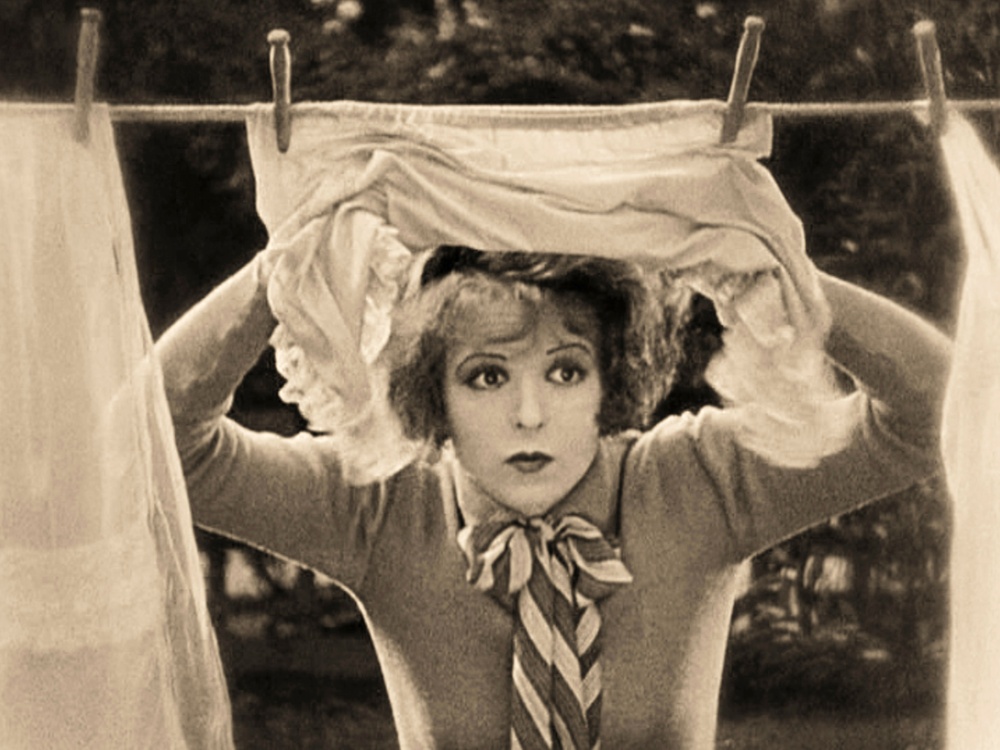
The National Women’s History Museum records that Clara Bow, who became an actress after winning a magazine contest, came to typify the flapper role. The film It (1927), which starred Bow, memorably depicted the flapper, establishing the stereotype in America’s cultural psyche. That’s a lot of weight for one film to carry, and Bow carried it effortlessly, mostly because she wasn’t performing the part – she was living it.
She rose to prominence after a role in It in which she played a plucky shop girl. Her role earned her the nickname “the It Girl” and she came to represent the ideal of bodily-appeal during the Roaring Twenties, becoming the model for the flapper girls of the era. The studio milked the persona for everything it was worth, and Bow delivered. She appeared in a remarkable number of films across the decade at a pace that would level most modern actors.
Not only did she originate the it-girl term, but she was also able to successfully make the transition from silent film to the talkies – not an easily achievable feat. Perhaps the most intriguing thing about Bow is her life outside of Hollywood: she retired in 1933 at age 28 and promptly moved to her husband’s ranch in Nevada, where she became a rancher. From the defining feminine symbol of a decade to a ranch in Nevada, in one clean exit. There’s something almost admirable about how completely she was done with the whole thing.
3. Greta Garbo
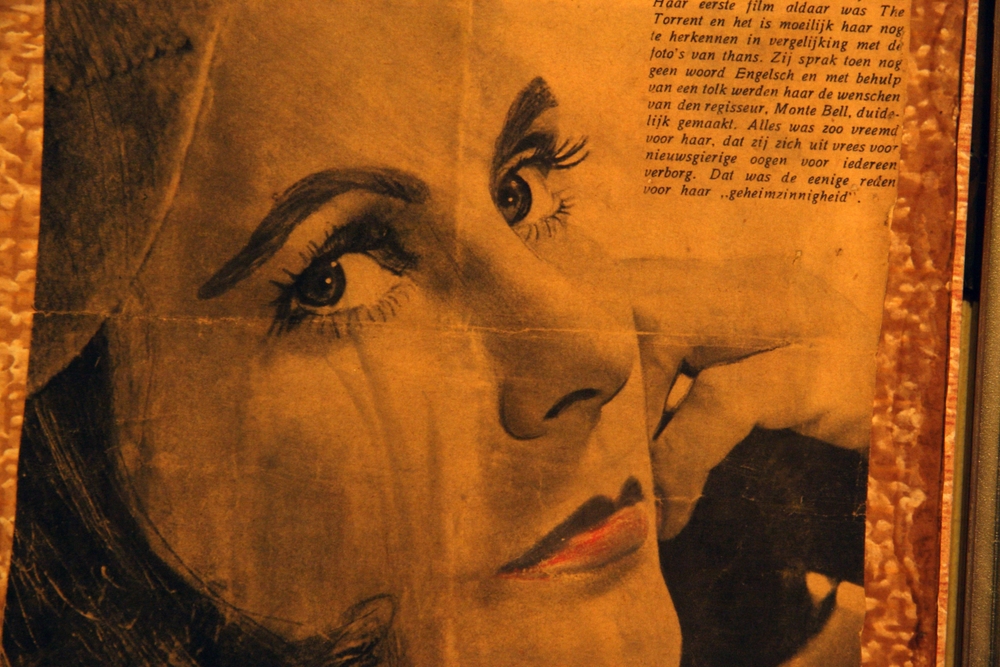
Born September 18, 1905, in Stockholm, Sweden, Greta Garbo was a Swedish American actress who became one of the most glamorous and popular motion-picture stars of the 1920s and 1930s. She arrived in Hollywood without speaking English, without a publicist, and without the faintest interest in being turned into a commodity. The studio did it anyway. She let them, up to a point, and then she walked away entirely at 36 – rich, worshipped, and permanently mysterious.
Britannica’s biography of Garbo notes that the director Mauritz Stiller gave her the name Garbo, and in 1925 he secured her a contract with MGM in Hollywood. At first, MGM chief Louis B. Mayer was skeptical of her talent, but all studio executives were impressed by the initial rushes of her first American film, The Torrent (1926). Garbo projected a luminous quality that was perfect for silent pictures, motivating Mayer to sign her to an exclusive contract and raise her salary even before she completed work on the film.
Her performance in Flesh and the Devil (1926), her third movie in the United States, made her an international star. By 1928, Garbo starred in A Woman of Affairs, which catapulted her to MGM’s highest box-office star, surpassing the long-reigning Lillian Gish. The phrase “surpassing the long-reigning Lillian Gish” gives you a sense of the altitude here. These women were not competing for small prizes.
4. Gloria Swanson
Gloria Swanson spent the 1920s at an altitude that makes you wonder what it must have felt like to simply exist at that level. Gloria May Josephine Swanson was born March 27, 1899, and died April 4, 1983. She moved from Mack Sennett comedies in the early days to Cecil B. DeMille’s lavish society dramas, where she became synonymous with excess, elegance, and a particular brand of commanding screen presence that other actresses referenced for decades.
Her films with DeMille – Male and Female (1919), Why Change Your Wife? (1920) – established her as the reigning queen of glamour before the word “glamour” had its current meaning. She was known for her extravagant personal life, reportedly spending more on clothes in a year than most Americans earned in a decade. Already a major star in the silent era, she transitioned into talkies and maintained her status as a Hollywood powerhouse.
History remembers her most for Sunset Boulevard (1950), in which she played a faded silent film star. The role required almost no stretching on her part, and she knew it, and played it like a woman who had made peace with the joke. A 1950 film about a woman trapped by 1920s fame is, when you think about it, its own kind of monument to how strange those years actually were.
5. Lillian Gish
Lillian Gish, one of the most famous actresses of the era, became the first woman to ever direct a feature film with Remodeling Her Husband, released in 1920. It was her only directorial effort, and she set it aside to return to acting – a decision that shaped cinema for another seven decades. Her career spanned virtually the entire history of American film, from one-reel shorts in the 1910s to supporting roles in the 1980s. Her acting career spanned over eighty years and she came to be known as the First Lady of Cinema.
What made Gish different from many of her contemporaries was the precision of her technique. Where others relied on broad physical expression, she worked with economy. A trembling lip, a particular turn of the head. Director D.W. Griffith cast her repeatedly throughout the decade, and their collaboration produced some of the most technically accomplished performances in silent cinema. Her work in Broken Blossoms (1919), Way Down East (1920), and The Wind (1928) still holds up.
In later years she devoted herself to the preservation of silent movies and tried to revive interest in them as works of art. She received an Honorary Academy Award in 1971 and a second lifetime achievement award from the American Film Institute in 1984. She was, by most accounts, impossible to fully reduce to a persona, which is part of why she’s the one who lasted longest.
6. Pola Negri
Pola Negri was born in Lipno, Poland, and moved to Warsaw as a child. Living in poverty with her mother, a teenage Pola auditioned and was accepted to the Imperial Ballet. Due to an illness that ended her dancing career, she switched to the Warsaw Imperial Academy of Dramatic Arts and became an actress. She became a star first in Poland, then in Germany, then arrived in Hollywood in the early 1920s with a European intensity that made American actresses look, temporarily, a little polite.
She brought passion and intensity to every role she played. Originally from Europe, she became one of the first international actresses to achieve huge success in Hollywood. Her work in films such as Hotel Imperial and Barbed Wire made her a major star. She was also known for an affair with Rudolph Valentino that she turned, upon his death in 1926, into a public display of grief so theatrical that it permanently altered her reputation. Whether the grief was real is beside the point. The performance was extraordinary either way.
Her thick accent became a problem when talkies arrived, and she returned to Europe for a significant stretch of her later career. But the 1920s were entirely hers – a decade of smoldering roles, impossible gowns, and a public persona so outsized that studio executives routinely did not know what to do with her. The answer, of course, was nothing. You don’t manage Pola Negri. You get out of the way.
7. Norma Talmadge
The San Francisco Silent Film Festival writes that in an era when the movie industry churned through stars, Norma Talmadge had remarkable staying power. Beginning at the time of nickelodeons, she later rose to stardom in the late 1910s and then superstardom in the early 1920s, sailing through the rest of the decade before talkies finally brought her career to a close. Her story is less about a single iconic role than about a decade of sustained dominance that gets undersold because there was no single movie to pin it to.
With help from films directed by her first husband Joseph M. Schenck, she became one of the highest-paid actresses of the 1920s. In 1923, a poll of picture exhibitors named Norma Talmadge the number-one box office star. She was earning $10,000 a week, and receiving as many as 3,000 letters weekly from her fans. That’s not a minor career. That’s the peak of the peak, in an industry that didn’t yet have the infrastructure to manage that level of public appetite.
Her most famous film was Smilin’ Through (1922), but she also scored artistic triumphs teamed with director Frank Borzage in Secrets (1924) and The Lady (1925). Talkies ended her reign, not because her voice was wrong but because the audience had moved on and she had become, however unfairly, a symbol of the thing that was over. She retired gracefully and, unlike some of her contemporaries, stayed retired.
8. Louise Brooks
Mary Louise Brooks, known professionally as Louise Brooks, was an American film actress and dancer during the 1920s and 1930s. She is probably the most visually reproduced woman in silent film history – that black bob, those bangs, that gaze that manages to be both available and completely elsewhere – and yet she spent much of her life largely ignored by the industry that made her famous.
She is best known as the lead in three feature films made in Europe: Pandora’s Box (1929), Diary of a Lost Girl (1929), and Miss Europe (1930), with the first two directed by G.W. Pabst. Pandora’s Box in particular – in which she plays Lulu, a woman of such vital, uncomplicated desire that the world essentially destroys her for it – remains one of the genuinely great performances in any era of cinema.
Brooks published her memoir, Lulu in Hollywood, in 1982; three years later she died of a heart attack at age 78. The memoir is sharp, clear-eyed, and sometimes brutally funny about the industry that spent decades pretending she didn’t exist. She wrote it in her seventies, in Rochester, New York, having spent years in near-poverty before film scholars found her and insisted on her importance. The gap between her cultural legacy and her actual circumstances for most of her life says something about Hollywood that probably doesn’t need to be said out loud.
9. Theda Bara
Theda Bara was the most famous vamp in the nineteen-teens. Though she was one of the first women to exude body positivity and exoticism on film, the vamp took many forms by the 1920s. Her studio, Fox Film Corporation, constructed one of the most elaborate celebrity fictions in the history of Hollywood around her: they invented a backstory claiming she was born in the shadow of the Sphinx to a French artist father and an Egyptian princess mother. Her real name was Theodosia Burr Goodman, and she was from Cincinnati.
The vamp persona she embodied – heavy-lidded, draped in black, consuming men without remorse – was genuinely transgressive for its moment. Bara was famous for creating the image of the dangerous and seductive screen siren. Though her rise began earlier, her influence remained strong into the 1920s. She became known for dramatic roles that challenged social expectations and helped shape Hollywood’s idea of glamour mixed with mystery.
Most of her films are lost. A 1937 nitrate film vault fire destroyed the majority of her Fox output, which means her reputation rests largely on photographs, press materials, and the memory of audiences who saw her. She essentially invented a type of female screen character that has been recycled, reinvented, and referenced ever since – and the original evidence is almost entirely gone. Film history has found stranger ironies, but not many.
10. Anna May Wong
The most famous Asian American actress of the 1920s was Chinese American Anna May Wong. She was also, in many respects, one of the most systematically limited by the industry she worked within, and the fact that she carved a substantial career anyway is a specific kind of remarkable. One of Wong’s most famous roles was her portrayal of the devious “Mongol slave” who betrays her mistress in The Thief of Bagdad (1924), with Douglas Fairbanks.
The roles available to Wong were constrained by both the anti-miscegenation laws of the time, which prevented interracial romance on screen, and by a studio system that had very firm ideas about what an “exotic” actress was for. Tired of being relegated to supporting roles due to her ethnicity, Wong had had enough and traveled to Europe in 1928, becoming one of the first stars to do so.
In 1929, Wong made what is today considered her finest movie, Piccadilly. Most critics agree it was one of the best silents ever made. In Europe she found the space Hollywood wouldn’t give her: lead roles, serious directors, and audiences who did not treat her as a novelty. She came back to America later, still fighting the same battles, and still winning more of them than the system was designed to allow.
Read More: 13 Things Women Couldn’t Do 100+ Years Ago: A Look into Women’s Rights History
11. Colleen Moore
Colleen Moore became one of the leading flapper stars of the 1920s. Her fashionable bob haircut and lively personality inspired women across the country. She rose to fame with Flaming Youth (1923), a film that captured the changing attitudes of the decade. She was, in the mid-1920s, one of the highest-paid performers in Hollywood – a fact that tends to surprise people who remember Clara Bow as the era’s defining flapper and forget that Moore got there first.
Her on-screen energy was different from Bow’s. Where Bow was raw and combustible, Moore was cheerful, quick, and broadly accessible – a girl-next-door version of the new freedom that played well in smaller markets and with audiences that found Bow slightly alarming. The bob haircut alone reportedly inspired a generation of women to walk into their hairdressers and point at photographs of her.
She retired in 1934 and went on to build one of the most extraordinary dollhouses ever constructed – a miniature fairy-tale castle called the Colleen Moore Fairy Castle, with working plumbing, electricity, and a collection of tiny artworks she commissioned from real artists. It now lives at the Museum of Science and Industry in Chicago and has been on display since 1949. The woman knew how to pivot.
12. Marion Davies
Marion Davies was one of the great comedic actresses of the silent era and into the 1930s. Her reputation has spent almost a century being refracted through her relationship with William Randolph Hearst, the newspaper magnate who financed her films and insisted on casting her in serious dramas when her real gift was comedy. The relationship was real, and the interference was real, and it did her genuine professional harm.
She combined beauty with genuine comedic talent, making her stand out among many of her peers. She had a warm and approachable screen presence that audiences found charming. In films like Show People (1928), she proved she could be both glamorous and funny. Show People in particular, directed by King Vidor, is still considered one of the great Hollywood comedies – and the fact that Davies is magnificent in it while her patron kept steering her toward weeping melodramas is one of the genuine tragedies of 1920s cinema. Her talent deserved a better advocate than her circumstances provided.
13. Vilma Banky
Vilma Bánky appeared in Hungarian, Austrian, and French movies between 1920 and 1925, the year in which Samuel Goldwyn signed her, in Budapest, to a Hollywood contract. In Hollywood she was billed as “The Hungarian Rhapsody.” In the mid and late 1920s she was Goldwyn’s biggest money maker, especially playing with Ronald Colman.
Her best-known works were with Rudolph Valentino: she played the daughter of a Russian aristocrat in The Eagle (1925) and an Arab dancer in The Son of the Sheik (1926). The Son of the Sheik pairing with Valentino was the last major film he completed before his sudden death in August 1926, which makes Banky’s performance in it a piece of cinema history that she couldn’t have anticipated when they were making it. She was 26 years old, in her second year as a Hollywood star, and the film became a memorial the moment it was released.
Her accent ended her American career when sound arrived, as it did for many European imports. She retired from film in the early 1930s and, unlike several of her contemporaries, did not attempt a comeback. She lived in Los Angeles for decades, died in 1991 at age 93, and is now largely remembered only by silent film enthusiasts – which is genuinely unfair to someone who was, for a moment, among the most famous people in the world.
14. Dolores del Rio
Dolores del Rio quickly became known as one of Hollywood’s great beauties after arriving in the late 1920s. She had a graceful presence that instantly made her memorable. Films like What Price Glory? (1926) helped establish her as a rising star. Audiences admired her calm confidence, and she became one of cinema’s earliest international icons.
Born in Mexico to an aristocratic family, del Rio was brought to Hollywood by director Edwin Carewe, who recognized in her a presence that didn’t need to be manufactured. She became one of the first Latin American actresses to achieve major Hollywood stardom, and she navigated the industry’s racial hierarchies with a combination of strategy and genuine dignity that her contemporaries noticed and admired.
She made the transition to sound with considerably more success than many of her silent-era peers, continuing to work in American films through the 1930s before returning to Mexico, where she had an equally distinguished career in Mexican cinema. She worked until the 1970s. The arc of her career is, in many ways, the inverse of the usual silent-film story – she got better at navigating the industry as it evolved, rather than being undone by its changes.
15. Mae Murray
Mae Murray was a glamorous star known mainly for her dramatic style. Nicknamed “The Girl with the Bee Stung Lips,” she became one of the decade’s most recognizable actresses. She had started as a dancer, first on Broadway and then in the Ziegfeld Follies, before moving into film, and the physical precision she’d developed in dance carried into everything she did on screen.
Her most celebrated role came in The Merry Widow (1925), directed by Erich von Stroheim, in which she played a wealthy American widow pursued by Parisian royalty. The film was a massive hit and is still regularly cited as one of the great silent-era romances. The production was notoriously fraught – von Stroheim was famously difficult and Murray reportedly gave as good as she got – and the result is a film that crackles with real tension between its leads.
Her later years were difficult. A series of failed marriages, financial mismanagement, and the arrival of sound that her theatrical style did not survive left her in circumstances that were, by any measure, far from the heights she’d occupied. She lived into her late seventies, spent some time in poverty in the 1950s, and died in 1965. The gap between what she was in 1925 and what her circumstances became is, like a number of stories on this list, a useful reminder of how completely the ground could shift beneath you.
16. Mabel Normand
Mabel Ethelreid Normand was an American silent-film actress, screenwriter, director, and producer. She was a popular star and collaborator of Mack Sennett in his Keystone Studios films and, at the height of her career in the late 1910s and early 1920s, had her own movie studio and production company. She was also, in the estimation of many film historians, the funniest person working in Hollywood during this period, regardless of gender.
Her films debuted the Keystone Cops, Charlie Chaplin’s tramp, and the pie-in-the-face gag. She co-starred with both Chaplin and Roscoe “Fatty” Arbuckle in a series of shorts, and was a star in the first Keystone Comedy as well as the first feature film comedy. The fact that Chaplin’s career was partly built on her advocacy and co-direction does not appear in most Chaplin biographies with the emphasis it deserves.
Throughout the 1920s, her name was linked with widely publicized scandals, including the 1922 murder of director William Desmond Taylor and the 1924 shooting of Courtland S. Dines, who was shot by Normand’s chauffeur using her pistol. She was not a suspect in either crime. Her film career declined, and she suffered a recurrence of tuberculosis in 1923, which led to a decline in her health, retirement from films, and her death in 1930 at age 37. She was thirty-seven years old. She had directed her own films, co-invented the visual grammar of screen comedy, and been genuinely beloved. The decade made her and consumed her in almost the same motion – a story that tends to get swallowed by the louder names.
What the Silence Held
These sixteen women did not operate in a vacuum of pure artistic freedom. They worked inside a system that owned their images, controlled their contracts, decided who was suitable for which roles based on criteria that had little to do with talent, and could end a career with a single damaging headline. As the National Women’s History Museum documents, female stardom was central to early Hollywood’s rise, yet many of these women were celebrated more for their appearances than for their acting ability – a characterization that gets more insulting the more you actually watch them work.
What’s striking, looking at this list now, is how many of them found ways to wield genuine power inside those constraints. Pickford co-founded a studio. Normand directed her own films. Brooks walked away from Hollywood entirely and went to Europe rather than take the roles she was offered. Anna May Wong did the same. Talmadge ran her own production company. They were not passive recipients of whatever the industry decided to give them. They pushed, negotiated, departed, invented, and in several cases simply refused.
The talkies ended many of their careers, but it’s worth resisting the easy narrative that they were simply swept aside by progress. Some were. But several found ways to continue – Garbo became even bigger, del Rio thrived in a different country, Gish worked well into her nineties. What made the difference was rarely just voice or accent or the accident of timing. It was something harder to name: an ability to remain fully themselves when the entire industry was insisting that who they were was no longer commercially interesting. The women on this list who lasted longest were the ones who never let the industry’s definition of them become the only definition on offer.
AI Disclaimer: This article was created with the assistance of AI tools and reviewed by a human editor.