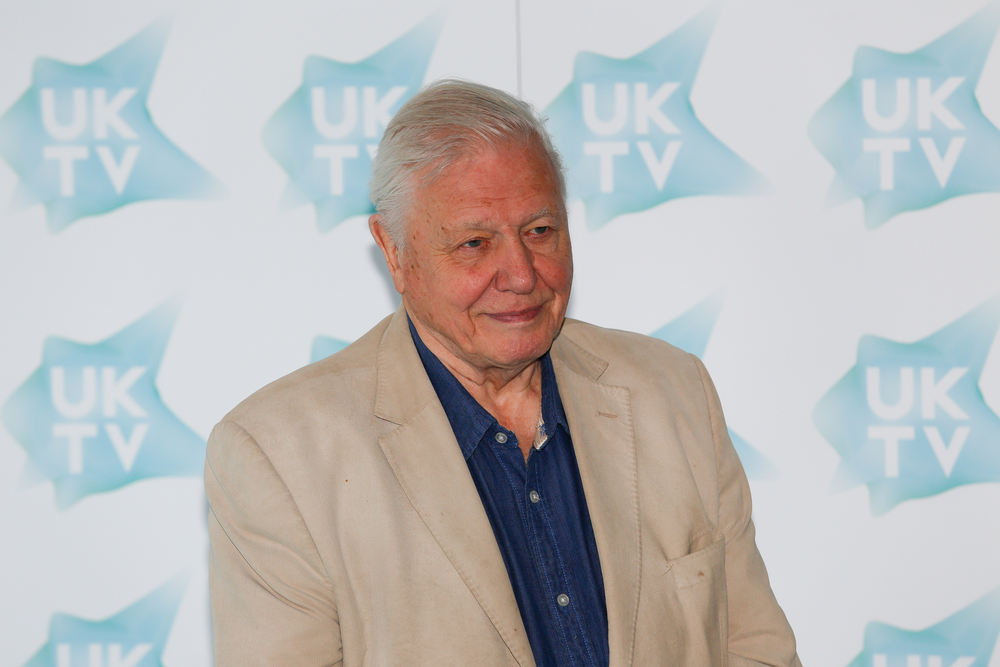

On May 8, 2026, Sir David Attenborough turned 100 years old. Not 100 in the polite, cake-and-cards way where someone is technically a century old but hasn’t done much since 1987. One hundred years old, still making documentaries, still narrating, still collecting Emmys – he became the oldest Daytime Emmy winner in history at 99 for his work on Secret Lives of Orangutans. The world sent messages. One person wrote “please let this man live forever.” The feeling was mutual.
What makes Attenborough remarkable is not just that he reached 100. The rate of centenarians in the UK and US has nearly doubled in the past twenty years, likely due to a mix of medical advances, lifestyle changes, and population growth. But reaching that milestone while still producing meaningful work, still curious, still present – that is a different thing entirely. Most conversations about longevity get stuck on the biological mechanics of staying alive. Attenborough’s life raises a more interesting question: what does it mean to stay genuinely well, for a very long time?
When asked directly about his secret, Attenborough gave a disarmingly simple reply: “sheer darn luck.” And from a purely scientific standpoint, he’s not wrong to say so. Making it past age 90 is not entirely due to healthy habits and a positive outlook on life – only individuals with the strongest genes seem to reach a certain point, and some scientists estimate that survival to 110 may be roughly 70 percent genetic. But that same science also tells us that luck is only part of the equation. The habits Attenborough has maintained across a century are ones that researchers keep arriving at, independently, from multiple directions. They are also, genuinely, things that most people can do.
The Diet That Became a Quiet Conviction
While Attenborough doesn’t eat a completely plant-based diet, he mostly skips meat. The shift happened gradually, driven less by a health plan than by what he was learning about the planet. He said in 2020, “The planet can’t support billions of meat-eaters. If we all ate only plants, we’d need only half the land we use at the moment.” When he does consume meat, he eats small amounts of fish and chicken, but he actively avoids red meat such as beef, pork, and lamb.
In interviews over several years, the picture that emerges is of someone who adjusted his plate incrementally rather than dramatically. “I have certainly changed my diet,” he said. “Not in a great sort of dramatic way, but I don’t think I’ve eaten red meat for months.” He added: “I do eat cheese, I have to say, and I eat fish. But by and large I’ve become much more vegetarian over the past few years than I thought I would ever be.” This approach is also known as a flexitarian diet, which allows followers to enjoy many of the same health benefits as vegetarians without giving up eggs, dairy, seafood, or meat completely.
The health case for reducing red meat is well established. Avoiding red meat is increasingly supported by medical experts, many of whom warn that consuming large amounts may raise the risk of bowel and colorectal cancer. According to Cancer Research UK, certain chemicals found in red meat when cooked at high temperatures – haem, a red pigment; heterocyclic amines; and polycyclic amines – can damage cells in the large intestine. The fish side of Attenborough’s diet earns its own case. Eating fish may improve not just longevity, but the quality of life in old age. Salmon, mackerel, tuna, herring, and sardines provide omega-3 fatty acids, which are important for brain and heart health.
What’s worth paying attention to, though, is how Attenborough frames all of this. The diet change was not primarily about his own longevity. It came from caring about something outside himself – the planet, the animals, the land. The health benefits arrived as a kind of side effect of a life spent paying attention.
Eating Less, and Eating Like It Matters
Alongside the shift away from meat, another common habit of people in Blue Zones – the world’s regions known for having higher proportions of exceptionally long-lived people – is consuming small meals abundant in plant foods. The Okinawan principle of Hara Hachi Bu advises stopping eating when roughly 80 percent full, and this approach helps avoid overeating. Attenborough has said: “I’ve never really been one for eating enormous meals, and I’m not particularly a gourmet either, so I can’t pretend that I’m feeling deprived in any way or that it’s cost me all that much.”
Attenborough shares key lifestyle habits with people who live in the world’s Blue Zones. The five Blue Zone regions are Loma Linda, California; Nicoya, Costa Rica; Sardinia, Italy; Icaria, Greece; and Okinawa, Japan – and it is not uncommon for people in these regions to reach their 90s and even 100s without developing age-related conditions like heart disease or metabolic complications.
The through-line in Attenborough’s approach to food is that it was never performed. He did not announce a plan or follow a protocol. He ate less of what was harming the world, less of what his body didn’t need, and paid attention to what he actually required. That lack of drama might be one of the more useful parts of the lesson.
The Ten Minutes Outside That Actually Matter
As a person who finds joy and peace in nature, Attenborough makes it a point to spend at least ten minutes a day outside. “One of the simplest things that you should do when you get the chance is to stop, sit down, don’t move, keep quiet and wait 10 minutes. I’d be surprised if something pretty interesting didn’t happen,” he explained on his Call of the Wild podcast.
This is not the advice of someone performing wellness. It is the advice of a man who has spent the better part of a century paying attention to the natural world and discovered, repeatedly, that paying attention is itself a restorative act.
The research on time in nature has grown substantially in recent years. Spending time outdoors in green spaces has been linked with myriad physical and mental health benefits, including lower mortality, according to Harvard T.H. Chan School of Public Health. Exposure to green space has been linked to better sleep, lower blood pressure, and reduced risk of chronic disease – likely because people who spend more time in green spaces also report higher levels of exercise.
For Attenborough, the relationship with nature was never a commute to a park. It was the organizing principle of his entire life. From befriending a cheetah to playing with baby gorillas, his life has been filled with animal encounters. According to the NIH, interacting with animals can decrease levels of cortisol – a stress-related hormone – and lower blood pressure. Even observing animals from afar or encountering them in the wild can boost mental health.
You don’t need a career in wildlife filmmaking to get there. The ten minutes he describes – outside, still, waiting – is accessible to most people. It’s not a hike or a program. It is the practice of stopping long enough to notice something.
Purpose as a Biological Force
This is where Attenborough’s longevity story becomes harder to package into a listicle. Purpose was never abstract for him. He spent nearly 70 years as a producer and narrator of nature documentaries – learning from nature, telling its stories, protecting the living world, and staying actively engaged with something larger than himself. That purpose appears to have shaped his behaviors. His largely plant-based diet has been tied to his concern for the planet. His physical activity came not through a gym routine, but through decades of filming, travel, hiking, and field work. His cognitive engagement came from a curiosity for the natural world: studying animals, ecosystems, climate, and the changing relationship between humans and nature.
Attenborough has rarely addressed the possibility of retirement, saying he “dreads” the very idea. Just last year, on his 99th birthday, he released a new documentary. He told The Times in 2017: “You never tire of the natural world. Putting your feet up is all very well but it’s very boring, isn’t it? Would you rather sail in a balloon over the Alps or sit at home dribbling?”
The research backs this up more forcefully than most people expect. Research from ScienceAlert shows that individuals with the highest sense of purpose experience a 46 percent reduced risk of mortality. Purposeful adults are also 24 percent less likely to become inactive and 33 percent less likely to develop sleep problems. Purpose, in this body of research, is not a motivation poster. It functions more like a biological anchor – something that keeps the body oriented toward forward motion rather than decline.
If you’re curious about how other older people are threading the needle between purpose, diet, and longevity in their own ways, the story of the fit grandma who rethought her entire approach to eating and exercise is worth a look.
Staying Connected, Across Generations
Maintaining strong social connections is another of the lifestyle habits Attenborough shares with the world’s longest-living people. His producer Alastair Fothergill, who worked with him for decades on The Blue Planet and Planet Earth, described what made Attenborough exceptional company. “There’s a whole side of David that people don’t know,” Fothergill said, which makes him great company and an even better storyteller. “That was the thing that was special about being on location with David: his stories,” Fothergill said. “He always used to say: ‘Have you heard this one before?’ And sometimes some of us had because we’d worked with him a lot, but often people we were filming with never had, and we’d let him tell him again anyway, because he’s so good at it.”
The connection across generations – with younger colleagues, with audiences, with people who discovered his voice through Planet Earth on a laptop in a dorm room – is a consistent thread in how Attenborough has lived his career. Adults over 50 who have a strong sense of purpose in life tend to have better physical and mental health outcomes. The research on social connection and longevity points in the same direction: isolation accelerates aging in measurable ways, and the reverse is also true.
What Luck Actually Means
When Attenborough said his longevity came down to “sheer darn luck,” he probably wasn’t being falsely modest. He is a biologist. He knows that his father lived to 85, that genetics hands you a starting position, and that some things simply cannot be controlled. Only about 0.025 percent of the current population makes it to 100. There is no diet or morning routine that guarantees a seat at that table.
But luck and intention are not mutually exclusive. The habits Attenborough has maintained across a century – a diet built mostly around plants and fish, small meals eaten without ceremony, time outside in contact with the natural world, work that still means something, relationships that run deep – are not extreme. They do not require a television budget or a career filming wildlife. They require attention, and a willingness to ask what you actually need versus what you’ve always done.
There is no tidy conclusion to pull from a hundred years of living. The most honest reading of Attenborough’s life is that he stumbled into several things that happened to be deeply good for him – a career that kept him moving and curious, food choices driven by conscience rather than health anxiety, a relationship with the natural world that never became a chore – and that the science, when it caught up, found all of it to be correct. He was not following a protocol. He was following his attention. That might be the only thing actually worth copying.
AI Disclaimer: This article was created with the assistance of AI tools and reviewed by a human editor.