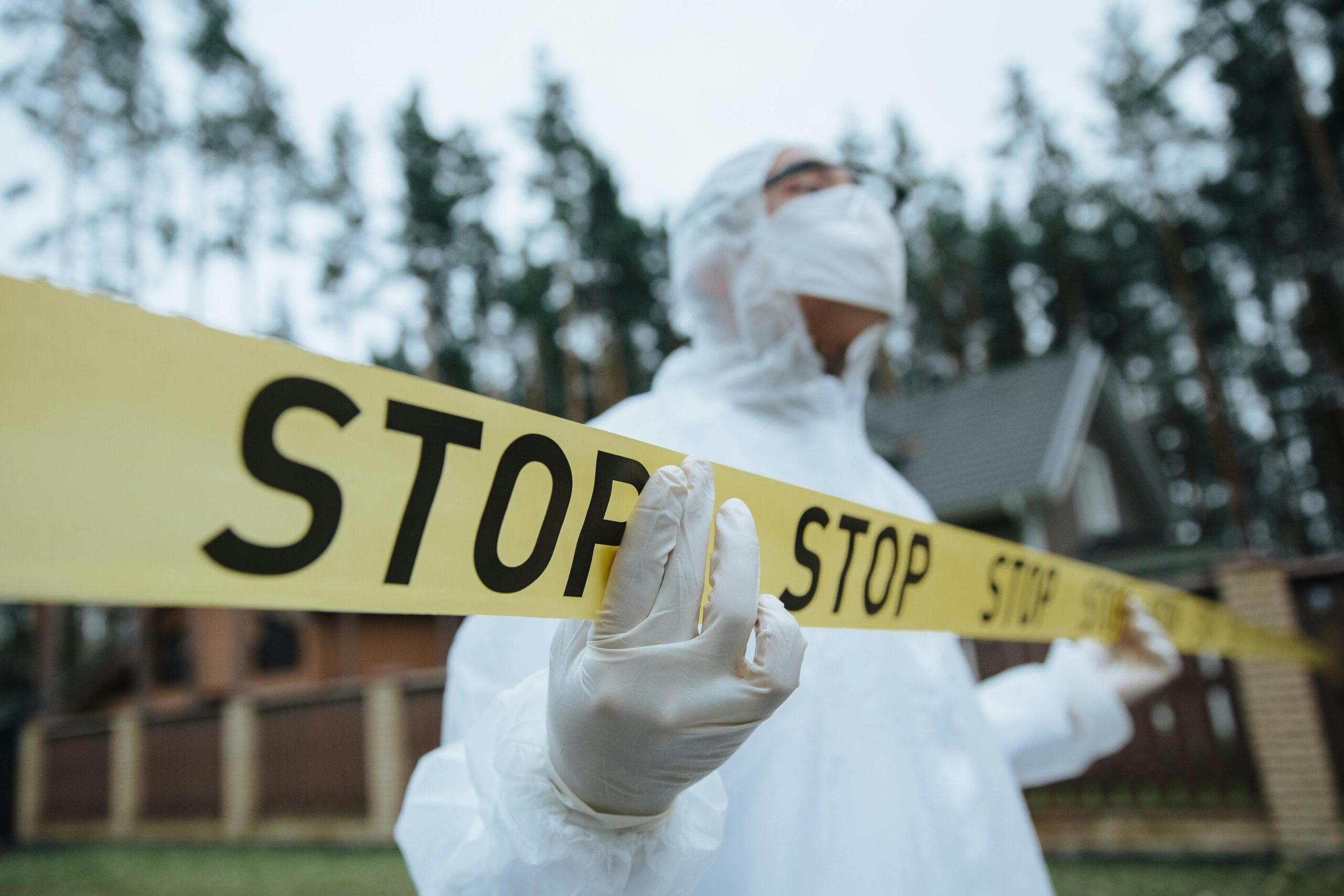

Most people file hantavirus under the same mental category as plague or scurvy: a serious disease that belongs to another century, another continent, or at least somewhere very far from their everyday life. It’s the thing you vaguely remember hearing about in relation to mice droppings in an old barn, the warning on the National Park pamphlet nobody reads. And for a long time, that assessment wasn’t entirely wrong. Hantavirus was something you contracted from rodents in rural South America or the American Southwest, and its relevance to most people in 2026 began and ended there.
That working assumption got significantly more complicated in May 2026, when a cluster of Andes virus cases emerged among passengers and crew of the cruise ship MV Hondius sailing in the South Atlantic Ocean. Three people died. Dozens were quarantined across more than a dozen countries. A level-3 emergency response was declared. Suddenly, a virus most people had dismissed as an obscure regional threat was appearing in news alerts on phones across North America, Europe, and Australia, and the questions coming in were the kinds that don’t have quick answers.
But even before the cruise ship outbreak put hantavirus back on the radar, researchers had already been sitting on a finding that reframes how we think about the virus entirely. Not just how it spreads through the air or from rodent to person, but how it might persist and travel in ways that have nothing to do with either of those things. The finding involves male survivors. It involves semen. And it involves a timeline that, once you’ve read it, is genuinely hard to un-know.
The Virus That Hides After Recovery
According to the CDC, the Andes strain is the only type of hantavirus known to spread from person to person, and that spread is usually limited to people who have close contact with a sick person. The standard picture of Andes virus transmission involves proximity to someone actively ill: sharing a room, sharing body fluids during the prodromal phase, the kind of contact that happens between household members. Once the person recovered, the assumption was that the transmission risk was over. Tests for the virus in blood, urine, and respiratory secretions came back negative. Clinically, the patient was clear.
Research conducted by Switzerland’s Spiez Laboratory, a government institute specializing in biological, chemical, and nuclear threat response, and published in the peer-reviewed journal Viruses, tracked the case of a 55-year-old Swiss man who had contracted the Andes strain during travel to South America. Though standard tests later showed no detectable virus in his blood, urine, or respiratory tract, researchers identified viral genetic material in his semen as late as 71 months – nearly six years – after the initial infection.
Six years. The man had, by every conventional clinical measure, recovered. The virus had been gone from every part of his body that doctors typically test. And yet it was still detectable in his semen, potentially transmissible, nearly six years later. The research demonstrated a long-lasting, strong neutralizing antibody response, and the results show that the Andes virus has the potential for sexual transmission.
Why the Testes Are Different
The reason a virus can linger somewhere the immune system can’t reach comes down to biology that sounds counterintuitive until you think about it. The study highlights how the testes can act as an immunologically privileged site – a so-called “viral reservoir” – where pathogens may evade immune detection. The testes are protected from the body’s standard immune surveillance for a reason that makes evolutionary sense: sperm cells carry proteins that would otherwise be recognized as foreign by the immune system, so the body maintains a kind of immunological firewall around testicular tissue. That firewall protects sperm from immune attack. It also, as it turns out, protects certain viruses from being cleared.
The study labeled the testicles a “safe harbour” for at least 27 diseases, including Ebola and Zika. Hantavirus is now on that list. What makes this finding particularly significant for the Andes strain specifically is that it is already the one hantavirus capable of human-to-human spread. Most hantavirus strains end with the infected person – a dead-end infection with no onward transmission. Andes was already the exception. The semen persistence data adds a dimension to that exceptionalism that nobody had mapped before.
The Ebola Comparison That Should Have Come Sooner
This is not, strictly speaking, the first time scientists have grappled with the problem of a serious virus persisting in male reproductive fluid long after apparent recovery. The WHO currently recommends that male Ebola survivors be offered semen testing three months after onset of disease, and recommends that male survivors practice safe sex and hygiene for 12 months from onset of symptoms or until their semen tests negative twice for Ebola virus. The protocol exists because researchers documented Ebola virus RNA persisting in the semen of male survivors for nine months or longer – and because at least one documented case of sexual transmission from a male survivor to a female partner was confirmed in Liberia in 2015.
The Ebola survivor protocol is the framework that health analysts are now invoking for hantavirus. Analysts at Airfinity, a company that tracks global health risks, recommend that male patients should receive “extensive safe-sex guidance beyond the 42-day quarantine,” with guidance analogous to the WHO’s Ebola survivor semen-monitoring protocols. That 42-day figure comes from the current CDC quarantine window for Andes virus exposure – the outer limit of the incubation period. It has nothing to do with the timeline on which the virus disappears from semen, which the research now suggests may be measured in years, not weeks.
The gap between those two timelines is where the public health question lives. A person can be released from quarantine, declared recovered, and still be carrying viral material in their semen with no way of knowing it and no standard guidance about what to do with that information.
What “Potential for Transmission” Actually Means
A reasonable thing to notice here is that the study describes a “potential” for sexual transmission, not a documented case of it. What the data actually supports is the finding that fragments of viral RNA were detected in one 55-year-old Swiss man’s ejaculate for an unusually long time, without documented evidence of confirmed sexual transmission in the recorded history of hantavirus research. The word “potential” is doing meaningful work in that sentence, and it deserves to be named plainly rather than buried in fine print.
Viral RNA is genetic material. Its presence does not automatically mean the virus is actively replicating, still capable of causing infection, or being shed in quantities sufficient for transmission. The study found RNA; it was not a controlled transmission experiment. What researchers concluded was that the findings indicate the potential for sexual transmission – the biological plausibility is established, but the epidemiological confirmation is not yet there.
That said, biological plausibility with a virus of this severity is not something anyone in public health can simply wave off. The Ebola comparison is instructive precisely because the WHO did not wait for confirmed cases of sexual transmission before building a monitoring and guidance protocol. They built the protocol when the persistence data suggested the risk was real enough to take seriously. The question now being asked about Andes virus is whether the same logic applies.
What the Cruise Ship Outbreak Changes
The cruise ship context matters here because it created, for the first time, a cohort of male Andes virus survivors in countries with functional public health infrastructure and the capacity to actually study them. Previous Andes outbreaks occurred primarily in rural Argentina and Chile, where systematic follow-up on recovered patients was limited and semen monitoring was essentially nonexistent. The CDC is currently responding to a deadly outbreak of Andes virus among passengers and crew of a cruise ship in the Atlantic Ocean, and as of the time of the response, no cases had been confirmed in the United States as a result of the outbreak, with the overall risk to the American public remaining extremely low.
That last part deserves emphasis. The risk to the general population is not the same as the risk to the specific subset of male survivors and their sexual partners. Those are two different risk calculations, and conflating them is how people end up either catastrophizing a situation or dismissing a legitimate concern that affects a small but real group of people.
For the women who are in relationships with male Andes virus survivors, the practical upshot is that the conversation about when it is safe to resume unprotected sex may need to extend far beyond the end of formal quarantine. That conversation should be happening between patients and their doctors, informed by whatever testing becomes available, not filled in by assumption and the absence of guidance.
What to Do With Incomplete Answers
The honest position right now is that the science is ahead of the protocols, and the protocols are ahead of the public conversation. A single case study, however striking its findings, is not a randomized trial. Researchers identified viral RNA in one man’s semen across a long monitoring period – that is the foundation of the current concern, and it is worth being precise about how strong or limited that foundation is. More data from more survivors, especially from the 2026 cruise ship cohort, will significantly sharpen the picture over the coming months and years.
What the research does establish, clearly and without much room for debate, is that the clinical assumption of “recovered equals no longer transmissible” may need to be fundamentally revised for Andes virus, at least when it comes to sexual transmission routes. The 42-day quarantine window was built around respiratory transmission and the standard incubation period. It was not built around semen persistence timelines that may run to six years. Those are two frameworks designed for two different problems, and applying one to the other leaves a gap that nobody has yet formally agreed how to close.
If you or someone you know was on the MV Hondius or has recently recovered from any confirmed or suspected Andes virus infection, the most important thing right now is to talk to a healthcare provider – not after the quarantine ends, but specifically about what monitoring and precautions might be appropriate after it ends. That conversation may not have a clean answer yet, because the field is moving quickly and the guidance is still being written. But asking the question is the right first step.
AI Disclaimer: This article was created with the assistance of AI tools and reviewed by a human editor.