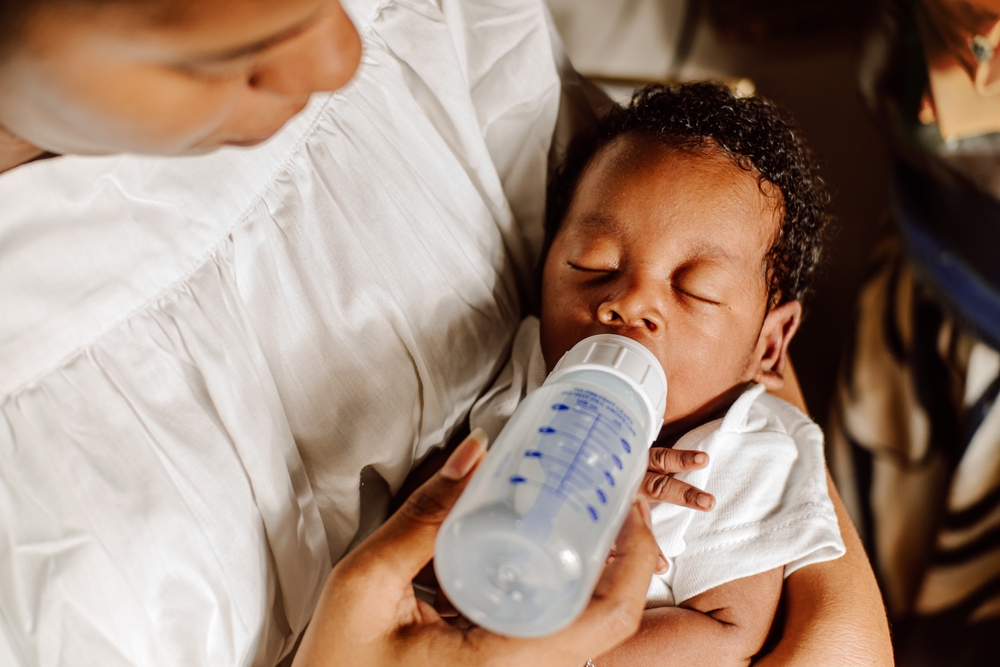

Twelve years is a long time to want something you can’t have. Long enough to grieve it in cycles, to stop and start hoping again, to sit through other people’s baby showers and smile in the right places while something inside you quietly closes a door. Bedriya Adem, a 35-year-old subsistence farmer from Ethiopia’s Harari Regional State, knows exactly how long that is. She spent a decade and two years in that particular kind of silence, praying for one child, watching the years move, and carrying the weight of a community that had opinions about her empty arms.
Then, in early May 2026, she gave birth to five babies at once.
Not one. Five. Four boys and a girl, delivered by Caesarean section at Hiwot Fana Specialised Hospital on a Tuesday evening, all of them alive, all of them breathing. The kind of news that doesn’t have a template for how to receive it, because nothing in the previous twelve years would have prepared anyone for it. Not Bedriya, not her husband, not the doctors who had their own moment of astonishment to manage. The story spread quickly across the world, and it’s not hard to understand why. Some things cut through the noise because they carry something true about hope and time and the absolute refusal of life to be predictable.
Twelve Years, One Prayer
Bedriya described her long wait simply: “I prayed for just one child, and Allah gave me five.” That line has been quoted everywhere since the story broke, and it keeps landing because it holds so much inside it, the smallness of what she asked for, and the scale of what arrived.
She had spent those years carrying not just personal grief, but the social weight of it too. Her husband reassured her that the child from his previous marriage was enough, but people in her village questioned her inability to have children. The psychological toll of infertility rarely gets talked about with the specificity it deserves. It isn’t just the medical appointments, the cycles of expectation and disappointment, the clinical language. It’s the village. It’s the questions at family gatherings. It’s the particular loneliness of wanting something that everyone around you seems to get without trying. Bedriya put it plainly: “I spent 12 years in pain, hiding myself, and praying constantly for children.”
According to K24 Digital, the pregnancy was confirmed to have occurred naturally, without IVF or any assisted reproductive technology, which the hospital does not offer, making the birth even more medically extraordinary. The chance of naturally conceiving quintuplets is about one in 55 million. To put that in perspective: you are statistically more likely to be struck by lightning multiple times in your lifetime than to conceive quintuplets without medical intervention. It is not the kind of number that means anything until you meet the person it happened to.
What the Doctors Found
Bedriya delivered four boys and a girl through a Caesarean section at Hiwot Fana Specialised Hospital. Doctors initially told her she was expecting four babies, and the fifth was only discovered during the delivery itself. There is something almost comic about that revelation, in the best possible way. Twelve years of hoping for one, told to expect four, and then a fifth baby arriving as if to say: just in case you needed confirmation that the universe has its own schedule.
Hospital medical director Dr. Mohammed Nur Abdulahi confirmed that the babies weighed between 1.3 and 1.4 kilograms at birth and were responding well to medical care. Both the mother and the babies were described as being in stable condition and receiving ongoing care.
Punch Nigeria reports that the quintuplets were named Naif, Ammar, Munzir, Nazira, and Ansar, and that despite the joy of the moment, Bedriya expressed concern about how she would provide for the children as a subsistence farmer. Five names for five children that weren’t supposed to exist at all, according to every probability table medicine has ever drawn up.
What a Quintuplet Pregnancy Actually Means, Medically
For anyone who has spent time in the world of fertility and pregnancy, the word “quintuplets” arrives alongside a quiet, immediate understanding that the story is not simple. A natural pregnancy carrying five babies is medically extraordinary in a way that requires an honest look at the numbers, because the joy and the complexity sit right next to each other in a quintuplet birth.
Research published in a peer-reviewed case study on quintuplet outcomes notes that the average gestation period for a quintuplet pregnancy is 28 to 29 weeks, compared to the roughly 39 weeks that a single-baby pregnancy would run. That’s roughly ten weeks fewer for five babies to develop before delivery, which carries real consequences. The length of gestation decreases with each additional baby, and higher-order pregnancies are almost always preterm. Babies born that early need significant medical support to breathe, regulate their temperature, and feed, which is precisely why the neonatal intensive care unit at Hiwot Fana became their home after delivery.
For anyone who has welcomed a premature baby or followed someone else through a NICU journey, the texture of that experience is familiar: the monitors, the tiny hands through the incubator porthole, the particular vigilance of the days and weeks that follow. Bedriya’s five babies are living inside that reality right now, and the coming weeks will be the ones that matter most.
The medical risks in a quintuplet pregnancy are not small. Higher-order multiple pregnancies are associated with increased risks of obstetric complications, including pre-eclampsia, gestational diabetes, and fetal growth restriction. For the babies, the primary challenge is prematurity itself, with underdeveloped lungs, low birth weight, and the need for intensive monitoring before their organs are ready to function independently. The fact that all five babies and their mother came through the delivery in stable condition is not a small thing. It is, by any medical measure, a remarkable outcome.
The Weight of What Comes Next
Bedriya said she is worried about how to provide for five children as a subsistence farmer, but remains hopeful: “I believe Allah will provide, through the support of my community and the government.”
That sentence carries a kind of weight that the feel-good headlines don’t always sit with. Five premature infants require sustained, intensive care. The cost, in money, in time, in physical and emotional labor, is staggering by any measure. The context of rural Ethiopia, where access to specialized maternal and neonatal healthcare is not a given, adds another layer to a story that is already full of them. Bedriya’s faith is real and her joy is unmistakable, but the practical reality of what she is walking into is genuinely hard.
This is not a reason to diminish what happened. The birth of five healthy babies after twelve years of pain is worth celebrating without qualification. But the story doesn’t end at the delivery room, and part of honoring it honestly is acknowledging that the next chapter involves a family that needs real, sustained support, medical, financial, communal, to write it well.
Read More: Mom Who Struggled With Infertility Shares Her Roller Coaster Story
What This Story Holds
There is something in Bedriya Adem’s story that resists easy categorization. It is not simply a miracle story, though it contains something miraculous. It is not simply a medical rarity, though the odds are almost incomprehensibly small. It is not simply an infertility story, though the twelve years of longing are at its heart.
What it is, underneath all of it, is a story about the specific courage it takes to keep wanting something after years of being told, by doctors, by biology, by your own body, that it may not come. To keep praying for one child when one child feels like it might never arrive. And then to find yourself, at 35, suddenly the mother of five, handed a reality so far beyond what you asked for that even your own words can’t quite hold it: “I cannot express my happiness in words.”
The world will move on to the next story quickly. That’s how news works. But in Harari Regional State, there are five small humans in a neonatal unit learning to breathe outside a womb that held them for around 29 weeks, and a woman who spent twelve years hiding herself and praying is now learning what it means to be seen, as a mother, five times over, all at once.
AI Disclaimer: This article was created with the assistance of AI tools and reviewed by a human editor.