
You know that moment at the grocery store when you’re standing in the deli section, balancing a kid on your hip, and your eye lands on the package of hot dogs you’ve bought a hundred times? Something in you wonders if you should just put it back. Not because of some fleeting wellness trend – but because you’ve seen enough headlines to know there’s probably something to it. That quiet hesitation? Turns out it’s well-founded.
The foods that cause cancer have been studied by scientists for decades, and some of the findings are now official. Not “one study suggests” official. Not “a naturopath on Instagram says” official. We’re talking about the World Health Organization’s cancer research arm – the International Agency for Research on Cancer, or IARC – spending years reviewing thousands of independent studies and publishing formal classifications that governments and health agencies around the world actually use. And some of what’s landed on their WHO list of foods that increase cancer risk is stuff that’s probably in your fridge right now.
Before you throw everything out, hang on. A classification on this list doesn’t mean eating a hot dog will give you cancer. The system is more specific than that, and understanding it actually takes the panic down a notch. Let’s walk through what WHO and IARC actually say, what it means for real life, and which everyday foods are linked to higher cancer risk – because you deserve the actual science, not the watered-down version.
First, What Does a WHO Carcinogen Classification Actually Mean?
This is the piece most articles skip, and it matters a lot. The IARC classifications describe the strength of the scientific evidence about whether an agent can cause cancer, not how dangerous it is at normal exposure levels. Think of it like a confidence rating, not a death sentence.
The four categories work like this: Group 1 means “carcinogenic to humans” – alcohol and tobacco sit here. Group 2A means “probably carcinogenic” – red meat falls in this one. Group 2B means “possibly carcinogenic” – which is where things like aspartame landed.
For example, IARC considers there to be strong evidence that both tobacco smoking and eating processed meat can cause cancer, so both are listed as “carcinogenic to humans.” But smoking is much more likely to cause cancer than eating processed meat, even though both are in the same category. That context is everything. It’s the difference between “this is worrying and worth knowing about” and “never eat another slice of salami again.”
Carcinogens don’t cause cancer at all times or under all circumstances. A carcinogen doesn’t always cause cancer in every person, every time there is any kind of exposure. Some may only be carcinogenic if a person is exposed in a certain way. Quantity, frequency, and individual genetics all play a role. With that grounding in place, here’s what’s actually on the WHO carcinogen foods list and why it matters to the person putting together the weekly grocery run.
The WHO Group 1 Carcinogens in Food – The Confirmed List
These are the foods and dietary components for which IARC has found sufficient evidence of cancer causation in humans. This is the cancer-causing foods list you actually need to know.
Processed meats are the big one. IARC places processed meats – hot dogs, bacon, ham, sausage, and cold cuts – in Group 1: Carcinogenic to Humans. The IARC Working Group concluded that eating processed meat causes colorectal cancer. An association with stomach cancer was also seen, but the evidence is not conclusive.
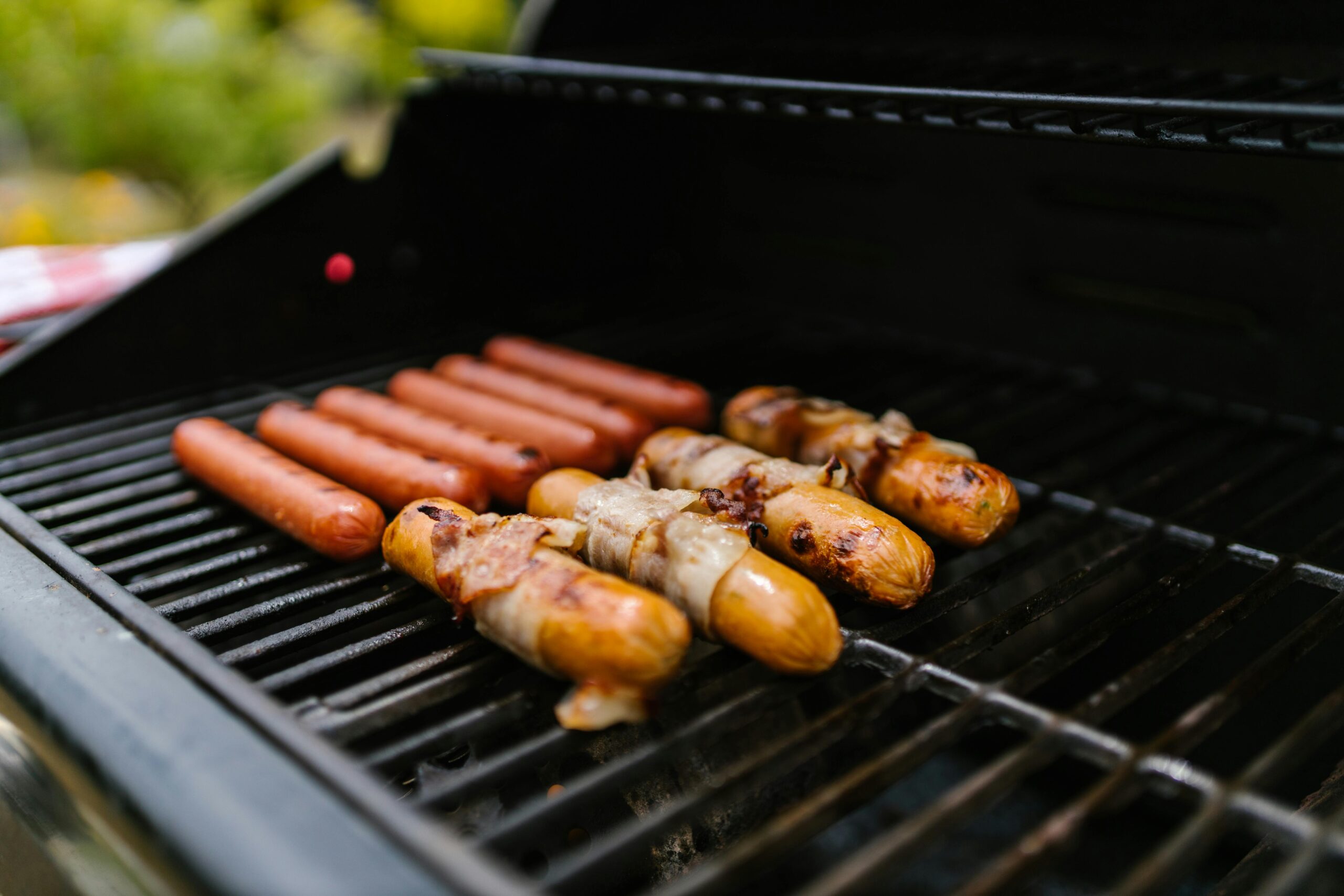
The numbers are specific here. Experts found that each 50-gram portion of processed meat eaten daily increases the risk of colorectal cancer by 18%. A 50-gram portion is roughly two strips of bacon or one hot dog. That’s not a massive amount, which is why the public health relevance is real even if the individual risk stays relatively small.
Why does processing make meat riskier? The curing of meats with nitrite can produce carcinogenic N-nitroso compounds, and the smoking of meat produces polycyclic aromatic hydrocarbons (PAHs). High-temperature cooking of meat also produces carcinogenic heterocyclic aromatic amines. Those aren’t just letters – they’re chemicals that can damage DNA.
Alcoholic beverages are also a confirmed Group 1 carcinogen – and this is the one that surprises the most people. IARC classified alcoholic beverages as carcinogenic to humans (Group 1) on the basis of sufficient evidence of causality for oral, pharyngeal, laryngeal, esophageal, liver, colorectal, and breast cancers.
Worldwide, in 2020, an estimated 741,300 new cancer cases (4.1% of all new cancer cases) were attributable to alcohol consumption. And the alcohol-breast cancer connection is particularly relevant for women. Alcohol consumption, even at relatively low levels, can cause female breast cancer. In 2020, almost a third of breast cancers caused by alcohol in the WHO European Region resulted from drinking no more than 1-2 alcoholic beverages per day.
Any alcoholic beverage can cause cancer because both ethanol and acetaldehyde – a byproduct created when ethanol is metabolized in the body – are carcinogenic. So it’s not a wine-versus-spirits conversation. The type of drink doesn’t change the equation much. The WHO’s own page on alcohol and cancer puts it plainly: there is no safe level of alcohol consumption in relation to cancer risk.
Aflatoxins – a naturally occurring mold toxin – round out the main dietary Group 1 carcinogens. Since the early 1970s, aflatoxin has been repeatedly examined as a human carcinogen, eventually resulting in its classification as carcinogenic to humans (Group 1). Classic investigations have documented the greater-than-multiplicative interaction between aflatoxin and hepatitis B virus, which is important in liver cancer development in Africa and Asia. Aflatoxins grow on improperly stored peanuts, corn, and grains – they’re less of a concern in countries with tight food safety regulations, but they’re worth knowing about, especially when buying bulk grains or nut butters with limited quality oversight.
The Group 2A Foods – “Probably Carcinogenic”
These are the foods where the evidence is strong but not yet at the “sufficient” threshold. That doesn’t mean you get to ignore them.
Red meat – beef, pork, lamb, veal – sits firmly in Group 2A. Red meat was classified as Group 2A, “probably carcinogenic to humans.” The classification is based on limited evidence from epidemiological studies showing positive associations between eating red meat and developing colorectal cancer, as well as strong mechanistic evidence.
The strongest, but still limited, evidence for an association with eating red meat is for colorectal cancer. There is also evidence of links with pancreatic cancer and prostate cancer. The American Institute for Cancer Research recommends eating no more than 18 ounces of cooked red meat per week and avoiding processed meats altogether – guidance they’ve maintained for years.
High-temperature cooking methods produce their own carcinogenic compounds, and IARC has evaluated several of them at Group 2A and 2B levels. Cooking at high temperatures or with food in direct contact with a flame or hot surface, as in barbecuing or pan-frying, produces more of certain types of carcinogenic chemicals, such as polycyclic aromatic hydrocarbons and heterocyclic aromatic amines. This isn’t an argument against ever grilling a burger again – it’s an argument for not charring everything black and for mixing up your cooking methods.
Acrylamide is another Group 2A concern worth knowing. Acrylamide forms in starchy foods cooked at temperatures exceeding 120°C through Maillard reactions between asparagine and reducing sugars, especially during frying or baking. Translation: it’s what forms when you cook potatoes, bread, and cereals at high heat until they brown significantly. The major food sources of acrylamide are French fries and potato chips; crackers, bread, and cookies; breakfast cereals; canned black olives; prune juice; and coffee.

A large number of epidemiologic studies in humans have found no consistent evidence that dietary acrylamide exposure is associated with the risk of any type of cancer – so this one remains genuinely uncertain for humans, despite the animal study data. The National Cancer Institute puts it clearly: more research is needed before firm conclusions can be drawn. The practical takeaway? Don’t burn your toast. Literally. Lighter browning means less acrylamide.
The Group 2B Foods – “Possibly Carcinogenic”
This is the biggest category and the one that generates the most confused headlines. Group 2B simply means the evidence exists but is limited. It’s where IARC files things while the science keeps developing.
Aspartame made waves in 2023 when IARC classified it as a Group 2B possible carcinogen. IARC classified aspartame as possibly carcinogenic to humans (Group 2B) on the basis of limited evidence for cancer in humans, specifically for hepatocellular carcinoma, which is a type of liver cancer.
Here’s the part that got lost in most coverage: at the same time, the WHO’s separate food safety committee – JECFA – reviewed the same data and reaffirmed the safety of aspartame. Despite the “possibly carcinogenic” classification of aspartame by IARC, the acceptable daily level of consumption remains equivalent to about 10 half-liter cans of artificially sweetened soda for a person weighing 70 kg. So you’d have to be chugging a remarkable amount of diet soda every single day before you’d even approach the level of concern. The FDA also rejected IARC’s classification and reaffirmed that aspartame is safe at current intake levels. This is a “watch this space” situation, not a “throw out the sugar-free gum” situation.
Asian-style pickled vegetables – particularly certain fermented and salted varieties – also carry a Group 2B classification. The concern centers on high nitrite content and specific processing methods used in some traditional preparations, not on all pickled or fermented foods. Regular grocery-store pickles and sauerkraut don’t fall into this concern.
What Does This Actually Mean for Your Family?
Here’s where the real conversation starts. Between 30 and 50 percent of all tumors are known to be preventable by eating a healthy diet, staying active, avoiding alcohol, smoking, and being overweight. That’s not a number to dismiss. It means diet genuinely matters – not in a “one food will save or kill you” way, but in the way that patterns across years add up.
The American Cancer Society’s nutrition guidelines frame it well: the goal is to limit processed meats, reduce red meat intake, limit or avoid alcohol, and build the bulk of the diet around vegetables, whole grains, fruits, and legumes. That’s not a dramatic overhaul – it’s incremental. More home cooking. Less reliance on packaged deli meats for lunches. Keeping alcohol awareness in mind rather than treating it as a freebie.
A few genuinely practical swaps that don’t require a personality change: swap the cold cuts in the kids’ sandwiches for roasted chicken or egg salad a few days a week. When you do grill, avoid charring and marinate first – research suggests marinating can significantly reduce the formation of harmful compounds during cooking. Cook starchy foods like potatoes to a golden color rather than deep brown. And with alcohol, even trimming back by one or two drinks a week moves the needle.
None of this is about fear. It’s about knowing what the actual science says so you can make choices that feel right for your family – without needing a chemistry degree or a twelve-step wellness plan to do it.
The Takeaway
What foods does WHO say cause cancer? The confirmed Group 1 list includes processed meats, alcoholic beverages, and aflatoxins. Is red meat classified as a carcinogen by WHO? Yes – as a Group 2A “probable” carcinogen, meaning the evidence is strong but not yet at the “sufficient” level. What are Group 1 carcinogens in food? They’re substances for which IARC has found sufficient human evidence to conclude cancer causation – and in the food world, processed meats and alcohol are the clearest examples.
The big picture here isn’t panic. It’s pattern. Nobody is claiming that a single hot dog at a backyard cookout causes colorectal cancer. What the research consistently shows is that daily habits across years are what shift risk. Knowing which foods are formally linked to higher cancer risk gives you the clearest possible starting point for making those habits count – and you deserve to have that information straight, without anyone watering it down.
Disclaimer: This article was written by the author with the assistance of AI and reviewed by an editor for accuracy and clarity.