
You know that moment when you’re speed-walking through an airport, bags banging against your hips, scanning the departure boards while mentally calculating if you can still make it? Your heart is pounding. Your shoes are not built for this. Someone in your group is definitely slower than you’d like. And somewhere in the back of your mind, you already know – you’re probably not going to make it.
Most of us have been there. And most of us know exactly how that story ends: standing at a closed gate, trying not to cry, while a gate agent offers you a polite shrug and a voucher for a flight that leaves six hours later.
But every so often, the story ends differently. And when it does, the internet loses its mind – for all the right reasons.
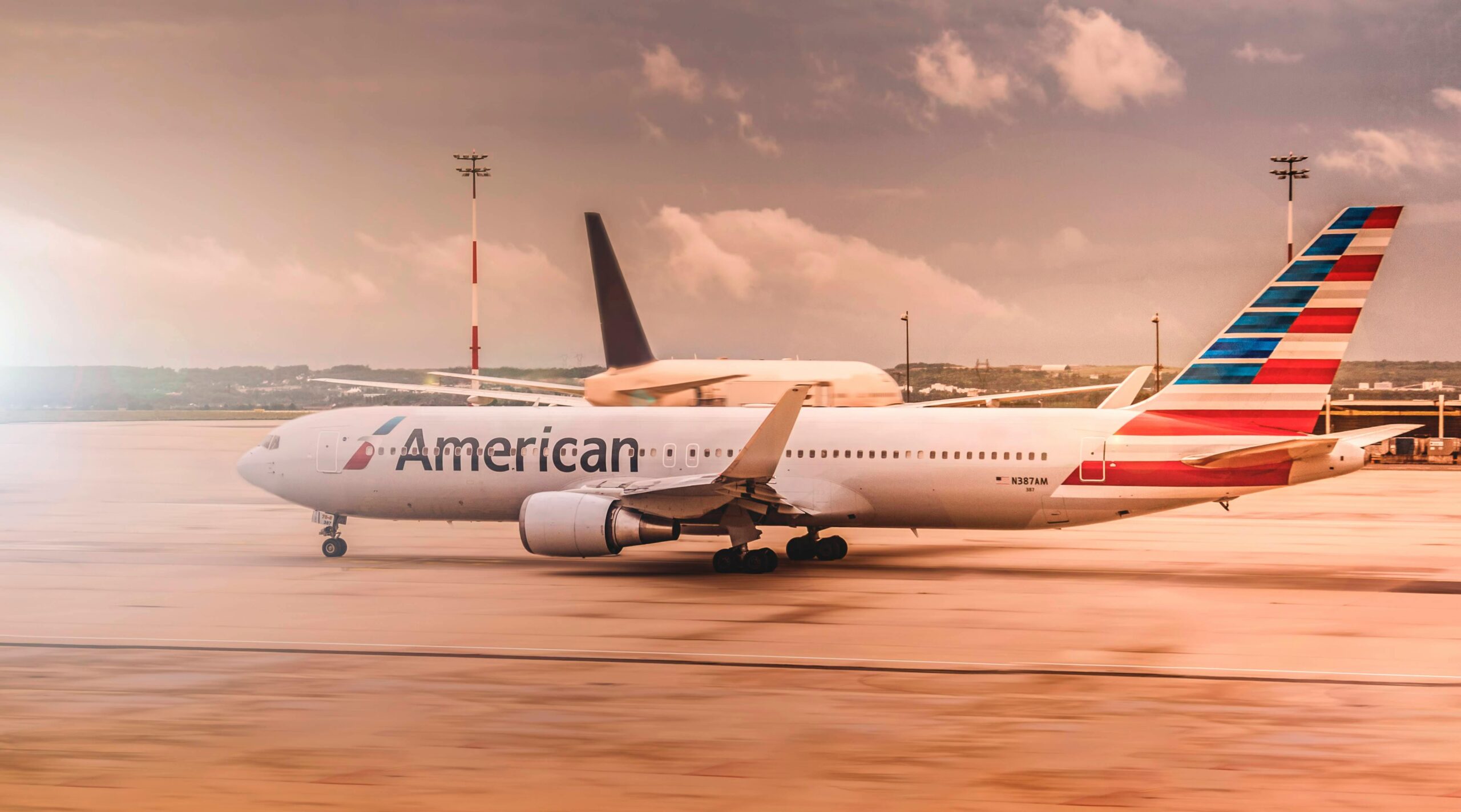
The American Airlines Pilot Who Holds a Flight for Pregnant Passenger at Dallas Fort Worth
Brittany Kamerman was traveling with seven friends to celebrate her friend’s 30th birthday in Panama City Beach, Florida. It was supposed to be a fun girls’ trip. It nearly became a stress spiral at one of the country’s busiest airports.
The whole thing unfolded at Dallas-Fort Worth International Airport. The group had been on a flight out of Salt Lake City that ran late, which left them with a shrinking window to make their connection. They landed just 30 minutes before the next flight was scheduled to leave, with the next gate an 18-minute walk away. Do that math and you’ll quickly realize the margin was basically nonexistent – and that’s before accounting for the fact that one of the women in the group was seven months pregnant.
Kamerman made it to the gate first and did what anyone in her position would do: she begged. She pleaded with the gate agents to hold the doors, explained the situation, mentioned the pregnant friend still making her way through the terminal. The gate agents said no. When the airline’s front-line staff couldn’t – or wouldn’t – help, Kamerman made a decision that most people would never consider. She walked onto the plane herself to find someone who could.
“Well, They Won’t Leave Without Me”
What happened next is the part that has been replaying on social media ever since. The pilot happened to hear Kamerman explain the circumstances to a flight attendant and asked for more details. When he learned of the situation, he was willing to help – telling her, “Well, they won’t leave without me,” as he stepped off the plane to wait for her friends and personally escort them on board.
Read that again. The captain of a commercial flight stepped off his own aircraft to walk a group of stranded women down the jet bridge himself.
The joyous group was filmed approaching the gate and running down the jet bridge in a TikTok video posted by Kamerman, in which she describes the pilot as “Our hero.” The video garnered over a million views.
Commenters in the thousands agreed. And one reaction stood out for what it actually explained about why this moment was so rare. One notable comment from someone who said they used to work for an airline read: “Good on the pilot because they’re really the only ones who can do this. The gate agent can’t make that call.” That last part matters more than it might seem. It gets to the heart of why this story hit so hard – and why it keeps getting shared.
Can an Airline Pilot Actually Hold a Flight for a Passenger?
Yes – and the pilot is essentially the only person with the authority to do it unilaterally. Under Federal Aviation Regulations, the pilot in command of an aircraft is directly responsible for, and is the final authority as to, the operation of that aircraft. That authority doesn’t just cover what happens in the air. It covers what happens on the ground too, including whether a plane stays at the gate a little longer.
Gate agents operate within a completely different chain of command. They’re bound by scheduling systems, airline protocols, and the pressure to keep departure times tight. Holding a flight – even by a few minutes – has ripple effects that can cascade through a hub airport’s entire schedule. American Airlines operates out of ten hubs, anchored by Dallas Fort Worth International Airport, the airline’s largest. DFW runs thousands of daily movements, and every delay has a downstream consequence. Gate agents know this. They’re not being heartless when they say no – they’re largely not empowered to say yes.
But a pilot? There are nearly 6,800 daily flights operated by American Airlines to approximately 350 destinations in 48 countries. The machine is enormous and tightly scheduled. Which makes it all the more remarkable when someone inside it decides to step outside the machine for a moment – literally.
What Happens if a Pregnant Woman Misses a Connecting Flight?
This is where the story stops being purely heartwarming and starts being genuinely useful to know. Because if that pilot hadn’t stepped in, this pregnant traveler would have been left to navigate a pretty unfriendly set of rules on her own.
If a missed flight connection is caused by the airline – a delay on the first leg, for instance – the airline is usually responsible for rebooking you onto the next available flight at no extra cost. That sounds reassuring until you realize that “next available flight” might be many hours away, and there’s no guarantee you’ll get a seat. Airlines aren’t legally required to provide accommodations or support for every missed connection, even when the delay is out of your control.
Being pregnant adds a layer of complexity. American Airlines requires pregnant passengers to provide a doctor’s certificate stating they’re fit to fly if they’re due within 4 weeks of the flight. If the flight is within 7 days of the delivery date, a special approval form is required, and a special assistance coordinator from American Airlines is assigned. A seven-months-pregnant traveler wouldn’t typically be near those thresholds, but being stuck at a large airport for hours – with limited seating, poor air circulation, and the physical demands of third-trimester travel – is no small thing.
The American College of Obstetricians and Gynecologists notes that any type of travel lasting 4 hours or more doubles the risk of deep vein thrombosis (DVT), and being pregnant is an extra risk factor. An unexpected hours-long layover at DFW isn’t just an inconvenience for a pregnant traveler. It’s a genuine health consideration.
There are newer protections worth knowing about. The Securing Growth and Robust Leadership in American Aviation Act, signed into law in May 2024, brought meaningful changes. Key provisions include guaranteed no-hassle refunds for canceled or significantly delayed flights, mandatory upfront disclosure of baggage fees, and a ban on fees for children to sit with a parent or adult travel partner. But there’s still no specific protection that gives pregnant travelers priority rebooking, or that requires airlines to hold flights for vulnerable passengers. Which is exactly why this pilot’s decision felt so extraordinary.
Tips for Passengers Who Are Pregnant and Flying
Flying during pregnancy is common, but it helps to plan ahead and reduce unnecessary strain. Start by checking airline policies before booking. Many carriers follow guidance similar to International Air Transport Association rules, which often limit travel after a certain stage of pregnancy. It is also sensible to confirm advice from American College of Obstetricians and Gynecologists guidelines, especially if there are any existing health concerns.

Seat choice matters more than most expect. An aisle seat allows easier movement, which supports circulation during longer flights. Try to stand, stretch, or walk every hour when possible. Wearing compression socks can also help reduce swelling and lower the risk of circulation issues. Staying hydrated is equally important, since cabin air tends to be dry. Keep a water bottle nearby and avoid drinks that may dehydrate you.
Comfort should be treated as a priority rather than a luxury. Loose clothing, supportive shoes, and a small pillow for lower back support can make a noticeable difference. Some travelers also find that packing light snacks helps manage nausea or sudden hunger, especially on longer routes.
Security screening is generally safe, but you can request a manual check if you feel uneasy. It helps to arrive earlier than usual to avoid rushing, which adds stress. Carry any medical documents in your hand luggage, including a note from your healthcare provider if required by the airline.
Finally, listen to your body. If something feels off, do not ignore it. Inform cabin crew early so they can assist if needed. A calm, prepared approach makes the entire experience more manageable and reduces avoidable discomfort.
Has an American Airlines Pilot Ever Delayed a Flight for a Passenger?
It’s hard to find documented cases – partly because airlines don’t exactly issue press releases when their pilots decide to hold departures for stragglers. What makes the Kamerman story so unusual isn’t just that it happened. It’s that it was caught on video and posted at a moment when people are genuinely starved for evidence that the system can still bend toward the human.
The aviation industry is enormous, efficiency-driven, and increasingly automated. American Airlines is the largest airline in the world in terms of passengers carried and daily flights, operating nearly 6,800 flights per day to almost 350 destinations in 48 countries. At that scale, the whole enterprise runs on tight margins – fuel calculations, crew scheduling, gate turnarounds, slot times. Every minute a plane sits at the gate costs money. Every delay has a downstream consequence somewhere else.
And yet. A pilot heard a desperate woman explain her situation to a flight attendant. He asked a question. He made a human decision. And then he got off his own plane and walked out to meet them.
That’s not a systemic fix. It’s not a policy. It’s not something you can put in an app or automate with AI. It’s one person, with the authority and the decency to use it, choosing to do something that the official processes had already said wasn’t going to happen.
Why This Story Keeps Getting Shared
Viral moments in the airline world usually involve something going badly wrong – someone getting removed from a plane, a tantrum at a gate, luggage carousel chaos. The default setting for air travel content online is frustration, and it’s not hard to understand why. The whole experience has been steadily squeezed: smaller seats, more fees, thinner margins for everything including human error.
When communicating with airline staff, politeness is key – what happens next is largely the result of their discretion, and most airline representatives want to help, but their options are limited by company policies. That’s the standard advice for a missed connection. Be nice. Manage your expectations. Hope someone has the latitude to help.
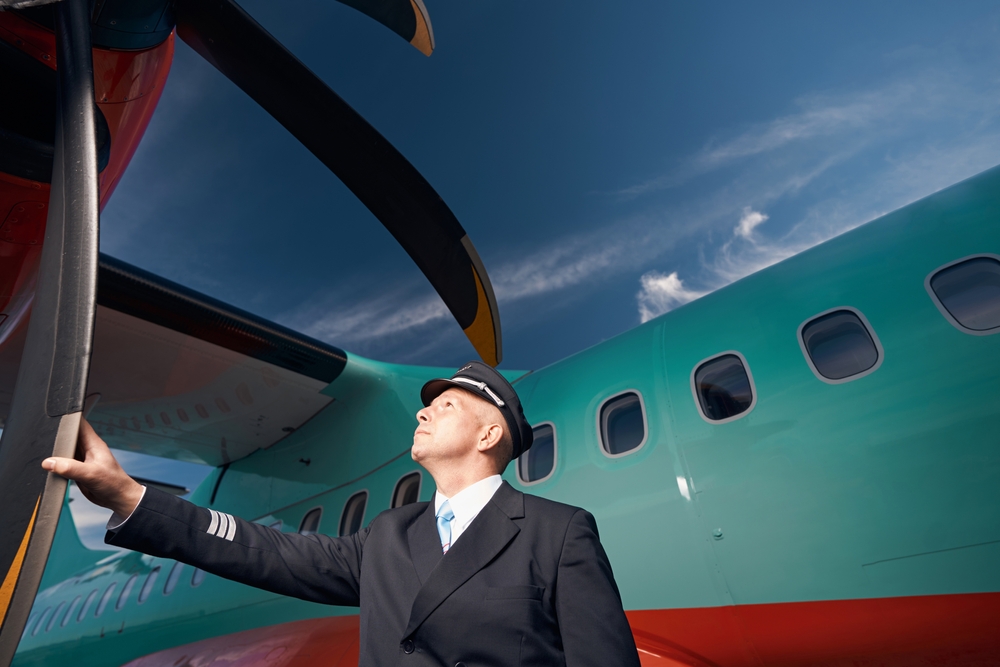
What the American Airlines pilot at Dallas Fort Worth did was take that latitude and actually use it, in the most visible and unhesitating way possible. He didn’t make a call from the cockpit. He didn’t send a message through the flight attendant. He stepped off the aircraft. That’s the detail that people keep returning to. Not just the decision, but the gesture of it.
Brittany Kamerman got her flight. Her seven friends made it. Her pregnant friend – seven months along, presumably exhausted and stressed after a sprint through one of the biggest airports in the country – got to sit down on a plane instead of at a departure gate, waiting for the next available seat to Panama City Beach.
The pilot didn’t get named in the original video. He didn’t need to be. He already knew what he’d done.
Read More: 7 Airlines That You Should Avoid, According to Seasoned Flyers
How to Make the Most of Your Travel Experience
A smoother travel experience often comes down to preparation that goes beyond the basics. Start by building a simple plan for your journey, even if it is flexible. Knowing your airport layout, gate location, and boarding time removes unnecessary guesswork. Many travelers use apps like Google Maps to preview terminals or find amenities before arriving. This small step can save time and reduce confusion in unfamiliar spaces.
Entertainment and mental comfort play a larger role than most expect. Download shows, podcasts, or playlists in advance using platforms such as Netflix or Spotify. A curated selection helps pass time quickly and keeps the journey feeling intentional rather than drawn out. Noise-canceling headphones can also improve the overall environment, especially on busy flights.
Food choices can shape how you feel during and after travel. Instead of relying entirely on airport options, research what is available ahead of time or plan a proper meal before departure. If you have a long layover, treat it as part of the experience rather than dead time. Some airports offer lounges, quiet zones, or even short-stay facilities that allow you to reset before continuing.
Another overlooked factor is mindset. Travel delays and minor disruptions are common, so approaching them with a level head makes a difference. Viewing delays as time to rest, catch up on reading, or simply pause can shift the experience from frustrating to manageable.
Lastly, give yourself something to look forward to on arrival. Whether it is a good meal, a comfortable stay, or a simple walk in a new place, having a clear reward at the end of the journey adds purpose to the process.
Disclaimer: This article was written by the author with the assistance of AI and reviewed by an editor for accuracy and clarity.