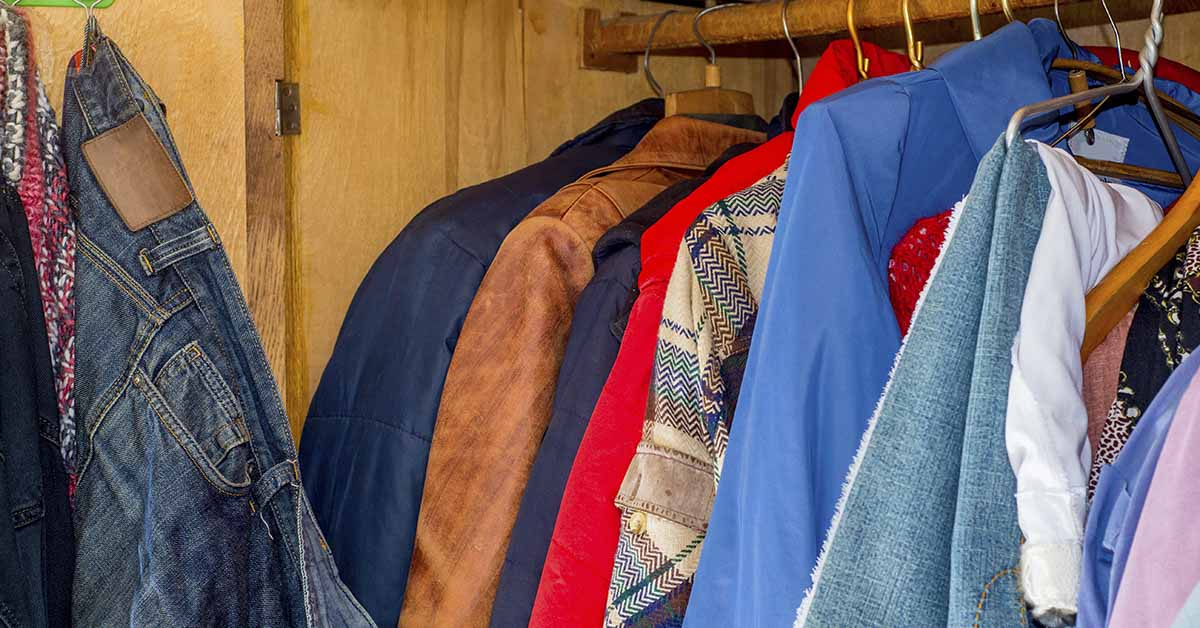

The clothes of a loved one who has passed do not simply hang in a wardrobe. They carry memories, and sometimes even a trace of the person themselves. A jacket might still hold their scent, while a sweater keeps the familiar shape of how they wore it. Feeling a strong pull toward wearing their things or feeling uncomfortable at the very thought are both completely natural responses. Deciding whether to wear a deceased person’s clothes involves grief, cultural traditions, spirituality, and your own personal boundaries. Understanding where these feelings come from can help you make a choice that feels right for your own journey.
People rarely ask this question out of simple curiosity. It more often surfaces during a quiet, heavy moment when you stand in front of a loved one’s wardrobe, clutching a single piece of clothing and wrestling with feelings that pull you in opposite directions. That emotional collision points to something true about grief: it is complicated, and it seldom moves in a straight line. That is why the question of whether to wear these clothes deserves an answer that is both genuinely empathetic and completely honest.
What Clothes Actually Carry After Someone Dies
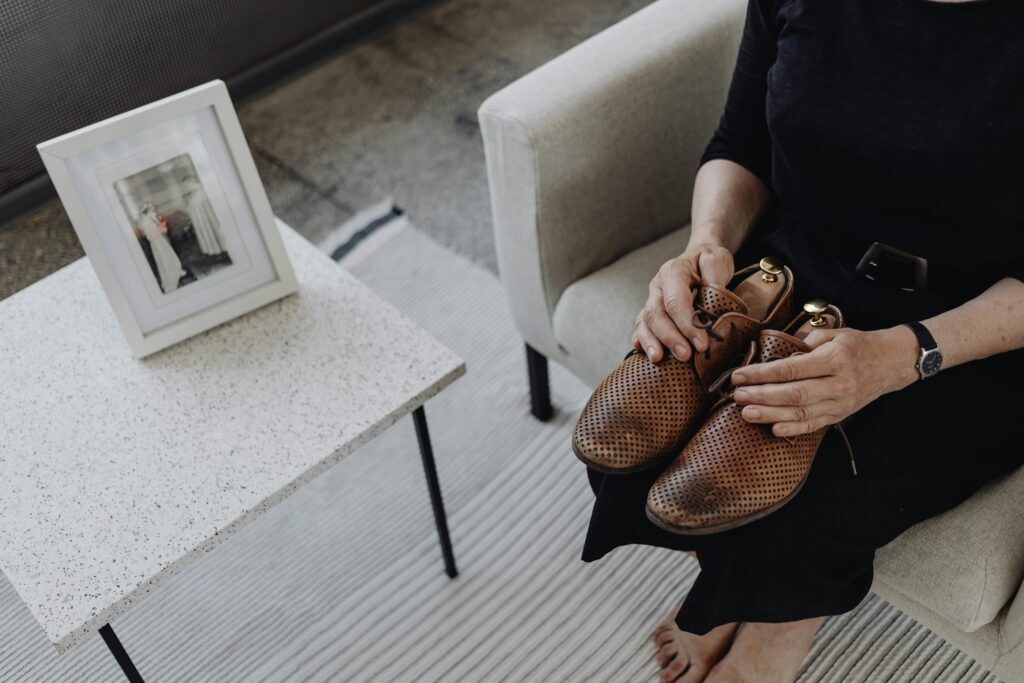
Clothing holds far more than fabric and thread. Over the years, a garment absorbs the intimate details of a person’s life: the scent of their signature perfume on a collar, the way a favorite jacket stretches at the elbows, or the memory of a shirt they wore to every family gathering without fail. This deep personal connection sets clothing apart from most other household objects. When someone passes away, their clothes survive as a tangible form of memory, and that physical link can feel so powerful that simply touching the fabric brings a brief but real sense of reconnection with the person you lost.
The psychology of holding on
Research into grief and possessions shows that people move through distinct emotional stages when confronting a deceased person’s things. Some experience numbness and cannot touch anything for months. Others cling to objects tightly, seeking physical comfort in them. Some feel an urgent need to clear everything out immediately. Many eventually reach a place where they can hold onto meaningful items without those items controlling their emotional state. All of these responses are normal parts of grief, and no single timeline is more correct than another.
One important nuance from grief research
A 2023 systematic review of continuing bonds research published in Death Studies found that people who rely heavily on a deceased person’s belongings for emotional comfort may face a harder grief journey than those who do not. The study by Boelen et al. specifically identified a strong attachment to possessions as a predictor of more intense, prolonged grief symptoms over nine months. This does not mean you need to throw everything away. It does suggest, however, that using objects to sidestep the emotional work of loss can slow down healing. There is a real difference between occasionally wearing a loved one’s clothes for comfort and using those same clothes to avoid accepting the reality of what happened. Recognizing that distinction matters, because the way you engage with their belongings can either support your healing or quietly get in the way of it.
What Different Cultures Believe About Wearing a Deceased Person’s Clothes
Hindu tradition holds that personal belongings absorb the owner’s energy during their lifetime and that this energy lingers in objects after death. Clothing carries this belief most strongly, given how closely it contacts the body. For this reason, Hindu practice generally discourages keeping or wearing a deceased person’s clothes. Instead, many families donate the items to people in need, viewing this act of charity as a way to help the departed soul find peace and continue its spiritual journey.
Islamic tradition and the emphasis on release
Islamic practice places strong emphasis on charity and on protecting the living from prolonged sorrow. Keeping a deceased person’s clothes in the home is generally viewed as an invitation to extended grief. Donating them to those in need is considered an act of goodness that benefits the soul of the departed. While some may seek comfort in a loved one’s attire, it is typically not advised to wear the clothing of those who were close to you. The primary focus should remain on the act of letting go rather than clinging to physical reminders.
Christianity and the range of approaches
In Christianity, views vary widely across denominations and cultural communities. Some Christian communities encourage keeping and repurposing a loved one’s belongings as a practical act of stewardship. Others, particularly in more traditional communities, associate retaining the deceased’s clothing with an unhealthy attachment to the physical world. Many Christian traditions emphasize that the soul has moved on, and the body and its coverings no longer represent the person. The focus shifts to memory, prayer, and legacy rather than physical objects, though the decision ultimately rests with the individual and their family.
Jewish tradition and the ritual of Keriah
Jewish tradition gives clothing a direct and powerful role in mourning. The practice of Keriah, the ritual tearing of garments, is one of the most recognized expressions of grief in Judaism. When a loved one dies, mourners tear a piece of their own clothing as a physical expression of loss. The Torah and Tanakh record this practice going back to figures including Jacob, upon believing Joseph was dead, and David, upon hearing of Saul and Jonathan’s deaths. The torn garment can be mended after the shiva period ends, symbolizing the gradual movement from acute grief toward healing.
African and Indigenous traditions
In many African traditions, the garments and belongings of the deceased are treated with significant care, as they are believed to retain the individual’s spirit or presence. Some traditions require specific rituals, such as washing or cleansing items, before they can be safely used or passed on. In other communities, wearing a deceased elder’s clothing is a form of honoring their memory and maintaining continuity across generations. The meaning depends heavily on the specific community, the circumstances of the death, and the relationship between the living person and the deceased. Generalizing across all African traditions misrepresents the diversity of these beliefs, so seeking guidance from within your own community or lineage matters here.
Western secular culture and personal choice
Western secular culture tends to treat this as a personal and individual decision. Victorian mourning culture once imposed strict dress codes, including the expectation that widows wear black for years after a husband’s death. Those formalities have largely disappeared. Today, most people in Western cultures make their own choices based on what feels emotionally appropriate. In Western secular culture, deciding whether to keep a loved one’s clothing is considered a deeply personal choice. While Victorian-era customs once dictated formal mourning attire and strict timelines, modern society lacks specific cultural prohibitions. Individuals today process grief in varied ways: some find comfort in wearing a parent’s sweater, others preserve a sibling’s jacket in a closet for years, and some choose to donate everything quickly. Each of these paths is socially acceptable.
These cultural and spiritual traditions differ widely, but they all agree on one thing: a deceased person’s clothing carries meaning that goes far beyond its practical use. It becomes a powerful symbol. The way you choose to handle these items reflects your own grieving process, your beliefs about what comes after death, and the kind of connection you want to keep with the person you have lost.
Should You Keep and Wear the Clothes?
If putting on their sweater feels like a source of comfort and you can move through your day without it pulling you into prolonged sadness, that is a healthy connection. Many grief counselors recognize that physical objects can provide real comfort in the early stages of loss. Research on continuing bonds theory, developed by Klass and colleagues and widely published since 1996, confirms that maintaining a connection to a deceased loved one through objects is a normal and often adaptive part of grief. The issue arises when that comfort becomes a way of avoiding the grief itself rather than moving through it.
Intentional use carries more meaning than habitual use
Some people choose to wear a loved one’s clothing to a specific occasion, a birthday, an anniversary, or a place they loved visiting together. This kind of deliberate use creates a moment of connection rather than a daily reliance on the object. It is the difference between a ritual and a habit. Rituals can be deeply healing. Habits built around avoiding grief tend to extend it. Consider whether you are reaching for the item consciously or automatically, because that distinction often reveals something important about where you are in your grief.
Give yourself time before deciding
Grief experts consistently advise against making significant decisions about a deceased person’s belongings in the immediate aftermath of a loss. Waiting several weeks or months before deciding what to keep, wear, or donate gives you the emotional clarity to decide you will feel at peace with later. If you are still in the raw early weeks of loss, there is no urgency. The clothes will wait.
Pay attention to how the item makes you feel
If you pick something up and something in you feels unsettled or heavy, pay attention to that response. Whether it comes from grief, from spiritual sensitivity, or simply from the emotional weight of the moment, it is worth listening to. You do not have to force comfort where none exists. Setting something aside is not the same as rejecting the person it belonged to. It simply means you are not ready yet, and that is a valid place to be. A practical approach for items you want to keep is to wash the garment and store it somewhere accessible but outside your daily line of sight, allowing you to maintain the connection without a constant visual trigger reopening fresh grief every time you open your wardrobe.
Should You Donate?
Donating a deceased person’s clothes is not a rejection of them. For many people and many traditions, it is an act of love, both for the person who died and for someone who genuinely needs practical help. The decision to donate can be just as intentional and meaningful as the decision to keep. Hindu, Islamic, and many African traditions specifically encourage donating the clothes of the deceased to those in need. The reasoning is consistent across all of them: the act of giving transforms something heavy into something purposeful. For people who hold these traditions, donating is not about letting go of the person. It is about directing their memory toward something useful and good.
The emotional relief of clearing space
For some people, clearing out a loved one’s belongings produces a sense of release rather than additional loss. Grief counselors note that some people find real relief in reclaiming physical space. If a wardrobe full of someone’s clothes fills you with sadness every time you walk past it, donating those items does not mean forgetting the person. It means choosing not to live inside a memorial that causes daily pain. Physical space and emotional space are more connected than most people realise.
Practical ways to donate with intention
Contact a local shelter or charity that accepts clothing donations. Before donating, ask family members whether anyone wants a particular piece. A brief conversation prevents regret and gives others the chance to hold onto something meaningful. Consider keeping 1 or 2 items before donating the rest, because you do not have to choose between keeping everything and keeping nothing. For pieces that carry particularly strong emotional weight, many craftspeople and online services transform clothing into quilts, blankets, or cushions, giving the fabric new life without requiring you to wear it yourself. For clothing in poor condition, textile recycling programs accept worn items rather than sending them to a landfill.
Donating as a family reduces conflict
Dealing with a deceased person’s belongings is rarely a solo task, and disagreements over what to keep, who gets what, or when to clear things out can add real strain to an already difficult time. Making donation decisions together as a family reduces that friction and gives everyone a shared sense of closure. It turns a potentially painful task into something collaborative. That shift in framing can make a significant difference to how the process feels for everyone involved.
Read More: Never Toss These 4 Things During a Family Member’s Funeral
When the Answer Stays Unclear
Deciding what to do with a loved one’s belongings rarely follows a straight path. You might pull a jacket from the wardrobe only to hang it back up or donate a bag of clothes and later wonder if you moved too fast. Feeling comfortable wearing something one day and completely overwhelmed by it the next is entirely normal. This back and forth is a natural part of grieving, not a sign that you are doing it wrong. Research into continuing bonds shows that our connection with the people we lose stays fluid rather than fixed. Because that relationship continues to evolve, something that feels impossible to face today may feel much more manageable a few months from now.
Spiritual unease deserves respect
If you feel spiritually uneasy about wearing a deceased person’s clothing, that feeling deserves respect regardless of whether you can explain it rationally. Many people describe a quiet discomfort when wearing such items, particularly in the period shortly after the death. Whether that discomfort comes from grief, from spiritual awareness, or simply from the emotional intensity of the moment, you do not have to push through it. Set the item aside. Return to it when you are ready, or not at all.
When to seek outside perspective
If you find yourself stuck and unable to make a decision, it may help to speak with someone. A grief counselor, a trusted friend, a religious leader, or an online support community can provide perspective when you are too close to the situation to see it clearly. You do not need to navigate this alone. The fact that you are asking at all shows that you are approaching your grief with care, and that matters more than any particular decision you make about what sits in that wardrobe. There is no universal rule. Whether you wear their jacket on a cold morning, pass it to someone who needs it, or tuck it into a box until you are ready, you are still honoring them. Grief, in every form it takes, is love with nowhere left to go.
A.I. Disclaimer: This article was created with AI assistance and edited by a human for accuracy and clarity.
Read More: 3 Inappropriate Colors to Avoid Wearing to a Funeral