

People still cling to an old promise about family life. They say a baby will steady a troubled home, deepen love, and make adulthood complete. It is an attractive promise because parenthood can bring pride, devotion, purpose, and fierce attachment. Yet the latest evidence does not support the simpler version of that story. A large 2026 cross-national study found almost no difference between parents and non-parents in hedonic well-being or life satisfaction, noting that having children doesn’t make you happy. It did find a very small rise in meaning in life, alongside a small drop in relationship satisfaction. That is a narrower result than most headlines suggest.
The distinction is important because many couples still ask the wrong question. They ask whether children make adults happier in a broad, lasting sense. The evidence points somewhere more complicated. Parenthood can make life more purposeful while also draining sleep, money, time, and romantic ease. A child can become the center of a family’s purpose without becoming a reliable source of baseline happiness. That tension runs through the newest paper, earlier reviews, and more recent cohort data. It also explains why this debate keeps producing louder headlines than the underlying research can support.
The study behind the claim

The new paper by Menelaos Apostolou and an international group of co-authors examined 5,556 participants from 10 nations. The researchers divided emotional well-being into two parts. Hedonic well-being covered positive and negative emotions, plus optimism. Eudaimonic wellbeing covered meaning and purpose in life. They also measured life satisfaction and relationship satisfaction. That design is important because popular conversation often treats all of those outcomes as one blur. In ordinary speech, people fold happiness, fulfillment, marriage quality, and life contentment into a single idea. The study did not make that mistake. It measured each domain separately, and that made the final picture much less sentimental. Parenthood did not emerge as a broad emotional upgrade. It emerged as a narrower shift, with some gains in purpose and little evidence of a general happiness bonus.
The headline result was not that parents were miserable. It was that there were “virtually no differences” between parents and non-parents across hedonic wellbeing and life satisfaction. Basically, having children doesn’t make you happy automatically. Parents did score higher on meaning in life, yet the effect was small. In the pooled sample, the adjusted difference for meaning was 0.90 points on a 10-point scale. On relationship satisfaction, parents scored 0.61 points lower on a 7-point scale. The authors also cautioned that, when countries were examined separately, those effects were significant only in the Greek sample. That does not nullify the pooled result. It does, however, warn against sweeping claims. The strongest conclusion from the study is not that children damage adult life. The stronger conclusion is that children do not deliver the stable happiness lift that many people expect.
The paper also pushes back against a belief the authors describe as widespread. Their review notes that the idea that parenthood brings greater happiness remains common across societies. Earlier datasets sometimes appeared to support that view. Yet some of those findings weakened after researchers controlled for confounding factors, especially relationship status. In the paper’s review of earlier work, the World Values Survey analyses changed after controls were added. Only meaning in life remained significant. That is not a small technical detail. It suggests part of the happiness story may reflect partnership, marriage, or surrounding stability, not children alone. Once those supports are separated from parenthood itself, the emotional picture becomes less dreamy and more exact.
That is also why the study will frustrate both sides of the argument. It does not flatter the comforting idea that children complete adult life. Yet it also does not support the fashionable claim that parenting simply ruins happiness. The authors summarise the pattern as a “small positive effect” on eudaimonic wellbeing. They found no lasting effect on hedonic well-being or life satisfaction. They also found a possible small negative effect on relationship satisfaction. That combination sounds less like a moral verdict and more like a demanding trade-off. People may gain purpose and identity while losing ease, spontaneity, and some romantic satisfaction. A serious reading of the paper has to hold all of those truths together at the same time.
Purpose rises while mood barely moves
One reason this subject confuses people is that purpose and happiness are not the same thing. A life can become more meaningful while becoming less light, less restful, and less enjoyable day to day. The 2026 study makes that distinction central. Its authors argue that raising children can support a stronger sense of direction. Parenthood creates a long commitment to something larger than the self. That logic fits the result they found. Meaning moved upward, yet hedonic well-being and life satisfaction barely moved. For many adults, that rings true at once. Caring deeply about something can enlarge a life without making daily experience easier. Parenthood may be one of the clearest examples of that tension. It can heighten responsibility, identity, and purpose while leaving the ordinary emotional balance largely unchanged.
The paper also explains a common contradiction. Many parents call children the best part of life, yet surveys show no major happiness dividend. Those statements may both be true. People can see children as central sources of love, purpose, and identity. They can also face exhaustion, stress, conflict, and financial pressure. The study’s review of prior work offers a clue. Earlier analyses using the World Values Survey found that, once relationship status was controlled, only meaning in life remained significant. That point changes the frame of the debate. Some of the apparent happiness gain may belong to a stable partnership, not to parenthood itself. Remove those surrounding supports, and the emotional payoff looks narrower. The warm language people use about children may describe value, attachment, and identity, not a permanent improvement in everyday mood.
A 2025 study in Social Science & Medicine adds another layer to that picture. Rosie Mansfield and Morag Henderson used English longitudinal data from 7,095 people at age 32. They reported modest mental health benefits of parenthood, but the advantages were not evenly spread. Parenthood improved life satisfaction more than it reduced psychological distress. Male parents showed better outcomes than female parents. Older age at first child was linked to better mental health. More children were linked to worse mental health for females, but not males. The same paper found that having a cohabiting partner and dual earnings protected mental health, especially for parents. Those details matter because they show how much context shapes the outcome. Parenting does not fall onto a blank surface. It lands inside sex differences, work patterns, finances, partnership quality, and timing.
That unevenness is exactly why the yes-or-no version of this debate keeps breaking down. The better question is not whether children make adults happy in some universal sense. The better question is which adults, under which conditions, at which stage of family life, benefit in which way. A widely cited review by Sonja Lyubomirsky, Sonja Nelson, and colleagues reached the same conclusion years earlier. Their model suggests parents do worse when sleep disturbance, money strain, and troubled marriages intensify. Parents do better when meaning, need satisfaction, positive emotion, and stronger social roles increase. That framework fits the newest findings very well. Parenthood may expand significance while placing daily comfort under pressure. Once that distinction is understood, the research starts to look less contradictory and more precise.
Romance meets the hard math of care
If the happiness claim weakens under scrutiny, the relationship claim looks even shakier. Many couples still absorb the idea that a shared child will lock them together emotionally. It can work that way in some homes, especially where the bond is strong and support is abundant. Research on the transition to parenthood has warned for years about early strain. The first stage with a child often tests a relationship. Brian Doss and Galena Rhoades reviewed that literature in Current Opinion in Psychology. They wrote that “the preponderance of evidence” suggests a negative effect. For most couples, relationship functioning drops after the first baby. They also note that parents and nonparents tend to converge later as children grow older. The early hit, however, appears real enough to take seriously.
That broader review fits the new 2026 study. It found lower relationship satisfaction among parents, even if the effect was small. It also fits the practical mechanics of family life. A baby changes how time is spent, how nights unfold, how money is used, and how desire competes with fatigue. Communication often shifts from affection to logistics. Minor irritations grow sharper when nobody is rested. Household labor becomes a loaded issue, especially when one partner carries more planning, more night waking, or more career disruption. Under those conditions, love does not suddenly disappear. Yet it can lose space, freshness, and freedom. The relationship starts functioning as a workplace, a childcare unit, and only partly a romance. Many couples do not break under that pressure, but many do experience a clear loss in ease and warmth.
A Psychology Today piece adds a useful layer. It summarises a newer international study. Compared with childless couples, parents showed “reduced love, passion, and intimacy,” while commitment did not differ. That pattern sounds plausible because it mirrors how long relationships often bend under pressure. Commitment usually survives stress better than passion does. People may stay loyal, serious, and devoted to the family project. Yet they may see less erotic energy, less playfulness, and less private tenderness. A couple can remain stable, cooperative, and outwardly solid while becoming less romantic behind closed doors. That is one reason the phrase relationship success needs more care than it usually receives. Stability and satisfaction are not identical outcomes.
None of this means children doom a relationship. Doss and Rhoades also point to moderators and buffers. Couples with stronger relationships before birth, fewer vulnerabilities, and less infant-related strain tend to fare better. Their review also notes that effective couple-focused interventions can help soften declines, even if average effects are modest. That should shape how the evidence is read. The problem is not parenthood in some abstract sense. The sharper problem is parenthood under stress. It is also parenthood without support, or parenthood sold as a cure for obvious cracks. A baby can expose those cracks fast. It can also widen those cracks. Miscommunication becomes costlier once care work turns relentless and sleep grows scarce.
Why the evidence keeps splitting in two
The literature on parenthood and well-being often looks contradictory because the subject itself is messy. Some studies report benefits, while others report neutrality. Others find losses, especially for women or for couples under pressure. Part of that confusion comes from selection. Sophie Cetre, Andrew Clark, and Claudia Senik found evidence of “positive selection into parenthood”. Put simply, happier individuals were more likely to become parents. That point changes how headline claims should be read. If happier adults are already more likely to have children, simple parent-versus-nonparent comparisons can flatter parenthood. They may import pre-existing differences into the result. A study may seem to show that children increase well-being. In part, it may only show who chooses parenthood.
Selection is not the only issue. Timing changes the picture as well. The move into early parenthood can be brutal during sleep disruption, role renegotiation, and financial adjustment. Later stages may look very different. Doss and Rhoades note that parents’ and nonparents’ relationship functioning tends to converge over time. That suggests the sharpest strain may cluster around the transition itself, not define the whole arc of family life forever. The 2025 English cohort study points in the same direction. Older age at first child, dual earnings, and a cohabiting partner protected mental health, especially for parents. Those details pull the debate away from ideology and back toward conditions. Support, timing, and stability shape outcomes more than slogans do.
Public policy also plays a major role, and more than many culture-war arguments admit. Jennifer Glass and colleagues found smaller happiness gaps in countries with more family support. Paid time off and childcare help were especially important. That finding cuts directly against fatalism. It suggests some of the strain blamed on children is actually produced by institutions, employers, and weak social infrastructure. Parents are not raising children in a vacuum. They are raising them inside labor markets, housing systems, transport burdens, and childcare costs. When the surrounding structure punishes caregiving, parenthood looks harsher. When the structure shares the load, the emotional penalty looks smaller. Debates about parental happiness, therefore, become distorted when they ignore the policy setting around ordinary family life.
That policy point also explains why people often argue past each other. One parent may describe family life in a generous welfare state. That system offers reliable leave, affordable childcare, and more predictable work hours. Another may describe family life inside a harsher system that offloads nearly every cost onto the household. Both accounts may still be honest. They are simply reporting parenthood under different structural conditions. Any article that ignores that gap turns a social question into a personality test. Weak public debate often treats family life in exactly that way.
Another source of confusion is that people mix momentary joy with baseline well-being. Parents may report unforgettable highs with children and still show no higher average happiness overall. They may also report more meaning while carrying more fatigue. Hans-Peter Kohler and Letizia Mencarini captured that tension clearly. They wrote that recent studies do not necessarily link parenthood to higher subjective well-being. That statement does not dismiss the value of family life. It rejects a sales pitch that the research cannot consistently defend. Parenthood can be rich, difficult, identity-shaping, and worthwhile. It can still fail to raise average happiness in the way many people imagine.
Read More: Why a Growing Number of People Are Saying No To Having Children
The better question before becoming parents
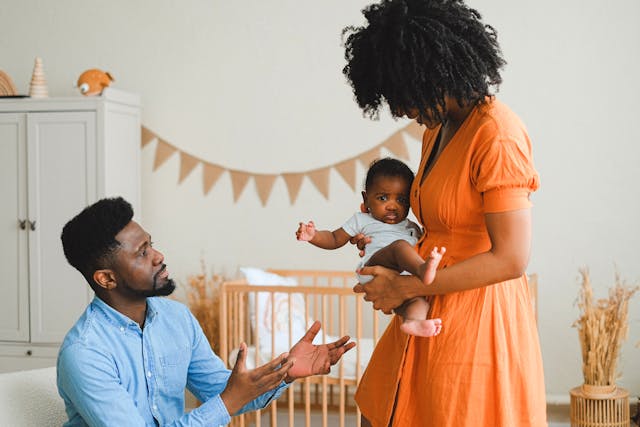
The newest evidence leaves couples with a more adult question than the old myth ever offered. The real issue is not whether children will save a drifting relationship or deliver a permanent emotional upgrade. The real issue is whether a couple has enough stability, honesty, support, and shared willingness. They must absorb a demanding project without expecting it to fix their weaknesses. Apostolou and colleagues say anyone expecting a sustained rise in happiness is likely to be disappointed. Their discussion says a “permanent increase in baseline hedonic wellbeing is unlikely.” That line cuts through both fantasy and panic. Children are neither magic nor poison. They are attachment, meaning, cost, pressure, obligation, and commitment in one package.
If a relationship already struggles with resentment, unequal labor, sexual distance, money stress, or poor communication, parenthood may intensify it. If a couple is strong, realistic, supported, and prepared to protect the relationship, the damage is not inevitable. Even strong couples, however, should drop the fantasy that children automatically deepen romance. The current evidence points somewhere harder and more useful. Children may enlarge a life’s meaning while putting daily happiness and relationship ease under strain. Adults deciding whether to become parents deserve that truth in plain language before they gamble on a myth. They deserve a decision built on reality, not on an old cultural promise that research keeps cutting down to size.
That does not make parenthood a bad choice. It makes it a serious one. Serious choices demand better motives than repair, boredom, panic, or social pressure. Couples need to ask blunt questions before they proceed. How strong is the relationship when both people are tired? How fair is the division of labor now, how solid are the finances today, how much family help is nearby, and how well do both partners handle resentment, routine, and reduced freedom? Research cannot answer those questions for any one couple, but it can show the cost of avoiding them.
Parenthood is still one of the most important choices many adults will ever make. That is exactly why it should not be sold with borrowed language about fulfillment and repair. The better case for parenthood is more sober and more durable. Children may give some people a deeper sense of duty, identity, continuity, and love. They may also expose a couple to new stress, less spontaneity, tighter finances, and lower relationship satisfaction for a time. None of those outcomes cancels the others. Those realities often sit together uneasily. The honest question is whether you and your partner are ready. Life may become more meaningful, yet not easier, and perhaps not happier in the simple way many people imagine. That is not a cynical conclusion. It is a mature one, and it treats parenthood with the gravity such a life-changing choice deserves.
A.I. Disclaimer: This article was created with AI assistance and edited by a human for accuracy and clarity.
Read More: When Love Isn’t Enough: 11 Childhood Expectations That Can Wound Devoted Parents