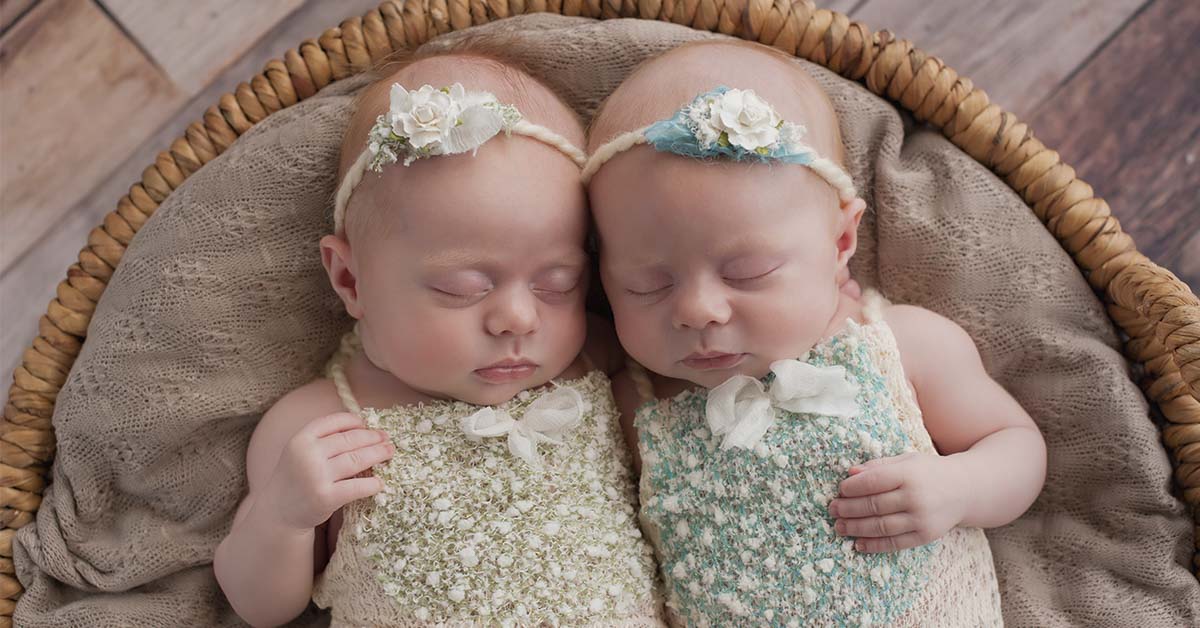

I grew up believing I had once been two people. That sounds dramatic, I know. But that is how my mother explained it when I was old enough to ask why my baby photos looked carefully cropped, why there was always empty space beside me in certain frames, and why she would stiffen when someone joked about twins having secret languages.
“You had a sister,” she told me when I was nine. “But she didn’t make it.”
That was all. No name. No details. Just a soft sentence dropped into the middle of my childhood.
For years, I carried that absence like a shadow. I imagined a tiny white coffin and hospital machines. I imagined my mother weeping beside a window. She never corrected me, so I filled in the blanks myself. As I got older, the questions grew. What was her name? Did she look like me? Did she have my nose or my father’s chin?
“It was a long time ago.”
That was my mother’s usual answer. Eventually, I stopped asking. I told myself that grief had edges and I did not want to cut her with mine. Still, something inside me never felt settled. I often sensed a strange loneliness I could not explain. Even when I married and had children. Even in rooms full of laughter, I sometimes felt like someone was missing.
At night, I dreamed of a girl who looked like me. She stood at the edge of a field. She never spoke, only watched. I would wake with the unsettling feeling that I had forgotten something important. Then life happened. Careers. Bills. School recitals. Illness. My father passed first. My mother followed years later. I was in my fifties when I buried her, and with her went any chance of asking more questions. Or so I thought.
Decades passed quietly. I became a grandmother. My hair thinned and turned silver. I learned to move slower. I accepted that some stories never get full endings. Then, on my seventy-third birthday, my daughter handed me a small box wrapped in bright blue paper.
“It’s just for fun,” she said. “Everyone’s doing it.”
Inside was a DNA testing kit. I laughed at first.
“What do I need this for?”
“For the family tree,” she insisted. “The kids want to know where they come from.”
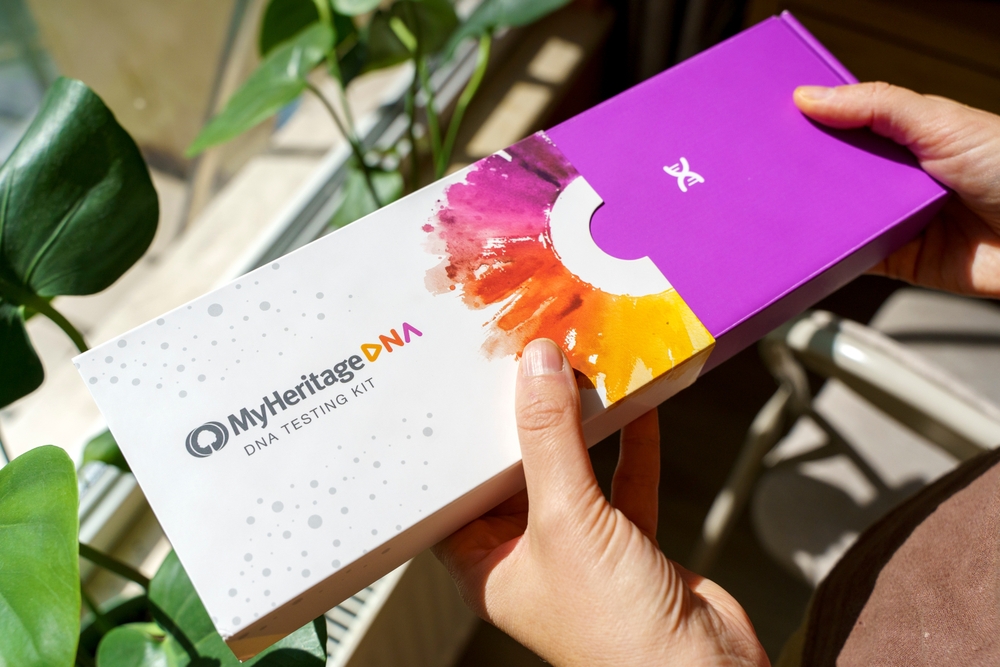
I almost tucked it into a drawer. I did not think I needed answers anymore. But that night, I sat at my kitchen table with the instruction booklet. The house was quiet. The clock ticked loudly against the wall. Something in me stirred. If I truly had lost a twin, it would not show up. Science could not change death. So there was no harm in looking.
I mailed the sample the next morning. Weeks later, an email arrived with the subject line: “You Have a Close Match.” I assumed it was a cousin. Instead, I saw a name I had never heard before, labeled: “Shared DNA: 49.8%.”
My hands began to tremble. That percentage did not mean cousin. It did not mean distant relative. It meant sibling. I stared at the screen for a long time. My heart thudded painfully in my chest.
“She didn’t make it.”
That sentence echoed in my mind. But numbers do not lie, and suddenly, for the first time in my life, I realized something that felt both impossible and undeniable. Maybe she did.
Read More: How This Mom Outsmarted Her Petty Neighbor – A Short Story
The Message I Almost Didn’t Send
I closed my laptop and walked away. That felt safer than staring at the number again. Forty-nine point eight percent. It looked clinical and cold, yet it carried the weight of a lifetime. I made tea with shaking hands and spilled some on the counter. My heart would not slow down. I kept telling myself there had to be a mistake. Laboratories mix things up and computers glitch. People share similar DNA by coincidence, do they not? Still, I knew enough to understand that nearly fifty percent meant one thing.
I opened the laptop again.
Her name was Margaret Ellis. Age seventy-three. Same birth year as mine. Same birth month. Three days apart. The profile showed a small photo. A woman with short gray hair and cautious eyes stared back at me. My breath caught in my throat. Her nose looked like mine, and even the slight tilt of her smile felt familiar.
For a long moment, I studied her face the way you study a stranger across a waiting room. Then a strange warmth spread through my chest. I was not looking at a stranger, I was looking at possibility.
There was a button that read, “Send Message.” My finger hovered over it. What does one say to someone who may be your twin? “Hello” felt absurd. So did, “Are you the baby my mother said died?”
I shut the screen again.
For two days, I told no one. I carried the secret like fragile glass. I watched my grandchildren play in the yard, folded laundry, and watered the roses. Outwardly, nothing had changed. Inside, everything had shifted. I kept thinking about my mother. About the careful way she avoided details, and the cropped photographs. Suddenly, those blank spaces looked deliberate.
On the third morning, I woke before sunrise. The house felt hushed and heavy. I realized I could not spend the rest of my life wondering. Seventy-three years had already passed and I did not have another seventy-three to hesitate.
So I opened the laptop and began typing.
“Hello Margaret. This may sound strange, but our DNA results show we share almost fifty percent. I was told I had a twin who died shortly after birth, but I do not know if that story is true. If you are willing, I would like to talk.”
I read it five times. My words looked small compared to the magnitude of what they suggested. Still, I pressed send.
The rest of that day crawled and every sound made me jump. I checked my email too often. By evening, I scolded myself for expecting an immediate reply. She might not even use the platform often, or she might think I was mistaken. She might even ignore me entirely.
The next afternoon, my inbox chimed. My pulse quickened as I opened the message.
“Hello. I have been staring at your name for weeks. I was adopted as an infant. My records say I was born a twin, but my sister did not survive, but I never believed the details fully made sense.”
I felt the room tilt slightly. My chair suddenly seemed too small to hold me. She ended the message with one simple line.
“Could it be that we are each other’s missing piece?”
What Our Mothers Never Told Us
I read her message again and again. Each time, the words settled deeper into me. Adopted as an infant and born a twin who didn’t survive. The same story, told in two different houses. Except one of us had lived it from the outside.
I replied that same night. My hands felt steadier now. Shock had softened into something else. Determination, perhaps.
“My mother said you died,” I wrote. “She never offered details. I always felt there was more to the story.”
Margaret answered within the hour.
“My adoptive parents were kind,” she explained. “But the paperwork was vague. It mentioned complications and that the other baby was not expected to survive. I always wondered why there was no hospital record or a funeral.”
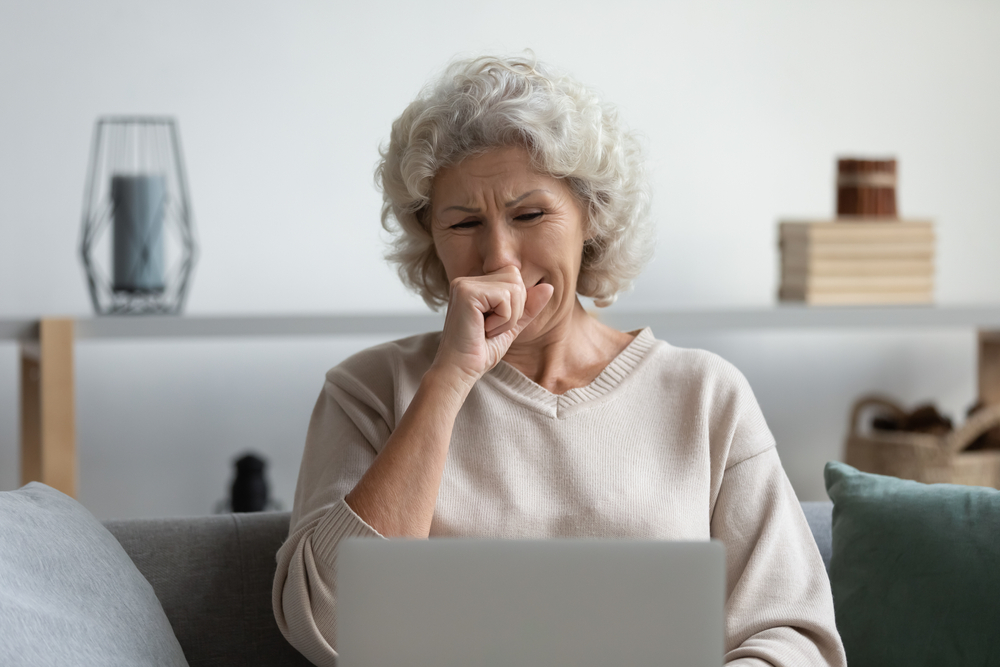
Image credit: Shutterstock.
I leaned back in my chair and closed my eyes. A quiet anger began to rise in me. Not loud or explosive. Just a slow burn. Why would our mothers tell us the same lie from opposite sides?
Over the next week, we exchanged long messages. We compared birth certificates. Mine listed a single live birth. Hers listed twin A. No mention of twin B. The hospital name matched and dates aligned too closely to dismiss.
Eventually, she wrote, “Do you think they separated us on purpose?”
That question sat heavy in my chest. In the late 1940s, twins were sometimes given up quietly. Families struggled financially and doctors made decisions without consent. Shame hung over unmarried mothers, so there were many reasons, but none of them felt good enough.
“I do not know,” I replied. “But I do know that neither of us died.”
We moved from messages to phone calls. I will never forget the first time I heard her voice. It sounded like mine after a cold. Slightly deeper, slightly rougher, but familiar. When she laughed, I felt something inside me unlock.
“This is surreal,” she said softly. “I feel like I have known you forever.”
“Maybe you have,” I answered.
We compared small details, like we both loved lemon in our tea, and hated loud restaurants. We both had a small scar above our right eyebrow from childhood falls. That one made us both fall silent.
“How is that possible?” she whispered.

I thought about the girl from my dreams. The one who stood in the field. I wondered if somewhere, somehow, she had been dreaming of me too.
As days passed, excitement mixed with grief. We had missed birthdays. Graduations. Weddings. We had lost decades that could never be returned, yet we were here now. Alive. A miracle hidden in plain sight.
Then Margaret said something that shifted everything.
“I want to see you,” she told me. “Not on a screen. In real life.”
I swallowed hard. The idea thrilled and terrified me at the same time. What if we met and felt nothing? What if the connection existed only in imagination? Still, I heard myself say yes.
We chose a small town halfway between our homes. A quiet café near a lake. Neutral ground. We set a date two weeks away.
As the day approached, I found myself studying old photographs of my mother. I searched her face for clues. Did she know where my sister had gone? Did she believe the lie she told me? Or had someone convinced her it was necessary?
I will never know her reasons. But I know this. She gave birth to two daughters. And both of us were still here. Soon, I would finally see the other half of the story standing in front of me.
The Woman Who Walked Toward Me
The morning of our meeting felt unreal. I barely slept the night before. My stomach fluttered like it had before my wedding day, and I kept reminding myself to breathe. This was not a dream. This was real.
I chose a simple navy blouse and pearl earrings. Nothing dramatic. I did not want to look like I was trying too hard. I wanted to look like myself. If she truly was my twin, she would recognize something in me anyway.
The café sat beside a quiet lake. Early autumn leaves floated on the surface of the water. I arrived twenty minutes early. My hands would not stay still, so Iwrapped them around a cup of coffee I barely tasted.
Every time the door opened, my heart jumped. Then, finally, she walked in.
For a second, the room seemed to narrow. Sound faded. I saw my own posture in the way she stood. I saw my father’s brow in her face, and I saw my hands in hers.
She spotted me at the same moment.
We did not wave or hesitate. We simply moved toward each other. Up close, the resemblance was undeniable. Not identical in every feature, but deeply connected. Like two versions of the same sketch drawn by different hands.
“Hello,” she said, her voice trembling.
“Hello,” I answered.
For a moment, we only stared. Then she reached out. I reached too. Our hands met first. Warm. Solid. Real.
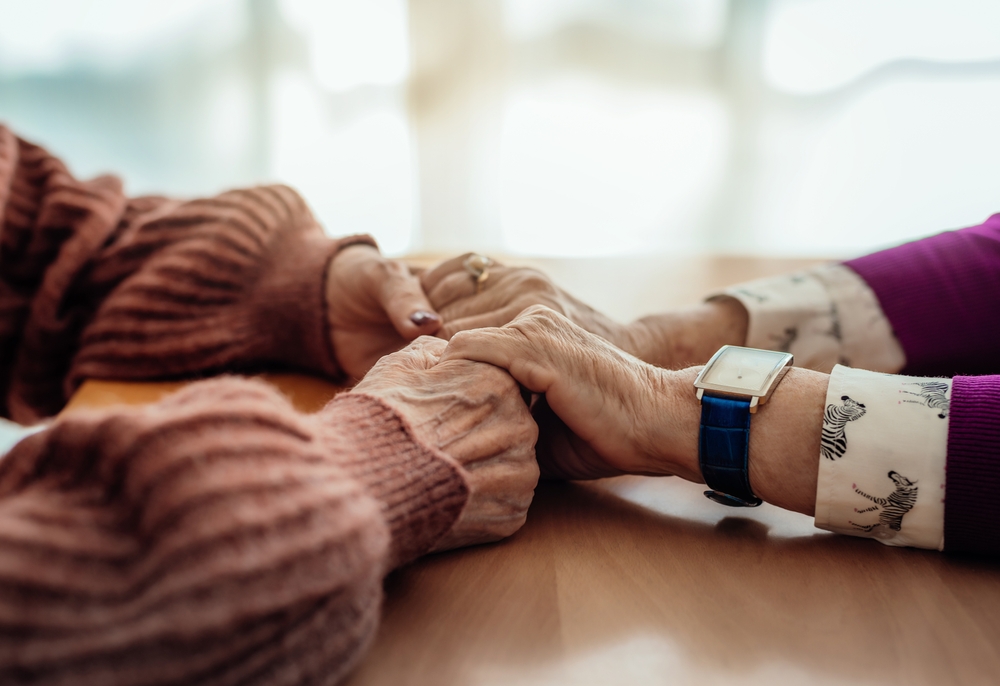
“I cannot believe you’re here,” she whispered.
“I cannot believe you’re real,” I replied.
We laughed softly through tears. The kind of laughter that comes when emotions spill over and you cannot contain them.
We sat down, still studying each other’s faces. Every small movement felt significant. She tilted her head the way I do when I am listening closely. She folded her napkin twice before placing it on her lap. I had done the same without noticing.
“It feels like looking into a mirror that lived a different life,” she said.
That sentence hit me harder than I expected. A mirror that lived a different life. She had grown up in another family, another house, another town. She had different memories, different stories. Yet the foundation felt shared.
We talked for hours. About childhood and our parents. About the gaps that now made more sense. She described always feeling slightly misplaced, as if something essential had been missing. I told her about the loneliness that followed me through crowded rooms.
“At least now we know why,” she said gently.
There were difficult moments, too. We grieved what we lost. Seventy-three years of sisterhood. Shared holidays. Secrets whispered in the dark. We would never get those years back.
But then she reached across the table and squeezed my hand.
“We have today,” she said. “And however many tomorrows we are given.”
I realized then that this was not about rewriting the past. It was about reclaiming the present.
As we walked along the lake afterward, side by side, I felt something inside me settle. The quiet ache I had carried since childhood eased for the first time. I had not imagined her. She had been walking this earth the entire time. And now, finally, we were walking together.
Disclaimer: This fictional story was inspired by stories from around the web. Any similarities between this story and actual people are purely coincidental.