

When Davon Jacobs and Tavon Jacobs were born, doctors were not sure they would live. Each twin weighed just over two pounds, and both tested positive for crack cocaine at birth. Because of that, they were placed into foster care almost immediately. From the very first days of life, instability shaped everything around them. People often assume the system steps in and fixes things, but that is not always how it works.
Their story is not just about survival at birth. It is about what happens after, when early trauma follows children into homes that are supposed to keep them safe. Over time, the twins moved through foster care, adoption, abuse, and emotional damage that lasted for years. Still, their lives did not stay stuck in that place. As adults, Davon and Tavon now speak out for children still trapped inside foster care systems that fail more often than many want to admit.
Born Into Crisis
Davon and Tavon were born prematurely in Florida. Their biological mother struggled with addiction and did not receive proper prenatal care. She did not even know she was carrying twins. As a result, the boys entered the world under extreme medical stress.
Both babies tested positive for crack cocaine, which raised serious concerns for doctors. The first goal was simple, keep them alive. They spent weeks in intensive care, surrounded by machines and constant monitoring. At that stage, nobody could predict how the drug exposure might affect their development long-term.
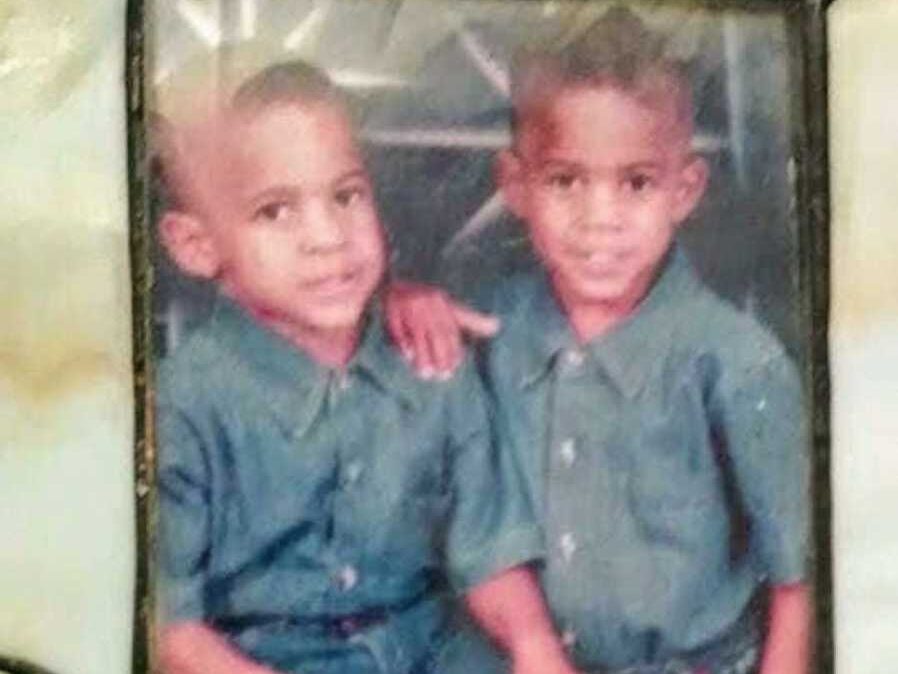
Medical research shows that babies exposed to drugs in the womb can face issues with emotional regulation, attention, and stress response later in life. Those risks increase when children also experience instability after birth. For Davon and Tavon, that instability arrived almost immediately through foster care placement.
Adoption Did Not Mean Safety
By the time they were around two years old, the twins were adopted. On the surface, this looked like a positive outcome. They had a permanent home and were no longer moving between placements. However, reality inside that home was very different from expectations.
The twins later shared that their adoptive household was abusive. Discipline often turned physical, and emotional neglect was constant. They were made to feel unwanted, like a burden, instead of children who needed care. Love was not freely given; it was conditional and inconsistent.
In many adoption cases, oversight fades once paperwork is finalized. That creates a dangerous gap. Children who already carry trauma can suffer silently for years. In this situation, the foster care system ended its role too early, leaving the twins without protection when they needed it most.
Growing Up in Survival Mode
As the abuse continued, Davon and Tavon learned to survive rather than feel safe. School became difficult, not because they lacked ability, but because fear and stress interfered with learning. Authority figures felt unpredictable, sometimes dangerous.
By around age eleven, they turned to smoking and drinking. This was not about fitting in or acting out. It was about numbing pain and managing anxiety. Trauma experts often explain that early substance use is a coping strategy, especially for children who feel trapped.

One of the twins later described multiple suicide attempts during adolescence. That kind of despair builds slowly. It grows when children feel unseen and unheard. Sadly, once adoption is finalized, children are often no longer monitored closely by foster care agencies.
Finding Pieces of Their Past
As teenagers, Davon and Tavon unexpectedly crossed paths with members of their biological family. The reunion was emotional and confusing. It answered some long held questions but raised new ones as well.
They learned more about addiction, poverty, and generational trauma. That knowledge did not erase what happened, but it helped shift how they viewed themselves. Instead of seeing their struggles as personal failures, they began to understand the larger forces at play.
This kind of perspective can be powerful. Healing often starts when survivors stop blaming themselves for things they never controlled.
Loss and a Dangerous Spiral
Young adulthood brought more hardship. The twins lost a younger brother, which added another layer of grief. That loss pushed them further into risky environments and unhealthy choices.
They spent time around drugs, violence, and unstable housing, as those patterns were familiar. They reflected what happens when trauma is never fully addressed. Statistics consistently show that young adults with foster care backgrounds face higher risks of homelessness and substance use.
Image credit: Shutterstock
Eventually, both brothers reached a point where continuing down that road felt unbearable. They knew something had to change or the outcome would be permanent.
A Shift Toward Meaning
Their turning point came through community and faith. Family members invited them to church, and over time, they found mentors who offered consistency instead of control. For the first time, adults listened to them without judgment.
This stage of healing was slow and imperfect. Therapy, reflection, and spiritual guidance all played a role. The twins began learning emotional skills that most children develop much earlier in life. Trust did not come easily, but it grew with time.
Trauma specialists often stress that recovery depends on stable relationships. Without them, resilience becomes much harder to maintain.
Turning Experience Into Advocacy
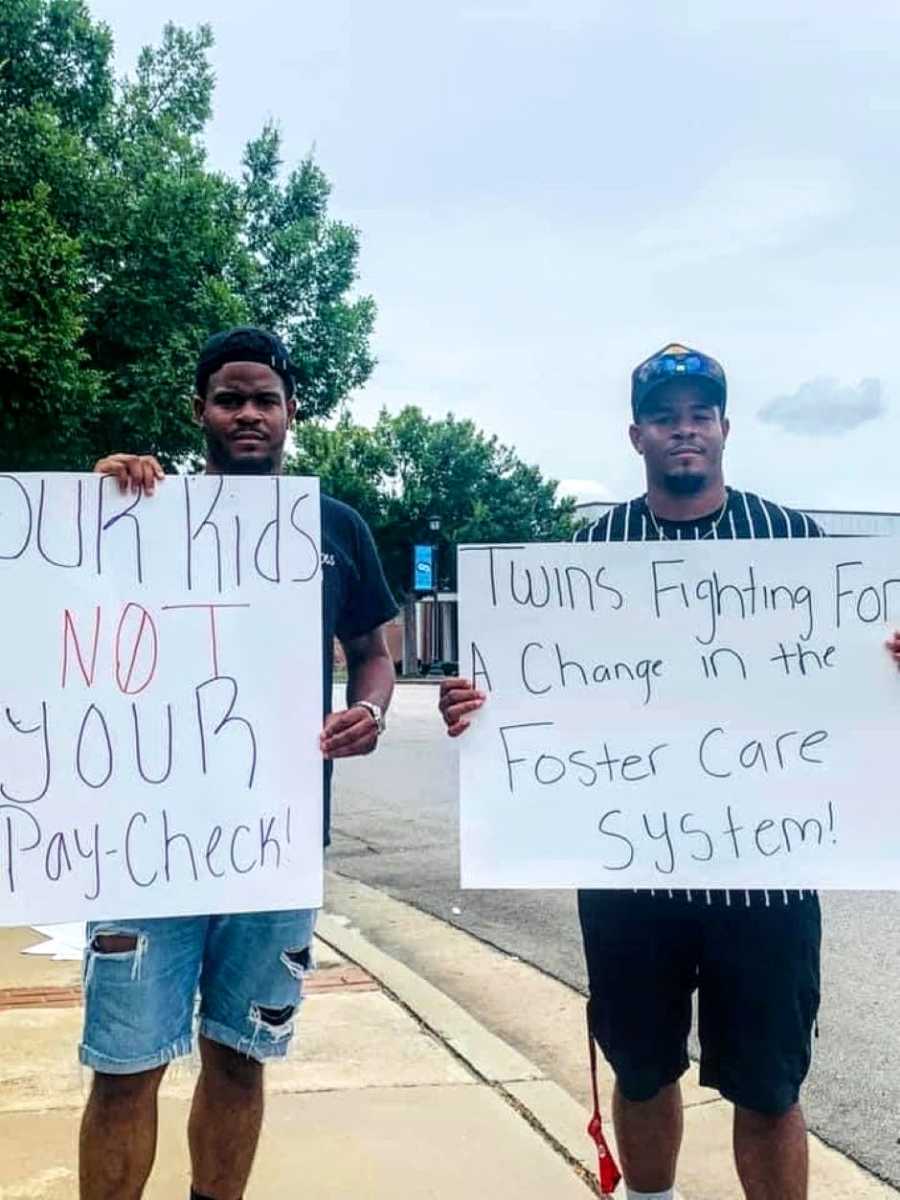
Eventually, Davon and Tavon decided their experiences should not stay private. They began speaking openly about abuse in adoptive homes and failures inside foster care systems.
They worked with at-risk youth in group homes and saw the same patterns repeat. Children were labeled as difficult rather than traumatized. Rules replaced relationships, and punishment replaced understanding.
Their advocacy focuses on better screening of adoptive families, long-term mental health support, and accountability within foster care. They also stress the importance of listening to children, even when their stories are uncomfortable.
What Trauma Looks Like Long After Childhood
Trauma does not always look dramatic in adulthood. It shows up as constant alertness, even in safe rooms. It appears as a deep need to control everything, because chaos once felt life-threatening. For Davon and Tavon, trauma did not disappear once the abuse stopped. It followed them into daily decisions, relationships, and self-image.
Image credit: Shutterstock
Many adults who grew up in foster care or abusive homes struggle with trust. They may want closeness but feel uneasy when it appears. Stability can feel unfamiliar, even suspicious. This can lead to pulling away from healthy relationships without fully understanding why.
There is also emotional numbness. When pain was constant in childhood, the brain learns to shut things down to survive. Later in life, joy can feel muted. Anger can surface suddenly, and small setbacks can trigger reactions that seem out of proportion. These are not character flaws; they are learned survival responses.
Trauma also affects identity. Children who were treated as problems often grow into adults who believe they are burdens. That belief shapes careers, friendships, and self-worth. Healing means unlearning those messages, which takes time and patience.
Why Some Abusive Homes Go Undetected for Years
From the outside, many abusive homes look normal. There is food in the fridge, children attend school, and adults speak politely during check-ins. For children, this makes abuse even harder to explain. They may assume what happens behind closed doors is normal.
Fear plays a major role. Children worry that speaking up will make things worse. Some are told directly that nobody will believe them, while others learn silence through punishment. Over time, silence becomes routine.
System issues also matter. Caseworkers often manage large caseloads and frequent turnover. Visits can become brief and private conversations with children may not happen often enough. When adoption is finalized, oversight decreases further.
In situations like Davon and Tavon’s, abuse continued because the system assumed permanence meant safety. That assumption leaves children vulnerable, and without consistent monitoring, harm can hide in plain sight.
The Emotional Cost of Being Labeled “Resilient”
People often call survivors resilient as a compliment. While well-intentioned, that word carries weight. It can suggest strength without acknowledging loss, and it can imply that surviving means thriving, even when pain remains.
For children forced to grow up too fast, resilience is not a choice; it is a requirement. Davon and Tavon adapted because they had to. That adaptation helped them survive, but it also cost them parts of childhood they never got back.
Being labeled resilient can also discourage support. When someone seems strong, others assume they do not need help. This can delay healing and reinforce isolation. Strength becomes a mask instead of a bridge to care.
True healing allows space for vulnerability. It recognizes that resilience does not erase damage; it simply means someone lived through it.
Larger Issues Inside the Foster Care System
Their story reflects broader problems. Foster care systems across the country face underfunding and overwhelming caseloads. Caseworkers are stretched thin, which makes thorough oversight difficult.
Children with prenatal substance exposure face additional challenges. When those challenges combine with abuse or neglect, long-term effects become more likely. Research links early trauma to higher rates of anxiety, depression, and addiction later in life.
These outcomes are not guaranteed, and early intervention can change trajectories. Unfortunately, many children do not receive that support.
Foster Youth Aging Out and the Missing Safety Net
A major gap in foster care systems appears when youth reach adulthood. Aging out often means sudden independence without preparation. Housing support disappears. Guidance fades. Mental health care becomes harder to access.
For many, this transition happens at a time when trauma symptoms intensify. Without stable support, young adults face higher risks of homelessness, unemployment, and substance use. These outcomes are often framed as personal failure, rather than systemic neglect.

Davon and Tavon’s struggles in early adulthood fit this pattern. They were expected to function without tools that most young adults receive naturally. Family safety nets were absent. Mistakes carried heavier consequences.
Experts emphasize that support should not end at legal adulthood. Healing from childhood trauma takes longer. Continued mentorship, housing assistance, and therapy can dramatically change outcomes.
Read More: Mom wants to give Down syndrome son to foster care, loyal dad refuses and raises him on his own
Looking Forward
Today, Davon and Tavon continue using their voices to advocate for vulnerable kids. Their message is not only about failure, but it is about responsibility and change. Safety should include emotional care, not just shelter and food.
Their journey shows how easily children can be overlooked within foster care systems. At the same time, it shows what is possible when survivors reclaim their stories and push for reform.
The twin brothers focus less on their past pain and more on what children need now. They want people to listen, especially when stories are uncomfortable, and they want adults to stay involved after adoption, not disappear.
They stress that foster care reform is not about blame alone. It is about responsibility. Children need emotional safety, not just placement, and they need consistency, not constant transitions.
Most of all, they want children to be believed. Silence often protects systems, not kids, and they hope that sharing their story helps break that silence, one voice at a time.
Final Thoughts
Davon and Tavon Jacobs began life facing extreme odds. Born into addiction, placed into foster care, and later adopted into abuse, their childhoods lacked the protection every child deserves. Still, their story did not end there.
Through support, reflection, and determination, they transformed trauma into advocacy. Their voices now speak for children who feel invisible. Their lives show that simply surviving is not enough. True healing, dignity, and real safety matter just as much.
A.I. Disclaimer: This article was created with AI assistance and edited by a human for accuracy and clarity.
Read More: Man Plans to Build Homes on His Land to Provide Housing for Youth Aging Out of Foster Care