
The internet loves a good visual challenge. At first, the picture looked simple. It was only a patch of gravel with little stones crowded together in soft browns and dull grays. Nothing exciting, nothing scary. Yet the moment someone said a snake was hiding in the scene, the whole mood changed. People leaned closer to their screens. They tilted their heads and zoomed in. Some spotted the snake fast, while others kept staring until their eyes hurt.
This challenge became more than a quick game. It raised questions about how we see the world. It showed how our eyes can miss something right in front of us, and it also revealed how smart camouflage can be when an animal knows how to blend into its home. The funny part is that your eyesight might not be the problem at all. The real story sits inside your brain, because vision is never only about the eyes. It is also about how the mind organizes patterns and fills in missing details.
The Snake Photo That Surprised Millions
The snake image was a plain scene at first glance. Gravel everywhere with no bright colors. There were no shadows, and that seemed odd. But the snake matched the stones so closely that your brain refused to separate them at first. This effect is a classic trick of camouflage. When you know something dangerous is hidden, the scene stops feeling calm. It becomes a test, and then you start scanning the picture again with a new kind of energy. Below is the viral image that had everyone looking. Can You Spot the snake?
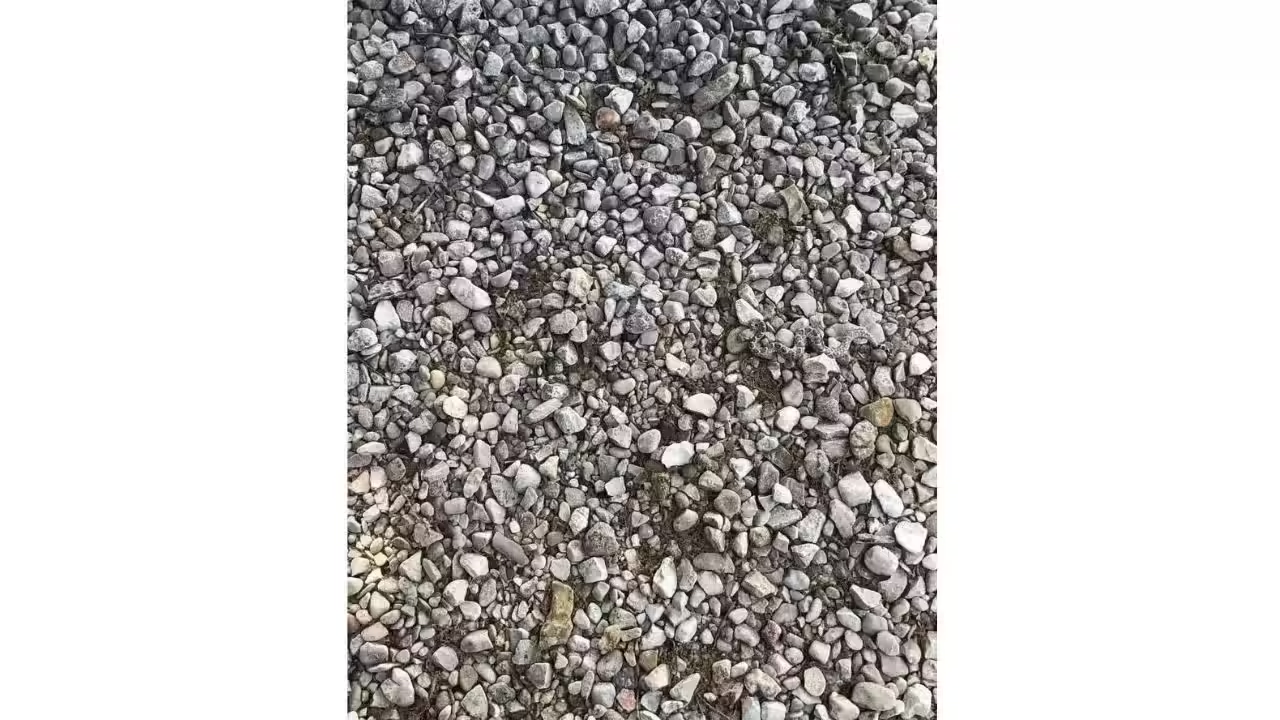
Before we reveal the snake, let’s learn a little more about camouflage. Researchers who study camouflage explain that the easiest way to hide an animal is to remove strong visual boundaries. Our brains look for edges and contrast before anything else. If an animal blends both of those things into the background, it nearly vanishes. That is what the snake did. Its scales had the same muted tones as the stones. Its body curled in a way that followed the natural chaos of the gravel. Even the light in the photo softened its outline.
Because of this, most people saw only a field of rocks. Their minds grouped the whole area into one single texture. This grouping is automatic and helps the brain save energy. You do not want to process every stone as a separate object. So the mind turns clutter into a simple backdrop, and the snake becomes part of that backdrop.
Yet, something funny happens once you actually spot it. Suddenly, the shape becomes so clear that you wonder how you missed it before. This snap moment happens in almost every hidden image challenge. Your brain switches from searching to recognizing, and that switch changes the entire scene. After that moment, the snake never disappears again. You can close your eyes and still picture exactly where it sits.
The Hidden Snake: Did You Find It?
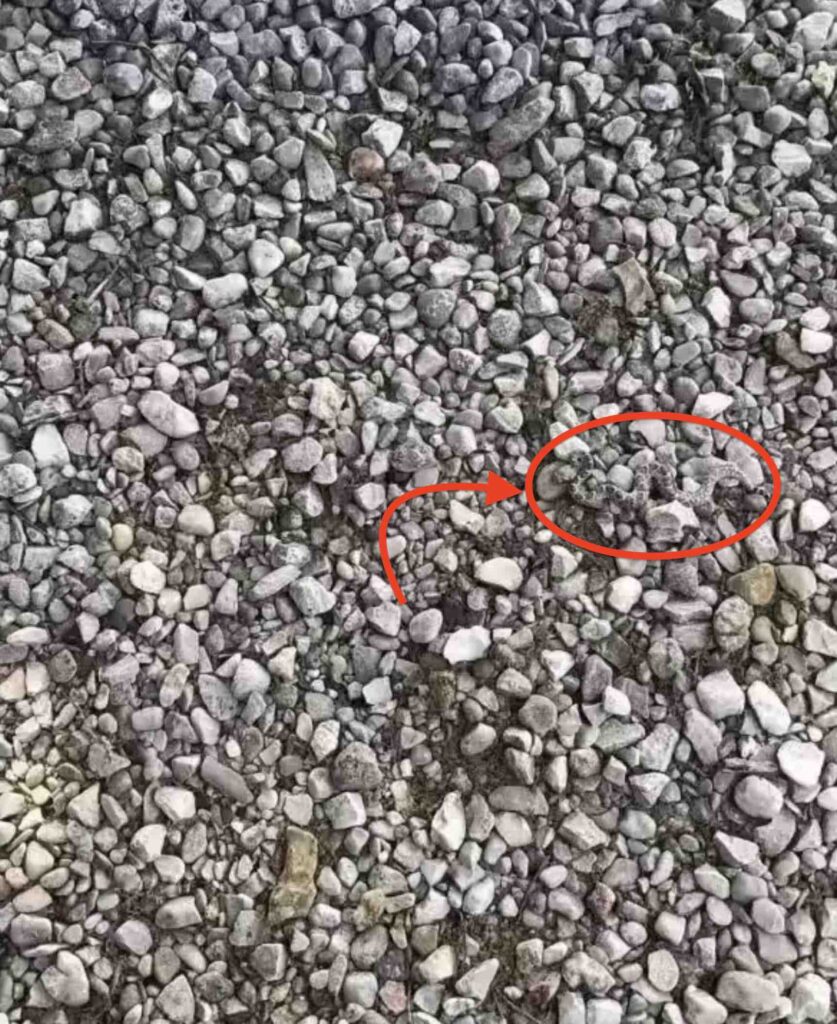
Were you able to spot the snake? See where it was below.
How the Brain Really Sees the World
People often think vision is a problem of the eyes. In reality, the brain does most of the heavy lifting. The eyes collect light, but the mind decides what the shapes mean. That is why illusions, puzzles, and camouflaged animals can trip us up. The brain tries to keep up, and sometimes it makes choices that hide the truth rather than reveal it.
The Brain Loves to Simplify
The American Museum of Natural History explains that the brain enjoys patterns. It groups similar shapes, colors, and lines so the world feels more stable. If it did not do this, daily life would feel overwhelming. Every leaf, stone, and grain of sand would demand attention. So the mind merges repeating shapes into bigger units.
This system is usually great. It helps you move through busy spaces without stopping to inspect everything. But it fails when something unusual hides inside a similar pattern. The snake becomes invisible because the brain does not expect it. It treats the whole scene as harmless, so it does not ask deeper questions. This is the same reason people miss hidden animals in forest images and even fail to notice large objects in optical illusions.

When Hidden Objects Refuse to Appear
The brain uses a concept called a perceptual set. It means you notice what you already expect to see. Gravel is harmless; it is not supposed to hide a living thing. So the brain commits to that belief until new information forces it to shift. But shifting takes focus and time.
When you stare at the photo long enough, your mind begins to question its first impression. It starts scanning edges and looks for curves that do not belong. It hunts for textures that appear too smooth or too intentional. At this point, the mind works harder. It stops filtering the scene and begins breaking it apart. Suddenly, the snake shows itself.
Why Recognition Feels Instant Once It Happens
After the brain identifies the snake, it builds a clear mental map of the shape. Scientists who study pattern completion explain that recognition activates stored templates in your mind. You have seen snakes before, so you already know the general shape. Even if the image hides parts of the body, your brain fills in the missing pieces. That is why you cannot unsee the snake once you find it. Your brain now holds a version of the scene that includes it.
Some people recognize hidden shapes faster because they know what to look for. A person who often hikes or works with animals may spot serpentine curves sooner. Experience shapes perception more than people realize.
The Clever Tricks of Camouflage in Nature
Nature has spent millions of years learning how to fool predators and prey. Camouflage is one of the most effective survival tools on Earth. According to long-term studies on animal concealment, creatures use different strategies to avoid being spotted.
Background Matching
This is the easiest method to understand, and it is the one used in the snake photo. The animal matches the color and texture of the environment. When lighting also helps hide edges, the illusion becomes even stronger.
Disruptive Patterns
Some animals have spots, stripes, or shapes that break up their outline. A zebra becomes strange when seen up close, but from far away, its body shape gets confused with the rest of the herd. The snake in the gravel used smaller disruptive cues. Its scales scattered light in ways that blended into the clutter around it.
Lighting Tricks and Countershading
Many animals have lighter undersides and darker tops. This reduces shadows and softens contrast. Shadows help the brain find depth and form. Remove them, and the creature becomes less noticeable.
Masquerading
This method involves copying the look of something else, like a leaf or a twig. While the snake in the gravel was not pretending to be a stone, it did use the shapes and colors around it to confuse the viewer.
These strategies work so well because they target natural weak spots in human perception. If you miss a camouflaged snake, it does not mean your eyesight is bad. It means the snake is using ancient survival tools that hit you in your most vulnerable area, your pattern processing.
Optical Illusions and Why They Trick the Brain
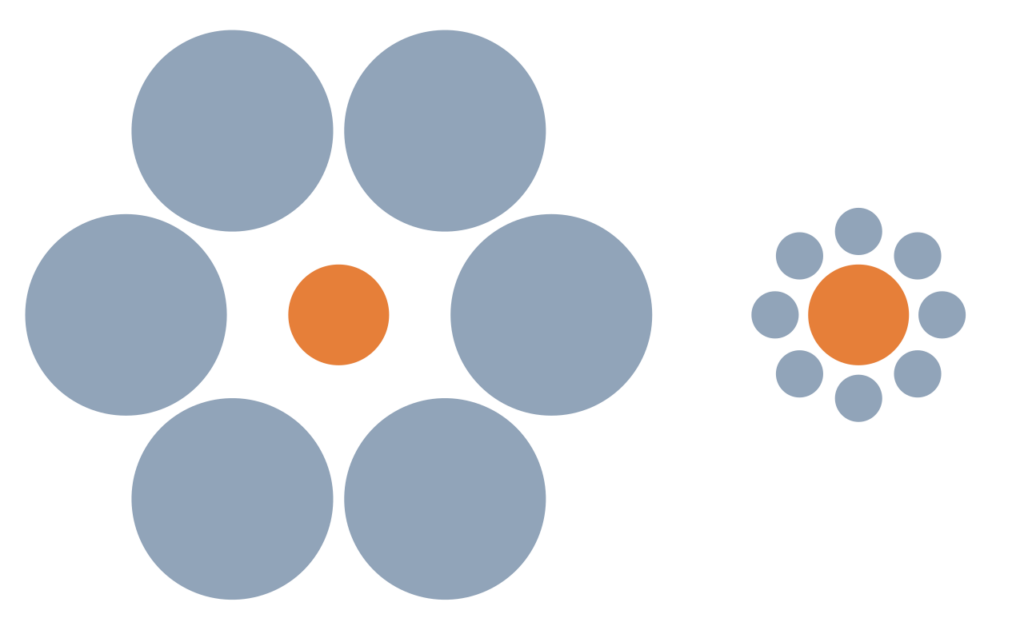
Optical illusions work for similar reasons. They take advantage of how fast the brain wants to understand a scene. The mind prefers simple answers. It fills in missing details and sometimes even invents shapes that are not really there. LiveScience collected many illusions that show how easily this happens, and the snake puzzle fits right into that pattern of surprises.
Illusions Often Use Assumptions
Your brain makes constant predictions. It expects light to fall a certain way and expects shadows to behave in a familiar pattern. It expects objects to stay solid, even when part of them is missing. Illusions use these expectations against you.
For example, the checker shadow illusion tricks you into seeing two different shades, even though they are the same. The brain insists the shadow must darken the tile, so it corrects the color in your mind. Your eyes told the truth, but the brain wanted a simpler story.
The snake puzzle uses a softer version of this trick. Your brain wants gravel to be gravel, not a hiding place for a reptile. That idea controls how you look at the image, at least until you question your assumptions.
How Hidden Images Hold Their Secrets
There are several tools creators use when they make hidden picture challenges. Each tool affects how well the brain can separate objects from the background.
One tool is low contrast. If the hidden object almost matches the brightness of the surrounding texture, the brain loses its usual shortcut for identifying shapes. Another tool is texture overload. The more repeating shapes you see, the more the mind blends everything into a single pattern. And unpredictable placement makes things even tougher. When the object sits where your brain least expects it, it becomes easier to miss.
The snake in the gravel used all of these tricks without any photographer trying too hard. Nature built the illusion on its own.
Pattern Completion and Why We See Things That Are Not Fully There
Scientists who study visual computation talk often about pattern completion. It is a process where your brain fills in the parts of an image that it cannot see clearly. This skill helps you recognize familiar objects in fog, rain or darkness. It also helps you know a shape when only a corner of it is visible.
But this system depends on having strong clues. When an object is too well hidden or blends into the background, there are no clues left to complete the pattern. The brain becomes confused, and recognition breaks down.
This is why a snake behind leaves is easier to spot than a snake in gravel. Leaves have different colors and shapes from reptile skin. Gravel, on the other hand, has similar tones and textures. There is very little conflict in the scene. Without conflict, the mind does not know where to search.
Some animals take this ability to the extreme. Stick insects look like twigs. Leaf insects look like real leaves. Stonefish match coral beds so well that people walk past them without noticing anything at all. In each case, pattern completion fails because the clues needed to detect the creature are too weak or too spread out.
Why Some People Spot the Snake Faster
People often brag about how fast they solved the snake challenge. Some even claim it proves they have sharper vision. But that idea is mostly wrong, and the real explanation is far more interesting.

Experience Shapes Perception
People who spend time outdoors often learn the shapes of animals without even realizing it. A hiker may spot a curve that looks wrong on a trail. A gardener may notice movement that breaks the rhythm of the leaves. A farmer may notice color differences that feel too unnatural. Experience builds tiny skills that help them see patterns faster.
Attention Styles Matter Too
There are people who see the world with a global view, so they catch the big picture first. Others see small details first. Hidden image puzzles usually reward the detail seekers. They scan piece by piece instead of rushing over the whole scene. Their eyes pause on textures that feel odd or breaks in the rhythm of the stones.
If your natural attention style is big picture first, you might miss the snake until someone tells you where to look. That is not a flaw. It is just how your brain prefers to process the world.
Stress and Fatigue Can Slow You Down
When you are tired or stressed, your brain uses even more shortcuts. It avoids deep searching because deep searching takes energy. You may stare at the image for a long time but never find the snake because your mind is simply not engaged enough.
Other people find the snake quickly because they enjoy puzzles. They treat the task like a small game. This playful mindset helps them stay alert and curious, which unlocks hidden patterns faster.
What the Snake Challenge Really Says About You
People like to think these puzzles reveal something about their personality or intelligence. It is tempting to believe that noticing the snake quickly means you are very observant or sharper than the average person. But science shows the truth is more balanced.
Your Brain Filters the World in Unique Ways
Each person has a different filter. Some filters are strong. They remove most visual noise, which makes life easier but weakens detail detection. Other filters are loose, letting more information in. These people might notice small shapes more quickly, but they also feel more overwhelmed in busy places.
The snake puzzle interacts with these filters. If your filter is too strong, the animal stays invisible for a while. If your filter is softer, the curve of the snake stands out faster.
Your Skills Are Trainable
Here is the encouraging part. Pattern recognition improves with practice. Artists learn to see shadows clearly. Photographers learn to notice shapes that do not belong. Hunters learn to track movement even when backgrounds are busy. Scientists study how even short training sessions improve detection in camouflage tests. So the snake puzzle can show your starting point, but it does not show your limit.
You See What You Expect
This is one of the biggest lessons from the photo. People who expected something dangerous in the picture found it faster. People who assumed the scene was calm found it slower. Expectation guides attention, and attention guides vision.
Read More: Eye Puzzle: Can You Spot The Ms?
The Larger Ideas Hidden in a Small Photo
The snake image may be simple, but it opens the door to important ideas about perception and survival. It shows that we do not always see the truth of a scene. Instead, we see a version of the scene that our brain builds for us. A study on concealed images in monocular and binocular vision shows how easily the mind can miss shapes that sit right in front of it.
We See Less Than We Think
Most people believe their vision is complete, like a camera. It is not. Vision is a mix of memory, habit, shortcuts, and guesses. Hidden images make this clear by exposing the limits of our awareness.
Nature Understands Our Blind Spots
Animals with camouflage use our perceptual weaknesses to survive. They hide in places where the brain is least likely to question the truth. They shape their bodies and colors to match backgrounds that confuse our detection systems.
Attention Is Selective
You can stare at something directly and still fail to see the important part. This is a humbling truth. Yet, it also explains why illusions work so well. They guide your attention toward one idea and hide another in plain sight.
Perception Changes Fast
Once the snake appears, your brain rewrites the whole scene. It adds new meaning that stays with you, even after you close the image. This fast reorganization shows how flexible the mind can be when it receives the right clues.
Final Thoughts
The hidden snake challenge looks like a small entertainment piece, but it teaches far more than most people expect. It reveals how perception works and why our brains miss things that sit right in front of us. It shows how animals use camouflage to avoid danger and reminds us that vision is not a perfect tool, but a system shaped by survival, training, attention, and memory. And while some people find the snake quickly, others need time. Both reactions are normal.
So the next time someone sends you a visual puzzle, enjoy the search. Take a slower look. Let your eyes settle and let your mind explore the scene. You may discover that your perception has more layers than you ever realized. And who knows, maybe you will find the hidden creature faster than before.
Read More: Test Your Vision: Can You Spot The Girl in The Rocks?