
Somewhere around age 31, Noam Tomaschoff did something that millions of people have done without a second thought: he bought a DNA test because it was on sale. Not because he was searching for answers. Not because anything felt off about his family. When asked later what drove the decision, he was straightforward about it: “Absolutely nothing other than the fact that it was on sale.” The test sat somewhere in a shipping queue while his life continued as normal, until it didn’t.
Before the results even arrived, his parents told him something they had never intended to say out loud. The man who had raised him, who he had called his father for three decades, was not his biological father.
When the 23andMe results did come through, they confirmed he had “at least 35 half-siblings that we know of.” The number kept going. It still is. And Noam Tomaschoff, Toronto actor, writer, and director, turned the whole thing into a musical.
The Test That Was Just on Sale
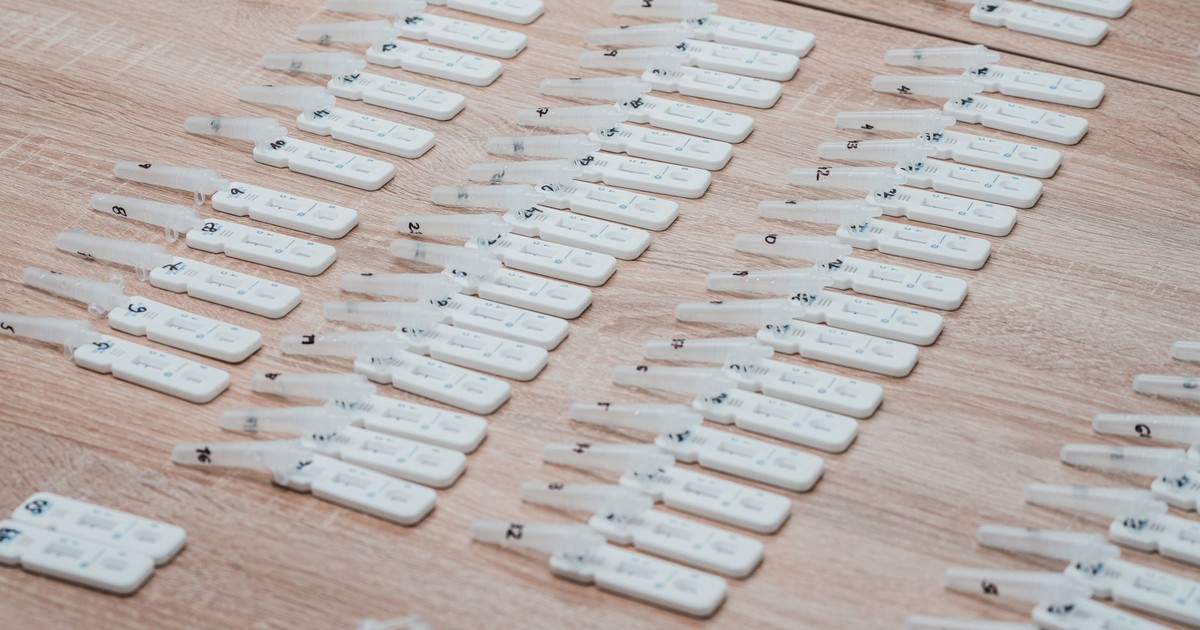
The specificity of the trigger matters here. There was no crisis that sent Tomaschoff looking. No deathbed confession, no suspicious photo album. The only reason he ordered the test at all was that it was on sale. The price tag on a 23andMe kit happened to be right one afternoon. That is the entire origin story of what came next.
His immediate reaction, when his parents told him what they had kept secret, was total disbelief. “The reaction was total surprise. I was shocked,” he told CTV News. Which is a fairly restrained way to describe learning at 31 that the shape of your family is different from the one you have lived inside your whole life. The man who taught you to ride a bike and sat through your school plays. Was just your dad, is your dad in every way that counts. Also not in one way that suddenly feels enormous.
What makes Tomaschoff’s story unusual is not the discovery itself, though the scale of it is striking. It is the sequencing. His parents told him about the sperm donation before the test results arrived. The test did not break the secret, his parents did. The test then revealed the full scope of what that secret had been sitting on top of: a network of DNA test half-siblings spanning North America, people who share his biology. Who, until recently, were strangers.
A Family Secret With a Waiting Room
His parents had followed the general clinical guidance of the time, which encouraged some families not to disclose donor conception to their children. This was not an unusual choice for the era. For decades, the standard advice in many fertility clinics leaned toward silence. The thinking went something like: the child will never know, so the secret costs nothing. What that logic missed is the part where DNA testing becomes something you can order on a sale rack.
In recent years, doctors working with donor-conceived families have reported talking with parents of young adults who don’t know they were donor-conceived, parents who reached out because someone in the family had just purchased a DNA kit or was talking about doing so. The anticipation of the test is now its own category of family event. Parents who kept a secret for thirty years start doing quiet math about whether the kit in someone’s Amazon cart is about to end that silence.
One in five Americans has taken a home DNA test, according to a February 2025 YouGov survey. When family members who have taken one are included, the share rises to roughly 43 percent of U.S. Adults. At that saturation level, a family secret built on the assumption that no one would ever check the biology is a secret on borrowed time.
The Donor Sibling Registry. A nonprofit that reunites families through DNA, has now connected over 27,000 people with half-siblings or biological parents across more than 40 countries. The number expands every year, as more people take tests for whatever reason: curiosity, health history, a sale.
Fifteen Close Relatives, Then More
The DNA results initially connected Tomaschoff with 15 close relatives. That number, 15, would already be a lot to absorb. Fifteen people who share your DNA. Who you have never met, spread across a continent. But the number grew. As he found more half-siblings through other platforms, the total kept climbing. More than 35 is where it stands now. That phrase “that we know of” does a lot of quiet work in every sentence about it.
The biological donor died before Tomaschoff learned he had half-siblings, though he has grown close to some of them. So there is no original source to call. No conversation to be had with the man whose genetic material created this particular constellation of people. What there is instead: a group of adults scattered across North America who have one unusual thing in common, all of them working out what it means.
Research published in 2025 found that people who were told early. Intentionally about their donor conception were more than three times as likely to feel satisfied with how they learned, compared to those who found out late or accidentally. The same research noted that withholding information about donor conception creates real risks of inadvertent discovery in the era of commercial DNA testing. That late discovery is associated with feelings of betrayal, shock, and dissatisfaction. Tomaschoff’s parents told him before the kit could. What happens when you hear something from the people who loved you enough to keep it, rather than from a screen full of percentages, is a different conversation entirely.
From Shock to Stage
After discovering through a 23andMe DNA test that his biological family wasn’t what he had imagined, Tomaschoff turned his story into Our Little Secret, an award-winning musical that traveled from Toronto Fringe to Edinburgh, Montreal. Edmonton, before landing on a bigger platform.
The show first premiered at the 2023 Toronto Fringe Festival under the title Our Little Secret: The 23andMe Musical, then went through developmental. Regional summer runs in Tweed and Prince Edward County in 2024. The production earned a 2024 Edinburgh Fringe Chrisparkle Award for Best Performance in a Musical for Tomaschoff. Five BroadwayWorld Awards for a 2025 production at Montreal’s Segal Centre, including Best New Musical.
The show is now playing at Mirvish’s CAA Theatre in Toronto, through November. Tomaschoff wrote the book and is the only performer, with music by Ryan Peters, musical direction by Nick Burgess, and direction by Pascal. It is a one-man show, which feels right. The experience of learning something this large about yourself is, at first, something you are entirely alone inside.
What You Do With the Number

There is something genuinely strange about the phrase “35 half-siblings.” The word “half” is doing a lot of labor there, suggesting partial connection, reduced relationship, something less than the real thing. But half-siblings are also just siblings, people who share your nose or your laugh or your stubborn streak, people who exist in the world partly because of the same biological material that made you. Who had no more say in any of this than you did.
What Tomaschoff did with the number is make art about it. The musical is not a tragedy, by his own account. It is not a simple redemption story either. It is an examination of what family actually means when the blueprint you thought you had turns out to be a draft. The parents who kept a secret did so, by their own telling, out of love. The man who raised him is still his father. The 35 people on the other side of a DNA match are something new, something the English language does not have a fully satisfying word for.
Seven of his half-siblings surprised him at the show. Think about the specific planning that required. They coordinated across time zones and kept their attendance secret. They sat in a theater watching a man tell a story they are also living, in some version. That is a reunion that could not have happened twenty years ago. The test made it possible. The sale price made it happen.
Read More: Wife Who Was Faithful To Husband Gave Birth To Another Man’s Kid By Accident
What Stays After the Reveal
Families carry things for generations that they believe will simply disappear. That the story will be buried with the people who know it. No one will ever have to reckon with it. Consumer DNA testing has made that calculation obsolete. Not in a punishing way, not as some kind of justice, just as a fact of the technology. The archive never closes. The match list keeps growing as more kits are ordered, more results processed, more names appearing next to percentages that mean: you are related to this person.
His parents told him first. The man who raised him is still his dad. The number 35 is not the end of the story, just the beginning of a different one. Somewhere in the audience of his show, on a given night, people are watching their own family history performed back at them. The person who lived it is on stage. All of them are still working out how to hold the whole thing.
Some secrets were kept with love. Some were kept with fear. Most were kept with both. The test does not sort out which is which, figuring out how to hold all of that is work that belongs to the people in the room, not to the results on the screen.
Disclaimer: This information is not intended to be a substitute for professional medical advice, diagnosis, or treatment and is for information only. Always seek the advice of your physician or another qualified health provider with any questions about your medical condition and/or current medication. Do not disregard professional medical advice or delay seeking advice or treatment because of something you have read here.
AI Disclaimer: This article was created with the assistance of AI tools and reviewed by a human editor.