

Every few years, parents collectively look up from whatever parenting philosophy has colonized their feeds and realize that somewhere between the good intentions and the group chats, things got a little out of hand. A question posted to Reddit’s AskReddit forum – asking which modern parenting trend needs to end immediately – drew more than 2,400 responses, and the answers ranged from exasperated to genuinely alarmed. Which makes sense, because the habits that feel like progress in the moment don’t always look that way from the outside, or from a year or two down the road.
The remarkable thing isn’t that parents disagree. It’s how much consensus ran through those replies. Across thousands of different households, different backgrounds, and wildly different parenting philosophies, the same frustrations kept surfacing. Too much screen time handed to children too young. Too little unstructured time to just be a kid. Parenting choices broadcast to audiences who never asked. Kids managed so carefully that they arrive in adulthood without ever having been allowed to be uncomfortable. The specifics vary. The patterns don’t.
Some of these parenting trends to end have been discussed for years and are still going strong anyway, which is its own kind of testament to how hard it is to change something when it’s embedded in daily life and validated by an algorithm. Others are newer and growing fast. All of them come from parents who are genuinely trying. Holding onto that is worthwhile, even when what follows is uncomfortable to read.
1. Giving Babies and Toddlers Smartphones as Pacifiers

It happens fast and it makes complete sense in the moment. A toddler is melting down in a restaurant, a grocery store, a waiting room. A phone appears. Crisis averted. Then it becomes the first solution instead of the last one, and before long, a two-year-old has a screen habit that took approximately four days to develop.
According to the 2025 Ofcom report on children and parents’ media use, around a quarter of three-to-five-year-olds own a smartphone, and a significant and growing share are using social media apps and sites, with 56% engaging with messaging apps or sites. Those aren’t teenagers. Those are kids who still need help putting on shoes. The concern isn’t that technology exists in their lives – it’s that it’s arriving before children have any capacity to manage its demands, and before parents have had time to set a pattern that isn’t built entirely around avoiding discomfort.
What researchers keep finding is that young children may learn less well from screen-based media than they do from real-life interaction. The developmental work that happens when a toddler is bored – learning to tolerate frustration, to invent something to do, to interact with whoever is nearby – doesn’t happen when the phone is already out. The pacifier comparison is apt not because screens are evil, but because both solve the immediate problem at the cost of the practice.
2. Giving Kids Smartphones Before They’re Ready
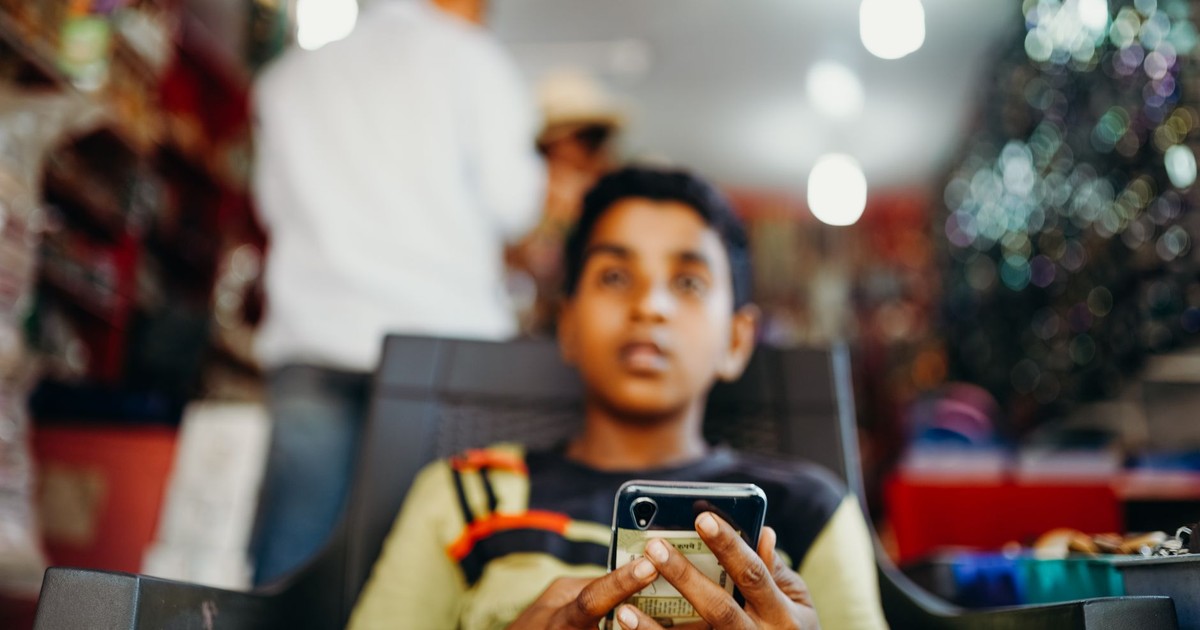
Parents navigate this question genuinely: when a child is old enough for a smartphone is real and the answer isn’t obvious. But the data suggests that most parents are resolving this question in favor of earlier rather than later, and earlier than most child development experts would recommend.
Smartphone use among children rises sharply through the primary school years, with a majority of parents reporting their child uses one well before the age of 13, according to a Pew Research Center survey. The problem isn’t the phone itself – it’s that a smartphone at 11 or 12 is functionally a social media portal, and social media at that age carries real documented risks. Some research has found an association between social media use during puberty and lower life satisfaction a year later, though the size and consistency of the effect varies across studies.
The counterargument – that all kids have one and your child will be socially excluded without one – is real and worth taking seriously. It’s also being used to justify a decision that most parents, if they’re honest, don’t feel entirely comfortable with. The pressure is social. The consequences are developmental.
3. Sharenting – Posting Every Moment Without Consent
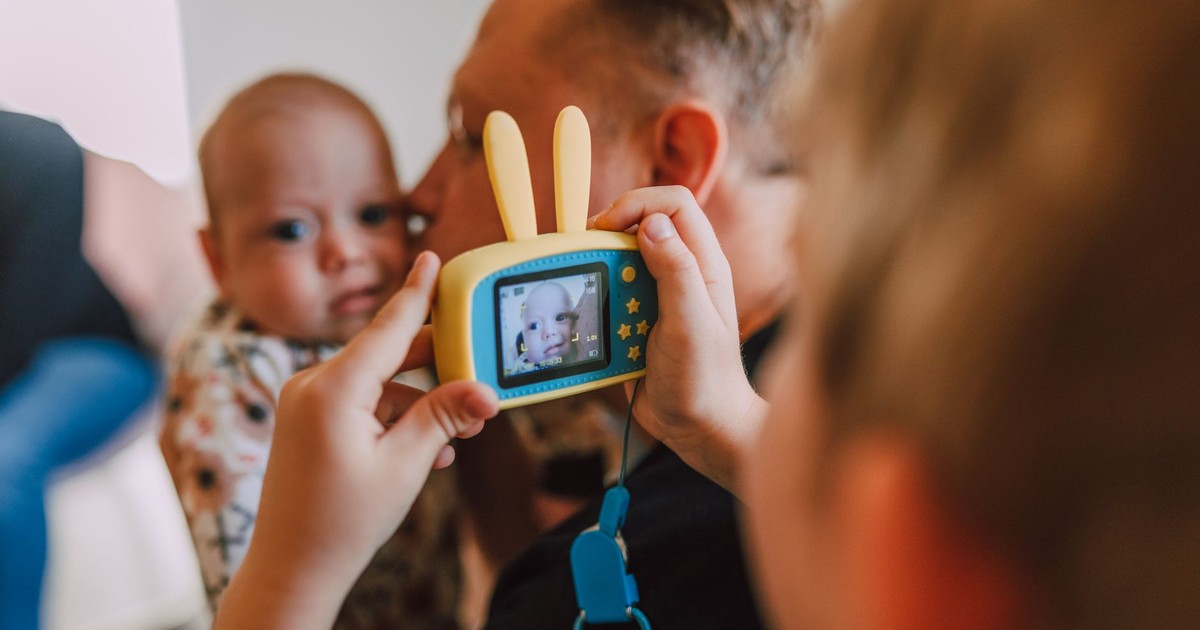
Sharenting has existed since the early days of mommy blogs, and it accelerated dramatically during the pandemic when parents were isolated and the internet was the main window to the outside world. In 2024, a sharenting reckoning began. The practice dates to the 2000s, with the rise of so-called mommy bloggers and family influencers, but it increased dramatically during the pandemic.
The thing that changed is the awareness of what children actually think about it. Kids who were photographed and documented throughout early childhood are now old enough to say, clearly, that they did not want that, and that having their most awkward, private, and difficult moments archived on a public internet profile feels like a violation. The child in the photo never agreed. They were too young to agree. That gap is where most of the serious ethical debate now lives.
Research published in 2024 by Sapienza University of Rome found that 93% of parents were not aware of current legislation and the risks related to the practice of sharenting. That’s not a judgment on the parents – the laws are genuinely confusing and inconsistently enforced. But ignorance doesn’t make a child’s digital footprint any smaller, and it doesn’t give them back the privacy they didn’t know they were losing.
4. Letting Kids Use Social Media Unchecked

Different from simply having a smartphone, this is the specific habit of allowing children and young teens to scroll, post, and engage on social media platforms with no oversight and no structure. The argument for hands-off is usually framed as trust, or as respecting privacy. The research doesn’t really support that framing for children under 16.
Suicide is one of the leading causes of mortality among adolescents, and emerging literature suggests a significant association between screen time, social media usage, and suicidal behaviors. A prospective cohort study of 9-to-11-year-olds in the US, analyzing data from 11,633 children, found that each additional hour of daily screen time was associated with a 9% increase in the odds of suicidal behaviors two years later. That’s not a reason for panic, but it is a reason for parents not to treat social media access as a neutral decision that kids will self-manage.
The monitoring conversation is uncomfortable because it requires drawing lines and enforcing them, and because teenagers are very persuasive about their right to privacy. Both things can be true: their privacy matters, and their developing brain is not equipped to manage a platform that is designed by adults to be maximally engaging.
5. Overscheduling Every Hour of Every Week

The schedule that would defeat most adults – swimming Tuesday, coding Wednesday, violin Thursday, soccer Saturday, and some kind of “enrichment” activity on Sunday – is being handed to children as young as six with the justification that it builds character, keeps them competitive, and demonstrates parental investment. It demonstrates those things. It also leaves no room for a child to simply exist.
Unstructured time is not wasted time. It is the time during which children learn to regulate their own boredom, to invent their own games, to manage low-stakes conflict with other kids without an adult moderating the outcome. When every hour is accounted for and adult-directed, those skills don’t develop because there’s no opportunity for them to. The child is always being supervised, coached, corrected, and moved to the next thing.
Child development researchers have increasingly identified overscheduling as a source of chronic stress in children, not a remedy for it. The intuition that a full schedule equals a prepared child is understandable – the world is competitive and parents feel it. But the child who has never been allowed to be bored for an afternoon is not more prepared than the one who has. They’re just less practiced at being themselves without a prompt.
6. Permissive Parenting Labeled as “Gentle Parenting”

Gentle parenting is a legitimate, research-supported approach focused on empathy, boundaries, and respect – the problem is how it is often applied in practice. The version that gets widely practiced and shared online often strips out the “limits” part entirely and replaces it with extended negotiation, repeated warnings that lead nowhere, and a household where a five-year-old effectively has veto power over most decisions.
The goal of gentle parenting – to raise emotionally aware children who understand why rules exist, not just that they exist – is genuinely good. The version that removes consequences, avoids any disappointment for the child, and treats every boundary as something to be explained into compliance is not the same thing. It leaves children without the experience of being told no and having that mean something. That experience, uncomfortable as it is in the moment, is foundational.
Kids who are never allowed to feel the friction of a firm boundary tend to arrive at school, at other people’s houses, and eventually at jobs without much practice tolerating it. That’s not a theory – it’s something teachers and coaches have been saying louder and louder for the last several years. The parenting philosophy got the affection part right. It got the structure part wrong.
7. Using AI Chatbots as Emotional Substitutes for Children

This one is newer and moving fast. As AI companions have become more sophisticated and more accessible, some parents have normalized their children forming emotional bonds with chatbot platforms – using them to process feelings, seek comfort, and talk through problems. The concern is not that the technology is inherently malevolent. It’s that a chatbot is not a relationship, cannot actually know a child, and cannot be trusted with the weight of a child’s mental health.
Many teens are turning to AI chatbots for friendship and emotional support, and the technology has become sophisticated enough that those conversations feel real to the teenagers having them. The problem is that they are not real in the ways that matter. The chatbot has no stake in the outcome. It has no capacity to call a parent, alert a counselor, or recognize that what a child is describing is a crisis. It produces responses that feel validating because it is designed to, not because it actually understands.
The risks here are not hypothetical. Parents who believe their children are “working through things” with an AI companion may not realize that the actual emotional work is not being done – it’s being outsourced to a system that gives the appearance of understanding without any of the substance of it.
8. Treating Every Childhood Discomfort as a Crisis

Children fall. They lose. They get left out. They get their feelings hurt by a friend, fail a test they studied for, or don’t get chosen for the team they wanted. All of this is painful, and the parental instinct to absorb some of that pain is not wrong. The habit of treating all of it as an emergency that requires immediate adult intervention is a different thing.
The child who is rushed to comfort at every sign of frustration does not develop the internal experience of getting through something hard. They develop the experience of waiting for a parent to arrive and resolve it. The difference between those two things becomes very visible around age 13 or 14, when the hard things get hard in ways that a parent actually can’t fix.
What developmental psychologists have described as “risk aversion” in modern parenting – the impulse to smooth every rough edge, to supervise every social interaction, to call the school whenever anything goes wrong – often produces the exact outcome parents are trying to prevent. A child who has never navigated low-stakes difficulty does not become resilient. They become dependent on the adults around them to manage reality on their behalf.
9. Helicopter Parenting Disguised as Advocacy

Genuine advocacy matters and is necessary: the parent who pushes back on a school policy that genuinely harms their child, who insists on appropriate accommodations, who refuses to let a legitimate problem be dismissed – that version is admirable. The version where parents contact teachers about every grade below an A, call coaches about playing time, and email the school administration when their child reports any social conflict is a different thing entirely.
Helicopter parenting has been a known pattern for decades, but it has found new tools in email, texting, and school portal apps that give parents real-time visibility into every grade, every assignment, and every teacher comment. Visibility that was intended to improve communication has also made it possible for parents to intervene in situations that children would benefit more from navigating themselves. The teacher who gives a child a poor grade for incomplete work is not a problem to be solved. They are a piece of reality the child needs to encounter.
The child on the receiving end of intensive advocacy learns something specific from it: that when things go wrong, someone else will fix it. That is the lesson, even when it isn’t the intention.
10. Exposing Kids to Adult Skincare Routines and Products
Social media has generated an enormous trend dubbed “Sephora Kids,” with tweens becoming obsessed with makeup and skincare. Many argue the trend is harmless, but a growing group of healthcare professionals warn that using products meant for adults can harm pediatric skin. The products at the center of this trend – retinoids, acids, actives, and anti-aging serums – are formulated for adult skin and specifically target cell turnover and collagen, processes that are already at their peak in a ten-year-old’s face. Using them is not neutral.
This became one of the most-discussed modern parenting trends heading into 2025. Experts advise that children’s skincare should be minimal, fragrance-free, and age-appropriate. The parent’s role in this one tends to be passive enablement – buying the products because the child asked, going to Sephora together because it seemed like bonding, treating a twelve-year-old’s elaborate skincare routine as a harmless quirk. The problem is less the individual product and more the underlying message: that a ten-year-old’s skin already needs intervention, correction, and management.
11. Competitive Academic Pressure Starting in Preschool
Reading programs at three. Flashcards at four. Enrichment curricula that promise to give a toddler an academic edge before kindergarten. The anxiety underneath all of this is real – the world is competitive, college is expensive, and parents feel that the preparation needs to start early or the child will fall behind. The research on early academic pressure mostly does not support that logic.
Children who are pushed into formal academic learning before they are developmentally ready – before the symbolic and abstract thinking required for reading and formal math has naturally emerged – often end up with higher anxiety and lower love of learning than children who were allowed to play, mess around, and explore in those early years. The kindergartener who spent preschool doing worksheets is not ahead of the one who spent preschool building blocks and pretending to be a dragon. They’re just more tired.
The countries that consistently outperform the US in international education rankings do not start formal academic instruction at age three. Several of them start it at age seven. The connection between early academic pressure and long-term academic success is much weaker than the industry of products built around it would suggest.
12. Turning Children Into Social Media Content
This is distinct from sharenting, which is casual posting of family moments. This is the specific and growing pattern of parents creating social media accounts for their children, building audiences around those children’s daily lives, and treating the child as a content asset. The child’s reactions, tantrums, funny moments, and private experiences become material for engagement metrics that benefit the parent’s platform.
Children have no meaningful way to consent to this kind of exposure. They don’t understand what it means for their image to be seen by millions of people, what it means to have their difficult moments archived and monetized, or what it means to be known – as a type, as a character, as a brand – before they have had any chance to know themselves. The emotional consequences for children raised this way are starting to become visible as the first generation of them ages into adulthood and begins to articulate what it was actually like. It was not uniformly positive.
Several countries have begun passing legislation requiring that minors who appear in monetized content be entitled to a portion of the earnings from that content, which suggests that policymakers are arriving at a conclusion that was already obvious to child development researchers: this is labor, and the child is not compensated for it.
13. Refusing to Let Kids Play Unsupervised

For most of human history, children played outside without adults watching them. They climbed things, got into conflicts, worked them out, fell off things, and arrived home dirty and self-governing. That stopped – roughly in the 1990s – and has not fully returned. The habit of supervising all play, structuring all outdoor time, and treating the presence of children without an adult as a safety emergency has significantly reduced the opportunities children have to practice independent judgment.
The fear underneath this is understandable. It comes from real anxiety, amplified by media coverage that makes the world feel more dangerous than it statistically is for most children in most neighborhoods. But the managed, supervised, adult-adjacent childhood that replaced free play has its own costs, and those costs are visible in adolescents who have very little experience making decisions, managing conflict, or being in physical space without a device in their hand.
The skills that come from playing unsupervised – reading a social situation, assessing physical risk, recovering from a bad call, negotiating with peers – are not taught in a scheduled activity. They emerge from unstructured time with other children and no adult managing the outcome. If you want to think through how social media bans for children connect to this same impulse to protect kids from the unmediated world, that conversation is happening in real time.
14. Using Food as Emotional Currency
The habit of rewarding good behavior with treats, soothing distress with snacks, and using food as a comfort or a punishment has a long history and a short list of benefits. As a routine pattern, it links food – which children will have a relationship with for their entire lives – to emotional states in ways that become progressively harder to untangle.
The child who learns that dessert is what you get when you eat your vegetables has learned that dessert is more valuable than vegetables, which is exactly the opposite of what the parent intended. The child who is soothed with food every time they are upset is learning an emotional regulation strategy that will not serve them as an adult. Neither pattern is catastrophic in isolation. As the default setting for how a family relates to food, they create associations that persist.
This doesn’t mean a birthday cake is sinister or that a post-sports-game ice cream run is a threat. It means that when food is the primary tool for managing a child’s emotional states, it carries more weight than food should carry, and children feel that weight in ways that often don’t become fully visible until they’re much older.
15. Dismissing Children’s Emotional Experiences as Overreaction

The phrase “you’re fine” has probably been said to a child by every parent on earth at some point, usually in a moment of exhaustion when what a child is experiencing is obviously manageable and the parent needs it to be managed. That’s not what this is about. This is the pattern of consistently minimizing what a child reports feeling – telling them they’re being too sensitive, that it’s not a big deal, that they should toughen up – as a default response to emotional expression.
Children whose emotional experiences are regularly dismissed don’t learn to feel less. They learn to report less. They learn that sharing difficult feelings with a parent leads to being told those feelings are wrong, and so they stop sharing. That dynamic tends to be invisible to the parent until a child is 15 and it turns out they haven’t said anything real in three years. The silence looked fine from outside the house.
The developmental task of learning to regulate emotions requires that emotions first be acknowledged. Not fixed, not solved, not absorbed – acknowledged. A child who is told their feeling is real, even if the parent thinks it is disproportionate, has at least learned that their inner experience is legible to another person. That is the foundation on which every other emotional skill gets built.
The Real Thread Running Through All of This

What nearly all of these parenting trends to end have in common is a confusion between protection and preparation. Parents who hand over devices to avoid a tantrum are protecting the peace of the moment. Parents who intervene in every social conflict are protecting their child from discomfort. Parents who overschedule are protecting their child from the fear of falling behind. The protection is real. But so is the cost, and the cost is usually paid later, by the child, in ways the parent didn’t anticipate and can’t fully fix.
None of these items are accusations. They’re recognitions – the kind that are easier to have when you step back from the daily reality of keeping small humans alive and functional and look at the patterns from a slight distance. The patterns are comprehensible. They make sense given the pressures parents are under, the technology available to them, and the cultural anxiety that surrounds every parenting decision. Understanding where a habit came from doesn’t make it harmless. It just makes the path out of it a little more visible, which is usually where any real change starts.
Disclaimer: This information is not intended to be a substitute for professional medical advice, diagnosis, or treatment and is for information only. Always seek the advice of your physician or another qualified health provider with any questions about your medical condition and/or current medication. Do not disregard professional medical advice or delay seeking advice or treatment because of something you have read here.
AI Disclaimer: This article was created with the assistance of AI tools and reviewed by a human editor.