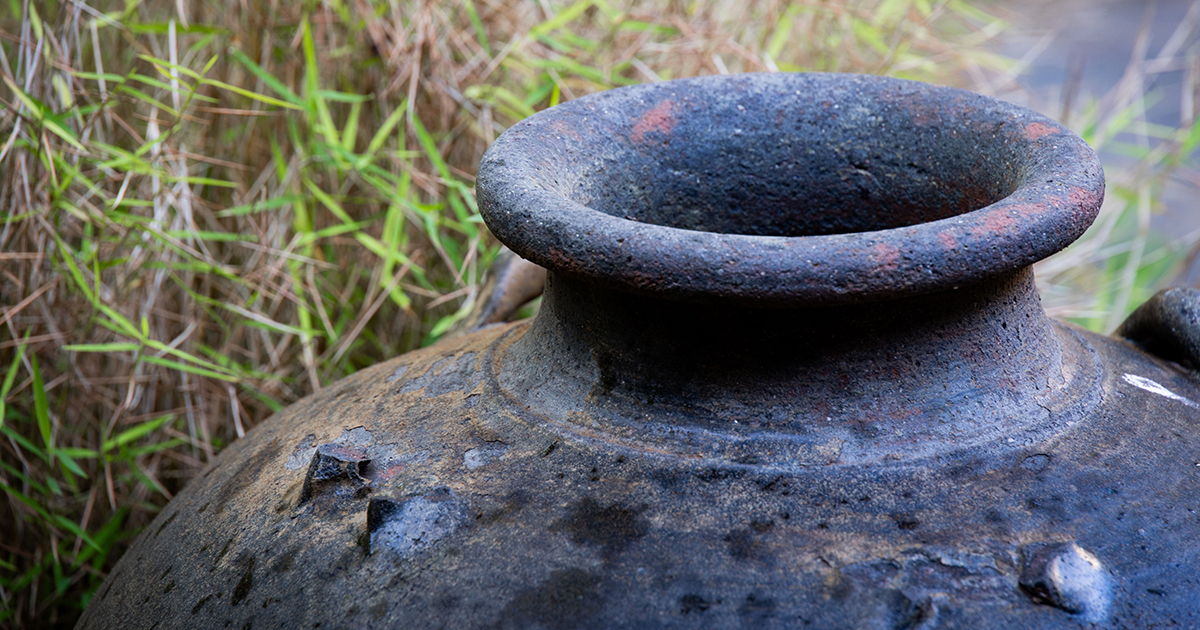

The pot sitting in a museum case with no label other than “Greek, 5th century BCE” looks like something you could still find at a farmers’ market in Athens. Plain clay, a modest handle, a rounded belly meant to sit over coals. Archaeologists get excited when they dig one up because the chytra was the working pot of ancient Greece, the vessel that kept households fed across centuries.
Most of the ceramics we associate with ancient Greece are the decorated kind – the red-and-black figure amphorae, the elegant kraters used for mixing wine, the elaborate oil flasks that traveled across the Mediterranean as luxury goods. The chytra was none of those things. It was not made to impress. It was made to cook dinner. Because of that, it ended up being one of the most ubiquitous, most archaeologically revealing, and most culturally embedded objects in the ancient Greek home.
The ancient Greek term χύτρα (khythra) translates directly as “cooking pot” or “clay pot used for cooking” – about as descriptive and no-nonsense as naming a pot can get. But the simplicity of the name belies how far the object reached into Greek life, from the daily rhythms of the household kitchen to the ritual observances of one of Athens’ most important annual festivals.
What a Chytra Actually Was
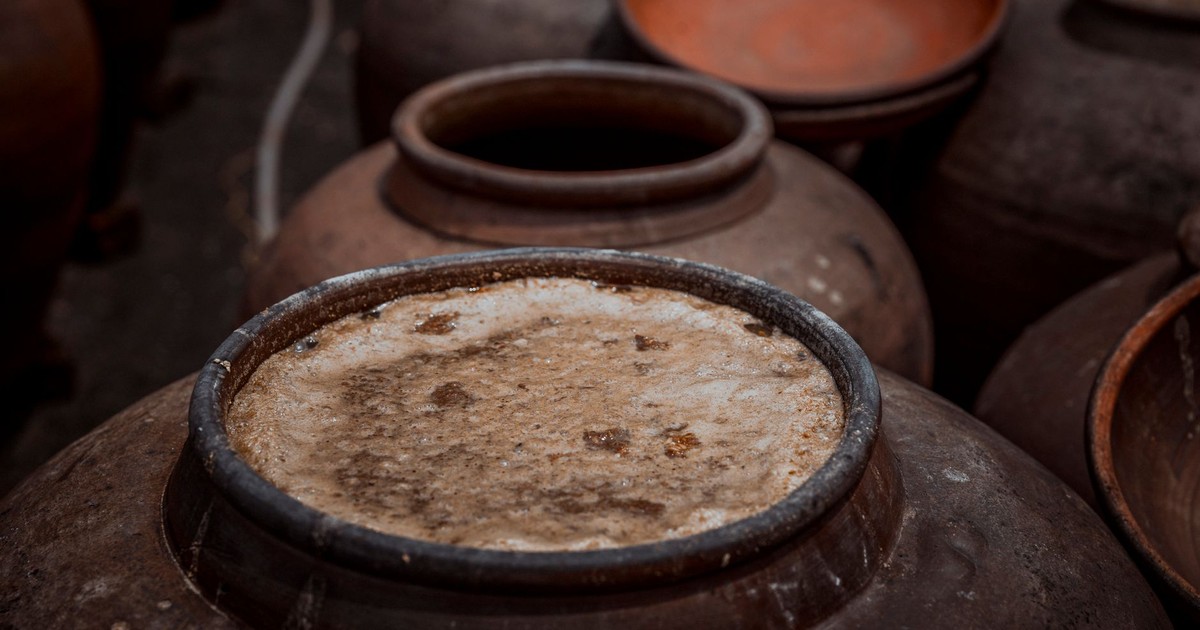
“Chytra” functioned as a generic term for cooking pot in ancient Greek. Think of it the way we use “casserole dish” today – not a single precise shape, but a whole family of vessels designed for the same essential purpose, varying by size, region, and the specific dish being prepared.
At the excavation site of Zagora, on the Cycladic island of Andros, the most common cooking pot shape recovered was a flat-bottomed ovoid jug with a defined neck, a slightly out-turned rim, and a vertical handle, found in a range of sizes from less than a liter up to five liters. A range that spans from a pot small enough to heat a single cup of broth to one large enough to feed a family of six.
The other classic form had a rounded belly, a prominent neck, and a single handle positioned so that it could be held away from the heat source. The chytra was the most common of these kitchen pots, the workhorse while its neighbors in the cupboard handled more specialized tasks like frying or braising under a lid.
The history of the ancient Greek chytra can be traced back to early Helladic times, with little change in the essential shape. The pot that an Athenian householder would have set over coals in the fifth century BCE was recognizably descended from the vessels used by earlier Greek-speaking peoples thousands of years before. When a design doesn’t change, it means the design works.
How It Was Made – and Why That Mattered
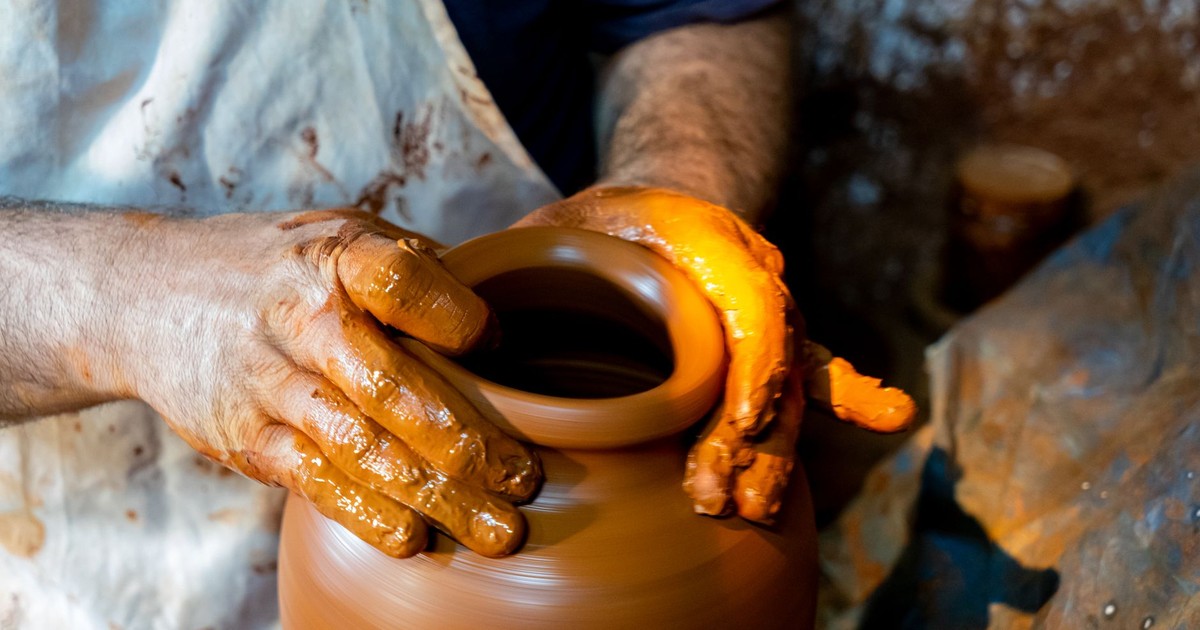
The chytra was not the glamorous pottery of ancient Greece. For cooking and other purposes, simpler and cruder vessels were used that were generally not decorated. These kitchen vessels were usually fired at much lower temperatures and made from coarser clay. Fine pottery was usually shaped using a potter’s wheel while coarser vessels were often just shaped by hand.
That hand-shaping detail is significant. It meant that chytrai could be produced locally, by potters who didn’t need specialist equipment or refined materials, which in turn meant they were available to everyone. You didn’t need to be wealthy to own a set. You needed to cook, which was qualification enough.
The coarse clay used for cooking vessels was also better suited to thermal shock – the stress that a pot undergoes when cold water is added to a hot surface, or when a vessel moves suddenly from hearth to table. Fine tableware, fired at higher temperatures with more refined clay, would crack under the force of that treatment. The chytra, rougher and more porous, absorbed the stress instead.
The pots frequently have smoke marks on the side opposite the handle, which suggests that the chytra were set on a hearth with hot coals piled up beneath and around their rounded sides. The smoke marks appear where the flame reached, and the clean side – the handle side – tells you which direction a cook would have stood to stir or lift. The pots are a record of someone’s posture over a fire two and a half thousand years ago.
What Went Inside
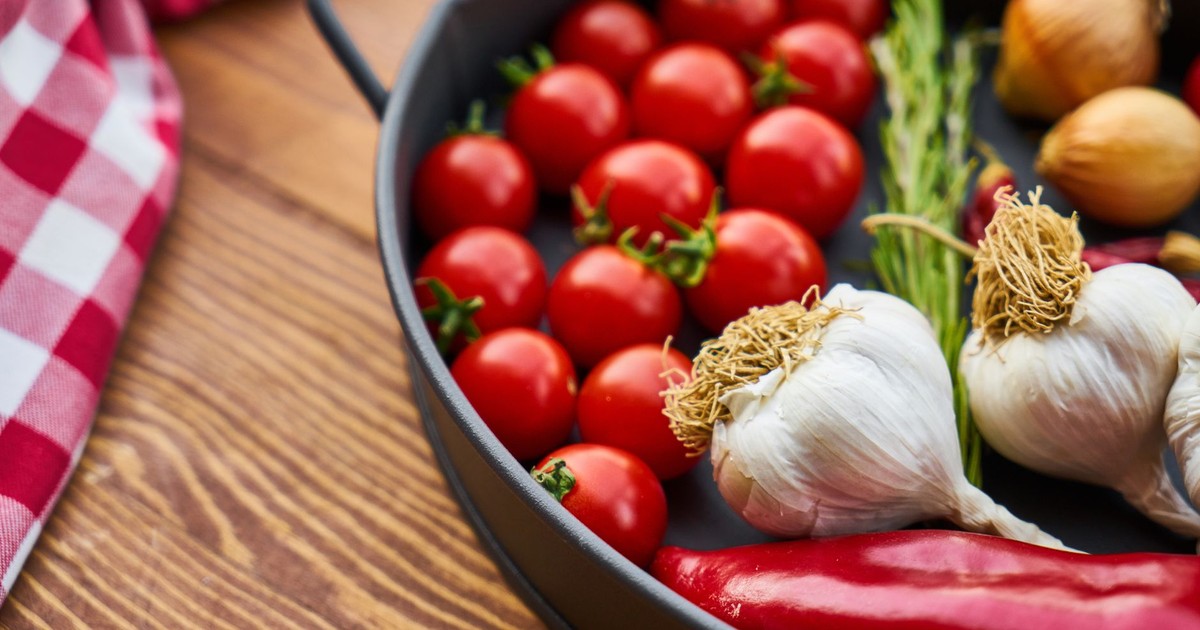
The ancient Greek diet leaned heavily on grains, legumes, vegetables, and fish, with meat appearing more often at religious festivals than at ordinary meals. The chytra was built for exactly this kind of cooking: long, slow applications of heat to humble ingredients.
In ancient Greece, chytrai were commonly placed on tripods over an open fire and were essential for the preparation of a wide range of dishes, from basic broths to more complex stews. Lentils, chickpeas, fava beans, barley porridge – these were the staples of the Greek table, and all of them required sustained heat and a reliable vessel. The chytra provided both.
Aristophanes, whose comedies are among our richest sources for ordinary Athenian life, refers to the chytra repeatedly in contexts that make clear it was considered the most basic, most everyday of all cooking equipment. If a character in an Aristophanes comedy is portrayed as poor, they’re eating from a chytra. If a household is well-managed, the chytra is on the fire. It functions almost as shorthand for domestic competence.
The paprika origin story offers a useful reminder of how profoundly ancient food cultures shaped what we now consider everyday cooking – the chytra is another thread in that same long story, connecting a clay pot over a hearth to the modern Dutch oven sitting on your stovetop.
The Regional Picture
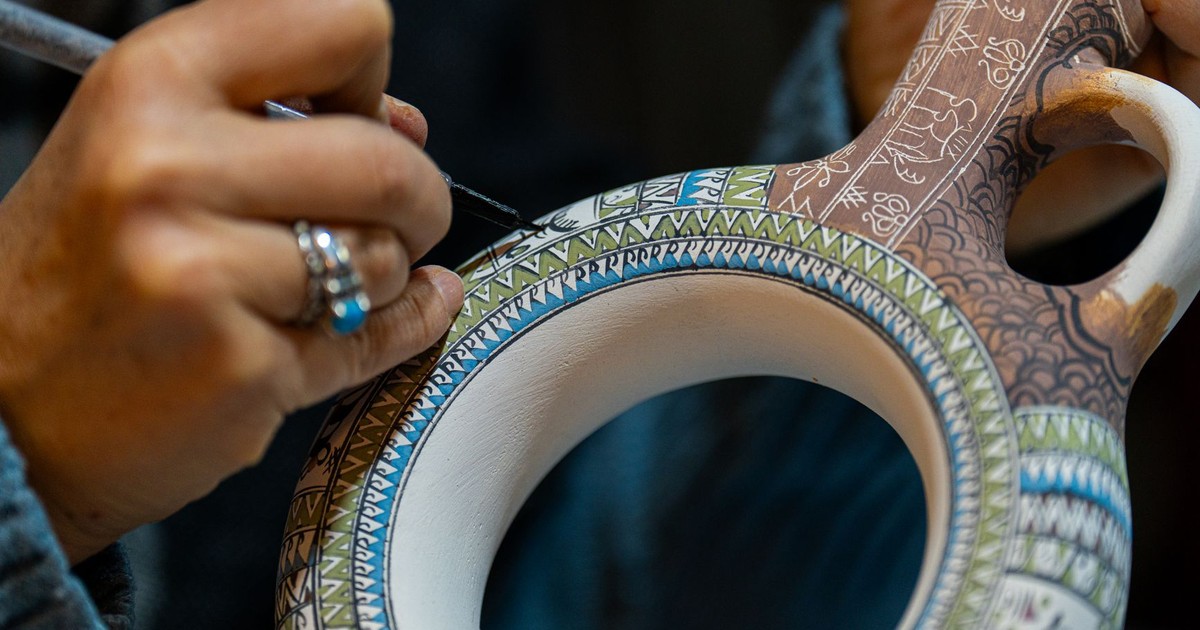
The chytra was not a single standardized object produced in Athens and distributed outward. It appeared across the Greek world in locally distinct forms, reflecting regional clay sources, local culinary traditions, and specific cooking practices.
At Karabournaki, a coastal site in northern Greece dating to the beginning of the Archaic period, cooking vessels including chytrai were still handmade, and across Central Macedonia, chytrai appear in various types and sizes. The range of forms uncovered across different excavation sites suggests that individual potters and regional workshops developed their own approaches to the basic template – same function, different hand.
The cemetery of Agia Paraskevi, dating from the first half of the sixth to the first half of the fifth century BCE, yielded only three chytrai, unlike the neighboring cemetery of Souroti where the chytra was the most common shape recovered. That variation between neighboring cemeteries points to something important: the chytra wasn’t just a kitchen object. It was placed in graves, which means it carried meaning beyond utility. The pot that cooked the meal was also deemed appropriate to accompany the dead.
The Festival of the Pots

The Anthesteria was one of the four great Athenian festivals honoring Dionysus, held each year in the month of Anthesterion (February–March) – and its third day was named directly after the pot.
The third day, called Chytroi, meaning “Pots,” was a solemn occasion on which families prepared pots containing boiled grains, seeds, and pulses – offerings known as panspermia – dedicated to Hermes Chthonios, the guide of souls, and to the spirits of the dead. Unlike communal meals offered to the gods during many Greek festivals, these offerings were reserved exclusively for the deceased.
The living did not eat from these pots. That prohibition is significant, because in ancient Greek religious practice, sharing food was the central act of communion – with other people, with the gods, with the dead. To set a pot aside and explicitly not eat from it was a powerful ritual statement: this food crosses a boundary that the living cannot cross.
The conclusion of the Chytroi involved the ritual expulsion of the spirits who had been walking among the living during the festival, with the Athenians calling out: “Thyrase, Keres! Ouketi Anthesteria!” – “Out the door, Keres! The Anthesteria is over!” The festival is sometimes compared to Halloween or Día de los Muertos in its structure: a designated period when the boundary between the living and the dead grows thin, followed by a formal ceremony of dismissal.
The naming of an entire day of a major religious festival after a humble cooking pot tells you something that no single archaeological find could. The chytra was not considered low or embarrassing. It was considered foundational. It was the vessel you reached for when you needed to mark something as important – even, apparently, when that something was feeding the dead.
What the Shards Tell Us

Pottery survives. Organic material – food, wood, cloth, leather – almost never does, particularly across the timescale we’re working with when studying ancient Greece. This is why fragments of everyday ceramics, the broken rims and handles that ancient households threw on the rubbish heap, become the primary evidence for how people actually lived as opposed to how they were officially commemorated.
A considerable amount of archaeological material is linked with food preparation and culinary activities that took place in domestic and public spaces in the ancient Greek world, though a place or room intended exclusively for cooking cannot always be identified in ancient Greek houses. The occasional ambiguity of items referring to ancient Greek kitchenware is often clarified through excavation contexts that include a combination of finds – structures, vessels, and organic remains – alongside written and iconographic sources.
That combination of evidence types – the physical pot, the charred seed in the soil beside it, the offhand mention in a comedy – is what gives archaeologists confidence in their conclusions. The chytra doesn’t reveal itself through one spectacular find but through the accumulation of thousands of ordinary ones. A smoke mark here, a lentil residue there, a passing reference in Aristophanes, a child’s grave furnished with a miniature version. The picture builds slowly, and it builds into something specific and vivid.
The Archive That Doesn’t Disappear
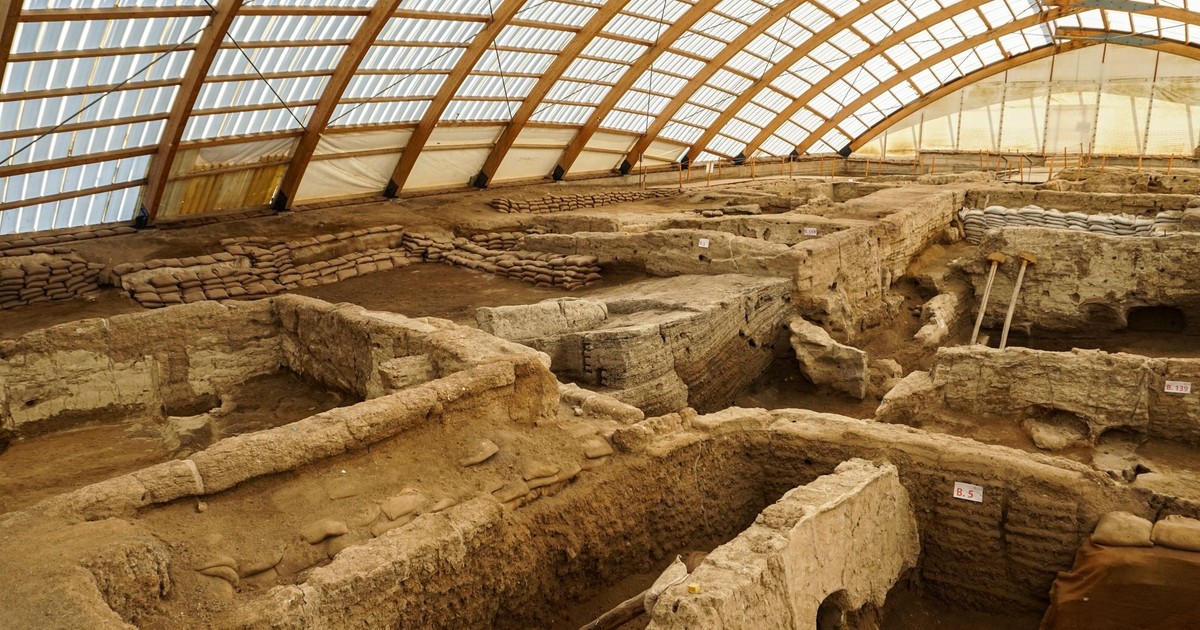
Clay, once fired, is nearly indestructible. Bronze melts and gets recast. Wood rots. Stone gets quarried for new buildings. But a broken pot thrown into a well or a midden pit five centuries before the Common Era will still be there when an excavator’s brush finds it. The chytra, precisely because it was common and undecorated and used until it broke, ended up being one of the most widely distributed artifacts in the ancient Greek world.
What the chytra describes, in aggregate, is the ordinary life that history usually leaves out. The fine decorated vessels tell us about trade, wealth, artistic convention, and elite display. The chytra tells us about dinner. About the woman or the enslaved person crouching over a hearth, watching a pot of lentils, keeping the household running. About the child buried with a miniature version of the pot that fed them. About the festival day when the whole city set pots out for the dead and then told the spirits to go home.
The archive of everyday objects never closes. Every new excavation adds a fragment, a data point, another smoke mark on another pot. That’s not a metaphor for anything. It’s just what happens when a civilization leaves behind enough clay.
The Pot That Outlasted Everything
The chytra did not survive into the modern world as an object – you won’t find one at a kitchen supply store, and replica versions exist mainly in the hands of historians and experimental archaeologists curious about ancient cooking methods. But the form it represents never went away. The rounded belly, the single handle, the design optimized for sitting over a heat source and cooking something slowly – that’s a Dutch oven. That’s a stockpot. That’s the ceramic tagine sitting on a shelf in a kitchen in Los Angeles.
The ancient Greek chytra was not preserved because it was beautiful or expensive or made for someone important. It was preserved because clay is tough and time is long, and because people kept cooking the same basic things in the same basic ways, generation after generation, in pots that all traced back to the same practical logic. A flat base, angled to hold its position over a fire. A rounded belly to distribute heat. A handle placed away from the flame so you don’t burn yourself. A neck to control what goes in and comes out.
That’s the design. Two thousand years later, it still works.
Disclaimer: This information is not intended to be a substitute for professional medical advice, diagnosis, or treatment and is for information only. Always seek the advice of your physician or another qualified health provider with any questions about your medical condition and/or current medication. Do not disregard professional medical advice or delay seeking advice or treatment because of something you have read here.
AI Disclaimer: This article was created with the assistance of AI tools and reviewed by a human editor.