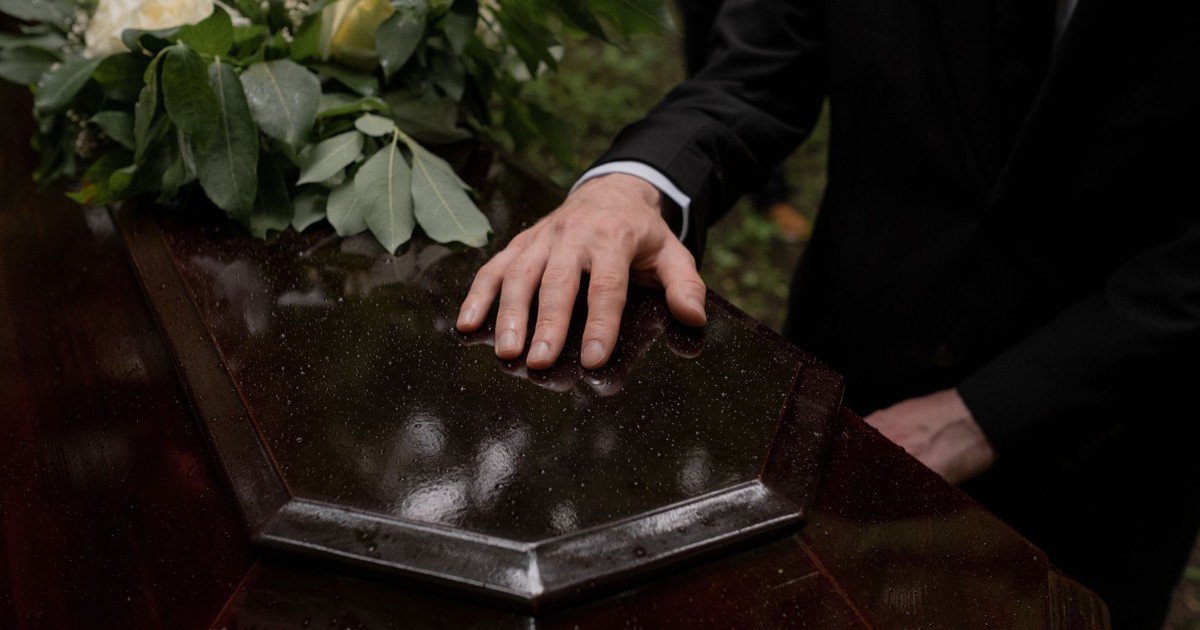

The moment a difficult person dies, a familiar pressure descends. You know the one. Somebody in the room says something warm and general about the deceased, and you feel the eyes – not on you, exactly, but near you. Waiting to see if you’ll play along. And the strange thing is, most of us do. We find the closest true thing we can say, something vague enough to be generous, and we say it. Not because we’re dishonest. Because the rule has been running so long it doesn’t even feel like a rule anymore. It feels like decency itself.
It isn’t, though. Or at least, it isn’t as ancient and universal as it pretends to be. “Don’t speak ill of the dead” has a specific origin, a specific purpose, and a specific era it was designed for – and younger generations are increasingly deciding that none of those apply to them.
That tension has become one of the more interesting cultural conversations of the last few years, flaring up every time a public figure with a complicated legacy dies and the internet immediately splits into two camps: the people reaching for grace, and the people reaching for honesty. Neither side is entirely wrong. But to understand why the argument keeps happening, it helps to know where the rule actually came from.
From Sparta, With Caveats

The phrase traces back to Chilon of Sparta, a sixth-century philosopher and one of the famous “Seven Sages” of ancient Greece, who advised in Greek: τὸν τεθνηκóτα μὴ κακολογεῖν – “of the dead do not speak ill.” Chilon was not a sentimentalist. He was a Spartan. His broader body of wisdom included sayings about merciful strength, restraint in mockery, and the preference for punishment over disgrace – a set of ethics built around public comportment and social order, not private feeling.
In Spartan culture, restraint in speech about the deceased was considered a mark of piety and social discipline, fitting the laconic ethos of a society that honored the fallen in battle without recrimination. In broader Greek practice, the idea found legal expression as well: Solon’s reforms in Athens around 594 BCE reshaped civic life around questions of justice and social order, reflecting the same broader Greek concern with how the community treated those who could no longer speak for themselves.
The phrase didn’t arrive in its now-familiar Latin form until much later. In the early fifteenth century, an Italian monk named Ambrogio Traversari completed a Latin translation of Diogenes Laertius’s Lives of Eminent Philosophers — the ancient biography that preserved Chilon’s sayings — and that’s where the version everyone actually quotes emerged: De mortuis nil nisi bonum – “of the dead, nothing unless good.” Traversari’s Latin wording is a polished later formulation of Chilon’s idea, not a word-for-word rendering of the original Greek – the phrase evolved on its way from Sparta to the monk’s desk.
So what we have is a piece of Spartan civic philosophy, filtered through fifth-century Greek biography, rendered into quotable Latin by a Renaissance monk, and handed down for six centuries as though it were an eternal moral law. It’s Spartan etiquette wearing a Latin costume, and it’s been doing that so successfully for 500 years that most people assume it was always theirs. Home decor gets away with a lot. So does dead philosophers’ etiquette.
What the Rule Was Actually Protecting

Chilon’s original logic – not to defend it, but because the reasoning tells you exactly where it breaks down – is the place to start.
De mortuis nil nisi bonum is a mortuary aphorism indicating that it is socially inappropriate for the living to speak ill of the dead who cannot defend or justify themselves. That’s the core of it: fairness to those who have no voice left. In a world without recorded testimony, without journalism, without the internet’s persistent archive of everything a person ever said publicly, that protection made sense. A dead person’s reputation was genuinely fragile. The community’s collective memory was the only record.
The principle permeated funerary orations, as seen in Pericles’ famous epitaphios in 431 BCE, recorded by Thucydides, which extolled the virtues of the fallen. Kindness at the grave wasn’t just comfort for the grieving – it was civic archiving. You were deciding what the community would remember.
That context has almost entirely evaporated. The people being eulogized today, whether private individuals or public figures, have left behind vast documentation of who they were – emails, interviews, lawsuits, published accounts from the people they harmed, social media trails going back decades. The dead can, in a sense, speak for themselves now. And the people they hurt can speak too. The original logic for silence is harder to sustain when so much is already on the record.
The Generational Break

In comparison to older generations, Gen Z appears noticeably more comfortable discussing death openly. Often, they use humor to cope with it – across TikTok, Twitter, and Instagram – in ways that previous generations would have found deeply inappropriate. This isn’t nihilism or irreverence for its own sake. It’s a different relationship with mortality and with social performance around mortality. Where older generations were raised to treat death as a sealed room – something you closed quietly and didn’t reopen – younger ones were raised in an era when that door was already open, with or without their permission.
The grief conversation they’re willing to have is also more honest about the person who died, not just the loss itself. There’s a difference between grieving someone and being required to retroactively canonize them. Millennials and Gen Z have generally decided that watching their mom die or losing an abusive parent is a complicated enough experience without also being required to perform simple reverence for the people who made it complicated.
The cultural moment that made this visible wasn’t a celebrity death. It was a book.
Jennette McCurdy and the Permission Slip Nobody Asked For
Released in August 2022, I’m Glad My Mom Died shot to the top of the New York Times bestseller list, instantly becoming one of the most buzzworthy books of the year. The title alone was the provocation. It was designed to be uncomfortable. It named, without softening, what some adult children feel when an abusive parent dies – not grief in the conventional sense, but something much more tangled: relief, and the guilt that follows relief, and eventually the strange freedom of being honest about both.
The book is not for those who preach reverence for the dead, especially dead family members. A victim of her mother’s abuse until her early adulthood, McCurdy does not shy away from expressing relief that her mother, Debra, is no longer alive to torment her.
The cultural response told you everything. Half the internet recoiled – the title alone felt like a violation of the unwritten rule, extending the prohibition even to memoir, even to private reckoning, even to a woman trying to understand her own life. The other half recognized themselves immediately. The book spent more than eighty weeks on the New York Times bestseller list not because it was titillating but because it was the first time many readers had seen their own experience given a name and a cover and a place on a shelf. When you’ve spent years grieving someone you were also relieved to lose, and being told quietly that the second part of that sentence isn’t allowed, seeing it printed in plain text does something to you.
Today.com covered the memoir’s impact at length following its release. The book shot to the top of the New York Times list. That’s not a publishing fluke. That’s a pressure valve releasing.
The Argument That Won’t Go Away
Every time a public figure dies with significant controversy attached to their name – a disgraced executive, a politician whose record included real harm, an abuser whose victims are still living – the same argument surfaces within hours. One side invokes the rule, cites a version of de mortuis nil nisi bonum, and calls for quiet. The other says that silence protects legacies at the expense of truth and, more specifically, at the expense of the people who were harmed.
Both sides are often talking past each other because they’re answering different questions. The first is asking: what do we owe the dead? The second is asking: what do we owe the living? Those are not the same question, and the old rule was written to answer only the first one.
There’s also a meaningful difference between cruelty and honesty. The instruction to don’t speak ill of the dead was never intended to mean that the historical record should be falsified, or that survivors should be silenced, or that obituaries should exclude relevant context. Even in its original Spartan form, it was a social norm about tone – about not dancing on graves at the funeral – not a prohibition on accurate history.
What younger generations are largely pushing back on is the extension of that norm into places it doesn’t belong: into therapy sessions, into memoirs, into family conversations, into the spaces where people try to understand what actually happened to them. The rule was about public decorum. It has been stretched, over centuries, into a demand for private silence.
The Case for Holding Both
None of this means honesty requires harshness. The most honest eulogies – the ones that actually capture a complicated person – tend to be the ones that refuse to choose between the warm thing and the true thing, and instead hold both at the same time. Grief is almost never simple. The loss of someone who caused harm is still a loss. The relief at the end of suffering, your own or theirs, doesn’t erase the love that was also there. People are not one thing.
The critique isn’t that grief should be grim or that funerals should become reckonings. It’s that a person should be allowed to feel whatever they actually feel, and to say so in appropriate contexts, without being shamed into a performance of reverence they don’t believe.
What Actually Changes Now
The rule isn’t disappearing. It’s being renegotiated, which is something different and more interesting. The core impulse behind it – some basic care about how we treat the memory of people who can no longer speak – isn’t wrong. What’s being questioned is the scope of that protection.
Gen Z’s more open attitudes toward death aren’t a rejection of the dead – they’re a renegotiation of what the living owe them. Chilon of Sparta was advising citizens of a small city-state on how to behave at funerals. He was not writing policy for a world in which a celebrity’s decades of documented behavior become the subject of a national conversation hours after their death, or in which a memoirist needs to describe her own childhood accurately in order to understand it.
The phrase traveled from ancient Greece to Renaissance Latin to English common wisdom over 2,500 years, and somewhere along the way it became less of a social courtesy and more of a tool for silencing. The younger generations who are pushing back on it are not disrespecting the dead. They’re respecting the living – including their past selves – enough to tell the truth about what happened.
The difference between cruelty and honesty matters, even if it never fully resolves the argument. Some patterns go back further than any one relationship does. Naming them honestly isn’t a violation of the dead. It’s the only way the living get to move forward.
Read More: Your Mother’s Funeral Will be The Day You Realize You Lost A Best Friend
The Archive Never Closes

The old justification for silence – that the dead cannot defend themselves – was always also an argument for the living to protect them. What it quietly ignored is that the living who were harmed by those same people also cannot fully defend themselves if the official story is permanently sealed.
Grief doesn’t require a clean verdict. You are allowed to miss someone and also acknowledge what they did. You are allowed to feel relief and also feel loss, sometimes in the same afternoon, sometimes in the same sentence. What you are not required to do is flatten any of that into something tidy enough to pass a 2,500-year-old Spartan etiquette test.
Chilon of Sparta never met your family. He doesn’t get a vote on what you’re allowed to say at the kitchen table.
Disclaimer: This information is not intended to be a substitute for professional medical advice, diagnosis, or treatment and is for information only. Always seek the advice of your physician or another qualified health provider with any questions about your medical condition and/or current medication. Do not disregard professional medical advice or delay seeking advice or treatment because of something you have read here.
AI Disclaimer: This article was created with the assistance of AI tools and reviewed by a human editor.