

Most couples decide where they’ll sleep the night they move in together, and then never revisit the question for the next thirty years. The bed is just there. Both people are just in it. Nobody asks whether it’s actually working.
A growing number of couples are asking. Not after a blowup, not as a last resort, not because something has gone wrong, but as a deliberate, mutual choice made before the tension can build up and make it feel like a punishment. The part that surprises people isn’t the sleeping apart. Plenty of couples end up there eventually, one of them exiled to the couch after too many restless nights. The part that surprises people is that it actually works, and often works fast.
Separate bedrooms in a marriage are far more common than the cultural silence around the topic would suggest, and the couples who try it are noticing changes that have nothing to do with the story the culture tells about what separate beds mean.
The Number That Changes the Conversation

According to 2025 survey data from the American Academy of Sleep Medicine, nearly one-third (31%) of U.S. adults have opted for what has been coined a “sleep divorce,” sleeping in another bed in the same bedroom or in another space in the home to accommodate a bed partner. That is not a fringe arrangement. That is a significant portion of the adult population quietly making a pragmatic call about their own rest and their relationship’s health.
Adults aged 35 to 44 are most likely to engage in a sleep divorce, at 39%, while those 65 or older are the least likely, at 18%. The pattern makes sense. The 35-to-44 window is often when careers are demanding, kids are young and exhausting, and two people’s schedules have diverged enough that sharing a sleep space starts to feel like a negotiation nobody wins.
Meanwhile, a 2025 Global Sleep Survey by ResMed, a medical device company, found that half of U.S. couples say they sometimes opt for a sleep divorce by sleeping in separate bedrooms. One in three say their partner’s snoring, loud breathing, or gasping for air interrupts their sleep regularly.
Why the Shared Bed Became Sacred in the First Place

Historically, separate bedrooms were not scandalous. Victorians were actually fond of their adjoining suites. The practice among married couples has evolved, reflecting a change from communal sleeping arrangements in earlier centuries to the individualization of sleep in the 19th century, and then back to a preference for closeness in modern relationships.
The shared bed became a romantic ideal, a signal of closeness and unity. A king-sized bed in a well-appointed room reads as intimacy even when the two people in it are both lying awake staring at the ceiling, furious about the snoring.
Social media still whispers that separate beds signal a looming divorce. Yet many modern couples report that reclaiming nighttime autonomy actually restores daytime closeness. The idea that relational health is measured by the square inches of mattress two people share is, at best, an oversimplification.
What Actually Disrupts Sleep in a Shared Bed
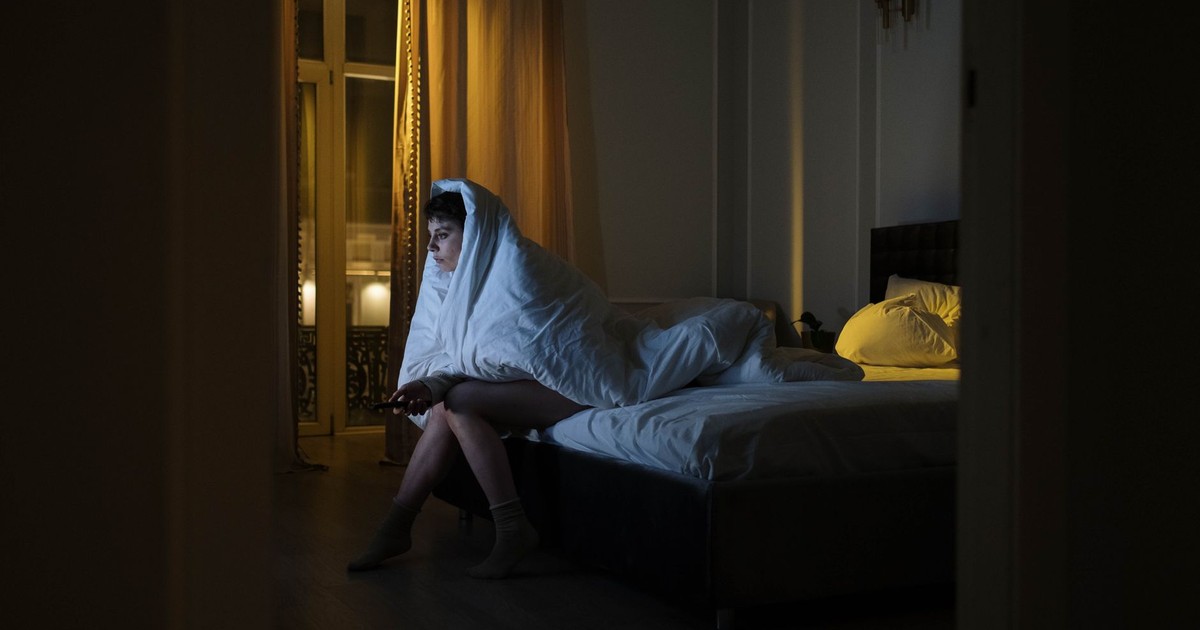
Before getting to what separate bedrooms can fix, it helps to understand what sharing a bed routinely breaks. The list is longer than most people admit to.
Women are more affected by nighttime disruption than men. According to the ResMed survey, 20% of women say their partner disrupts their sleep every night, compared to 11% of men who report the same.
Then there are the mismatched chronotypes: the early bird who is asleep before the ten o’clock news and the night owl who finds their stride at 11 p.m. The blanket thief. The person who runs at a body temperature that should be medically investigated. The one who scrolls their phone until 1 a.m., casting that particular shade of blue light onto a partner who needs darkness to fall asleep. All of it adds up, night after night, into a sleep debt that neither person is consciously tracking but both are paying.
What Sleep Deprivation Does to a Marriage
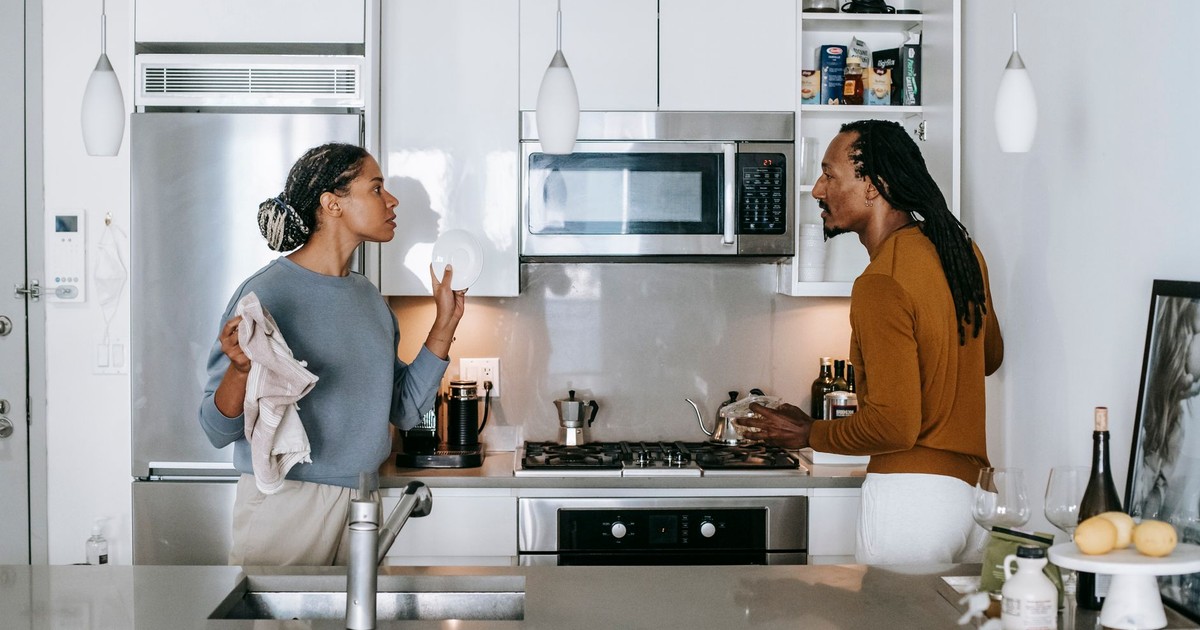
The damage bad sleep does to a relationship isn’t incidental. It’s direct and well-documented.
Research on sleep deprivation and couples’ conflict has found that sleep-deprived partners show elevated cortisol levels during conflict discussions compared to rested couples — higher cortisol levels during conflict discussions have been linked to outcomes actively harmful to the relationship. In other words, the same argument has a measurably worse outcome when one or both partners is running on poor sleep.
Related research has found that while poor sleep quality had a direct effect on reduced relationship satisfaction, anger fully mediated this effect, meaning poor sleep quality causes increased feelings of anger, which then produce poorer relationship outcomes. One bad night is survivable. A pattern of bad nights rewires how both partners interpret each other’s behavior.
The Numbers on What Happens After the Switch
What actually changes when couples choose separate bedrooms? The data is fairly consistent, and it leans positive.
Surveys suggest that somewhere between one in six and one in three couples sleep apart at least part of the time, depending on the population studied. Among those who have made the switch, a meaningful share rate their relationship positively after doing so.
Nearly half (48%) of couples sleeping apart say their relationship improved, with 28% believing it actually saved their partnership. Those are not the numbers of an arrangement that signals trouble. Those are the numbers of something that, for many people, is quietly doing a lot of good.
The Extra 37 Minutes That Changes Everything
The sleep gain is real and it is specific. A 2024 Sleepopolis report found that 53% of couples who tried a sleep divorce experienced better sleep and gained about 37 extra minutes of rest per night.
Thirty-seven minutes might not sound like much. But compounded across a week, that’s nearly four and a half hours of additional sleep, the difference between dragging yourself through Thursday and actually having the cognitive and emotional reserves to be a decent partner when your spouse comes home and needs to talk about something real. Rest is not a luxury. It is the infrastructure everything else runs on.
The Stigma That Keeps Couples Suffering
Psychiatrist Dr. Joshua Weiner has been married for 25 years and has practiced a sleep divorce for 10 of them. “It’s embarrassing to some degree,” he told NBC Washington in June 2025. A psychiatrist. Someone whose entire professional life involves talking openly about how humans work. Still embarrassed. That tells you something about the weight of the cultural narrative around this.
While sleeping apart has traditionally been seen as a sign of marital trouble, experts suggest it’s time to revisit that outdated thinking. The stigma is almost entirely social, a story we tell about what a good marriage looks like, based on aesthetics rather than evidence. Nobody looks at two people who are well-rested, generous with each other, and genuinely glad to see each other in the morning and thinks: they must be sleeping in the same bed every night. The correlation was always imaginary.
How Couples Are Actually Making It Work
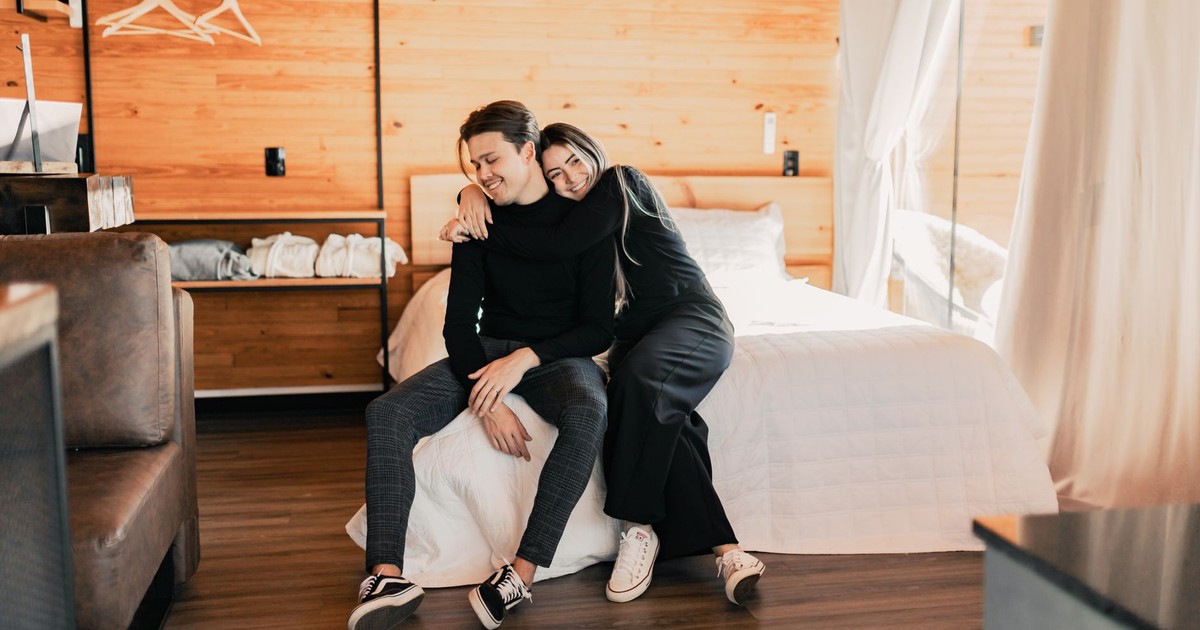
Separate bedrooms in a marriage do not have to be a binary, all-or-nothing arrangement. Many couples find a rhythm that works for them rather than following a fixed script.
It doesn’t have to be an every-night arrangement. Some couples maintain separate sleep spaces during the workweek and return to a joint sleeping space on weekends. Others structure it around who has an early meeting, who slept badly the night before, or whose body clock is in a phase that makes the usual arrangement unworkable this week. The key is that the decision is made deliberately, together, rather than being a consequence of one person sleeping on the couch after an argument.
Some therapists note that a sleep divorce can lead to better intimacy and bring back desire, since couples may no longer be taking each other for granted. When you’re not sharing the eight-hour stretch of sleep with your partner, when the bed becomes a place you go to separately, and the times you share it become something you choose rather than something that just happens by default, the dynamic changes. Choosing each other registers differently than defaulting to each other by proximity.
When Sleep Issues Have a Medical Root
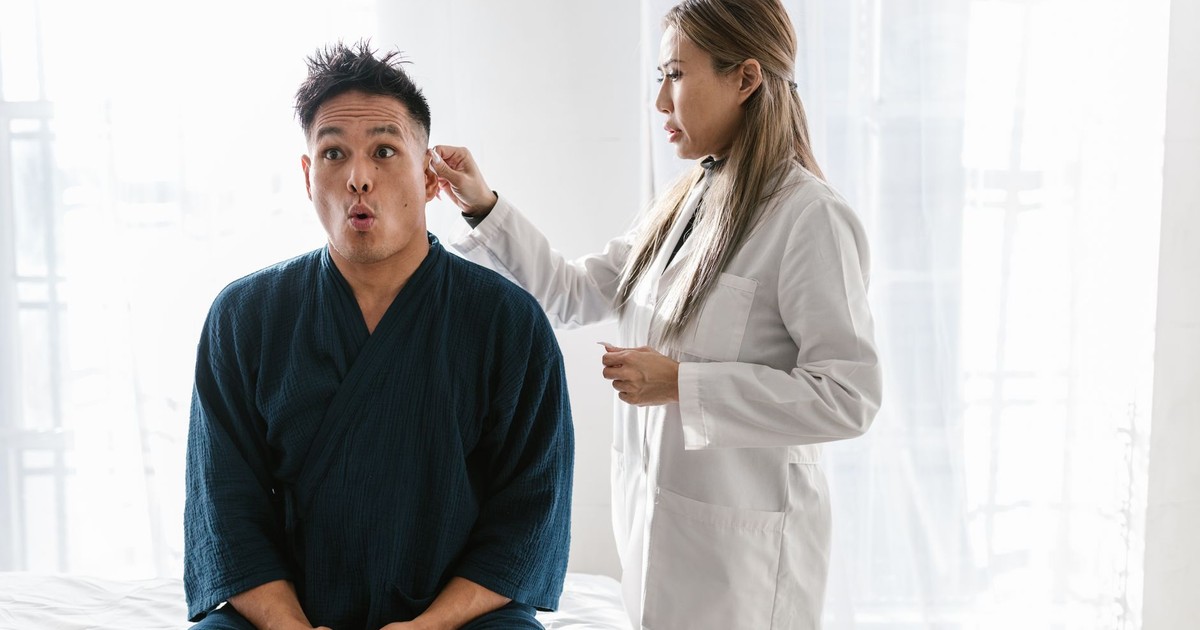
Sometimes the reason a couple ends up in separate bedrooms isn’t just preference or scheduling. It’s a condition that needs medical attention. Snoring, gasping, and repeated waking are hallmarks of obstructive sleep apnea (a condition where the airway collapses during sleep, disrupting breathing and rest), and it affects not just the person who has it but the person sleeping next to them.
In a study of Brazilian couples who had chosen to sleep apart, loud snoring and sleep apnea together accounted for 75% of the reasons couples opted for a sleep divorce. In those cases, a separate bedroom is a reasonable short-term solution, but it’s also a useful signal that something worth diagnosing might be going on. A doctor is a good first call when the snoring is severe enough that the other person is losing an hour of sleep a night.
The Couples Who Go Back

Not everyone who tries sleeping separately stays that way. About 1 in 4 couples who try a sleep divorce return to sharing a bed, most often because they miss each other. That is not a failure. That is useful information. Missing your partner is data. So is waking up rested and kind for the first time in months.
Some couples cycle between the two arrangements depending on the season of their lives. They share a bed when the kids are small and everyone’s schedule is the same kind of chaos. They separate when one partner’s work hours go erratic, when a health issue disrupts nighttime routines, when insomnia comes back after a stressful stretch at work. The arrangement is a tool, not a verdict.
What the Numbers Actually Show
The data increasingly supports that the shared bed is not the relationship. It is one part of the relationship. And optimizing for rest is not a concession; it’s an act of care, directed both inward and outward. Two people who sleep well are more patient, more empathic, less reactive, and more capable of being genuinely present with each other during the hours they are actually awake and interacting.
You can explore what your own sleep habits might be communicating about your relationship in this look at couples’ sleep positions, the patterns couples fall into at night often say more than they intend to.
Half of U.S. couples say they sometimes opt for a sleep divorce by sleeping in separate bedrooms. Which means if you’ve considered it, you are not on the strange end of anything. You are in the middle of a very common conversation that most people are just having quietly.
The Logistical Questions Nobody Asks First
If a separate bedrooms marriage is something you’re actually considering, the logistics tend to feel more daunting than they end up being. A second bedroom is the obvious solution, but it’s not the only one. Some couples use a sofa bed, a high-quality pull-out, or even a comfortable chair-and-ottoman setup in a home office for the partner who needs the quieter space on a given night.
Temperature control matters more than most people realize when setting up a sleep space. If one partner runs hot and the other runs cold, the ability to set the thermostat in your own room to your own preference, rather than negotiating a compromise that satisfies nobody, is a surprisingly significant quality-of-life improvement. The same goes for light, noise, and the presence or absence of a dog who believes 5 a.m. is an appropriate time to stand on someone’s face.
The Conversation That Makes It Work

The arrangement is only as good as the communication surrounding it. Couples who thrive with separate sleeping spaces tend to have made the decision together, framed it as a positive choice rather than a retreat, and built in intentional togetherness to replace the passive proximity that a shared bed provides.
As one American Academy of Sleep Medicine spokesperson put it: “Healthy sleep is essential for healthy relationships, no matter how it’s achieved.” No matter how it’s achieved is the important part. There is no single right configuration for two people trying to build a life together. There is only what actually works for these two specific people, in this specific home, in this particular phase of their lives.
The Younger Generation Is Already There
Millennials lead the sleep divorce trend at 43%, compared to 22% of baby boomers. The generation that spent its formative years dismantling the idea that every relationship has to look a specific way has apparently also decided that two people can love each other deeply and sleep in different rooms. This is not a radical position. It is a pragmatic one that older generations were perhaps too attached to appearances to make openly.
In clinical experience, the practice trends toward greater popularity among younger generations, people who are more likely to evaluate an arrangement on its merits than on whether it matches what their parents did. That is, at minimum, a reasonable approach to something as personal and consequential as how you structure your rest.
The History That Normalizes It

The idea of separate bedrooms as a modern failure or a sign of marital distance is historically inaccurate. In ancient Rome, the concept of the marital bed, known as the “lectus genialis,” was both practical and symbolic. Roman couples often used one bed for intimate conversations and physical closeness, but it was not unusual for them to retire to separate beds when it was time to sleep.
The insistence that a healthy marriage must include eight shared hours in the same mattress is a relatively recent and mostly Western construction. It is not ancient wisdom. It is, largely, a product of smaller housing, changing social norms, and the mid-20th century idealization of a certain vision of domestic life. Two people sharing a bed became the default not because it was best for sleep, but because it was what the culture came to expect.
Read More: “Living Apart Together” is the New Trend that Might Save Your Relationship
What This Is Really About

A separate bedrooms marriage is not a sign that something is wrong. In a growing number of cases, it’s a sign that two people were honest enough with each other to admit what they actually need, and secure enough in the relationship to ask for it.
The real question isn’t whether your marriage could survive separate bedrooms. It’s whether it’s already being worn down, slowly and invisibly, by a sleep arrangement nobody chose consciously and nobody has ever bothered to reconsider. Years of interrupted sleep, morning irritability nobody fully traces back to its source, conflict that escalates faster than it used to, all of it quietly funded by a habit of sharing a bed because that’s just what you do.
Some of these patterns go back further than the current sleep setup does. The resentment that builds from months of being woken at 3 a.m. is real, and it doesn’t announce itself clearly. It just makes the next argument harder to come back from, and the one after that harder still. Naming the actual source isn’t a solution on its own. But it is usually where the real conversation starts, and that conversation tends to go better when both people have actually slept.
Disclaimer: This information is not intended to be a substitute for professional medical advice, diagnosis, or treatment and is for information only. Always seek the advice of your physician or another qualified health provider with any questions about your medical condition and/or current medication. Do not disregard professional medical advice or delay seeking advice or treatment because of something you have read here.
AI Disclaimer: This article was created with the assistance of AI tools and reviewed by a human editor.