

Christianity is the dominant faith in all 50 states. What comes second is considerably more interesting. Set Christianity aside, and Islam dominates the non-Christian landscape in nearly half the states, Buddhism is the runner-up faith along the Pacific Rim, and the Bahá’í Faith ranks among the top non-Christian faiths in several states that have very little else in common. The patterns below draw on data from the 2020 U.S. Religion Census.
The 2020 U.S. Religion Census tracked more than 370 religious bodies and over 160 million adherents. It included 372 faith groups in total. The numbers are not a poll. They are a congregation-by-congregation count, which means the data reflects actual membership records, not what people tell a phone surveyor on a Tuesday afternoon.
The data reveals a map of migration patterns, urban density, historical outreach campaigns, cultural ties to other continents, and communities that found a home in places you would not necessarily predict. Every state is accounted for below, all fifty, grouped by the faith that leads when Christianity is set aside.
Islam: The Dominant Non-Christian Faith Across Nearly Half the Country
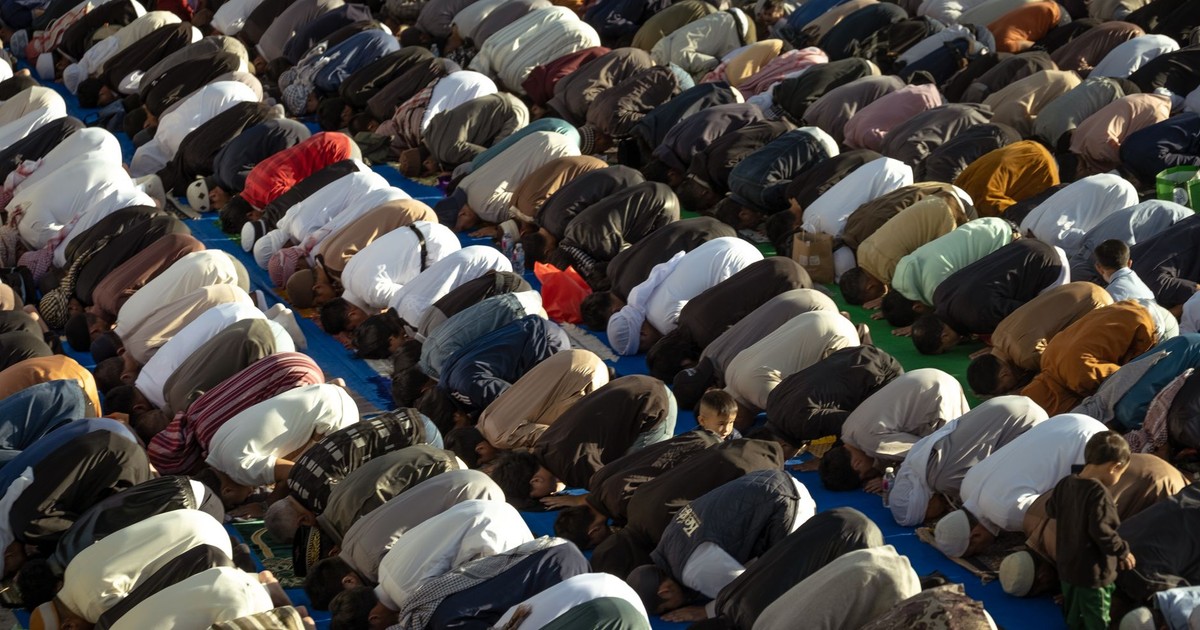
Islam accounts for nearly half of all non-Christian adherents counted, and it ranks as the largest recorded non-Christian religion across nearly half of all U.S. states, spanning much of the Midwest, South, Northeast, and several major coastal states, particularly in places with major urban centers and long histories of immigration.
New York records roughly 724,000 Muslim adherents, the largest recorded non-Christian religious community in any single state, and is home to about 1.7 million non-Christian adherents overall, the highest total in the country. California follows with more than 504,000 Muslim adherents, while Illinois has approximately 474,000. Those three states alone would constitute a significant Muslim population by global standards. Beyond them, Islam leads the non-Christian count in Texas, Florida, Michigan, New Jersey, Virginia, Georgia, Maryland, Pennsylvania, Ohio, North Carolina, Tennessee, Alabama, Mississippi, Louisiana, Missouri, Indiana, Minnesota, Connecticut, Massachusetts, Arkansas, Iowa, Kentucky, Maine, Oklahoma, Vermont, and Wisconsin.
The breadth of that list reflects two distinct histories of American Islam. Immigration: waves of arrivals from South Asia, the Middle East, and West Africa who settled in cities and then fanned out into surrounding regions over generations. And an older, less frequently told story: the African American Muslim community, present in significant numbers across the South and Midwest, with roots that trace back through the Nation of Islam, the civil rights era, and much further.
Idaho and Utah also record Islam as the leading non-Christian faith in the 2020 census count, an outcome shaped in part by growing Muslim communities in Boise and the Salt Lake metro area, which expanded significantly through refugee resettlement programs over the past two decades.
Buddhism: The Pacific Rim’s Second Faith

Buddhism accounts for the second-most popular faith in five states: Alaska, Hawaii, Montana, Nevada, and Washington. The specifics vary by tradition. Mahayana Buddhism is the largest non-Christian religion in Hawaii, Nevada, and Washington, while other Buddhist traditions lead in Alaska and Montana.
Hawaii has the highest concentration of Buddhists of any U.S. state, a figure that reflects the state’s longstanding cultural ties to Japan, China, South Korea, and other parts of Asia. Nevada and Washington are the more interesting entries. Large Asian American urban communities in Las Vegas and the Seattle metro have built Buddhist institutions substantial enough to lead the non-Christian field statewide. Montana presents a different logic: a state with a small overall population where a concentrated Buddhist community, smaller in raw numbers but proportionally significant, holds the top position.
Alaska’s Buddhist community reflects a similar dynamic: a relatively small total population means that a well-organized faith community can reach the top of the rankings without the massive absolute numbers required in, say, Texas. These rankings measure relative presence, not absolute scale.
Hinduism: The Quiet Plurality in Five States
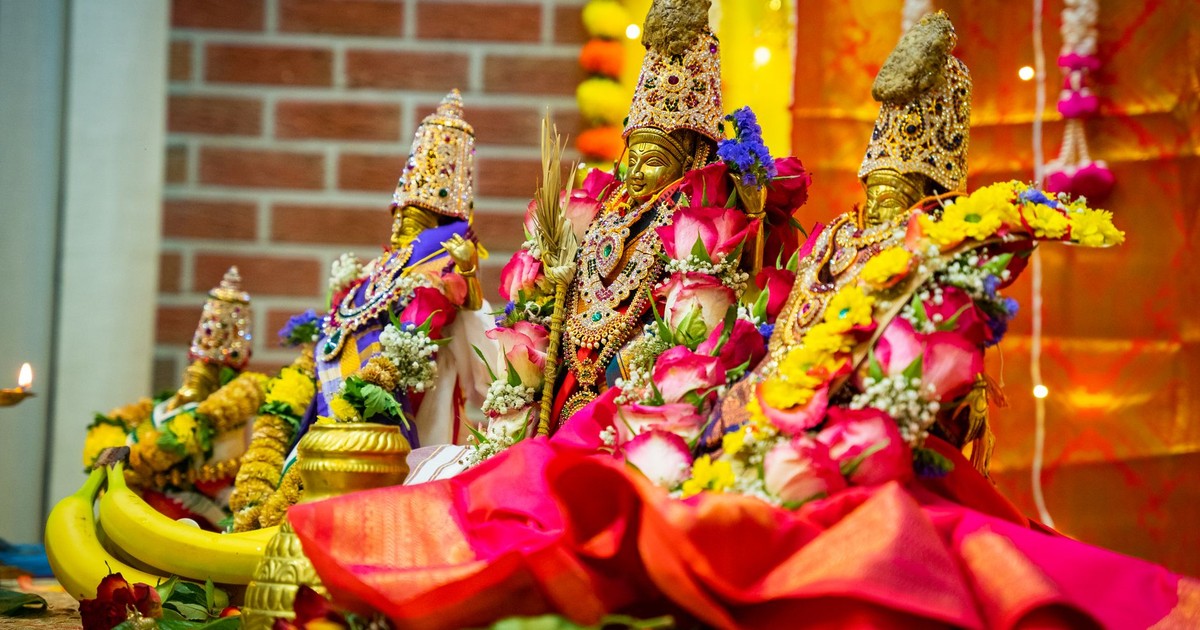
Hinduism ranks first in Colorado, Delaware, Kansas, Nebraska, and Oregon. These communities are smaller in absolute terms, but they still represent the largest recorded non-Christian faith in those states.
Colorado and Oregon have significant populations of professionals who arrived through the tech sector and academic institutions, communities with strong ties to South Asia. Delaware is partially explained by its proximity to Philadelphia and the dense Indian American communities of the mid-Atlantic corridor. Kansas and Nebraska are the genuine surprises. Both are states where the total non-Christian population is relatively modest, and where a concentrated Hindu community, often anchored around university towns and medical centers, is large enough, proportionally, to lead the field.
New Mexico belongs in a related category. Hindu yoga and meditation organizations constitute the largest recorded non-Christian group in the state, a reflection of both the state’s long history with alternative spiritual movements and the specific way the Religion Census categorizes certain Hindu-affiliated organizations.
Judaism: The Northeast’s Enduring Presence

Judaism’s geographic footprint in this data is concentrated in the Northeast, where Jewish communities have been established for well over a century. Reform Judaism is the largest non-Christian religion in Rhode Island and West Virginia. Conservative Judaism ranks first in New Hampshire.
Those three states tell different stories. Rhode Island’s Jewish community is old and deeply rooted, tied to the history of Newport and Providence as early centers of American Jewish life. New Hampshire’s Conservative Jewish population reflects the demographic pull of Boston’s Jewish suburbs extending northward. West Virginia is the outlier that demands a second look at the whole map. The state is not typically associated with religious diversity of any kind, but the data shows a Jewish community present in sufficient numbers to lead the non-Christian field, partly because West Virginia’s overall non-Christian population is among the smallest in the country.
The Bahá’í Faith: Three States, One Surprising Pattern
The Bahá’í Faith ranks as the leading non-Christian faith in South Carolina, South Dakota, and Wyoming in the 2020 Religion Census count. These three states share a small overall non-Christian population, which means a well-organized, historically rooted Bahá’í community can reach first place with numbers that would be invisible in New York or California.
South Carolina’s Bahá’í community has the most documented origin story. The faith spread rapidly there beginning in the late 1960s and accelerating through the 1970s and into the 1980s, especially among African Americans, with around 20,000 South Carolinians joining the religion during that period. That outreach effort, concentrated in a state that already had a relatively modest recorded non-Christian population, created a Bahá’í presence substantial enough to hold first place among non-Christian faiths decades later.
South Dakota and Wyoming follow a similar logic. The Bahá’í Faith, which emphasizes the unity of all religions and the equality of all people, has historically invested in outreach to Indigenous communities across the Great Plains and Mountain West. That combination of purposeful community-building and a small overall non-Christian population produces the same result in both states: a faith that most Americans would struggle to locate on a religious map ends up at the top of it.
Read More: 20 Captivating Biblical Quotes About Love
What the Full Picture Actually Shows
The complete list reveals something the conversation rarely reaches: this country’s religious geography is not a simple binary between Christian and secular. It is a layered record of who came here, from where, when they arrived, where they settled, and what they built. The fact that Islam leads in Alabama and Minnesota simultaneously, that Buddhism leads in both Hawaii and Montana, that the Bahá’í Faith is the top non-Christian faith in Wyoming – none of those outcomes were inevitable. They are the accumulated result of specific historical moments: an immigration wave, a community outreach campaign, a refugee resettlement program, a university that drew international faculty.
The 2020 Religion Census captured one moment in time. It will look different in 2030, and different again in 2040. The communities that are small enough today to be invisible in the data are, in some states, growing fast enough to reshape those rankings within a generation. Hindu communities in the South. Muslim communities in rural Midwest counties that had no mosque ten years ago. Buddhist temples in states where the Asian American population has doubled since 2010.
What the current data gives us is a baseline: a detailed, congregation-level portrait of where American religious life actually stands, as opposed to where the dominant cultural narrative places it. The country is not becoming less religious in any uniform way, and it is not diversifying its faiths in any predictable pattern. It is doing what it has always done: absorbing new communities, watching them take root, and producing a map that surprises people every time someone looks at it carefully.
Disclaimer: This information is not intended to be a substitute for professional medical advice, diagnosis, or treatment and is for information only. Always seek the advice of your physician or another qualified health provider with any questions about your medical condition and/or current medication. Do not disregard professional medical advice or delay seeking advice or treatment because of something you have read here.
AI Disclaimer: This article was created with the assistance of AI tools and reviewed by a human editor.