
Somewhere between the end of a long week and the beginning of a weekend you promised yourself would be different, there’s a window. Not a big one – maybe 20 minutes while the pasta boils, or half an hour before everyone else wakes up. That window is exactly enough time to get started on a skill you’ve been mentally filing under “someday.” The gap between “I’ve always wanted to learn that” and actually knowing how to do it is rarely as wide as it looks from the outside.
The idea that adults are bad at learning new things is mostly a myth that hasn’t kept up with the science. Research indicates that learning multiple new skills in a supportive environment can help older adults achieve similar scores on cognitive tests as young adults. Findings suggest that leveraging neuroplasticity at any age can increase confidence, motivation, and the desire to tackle new challenges, factors that ultimately help individuals adapt to change and maintain independence longer. Your brain is not a fixed object. It is more like a house that keeps getting renovated as long as you keep handing it new projects.
The 20 skills below have one thing in common: they look harder than they are. Some are practical. Some are creative. Some will quietly make you more interesting at dinner parties, which, depending on your current dinner party situation, may be exactly what you need. None of them require a degree, an expensive class, or a personality overhaul. They require curiosity and a little consistency – and a willingness to be a beginner for a while, which, it turns out, is its own underrated skill.
1. Touch Typing
Most people who didn’t grow up in a formal keyboarding class are still hunting and pecking their way through emails with a speed that their thoughts routinely outpace. Touch typing – using all ten fingers without looking at the keyboard – is one of those easy skills to learn that pays compound interest for the rest of your life, because almost every other digital task you do becomes faster.
Free platforms like Keybr and TypingClub break the skill into short daily sessions. The initial learning curve feels frustrating for about two weeks, and then something clicks. Most adults reach a functional speed within a month of 15-minute daily sessions. After three months, many report typing faster than they ever did with their old method.
2. Basic Photo Editing
You don’t need to know Photoshop. You don’t even need a subscription. Free tools like Canva, Snapseed, and the built-in editors on most phones now give you access to color correction, cropping, background removal, and simple compositing in an interface that took designers a decade to figure out and then handed to everyone for free.
The core principles – exposure, contrast, white balance, and crop composition – can be absorbed in an afternoon of deliberate play. Once you understand what those four dials actually do, every photo you’ve ever taken starts looking fixable. The skill compounds fast: once you understand light correction, you start seeing light differently in photos you haven’t taken yet.
3. A Second Language – Conversational Level
Full fluency takes years. Basic conversational competence in a new language is much closer than most people think. Apps like Duolingo and Babbel are genuinely effective for getting someone to a level where they can order food, navigate a city, and understand the gist of a conversation – and Mayo Clinic Press notes that the brain has an incredible capacity for change due to neuroplasticity, which means you can retrain your brain and tap into new skills – including a new language – at any age.
The key is pairing app-based practice with actual listening: podcasts in your target language, YouTube channels, or short TV episodes with subtitles. Even 20 minutes a day moves the needle noticeably within two to three months. Spanish and Portuguese are widely considered the fastest for English speakers to reach conversational level; Mandarin and Arabic are the slowest. Start where the return on effort is highest.
4. Basic Cooking Techniques
Not recipes – techniques. There is a meaningful difference. Someone who knows a hundred recipes is dependent on following instructions. Someone who understands how to build a pan sauce, how to season at each stage of cooking, how heat affects protein, and how acid balances fat can improvise with whatever is in the refrigerator on a Tuesday night.
YouTube channels like Ethan Chlebowski and Internet Shaquille break down professional cooking techniques in plain language aimed at home cooks. The foundational techniques – knife skills, the Maillard reaction (the browning of food that creates flavor), braising, and emulsification – can be understood and practiced in a few dedicated weekends. After that, cooking stops being a chore with a recipe card and becomes something that actually engages your brain.
5. Ukulele
The ukulele has a reputation for being the beginner instrument that serious musicians roll their eyes at, which is mostly unfair and also completely irrelevant to why it’s worth learning. It has four strings, a compact fret board, and requires significantly less hand strength than a guitar. Most people can play three to four recognizable songs within their first week of practice.
Research published in PLOS One found that the acquisition of new skills provides a more robust stimulus for neuroplasticity than re-engaging with familiar knowledge – and the neuroplastic benefits of skill learning extend beyond traditional cognitive domains. Music is one of the richest areas for this kind of brain engagement, activating memory, motor coordination, and auditory processing simultaneously. The ukulele is simply the lowest-friction entry point into that world.
The secret is chord families. Learn the four chords that appear in hundreds of popular songs – C, G, Am, F – and you have an enormous repertoire available without reading a single note of sheet music. Strumming patterns come next. Then, if you want to keep going, the instrument grows with you.
6. Basic Home Repair
Changing a light switch, patching drywall, unclogging a drain without chemicals, anchoring a shelf, replacing a faucet washer – these are tasks that most households outsource at significant cost largely because no one taught the adults in the house how to do them. YouTube has turned this into a genuinely solvable problem.
The investment is a basic toolkit: a cordless drill, a set of bits, a level, and some basic hardware. Patching a small hole in drywall, for instance, takes about 20 minutes of active work and $8 in materials. The same job quoted by a handyman runs $150 to $250 in most cities. Most repairs follow a similar pattern: ten minutes to understand the task, twenty to execute it, and a recurring sense that you should have learned this a decade ago.
7. Spreadsheet Skills (Beyond Basic Formatting)
Most people who use spreadsheets daily are using roughly 10 percent of what the tool can do. Learning functions like VLOOKUP (or its more forgiving replacement, XLOOKUP), SUMIF, COUNTIF, and pivot tables converts a spreadsheet from a glorified table into a tool that can actually answer questions.
These functions can be learned in a focused Saturday morning via free tutorials on YouTube or Coursera’s skill-building resources. The practical payoff is immediate: household budgets that actually track spending patterns, project timelines that update automatically, data comparisons that would otherwise take an hour of manual work. This is one of the easy skills to learn that most employers also consider a genuine differentiator.
8. Meditation (10-Minute Practice)
Not the incense-and-silence version if that’s not your thing. A ten-minute sitting practice using an anchor – usually the breath – is something most adults can establish within two weeks of consistent daily effort. The learning curve here is less about technique and more about expectation management: meditation is not about making your mind go blank. It is about noticing when your mind has wandered and returning it to the anchor. That’s the practice.
Apps like Insight Timer offer thousands of free guided sessions. The barrier to entry is almost purely motivational. Once the habit is established, the physiological payoff – reduced cortisol (the stress hormone your body releases during pressure), improved sleep quality, and greater focus during the hours that follow – becomes self-reinforcing.
9. Chess Basics
Chess has an undeserved reputation as a game for prodigies and grandmasters. The rules take about 30 minutes to learn. Playing a decent beginner’s game takes a few weeks of practice. Free platforms like Chess.com and Lichess provide unlimited games against computer opponents calibrated to your exact skill level, which means you are never steamrolled by someone three decades ahead of you.
The cognitive benefits are real. Chess training builds pattern recognition, forward planning, and the ability to hold multiple possibilities in mind simultaneously – skills that translate directly to decision-making in ordinary life. It’s also one of the few hobbies where you can get genuinely better in a matter of weeks rather than years.
10. Calligraphy (Modern Style)
Modern calligraphy, as opposed to the classical variety that requires a dip pen and a separate art degree’s worth of muscle memory, can be started with a $15 brush pen set and a printable guide sheet. The style is more forgiving, more expressive, and faster to reach a stage where the results look intentional rather than accidental.
The learning path is simple: letterforms first, then connectors, then words, then rhythm and spacing. Most beginners produce handwriting they’re proud of within a few weeks of 15-minute daily practice sessions. The skill finds an immediate practical outlet – addressed envelopes, handwritten notes, birthday cards – which keeps the motivation alive better than abstract practice for its own sake.
11. Strength Training Basics
Not a gym membership and a complicated split routine. The foundational movement patterns – squat, hinge, push, pull, carry – can be learned at home with a single kettlebell or a set of resistance bands. Understanding these patterns before adding load is actually more important than the equipment.
The learning investment here is genuinely small: two to three sessions with a qualified coach or a structured beginner program like Starting Strength or StrongLifts 5×5 establishes the form foundations. After that, the skill is self-teaching – your body gives you feedback through soreness, fatigue, and adaptation. The long-term return on this particular investment is hard to overstate.
12. Speed Reading
Not the gimmick version that promises you’ll absorb novels in 12 minutes. Functional speed reading is about eliminating two habits that slow most people down: subvocalization (silently pronouncing every word as you read) and regression (going back to re-read sentences you already processed). Targeting those two habits alone can increase reading speed by 30 to 50 percent without meaningfully reducing comprehension.
There are structured apps like Spreeder and Reedy that force your eye to move faster than your inner voice can keep up. A few weeks of deliberate practice with those tools, combined with conscious attention to regression when reading normally, produces noticeable results. For anyone who reads professionally, or who has a list of books they genuinely want to finish, this is among the most practical skills available.
13. Basic Sewing and Mending
The ability to replace a button, hem a pair of trousers, or repair a seam is something that was once considered a baseline adult skill and has since become something most people pay someone else to do – or don’t bother with at all, which explains the average life span of a modern wardrobe.
A basic hand sewing kit costs under $10. Learning the four most useful hand stitches – running stitch, backstitch, whip stitch, and slip stitch – takes an afternoon. After that, machine sewing is the natural next step if you want to go further, but it’s not required for the most useful applications. A functional garment repair skill saves money, extends the life of clothing, and, perhaps more importantly, makes you the person who can fix things rather than the person who throws them away.
14. Learning to Sketch
Drawing is not a talent. It is a skill, and the most widely cited reason adults give for not drawing – “I can’t draw a straight line” – is both true of most people and entirely irrelevant, since straight lines are almost nowhere in nature and hardly anywhere in good sketching either.
Betty Edwards’ foundational 1979 book Drawing on the Right Side of the Brain remains the most influential entry point into learning to draw as an adult, and its exercises hold up. The core insight – that most people draw what they think something looks like rather than what they actually see – is the unlocking idea. Once you start drawing contours and relationships rather than symbols, the skill advances rapidly. Carry a small sketchbook for two months and the difference in what your eye notices is visible.
15. First Aid and CPR
The skill most people intend to learn someday and most urgently should already know. CPR certification takes a half-day course. Hands-only CPR – the simplified approach recommended for bystanders – can be understood in minutes via the American Heart Association’s free video resources. The survival rate for cardiac arrest nearly doubles when a bystander performs CPR before emergency services arrive.
Basic first aid – wound care, choking response, burn treatment, how to use a tourniquet – fills in the picture. Many workplaces offer this training free. Community centers and Red Cross chapters run low-cost weekend certifications regularly. This is the one skill on any list like this that isn’t about enrichment or career advancement. It’s about the moment when none of the other things on the list matter at all.
16. Podcast or Audio Production Basics
Starting a podcast sounds technically daunting and turns out to be, equipment-wise, surprisingly accessible. A USB microphone in the $60 to $100 range, free software like Audacity or GarageBand, and a quiet room with soft furnishings are genuinely sufficient for producing audio that sounds professional enough to hold a listener’s attention.
The skills involved – microphone technique, basic equalization (shaping the sound frequencies in a recording), compression (evening out the volume), and export settings – can be learned in a weekend from YouTube tutorials. The more useful application for most people isn’t starting a podcast so much as understanding how audio works well enough to produce clear recordings for work presentations, voice memos, or online meetings – which are domains where audio quality is the single biggest determinant of whether people keep listening to you.
17. AI Prompt Writing
This is the newest skill on the list and also one of the fastest-moving, which makes getting the foundations right more important than chasing whatever the latest tool happens to be. Prompt writing – structuring instructions to AI tools like ChatGPT, Claude, or Gemini in a way that reliably produces useful output – is increasingly a workplace differentiator. In-demand skills in 2025 include generative AI alongside data analysis, cybersecurity, and project management, as well as workplace strengths like leadership, creativity, and analytical thinking.
The foundational skill is simple: providing context, specifying format, defining the audience, and iterating. Most people use AI tools at roughly 20 percent of their capability because they write vague single-sentence prompts and accept the first output. Learning to structure a prompt takes an afternoon of deliberate experimentation. The improvement in output quality is immediate and substantial.
18. Journaling for Clarity (Not Feelings)
The kind of journaling that most people abandoned after two entries in a notebook they bought with good intentions is the feelings-dump variety – a stream of consciousness that often loops rather than resolves. There is a more structured approach that functions less like a diary and more like a thinking tool.
Prompted journaling – using a set question like “What is the actual problem I’m trying to solve?” or “What would I do if I weren’t worried about being wrong?” – produces usable insights rather than just a record of what you were anxious about on a given Wednesday. The skill is learning to use the page as a thinking partner rather than a receptacle. It takes roughly two weeks of consistent use to stop finding it awkward and start finding it productive.
19. Basic Gardening (Container or Raised Bed)
Not a full vegetable plot. Not a landscaping project. A container of herbs on a windowsill or a single raised bed with four crops is enough to learn the foundational principles: soil health, watering rhythm, the difference between sun requirements, and what it actually looks like when a plant tells you something is wrong.
The gardening skills that transfer once you have those basics are extensive: composting, propagation, succession planting, soil amendment. But the entry point is genuinely small. A bag of good potting mix, a few starter plants, a container, and consistent attention is enough to produce edible food within weeks. The tactile engagement with a growing thing has a documented effect on stress reduction, and the skill base it builds is surprisingly technical the further you go.
20. Playing a Musical Instrument – Any One
The music item has been saved for last deliberately, because research consistently links music learning to cognitive development in meaningful ways – and the same processes apply to adults, not just children. According to a 2026 APA report, research-backed interventions that help adults implement learning-related new behaviors have been shown to improve and prolong cognitive health. Music is among the richest of these interventions, because it engages motor skills, auditory processing, memory, and emotional regulation at the same time.
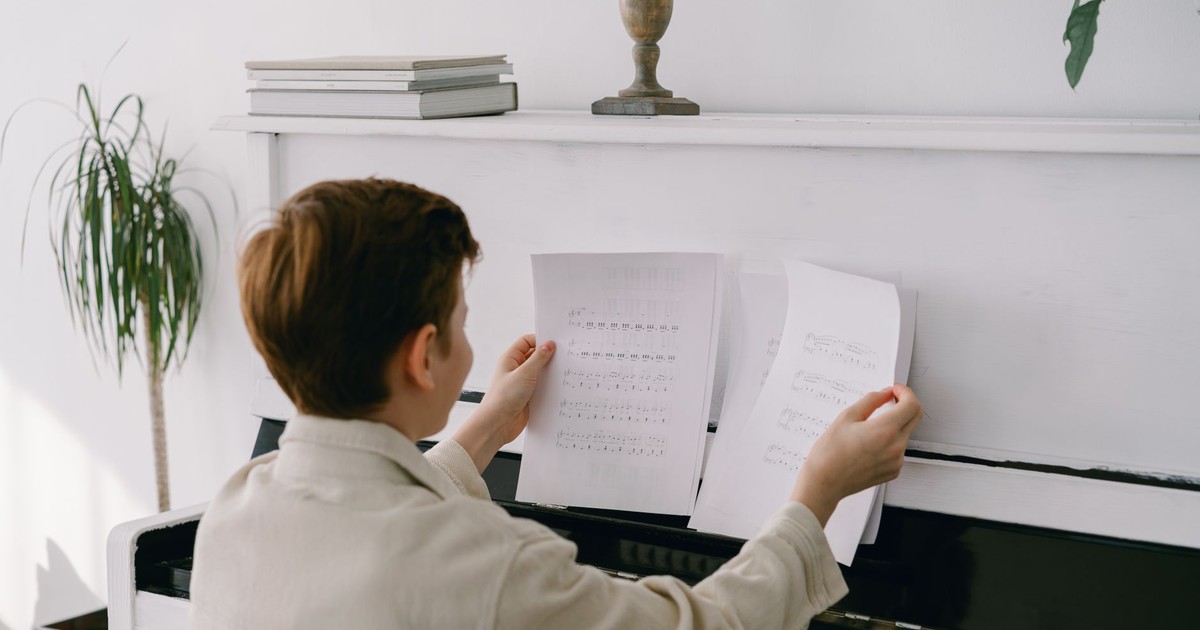
The specific instrument matters far less than picking one and committing to it. Ukulele was covered earlier. Piano is extraordinary for visual learners because the layout of the keyboard makes music theory legible – you can see scales and intervals as physical patterns. Drums, despite their reputation, are accessible via a practice pad and a pair of sticks with no noise complaints required. The recorder, which got a bad reputation from fourth grade, is actually a legitimate instrument used in early music that rewards adult dexterity. The question isn’t which instrument is right. The question is which one you’re willing to pick up again after a bad practice session. Start there.
Read More: 30+ Questions You’ve Never Asked Your Friends, But Definitely Should
The Real Cost of Waiting for the Right Time
Things do not calm down – they just reorganize themselves into a different configuration of busy. The 20 minutes while the pasta boils remains the actual unit of time available, and it turns out to be enough for most of the skills on this list.
None of these are accomplishments to post about. They are just things that, once you know them, become part of how you move through your days – a little more capable, a little more confident, a little less dependent on the person who supposedly knows how to do the thing you’ve been meaning to figure out for years. Some of these skills will stay small and useful forever. Others have a way of pulling you somewhere you didn’t expect to go.
AI Disclaimer: This article was created with the assistance of AI tools and reviewed by a human editor.
Disclaimer: This information is not intended to be a substitute for professional medical advice, diagnosis, or treatment and is for information only. Always seek the advice of your physician or another qualified health provider with any questions about your medical condition and/or current medication. Do not disregard professional medical advice or delay seeking advice or treatment because of something you have read here.
AI Disclaimer: This article was created with the assistance of AI tools and reviewed by a human editor.