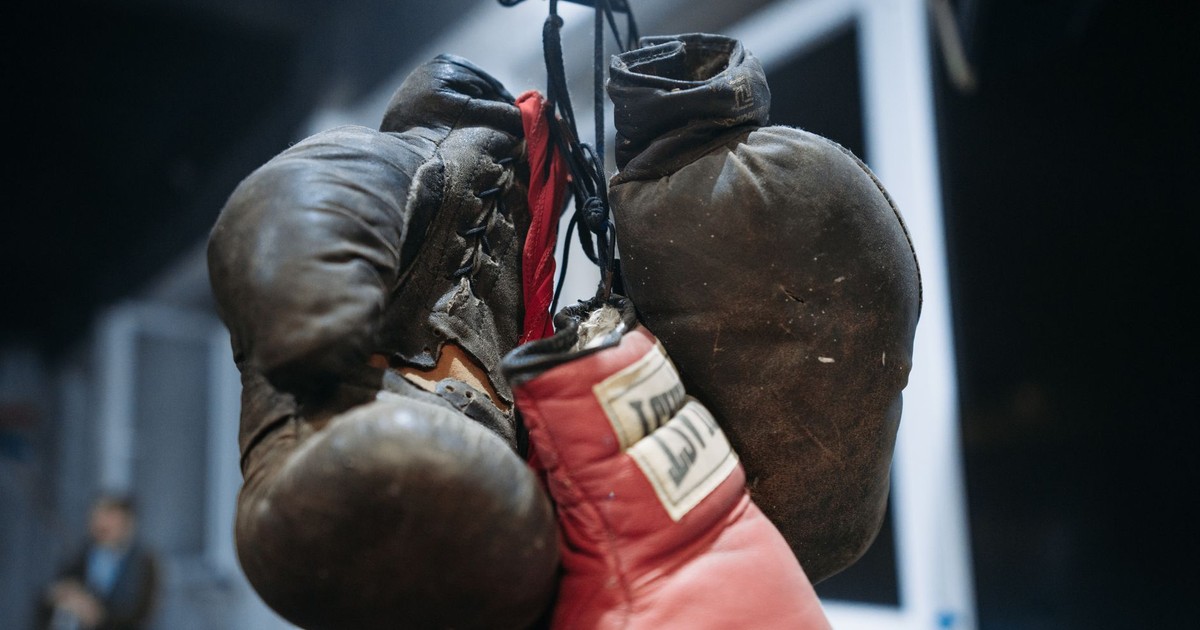

Fifty years on, the story has been told so many times it has the polish of something rehearsed. Sylvester Stallone, broke and unknown, writes a script in a white-hot frenzy and then refuses to let Hollywood take it from him. Studio executives scoff, wave checks at him, try to cast someone more famous, and he says no, every time, to all of them. He bets everything on himself. He wins. Roll credits, cue the trumpet fanfare, everybody goes home feeling like they too could run up a long flight of stairs if the moment called for it. It is one of the great Hollywood origin stories, and like most great Hollywood origin stories, the version everybody knows is true in spirit and messier in the details.
The real Rocky casting story is not a story about a man who conquered a hostile studio. It is a story about a man who bet on himself in a room where nobody particularly cared whether he won or lost.
I Play Rocky arrives from Amazon MGM Studios in November 2026. The film is directed by Academy Award winner Peter Farrelly (Green Book) and tells the true story behind how Rocky came to be, and how a then-unknown Stallone fought to not just write the film but star in it. Anthony Ippolito, who already has experience playing iconic Italian American actors – he played Al Pacino in The Offer – takes on the role of young Sylvester Stallone. The film is set to screen at the Toronto International Film Festival in September 2026 before a wide release in theaters on November 20, 2026. What it will dramatize is the legend. What it probably will not have time to address is the gap between the legend and what actually happened.
The Night That Started It

The Muhammad Ali and Chuck Wepner fight in March 1975 gave Stallone the spark for a character. According to history.com, which draws on a New York Times profile published November 28, 1976, he thought about “stifled ambition and broken dreams.” Wepner was a club fighter from New Jersey who was not supposed to last more than a few rounds against the heavyweight champion of the world. He knocked Ali down in the ninth round and was stopped by TKO with nineteen seconds left on the clock in the fifteenth. Stallone watched all of it and went home with a character forming in his head.
What he also had at home was almost nothing else. In 1975, Stallone was a 28-year-old actor with nothing in the bank, a pregnant wife, and a resume consisting mostly of background extra work. His most notable screen credit at that point was his first substantial role, in The Lords of Flatbush (1974), a low-budget drama about Brooklyn teenagers that had done nothing to move his career forward. He wrote Rocky in the condition that Rocky Balboa inhabits at the start of the film: cornered, broke, with a shot he had not yet earned.
“Sylvester What?”
Stallone wrote a first draft of the Rocky script in roughly three days — a figure he has since qualified, telling AARP “I wrote a spine” that then required extensive revision. After a long negotiation process, he sold the script to producers Irwin Winkler and Robert Chartoff on the condition that he play the lead character himself. His only previous leading role had been in the low-budget flop The Lords of Flatbush, and the producers had wanted to cast an actor with a higher profile. Names like James Caan, Burt Reynolds, and Ryan O’Neal were all in the conversation.
That last part is where the popular Rocky casting story tends to place all its dramatic weight: the studio wanted a star, Stallone refused to sell, Stallone won. What that version leaves out is a detail that producer Robert Chartoff shared, and that quietly reframes the whole negotiation. Chartoff’s account, recounted in contemporary reporting, was that the studio’s resistance was less active opposition than it was indifference. The producers had just made New York, New York for United Artists, and the studio wanted them to make substantial pictures. “Then we brought in this little film with ‘Who? Sylvester what?'” Chartoff noted. “Obviously they didn’t have any strong feelings about making it. It was something that we wanted to make, and it was probably because we were just starting fresh with the studio and were committed to doing it that they agreed to do it. But there was never any question in my mind that Sylvester Stallone was going to be starring in it, in spite of all of the mythical stories you might hear.”
Chartoff’s version does not diminish Stallone’s gamble, but it does change what the gamble was. Stallone was not breaking down a locked door. He was insisting on walking through a door that nobody was particularly guarding, into a room where nobody much cared what happened next.
The Economics of Belief

Stallone’s insistence on starring came paired with his willingness to accept a dramatically reduced salary and rights fee, which lowered the film’s overall budget risk at a time when Rocky was made on a modest budget of roughly $1 million. The economics became more palatable to a studio like United Artists that was otherwise wary of an unknown actor carrying the film.
The studio did not simply capitulate to Stallone’s belief in himself. Stallone made it financially rational to let him try. He was not just saying “trust me,” he was saying “and here is what it costs you if I’m wrong.” The film was ultimately shot in just 28 days on a budget of $960,000. For a studio that had just been expecting Chartoff and Winkler to bring in prestige productions, a small bet on a nobody with a boxing script was not exactly a catastrophic risk, especially once that nobody had agreed to take less money than a known name would have.
Director John G. Avildsen has described the dynamic in public interviews over the years: a number of people were interested in the role, but Stallone drew a line. “Nothing doing,” as Avildsen put it. “I play it or nobody does.” Stallone himself, writing in The Official Rocky Scrapbook, recalled United Artists acknowledging they would love for him to star but citing his lack of bankability as the obstacle. Both accounts are probably true at once, and neither contradicts Chartoff’s. The studio had reservations. The producers were committed. The deal got done. The version where Stallone heroically faced down a hostile room is a better story, but the version where he outsmarted the room by making the math work is a more instructive one.
What the Biopic Will Tell You
I Play Rocky is a dramatization of the events behind the making of Rocky, not a complication of them. Amazon MGM’s synopsis describes it as “an electrifying true story about an unknown actor with an unshakable belief that he wasn’t just meant to write Rocky, he was meant to be Rocky Balboa.” Ippolito reportedly landed the role by sending an unsolicited audition tape to the film’s producers, which is either a remarkable coincidence or a very deliberate piece of casting poetry, depending on how generously you read it.
The film has an ensemble that takes the project seriously. Jay Duplass plays director John G. Avildsen, while P.J. Byrne and Toby Kebbell take on the roles of producers Irwin Winkler and Robert Chartoff, and Matt Dillon plays Stallone’s father, Frank Stallone Sr. The casting of Stephan James as Carl Weathers, and AnnaSophia Robb in the production, rounds out a company that suggests this is not a quick nostalgia cash-in. The film is told in the style and structure of the original Rocky itself: a scrappy underdog facing impossible odds trying to go the distance, making it a weird, metatextual near-remake of the film it is examining.
That structural choice is smart, and probably inevitable. The story of how Rocky got made is structurally identical to Rocky. A guy who should not win, who has no business being there, who refuses to quit, who goes the distance. The form and the content are the same story, which is either a beautiful accident or the reason Stallone’s gamble felt so inevitable in hindsight. You cannot entirely separate the man from the character he invented.
What Rocky Actually Became
Rocky earned 10 Academy Award nominations, including Best Actor and Best Original Screenplay for Stallone, and won three Oscars: Best Picture, Best Director for John G. Avildsen, and Best Film Editing. It launched a franchise that now spans nine films, a stage musical, and a string of video games, and it turned the steps outside the Philadelphia Museum of Art into one of the most visited locations in American pop culture. The original film also made Stallone, almost overnight, the kind of bankable star United Artists had initially wanted to cast instead of him.
In 1977, Stallone became the third actor in history to be nominated for two Academy Awards – for Best Original Screenplay and Best Actor – for the same film. He lost both, to Peter Finch and Paddy Chayefsky respectively, and neither loss erased what the nominations confirmed: that a 28-year-old actor who had spent most of the previous five years doing background work had written and performed one of the defining films of the decade on what amounted to a large student film budget.
The sequels, the franchise, the legacy – all of that came later and brought its own complications. The original Rocky is the thing that cannot be revised or improved. It was a film made by people who had very little to lose, financed by a studio that was not paying close attention, and it turned out to contain something true enough to last fifty years.
Read More: From Stardom to Legacy: Anita Ekberg’s Life Before and After La Dolce Vita
What the Story Is Actually About

The version of the Rocky casting story that tends to get passed around is a story about refusing to take no for an answer. The more complete version is a story about knowing which no actually matters and which is just somebody’s indifference misread as opposition. Stallone pushed. He also made it easy to say yes. Both things were required.
The myth of the pure underdog – the one who wins through sheer will alone – is deeply appealing, and not accidentally so. It asks nothing of the story except that you believe in the person. The actual history asks a little more of everyone. Stallone believed in himself, yes, and also understood the room well enough to change what it cost the room to believe in him too. That is a harder skill to romanticize, which is probably why the biopic will not lead with it.
The film arrives in November 2026, fifty years after the original opened. Facing constant rejection, Stallone famously refused to sell the script unless he could play the lead, betting on himself in a move that would ultimately launch one of Hollywood’s most iconic careers. That is the version that will unspool on screen, and it is not wrong. It is just the version that leaves out the part where nobody at United Artists was particularly eager to stop him in the first place. You get to hold both things at once: the man who bet on himself, and the room that barely noticed he was gambling.
Disclaimer: This information is not intended to be a substitute for professional medical advice, diagnosis, or treatment and is for information only. Always seek the advice of your physician or another qualified health provider with any questions about your medical condition and/or current medication. Do not disregard professional medical advice or delay seeking advice or treatment because of something you have read here.
AI Disclaimer: This article was created with the assistance of AI tools and reviewed by a human editor.