

You’ve probably blamed your metabolism for the weight that crept on after forty. Most people do. It’s a neat explanation – the body slowing down, the machine getting older – and it lets everyone off the hook, including biology. The only problem is that for most adults between twenty and sixty, the metabolism excuse doesn’t entirely hold up.
What does change, in ways that are both real and somewhat inconvenient, is how your body stores fat, how much muscle it quietly loses each year, and how hard it becomes to shift weight once it settles in. The number on the scale doesn’t lie, even if the reason behind it is more complicated than a failing engine. And walking – ordinary, free, low-drama walking – turns out to be one of the most effective tools for dealing with all three of those changes. Not the gentle, contemplative strolling kind, though. The kind where you actually make your body work for it.
The specific method getting attention from researchers right now is interval-based walking: alternating bursts of faster, harder effort with periods of slower recovery, all within a single walk. It sounds simple because it is, and the science behind it is getting harder to dismiss.
What’s Actually Happening to Your Body After Forty

“Metabolic rate is really stable all through adult life, 20 to 60 years old,” according to Herman Pontzer, a professor of evolutionary anthropology at Duke University. That finding, drawn from data on more than 6,400 people across 29 countries, was published in the journal Science and sent a ripple through every weight-loss conversation happening at the time. If metabolism isn’t slowing down in your thirties, forties, and fifties, then the weight gain so many women experience during those decades needs a different explanation.
Part of the answer is muscle. Muscle mass decreases 3 to 8 percent per decade after age 30, and after age 60, the rate of decline accelerates further. This matters because muscle tissue burns more calories at rest than body fat, and the more muscle you carry, the more efficiently your body processes glucose. Lose muscle quietly for a decade or two, and your daily calorie burn drops without your metabolism technically “slowing down” at all. The engine isn’t running slower – it’s just gotten smaller.
The other factor is fat distribution. As estrogen declines in perimenopause and menopause, fat that might once have settled in the hips and thighs tends to migrate inward, accumulating around the abdomen and organs. This visceral fat – the kind that sits deep in the belly rather than just beneath the skin – is metabolically active in ways that subcutaneous fat isn’t, and it’s the kind that carries the most health risk. It’s also the kind that walking, done with the right intensity, directly targets.
Why Interval Walking Outperforms Easy-Paced Walking

Standard-pace walking has genuine benefits. It’s good for your heart, your mood, your joints, and your long-term mobility. But for actual walking fat loss, the research keeps coming back to one thing: intensity variation. When you push your pace to the point where conversation becomes uncomfortable, then ease back, then push again, your body responds differently than it does to a comfortable, even-paced walk. The cardiovascular system works harder, more muscle fibers are recruited, and the body’s demand for energy during and after the session increases.
The reason interval-style exercise is particularly effective for fat loss is that your body not only burns calories during the workout, but continues burning after it’s over – a response known as EPOC, which stands for Excess Post-Exercise Oxygen Consumption. The afterburn effect is real, though its scale has been overstated in a lot of fitness marketing.
A 2026 study published in Nature Communications and reported by MedicalXpress found something that genuinely reframes the conversation about how often you need to exercise. Brisk interval walking performed once a week can significantly improve body fat reduction and cardiorespiratory fitness in adults with central obesity, comparable to exercising three times a week – the traditional recommendation for exercise frequency. The trial, run by researchers at the University of Hong Kong, was conducted between September 2021 and September 2024 and involved 315 adults. The interval training groups performed a total of 75 minutes of interval training per week, either in a single session or divided into three sessions, and both approaches produced similar results. That’s 75 minutes once a week producing the same fat-loss outcomes as three separate sessions spread across the week. The barrier to entry, in other words, just got considerably lower.
The Muscle Equation Nobody Talks About
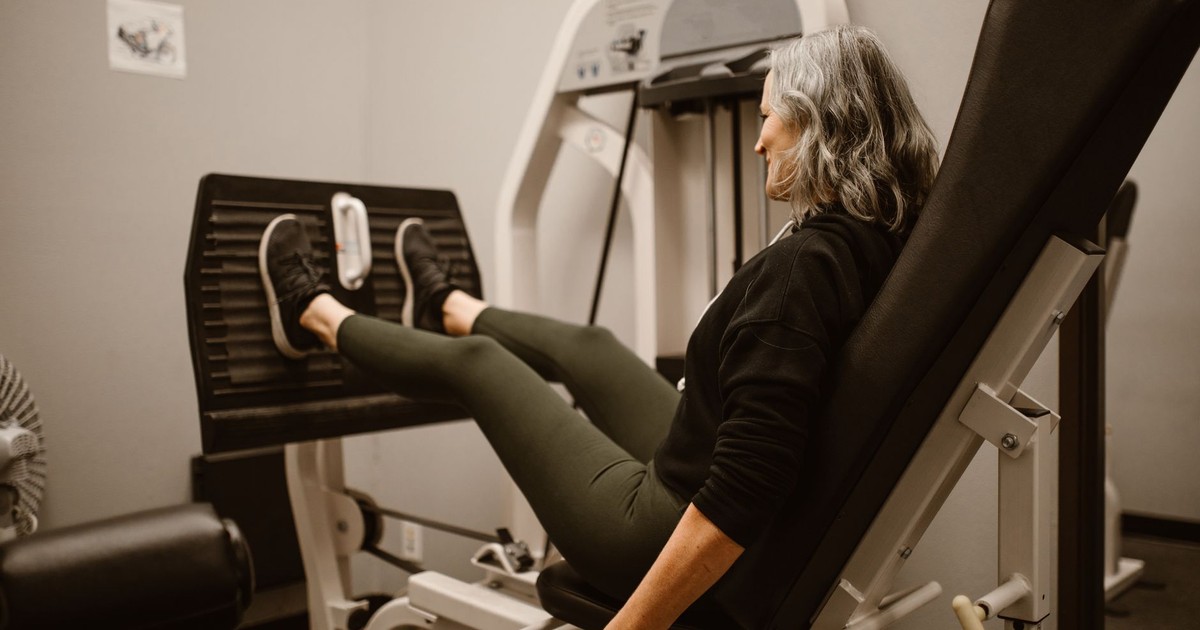
Here’s the part of the interval walking conversation that gets skipped in most fitness content: fat loss without muscle preservation isn’t the goal, particularly as you get older. Losing ten pounds while also losing muscle gets you a smaller but softer body with a lower daily calorie burn – which makes the next round of weight gain easier and faster. What you actually want is to lose fat while keeping the muscle you have.
A six-month study of more than 120 adults in their seventies found that high-intensity interval training reduced body fat while preserving valuable muscle mass – while moderate and low-intensity workouts also led to some fat loss, only HIIT maintained lean muscle. The study, published by researchers at the University of the Sunshine Coast in June 2026, matters for anyone trying to figure out what kind of exercise is worth the investment of time. The difference between “some fat loss” and “fat loss plus muscle retention” is enormous, especially for women in their fifties and beyond, when muscle loss is already accelerating on its own.
This is also why interval walking – as opposed to pure HIIT on a gym floor – has practical advantages. It’s weight-bearing, which protects bone density. It’s low-impact enough to be sustainable without the injury rate of higher-intensity gym protocols. And because you control the intensity by adjusting your pace rather than jumping or sprinting, it’s genuinely accessible to people whose joints have opinions about exercise.
One woman who learned this firsthand is Missy Gillenwater, whose daily walking routine transformed her health over the course of a year. She lost 114 pounds after changing her diet and walking 2 to 3 miles every day, eventually building up to distances most gym-goers would balk at. The point isn’t the number – it’s that consistency with walking does what a month of ambitious but unsustainable routines never manages to do.
How to Actually Do This

The structure of an interval walk is straightforward. Warm up at an easy pace for about five minutes. Then alternate between three minutes of effort – walking fast enough that you’re breathing harder and couldn’t comfortably carry on a detailed story – and two minutes of recovery at a more comfortable pace. Repeat that cycle four to six times. Cool down for five minutes. Total time: around 35 to 40 minutes.
If you’re outdoors, hills add intensity naturally. An uphill section at any pace recruits more muscle and elevates your heart rate faster than flat-ground speed work, and the downhill gives you recovery without having to consciously slow yourself down. If you’re on a treadmill, a 4 to 6 percent incline during the effort phases accomplishes the same thing.
The specific intervals you choose matter less than the principle: push hard enough during the effort phases that your body can’t coast, and recover long enough to go hard again on the next one. Three minutes on, two minutes off is a reasonable starting point, but four minutes on and two minutes off works equally well. The goal is not to arrive at your cool-down period feeling fine. The goal is to arrive having actually worked.
Frequency is where the new research is most encouraging. If you can manage three sessions of interval walking per week, the evidence supports that as a solid approach. But if your week is the kind that swallows three dedicated exercise sessions without apology – and most weeks are exactly that – one well-executed 75-minute session produces comparable fat-loss outcomes, according to the Hong Kong trial. That’s enough to rearrange how most people think about fitting exercise into a complicated life.
Incline, Pace, and the Variables Worth Playing With

Pace is the most obvious lever, but it isn’t the only one. Adding an incline or taking your walk onto genuinely uneven terrain – a park path, a trail, even a parking garage ramp – changes the muscular demand in ways that a flat fast walk doesn’t. Different muscle groups activate, balance demands increase, and calorie burn rises without requiring you to move any faster.
Walking poles, used correctly, engage the upper body enough to meaningfully increase the total output of a session. They’re popular in the Nordic walking tradition for exactly this reason, and while they look slightly eccentric on a suburban sidewalk, they bring arms, shoulders, and core into a movement that is otherwise almost entirely lower-body. More muscles working means more energy demanded, which is the whole point.
Arm swing is a free upgrade most people leave on the table. Actively driving your arms forward and back – bent at ninety degrees, controlled but powerful – increases your pace naturally and adds upper-body engagement without requiring any gear or a gym membership.
What to Do With This
The story the fitness industry has been telling for decades is that fat loss requires suffering: a hard schedule, hard workouts, a discipline that most people can’t sustain past February. What the current research suggests is more interesting and considerably less punishing. Walking fat loss, done with intensity variation and a minimum of consistency, produces real results in real bodies – including older bodies, including bodies that have been frustrated by other approaches for years.
The data suggest that metabolic decline doesn’t really begin until after age 60, and even then, the slowdown is gradual – only 0.7 percent a year. What that means practically is that the weight most women are carrying in their forties and fifties isn’t the inevitable consequence of a broken-down system. It’s the accumulated result of muscle loss, shifting fat distribution, and – honestly – living a life that doesn’t leave much room for sustained effort. Interval walking doesn’t fix the life. But it fits into a complicated week in a way that a six-days-a-week gym commitment almost never does, which is the only metric that ultimately matters for whether something actually gets done.
Some patterns take years to establish and don’t reverse in six weeks. But the research is consistent enough to say this: adding harder effort to the walking you’re probably already doing is the kind of change that actually accumulates into something. Not a transformation, not a revolution. Just a body that starts working with you instead of quietly against you.
Disclaimer: This information is not intended to be a substitute for professional medical advice, diagnosis, or treatment and is for information only. Always seek the advice of your physician or another qualified health provider with any questions about your medical condition and/or current medication. Do not disregard professional medical advice or delay seeking advice or treatment because of something you have read here.
AI Disclaimer: This article was created with the assistance of AI tools and reviewed by a human editor.