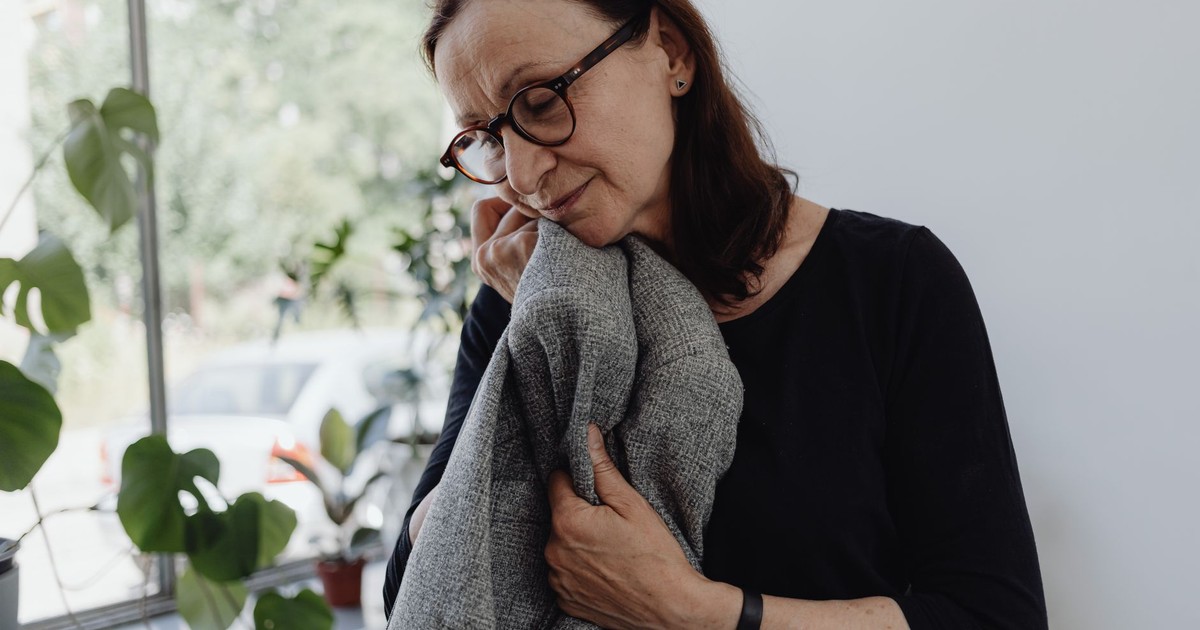

Most people picture addiction as a young person’s problem. It arrives in your twenties, it involves a certain kind of chaos, and it gets sorted out or it doesn’t before middle age. That picture is wrong, and the gap between what we assume and what is actually happening to millions of older adults has real consequences. Families miss the signs. Doctors treat the symptoms without identifying the cause. A 75-year-old sitting in a quiet house with a bottle of wine every evening, or taking her prescribed sleeping pills at double the recommended dose, never ends up in a conversation about addiction at all.
Substance use disorders do tend to peak in young adulthood, but aging itself creates specific vulnerabilities. Life events common to later years act as real triggers, and the medical system is structurally bad at catching the problem even when it is directly in front of it.
Addiction in older adults is growing, it looks different than it does in younger people, and the people most likely to be affected are the least likely to be screened, treated, or believed.
The Numbers Are Larger Than You Think
Between 2001 and 2013, alcohol misuse among older adults increased by 107 percent, and then continued climbing through the COVID-19 pandemic. By 2022, 1 in 11 adults over 60 had a substance use disorder.
According to the 2024 National Survey on Drug Use and Health, 6.8 million people ages 65 and older reported binge drinking in the previous month, and 2.9 million in that age group met the criteria for past-year alcohol use disorder. These are not people who started drinking heavily at 20 and simply kept going, though some of them are. Many developed a problem in their sixties and seventies, after retirement, after a spouse died, after the structure of a working life dissolved and left something emptier in its place.
About 10 percent of older adults reported cannabis use and 2.3 percent reported misusing opioids. Of those who needed treatment, fewer than 1 in 3 received it.
Why the Aging Body Handles Substances Differently
The body at 75 is not simply a slower version of the body at 35. It processes substances differently, and the effects land harder.
According to NIDA, older adults typically metabolize substances more slowly, and their brains can be more sensitive to drugs. A drink that would barely register for a 40-year-old can impair coordination, judgment, and reaction time in a 75-year-old in ways that look like something else entirely. A stumble becomes a fall. A fall becomes a hip fracture. A hip fracture becomes a hospitalization that nobody connects back to the glass of Scotch taken nightly for the last three years.
New-onset substance use disorder in older adults can be set off by mental illness, trauma, isolation, grief, loss, and chronic pain, or by exposure to prescription psychoactive medications. Older adults with substance use disorders face a disproportionate burden of drug-related harms because of age-related physiological changes and the presence of multiple simultaneous health conditions.
Primary care providers, specialists, and emergency physicians commonly prescribe opioids and benzodiazepines on a long-term basis, a practice that can lead to physical dependence as well as negative cognitive effects. Nobody plans for their father to become dependent on the pain medication his orthopedist prescribed after knee surgery. But that’s often how it goes.
The Life Events That Open the Door
Retirement can be isolating, being far from family can be lonely, and losing elderly friends or a spouse can cause unwanted solitude. Needing to relocate to an assisted living facility removes people from their social support network and can compound that isolation. For someone who spent 40 years with their identity organized around work, a career, a marriage, or raising children, the sudden absence of those structures is not simply an adjustment. It is a destabilizing loss. And like most losses, it creates conditions where self-medication makes a certain kind of sense.
In 63 percent of older adult addiction cases, depression and anxiety play a leading role. In about 30 percent of cases, financial worries are a contributing factor.
For some older adults, substance use starts in their younger years and continues as they age. For others, addiction develops much later. Sometimes called late-onset addiction, it can be triggered by new health issues or other major life changes. The distinction matters because late-onset addiction tends to be even less visible than long-standing patterns. A family member who has never seen a relative struggle with alcohol before is much less likely to recognize what’s happening when it begins at 70.
The Diagnostic Problem Nobody Is Talking About Enough
Even when addiction is present and visible, it routinely goes undiagnosed. According to ASU News, fewer than 40 percent of older adults receive appropriate treatment, in part because symptoms can resemble normal aging or dementia.
The condition is often underdiagnosed, or misdiagnosed as dementia, anxiety, or depression. A doctor sees a 78-year-old whose memory has gotten worse, who seems confused at appointments, who has fallen twice in the past year. The doctor orders cognitive testing. Nobody asks how much she is drinking, because the idea that she might have an alcohol problem doesn’t fit the story anyone around her is telling about who she is.
Healthcare providers may confuse symptoms of substance use with other symptoms of aging, including chronic health conditions or reactions to stressful life-changing events. Withdrawal from alcohol and early-stage dementia share enough symptoms that even experienced clinicians get it wrong. Fatigue, confusion, mood changes, memory lapses belong to both diagnoses. Without asking the right questions, and without a culture that expects older adults to be at risk, providers often reach for the more familiar explanation.
Symptoms of addiction in older adults may go unrecognized or be misattributed to other age-related health conditions, leading to underreporting and denial from both individuals and their families. The emotional resistance to adding “and possibly struggling with addiction” to that picture is human and understandable. It is also, unfortunately, part of why the problem persists.
What Treatment Actually Looks Like and Why It Works
Once older adults enter treatment, they achieve greater success than any other age group. This is one of the most counterintuitive and important facts in the whole conversation.
Treatment for addiction in older adults follows many of the same principles as treatment at any age, but the context matters. Age-appropriate care needs to account for the psychosocial stressors that are more prevalent in later life: isolation, grief, loss, and chronic pain. Generic programs built for 30-year-olds, with confrontational group dynamics, fast-paced schedules, and an assumption of physical resilience, are not always suited to someone who is 75 and also managing arthritis, hearing loss, and the residue of decades of accumulated grief.
The risk factors for substance use in older adults include chronic pain syndromes, polypharmacy (taking multiple medications simultaneously), physical disability, social isolation, and prior substance use. Effective treatment addresses those underlying conditions, not just the substance itself. Grief counseling, community connection, and realistic medical management of pain and sleep are part of what recovery in this population requires.
People who grew up in an era when addiction was a moral failing rather than a health condition are less likely to name what is happening to them and less likely to ask for help.
What the People Around Them Can Do
The most practical thing is also the most uncomfortable one: ask the question directly, and do it without judgment. Not as an accusation and not as a drama, but as a genuine inquiry. How much are you drinking lately? Are your pain medications helping? Have you noticed needing more to get the same effect? Those questions feel intrusive until you understand that the alternative is leaving the problem invisible.
Increased confusion, memory issues, or unsteady movement can all be signs worth paying attention to, because these can be mistaken for normal aging or other health issues. Substance use should be considered as a possible factor when changes like these appear.
If a conversation with a primary care physician is the next step, bringing someone along to that appointment helps. Not to speak over an older adult, but to make sure the question actually gets asked. Many primary care visits don’t include any screening for substance use in older patients, even though the tools exist and the need is demonstrably there.
What We Get Wrong When We Get This Wrong
Missing addiction in an older adult accelerates cognitive decline. It increases fall risk in a population where a single fall can be life-altering. It worsens every chronic condition a person is already managing, from heart disease to diabetes to liver function. And it extends an already painful period of life in a way that often goes unremarked on until something goes wrong that cannot be explained away.
The people who are 75 today have the same brain chemistry, the same capacity for dependency, the same response to loneliness and grief and pain as people who are 35 today. What they don’t have, in most cases, is a medical system or a family culture that treats them as plausible candidates for addiction. Because addiction in older adults doesn’t look the way we expect it to, most cases never get caught, and what doesn’t get caught doesn’t get treated. The person who spends the last decade of her life managing an unaddressed alcohol use disorder because no one thought to ask the question is not a rare case. She is far more common than the statistics we have even begin to capture.
The Question Nobody Gets Asked
Some patterns take root slowly, in the space between one hard year and the next, without anyone keeping count. The person developing a problem at 72 is not doing something foreign or unexpected. She is doing what humans do under sustained stress, chronic pain, and prolonged loneliness. The pharmacology is identical. The brain’s reward circuitry doesn’t check a birth certificate.
What changes with age is not the risk but the invisibility. The scaffolding of assumptions around older adults, that they are past the age of risk, that their daily drink is earned, that their confusion is just aging, does real damage. It delays treatment that works. It leaves people in pain that could be addressed. And it asks older adults to carry a problem alone that they did not create alone and cannot solve alone.
Older adults who make it into appropriate treatment do better than younger patients. Not slightly better. Measurably, consistently better. That doesn’t mean the path to getting there is easy, or that the barriers aren’t real, or that the conversation will go perfectly the first time someone asks. It means the conversation is worth having, and that the person on the other end of it is more capable of recovery than most people around her assume.
AI Disclaimer: This article was created with the assistance of AI tools and reviewed by a human editor.