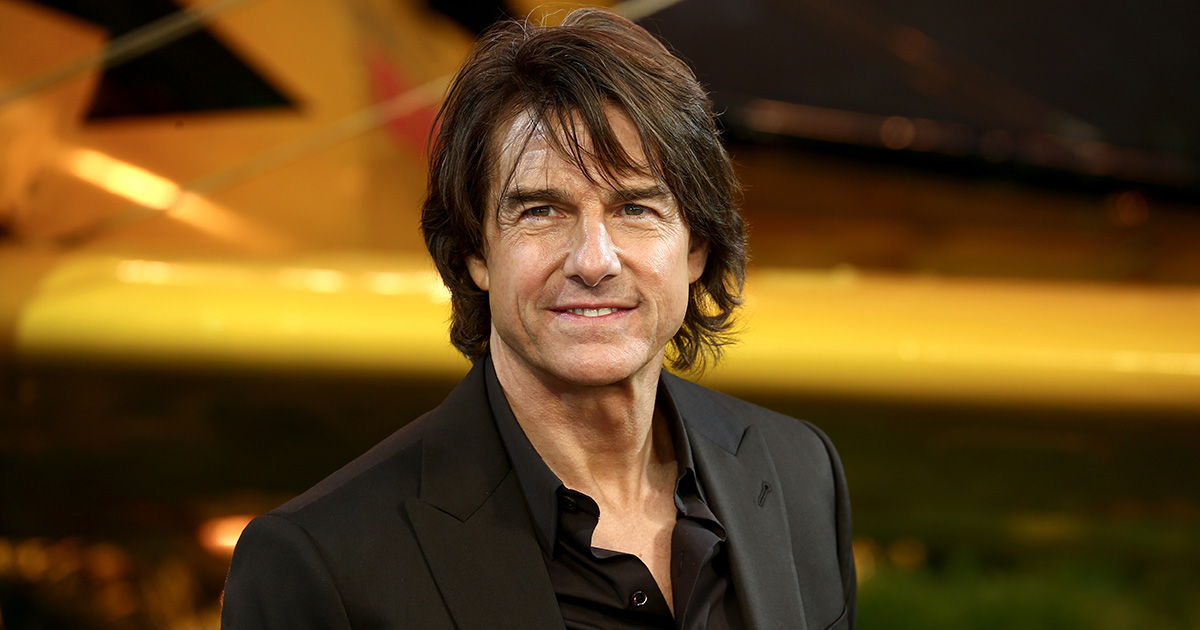

Nobody expected Tom Cruise to be the most talked-about moment of the biggest football final in history. Roughly 24 hours after the 2026 FIFA World Cup final kicked off at MetLife Stadium in East Rutherford, New Jersey, the thing burning up social media is not Ferran Torres’s extra-time winner, not Enzo Fernández’s red card, and not Spain becoming world champions for the second time. It’s two words from a 64-year-old action star standing on a small podium in a black polo shirt, delivering a speech nobody knew was coming.
The word was “football.” He said it. Repeatedly. On American soil, at the biggest American sports moment of the decade, with an audience of more than a billion people watching around the world. The internet split clean in two.
Two minutes of monologue, three deliberate uses of the word “football,” and one Roy Keane reaction later, the Tom Cruise World Cup speech had become the most discussed pre-game moment in World Cup history – not for what it got right or wrong, but for one single word that managed to offend half the audience and delight the other half in the same breath.
The Speech Nobody Saw Coming
FIFA’s official ceremony announcement confirmed that the closing ceremony at New York New Jersey Stadium would feature “global superstars Tom Cruise, Laura Pausini, Nicole Scherzinger, Robbie Williams, IShowSpeed, among others,” with the show set to “celebrate the 48 teams’ unforgettable journey across the three host countries and 16 host cities throughout the tournament.” What FIFA did not spell out was that Cruise’s role would extend beyond a celebrity cameo and into a full pre-match address.
Cruise appeared on the pitch of MetLife Stadium in East Rutherford, New Jersey, prior to kickoff between Argentina and Spain. He painted a sweeping picture of global connection. He began: “More than 30 days ago, 48 nations began a journey. They crossed oceans, they crossed borders, they crossed cultures. And together they showed us why this game belongs to the world.” He continued: “From three countries across them, and from every corner of the globe, we have witnessed greatness. We have shared moments of joy, moments of hope, moments that we will all never forget. Football is a language spoken without words, a force that unites people, turns strangers into friends, and reminds us of what we all have in common.”
Cruise concluded: “So as we gather for one final chapter, let us celebrate a tournament that brought the world together. Let us celebrate each other. This is football. This is unity.” He doubled down on the terminology during the emotional crescendo, signing off with: “This is football. This is unity. And this.. this is greatness.”
Earnest, committed, and entirely on brand for a man who once held his breath underwater for six minutes for a film role. Whether it landed depended entirely on which side of the Atlantic you were sitting on.
Why One Word Broke the Internet

Cruise repeatedly, unapologetically referred to the sport as “football” rather than “soccer.” To American fans who had spent weeks watching what they call soccer, hearing a born-and-raised New Yorker refuse to use that word on their home turf felt like a betrayal. The reaction online was immediate and loud. Tyla reported that fans were divided over Cruise’s speech, with some criticizing it while others found it inspiring and praised his use of the term “football” instead of soccer.
One user, quoted widely across social platforms, wrote: “Why did they have Tom Cruise giving us a motivational/inspirational speech about the unifying nature of soccer?” The emphasis on “soccer” was doing a lot of work in that sentence.
Another wrote: “I love Tom Cruise, but unless he came from a plane to the pitch, this was the weirdest thing seen in a World Cup final.” Cruise once scaled the exterior walls of the Burj Khalifa for a film, running vertically up the side of the skyscraper. Anything less than a physical stunt of that scale was probably going to feel anticlimactic.
On the other side of the argument – the rest of the entire planet – the reaction was the opposite. Social media users were pleased when New York-born Cruise described the sport as “football” rather than “soccer,” with one X user writing: “Tom Cruise saying ‘football’ not ‘soccer’ as dramatic music plays in the background and the WC final is about to kick off. Absolute cinema.” Another wrote: “Thank heavens he called it football! Well done, Tom.”
Despite the raging online backlash from American fans, international football purists quickly jumped to the actor’s defense, mocking the American outrage and pointing out that Cruise was simply addressing the overwhelming majority of the global viewers tuning into the broadcast.
The Crowd Had Other Plans

The crowd inside MetLife Stadium expressed their opinion in real time and with no ambiguity whatsoever. The Mirror reported that as Cruise’s speech dragged on, fans from both Spain and Argentina drowned him out with chants supporting their teams, clearly eager for the game to begin.
Fans in attendance, who had spent thousands of dollars on tickets, were more interested in the main attraction: the clash between Lionel Messi‘s Argentina and Lamine Yamal’s Spain to decide the world champions. Cruise delivering a monologue about unity and greatness to 80,000 people who were collectively willing the speech to end so the actual sport could begin is a very specific kind of humbling. The kind that no amount of cinematic gravitas fully insulates you against.
The World Cup final between Argentina and Spain did not kick off on time and was delayed by six minutes. Kickoff was scheduled for 8pm BST (3pm ET), but the match did not begin until 8:06pm BST, following a performance by Robbie Williams, the singing of the national anthem by Jennifer Hudson, Cruise’s pre-game speech, and a “let’s get ready to rumble” build-up by ring announcers the Buffer brothers, Michael and Bruce.
Roy Keane Said What Everyone Was Thinking
For those watching on ITV in the UK, the most memorable reaction to the Tom Cruise World Cup speech came not from social media but from the broadcast desk. Manchester United legend Roy Keane jokingly asked, “He isn’t going to sing, is he?” as Cruise appeared on screen before kickoff. His comment spread quickly online, with many fans sharing the same feeling.
No elaboration needed. Roy Keane has built an entire second career on saying exactly what the room is thinking and delivering it with the energy of someone who has genuinely run out of patience for things that are not football. His reaction to a Hollywood star giving an inspirational speech at the World Cup final was, in that sense, perfectly on brand and perfectly timed.
What Was Actually Happening Around the Speech
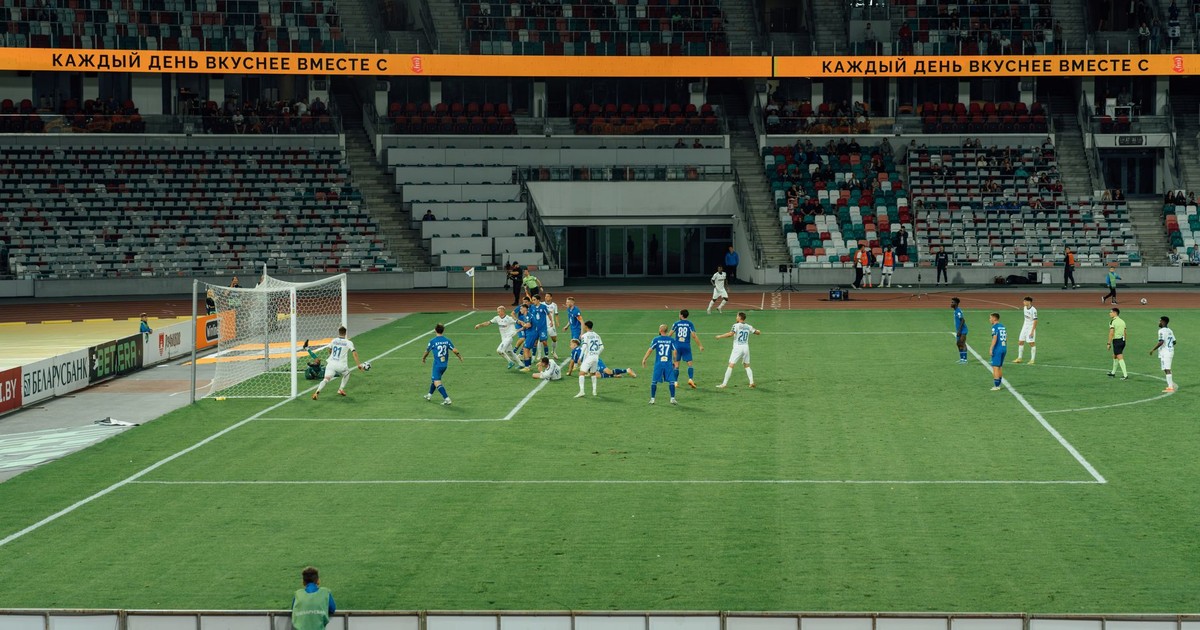
The speech itself was one part of a much larger production that surrounded the final. FIFA confirmed that the closing ceremony at New York New Jersey Stadium featured global superstars including Tom Cruise, Laura Pausini, Nicole Scherzinger, Robbie Williams, IShowSpeed, and Jennifer Hudson, who performed the United States national anthem ahead of the final.
The closing ceremony, 90 minutes before kickoff, included performances by Post Malone and streamer IShowSpeed, while the World Cup trophy was brought onto the pitch by Spain’s 2010 champion Andrés Iniesta and Argentina’s 1978 champion Mario Kempes, as well as tennis champion Carlos Alcaraz and Squid Game actor Hoyeon.
The final introduced the FIFA World Cup’s first-ever halftime show. Madonna Shakira, BTS, and Justin Bieber co-headlined the performance, with Burna Boy and Coldplay’s Chris Martin also taking part. The musical performance ran approximately 11 minutes, though the total halftime break extended beyond the standard 15 minutes to allow for stage setup and removal. Many football fans and critics raised concerns about the extended interval.
The halftime show attracted its own complaints, mostly from people who were entirely right that an extended interruption to a football match is, structurally speaking, a problem. But that controversy barely registered against the Tom Cruise speech debate, which had already spent three hours consuming every corner of the internet by the time the second half kicked off.
The Match That Got Overshadowed
Spain defeated Argentina 1-0 after extra time to win the 2026 FIFA World Cup, with FC Barcelona forward Ferran Torres scoring the only goal in the 106th minute after Enzo Fernández’s red card reduced Argentina to 10 players.
Spain’s win was their second World Cup title and the first since 2010, making them the first country to simultaneously hold the men’s and women’s World Cup titles, having won the latter in 2023. The match also saw the most saves ever recorded in a World Cup final, with 11 by Argentina goalkeeper Emiliano Martínez.
Argentina arrived at the final as defending champions (Lionel Messi and his teammates had won it all in Qatar in 2022) and came within a red card and an extra-time goal of doing it again. The final was tense, physical, and genuinely gripping in the way that World Cup finals rarely are. Spain were worthy winners. Ferran Torres scored a goal that will be shown for decades.
And yet the first thing most people typed into their phones after the final whistle was “Tom Cruise football speech.”
The One Word That Did All the Work
The speech itself was not, by Hollywood standards, particularly unusual. Cruise has built an entire career on committed, earnest delivery. He has scaled the exterior walls of skyscrapers. He has held his breath underwater for six minutes for a film. Delivering a two-minute monologue about unity and greatness to a packed stadium is, if anything, relatively low-stakes by his own standards.
Nobody predicted the word “football.” Not once, not as a slip, but three times, including as the final word of the entire speech. Some viewers questioned why a film star had been chosen to speak over a World Cup alum. But the majority of the backlash, particularly from American fans, was laser-focused on that single terminology choice.
International football purists jumped to Cruise’s defense, mocking the American outrage, and the social media war showed no signs of slowing even after the match got underway. A speech specifically designed to celebrate unity managed to create one of the most divisive moments of the entire tournament. “Football is a language spoken without words,” Cruise said, and then the word he chose to end on caused an international argument.
Read More: “Narcissistic”: Alec Baldwin’s Tribute for Sam Neill Sparks Backlash
What Nobody Will Say Out Loud
The people most annoyed by the speech were probably not annoyed about the word “football.” They were annoyed that a film star was giving a pre-match speech at a World Cup final at all. The word was just the thing they could point at.
The World Cup has its own heroes, its own legends, its own history. Andrés Iniesta, who helped bring the trophy onto the pitch as a 2010 champion, was right there. Mario Kempes, Argentina’s 1978 winner, was right there. The two men who had arguably done more than anyone to carry the narrative of this tournament, Lionel Messi and a teenage Lamine Yamal, were about to walk out on that pitch. And the ceremony’s pre-match centrepiece was a Hollywood actor reading a speech about greatness.
The counterargument (that the World Cup is now a global entertainment product and has been for decades) is also true. FIFA did not accidentally book Tom Cruise. They made a deliberate choice to have one of the most recognizable faces on the planet deliver a message to a global audience of more than a billion viewers, and those viewers responded by debating it for hours. By that metric, the mission was accomplished. No speech at a World Cup final has ever been this widely discussed. Whether that was the intended outcome is a different question.
What the Argument Was Actually About
The “football vs. soccer” debate is old, exhausting, and entirely predictable, which is probably why it explodes every time it surfaces. Americans call it soccer. The rest of the world calls it football. The rest of the world significantly outnumbers Americans. These are all facts that have been true for a very long time and will remain true regardless of how any given pre-game speech resolves the question.
The Tom Cruise World Cup speech moment landed differently because of its context. This was American soil. The host country’s stadium. A tournament that the United States, Mexico, and Canada had spent years preparing to present to the world. And the celebrity chosen to open proceedings (an American actor, no less) looked down the barrel of the camera and said “football” three times, clearly and deliberately. Whether that was a FIFA instruction, a personal choice, or simply a recognition that the majority of global viewers tuning in call it football, nobody outside Cruise’s team can say for certain.
The moment captured something real: the 2026 World Cup was always going to be a collision between how America sees itself and how the rest of the world sees the sport it loves. Tom Cruise, standing on a podium in a black polo shirt, managed to make that collision happen in the opening two minutes of the ceremony, before a single ball had been kicked.
That is either brilliant or baffling, depending entirely on which side of that divide you were standing on when it aired. And the fact that we are still arguing about the word rather than the speech, still debating terminology rather than content, tells you something about how deep that divide actually runs. Cruise didn’t put it there. He just had the bad, or possibly excellent, luck to be standing on the pitch when it finally boiled over.