

You can tell a lot about a person by how they talk when something isn’t going their way. Some people fill the air with excuses, others go quiet, and then there are the ones who speak with a kind of calm decisiveness that changes the whole tone of a room. These are the women who know what they mean and say it directly. The list of things smart women say isn’t made up of complicated words or clever tricks—it’s simple language used with purpose. The smartest women don’t talk to impress; they talk to make things clear. And once you start paying attention, you can hear how different that sounds.
“That isn’t going to work for me.”
When a woman says this, she’s drawing a line without making it a fight. It’s one of the most efficient sentences in the English language because it ends guessing games. She’s looked at the request, measured what it costs, and decided the return isn’t worth it. No apology, no guilt. According to research from the American Psychological Association, people who set verbal boundaries this way report higher satisfaction in both work and relationships because they avoid resentment before it starts. This phrase is an act of time management disguised as politeness. It leaves the door open for another option while making it clear she’s not a default yes. Smart women use it because they’ve learned that being accommodating doesn’t mean being available for everything.
“Let’s take a minute.”
People who rush to fill silence often say more than they mean to. Smart women know that the moment right before a response is where real control lives. “Let’s take a minute” is her way of slowing things down long enough to think clearly. Studies from Princeton University show that pausing before making a decision increases accuracy and reduces bias. The smartest communicators use that pause like punctuation. It gives everyone time to breathe, step back, and look at the bigger picture. This isn’t hesitation—it’s discipline. The difference between reacting and responding is about five seconds, and this phrase creates that gap on purpose.

“I’m qualified to handle this.”
This line sounds simple, but it’s rare to hear it said out loud. Many people, especially women, are taught to show humility even when it costs them credit. Smart women skip that performance. They don’t oversell or underplay—they state facts. “I’m qualified to handle this” is the kind of phrase that stops interruptions before they happen. It tells the room she’s not looking for permission. A study published in Harvard Business Review found that women who use direct, factual language about their achievements are more likely to be promoted and less likely to have their competence questioned. It’s not confidence for show; it’s a reminder that she earned her position and doesn’t need to prove it twice.
“No.”
When someone says no and means it, you can tell she’s thought about it. There’s no speech attached, no attempt to soften it. She’s made a decision and trusts it. Research from Stanford University found that employees who say no to unnecessary requests are less stressed and more productive than those who try to take on everything. Women who use this word aren’t being difficult. They’ve just learned that saying yes to the wrong things costs more energy than it’s worth. A simple no keeps priorities intact.
“Let’s come back to this conversation.”
This phrase sounds polite, but it’s really about timing. A woman who uses it knows when a discussion has stopped being useful. She’s not dodging the issue; she’s pressing pause. The Journal of Organizational Behavior reported that leaders who delay heated discussions reach better results because everyone returns with a clearer head. It’s a practical way to stop circular arguments and avoid saying things no one can take back. Waiting a day to talk again can make all the difference.
“Let me communicate my expectations.”
This sentence doesn’t try to impress anyone—it just gets things in order. Most tension at work or in relationships comes from people assuming they already know what the other person wants. Women who say this are trying to avoid that problem before it starts. A study from the University of Amsterdam found that teams who discuss expectations early are more efficient and fight less about responsibilities. When someone says this, she’s keeping everyone on the same page so no one wastes time later.

Image credit: Unsplash.
“I deserve more than this.”
There’s no drama in this line, just perspective. It usually comes from someone who’s taken a long look at what she gives versus what she gets. It might be about a paycheck that hasn’t changed in years or a partner who stopped showing up. Research from Carnegie Mellon University shows that women who negotiate their salaries early earn more in the long run. The women who use this phrase aren’t making demands—they’re describing reality. It’s often the sentence that starts a change.
“I’m here if you need help.”
When this line comes from confidence, it sounds different. It doesn’t feel like someone trying to please—it feels like someone capable offering support. Harvard Business School found that people who both give and ask for help are seen as more competent than those who do neither. Women who say this are signaling that they can handle their own work and still have space to help others. It builds trust without creating dependence.
Building Confidence and Thinking Smarter
The women who talk this way don’t wake up fearless. They’ve just been through enough situations to know that being direct saves time. Confidence doesn’t grow in theory—it builds when people start using their own voice even when it feels risky. You practice it by speaking up once, realizing the world didn’t end, and doing it again. That’s how the edge sharpens.
What usually changes first is language. Someone stops apologizing for having an opinion. They drop the habit of softening every sentence with “I’m not sure, but…” or “This might sound stupid, but…” They stop acting like they need permission to participate. The way people talk about themselves is a mirror for what they believe they deserve, and smart women adjust that reflection on purpose.

Action matters more than pep talks. Psychologists call it behavioral confidence, but in real life it just means acting before you feel completely ready. The doing part is what rewires the fear. Each time a woman says what she means or turns something down that doesn’t fit, she collects proof that she can handle things without approval. Confidence isn’t mysterious—it’s repetition with awareness.
Boundaries and communication usually evolve together. Women who get used to saying no stop spreading themselves thin. They stop filling silence with explanations and start using it to think. That shift isn’t just professional; it shows up in friendships, family, everything. People who speak clearly attract less chaos because they no longer reward it.
Tone also plays a role. Research from MIT’s Human Dynamics Lab found that how something is said often matters more than what’s said. Pacing, volume, and timing can change how intelligent someone sounds to others. The smartest women use that to their advantage—they don’t rush, and they don’t fill space just to sound busy.
Confidence also depends on environment. People who spend time around those who communicate well start to match their rhythm. It’s contagious in a good way. Direct language feels easier when you hear it daily, and standards rise without anyone announcing it. That’s how a group starts shaping confidence as a shared habit instead of a solo project.
Eventually, these phrases stop sounding like a checklist and start sounding like a personality. “That isn’t going to work for me” or “Let’s take a minute” become as natural as breathing. They’re not tricks—they’re evidence of someone who knows what they mean when they talk. Women who reach that point aren’t chasing confidence anymore. They’re just speaking like people who trust their own judgment.
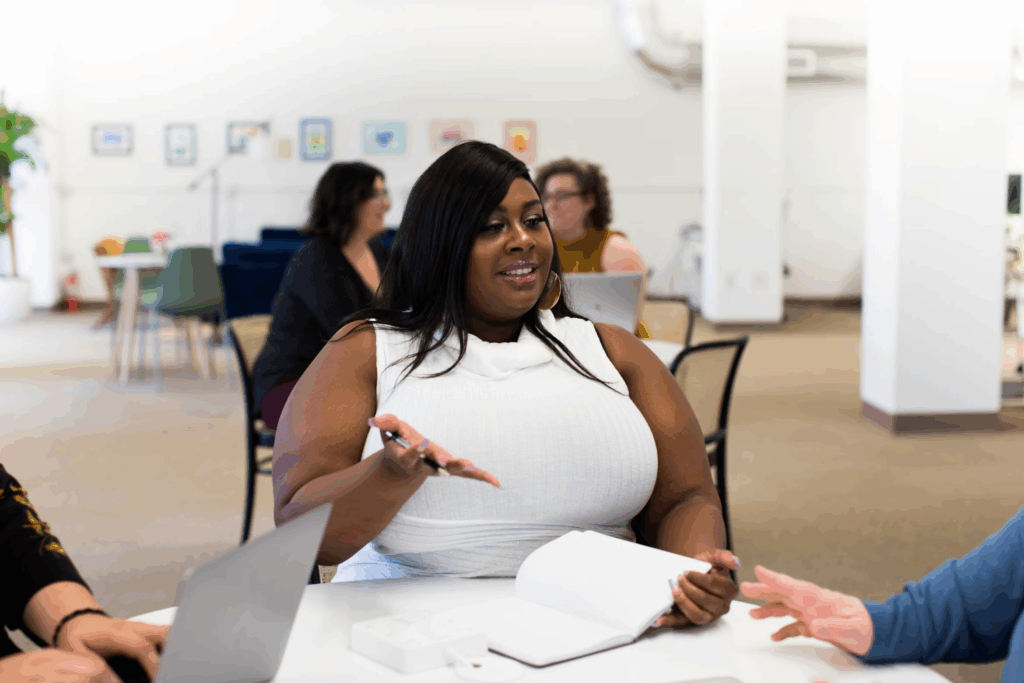
How Smart Communication Changes Everything
Language shapes how people see you, but it also shapes how you see yourself. Women who communicate with purpose often notice that their lives start running smoother. Meetings take less time, relationships feel lighter, and misunderstandings shrink. It’s not magic; it’s efficiency. Clear communication reduces friction. It leaves less room for guessing, and guessing is what usually causes drama.
In professional settings, clear communication makes a visible difference. Research has found that speakers who avoid hedging words like “maybe” or “I think” are seen as more competent and credible. The same idea shows up in leadership studies – concise language signals confidence, while long explanations tend to weaken authority. In short, people pay more attention when you sound certain. Women who communicate this way often notice that their feedback lands the first time. They don’t need to say the same thing twice to be taken seriously.
There’s also the way this language changes personal relationships. Smart women who use these phrases don’t rely on emotional guessing games. They tell people what they need instead of hoping it’ll be noticed. That shift doesn’t make them hard—it makes them consistent. Partners, friends, and coworkers understand where they stand because the communication isn’t coded. There’s less “Did I do something wrong?” and more “What’s the plan?” It’s a small linguistic difference with huge emotional payoff.
Why People Misread Direct Women
The world still expects women to phrase things softly, to take up less verbal space, and to frame disagreement as compromise. When someone doesn’t do that, it unsettles people. That discomfort doesn’t mean she’s wrong—it means the room isn’t used to equality in tone.
Sociolinguistics research shows that people often label direct female speakers as “intimidating” while describing male speakers using the same tone as “confident.” The pattern is old and boring, but it explains a lot about how women adapt. Smart women know they can’t control those reactions, so they don’t waste effort trying. They focus on what gets results. When someone calls them “assertive” like it’s an insult, they hear “effective” instead.

Image credit: Unsplash
There’s also a cultural habit of confusing warmth with agreeableness. Smart women understand the difference. They know that empathy doesn’t require compliance. You can care about people and still tell them no. You can listen without surrendering your opinion. The strongest communicators manage both.
How These Phrases Build Authority
Each of the eight phrases acts like a shortcut to authority. They’re not about dominance; they’re about ownership. “That isn’t going to work for me” signals boundaries. “Let’s take a minute” signals control of timing. “I’m qualified to handle this” shows competence. “Let me communicate my expectations” builds structure. “No” protects focus. “Let’s come back to this conversation” manages tension. “I deserve more than this” demands fairness. “I’m here if you need help” builds connection. Together they form a communication system that balances power with respect.
Women who use these kinds of sentences tend to have smoother negotiations and stronger collaborations. They don’t wait for validation to speak. They enter discussions ready to clarify rather than defend. That small shift saves energy and earns credibility. And because these phrases are short and factual, they’re hard to argue with. No one can reasonably debate a boundary that’s stated without emotion.
Even outside formal settings, this approach changes how people interact. It shows self-respect in small details—the tone of a text, the phrasing of an email, the way feedback is given or received. Smart communication isn’t only about words; it’s about presence. The language you use teaches others what to expect from you. When it’s consistent, trust follows.
What Happens When You Start Talking This Way
People who adopt this style often notice a few shifts. They stop overexplaining. They start listening more. Their conversations get shorter but carry more meaning. It feels awkward at first because silence becomes part of communication again. But that’s where the thinking happens.

There’s usually some pushback, especially from people who relied on ambiguity. The first few “no’s” might surprise them. The first time someone says, “That isn’t going to work for me,” a few eyebrows go up. That’s normal. What matters is consistency. Over time, the new tone becomes expected. The people who appreciate honesty stay. The ones who preferred guessing games fade. What’s left is cleaner communication and less emotional noise.
Confidence grows quietly through repetition. Saying what you mean, even once a day, changes how you process conflict. You stop worrying about tone policing and start noticing how often you used to talk around the point. The shift doesn’t just affect how others treat you—it changes how you treat yourself. You begin to measure worth in action instead of approval.
Why This Matters Beyond Gender
This isn’t only about women being heard. It’s about communication that works, no matter who’s using it. The research that supports these patterns applies to leadership, negotiation, and emotional health in general. Direct speech makes decisions faster, reduces anxiety, and improves collaboration. The women who use these phrases just happen to show the rest of us how it’s done.
Men who work with women like this often benefit too. Clarity reduces tension. There’s less decoding and more focus. Entire teams work better when people stop hedging. So while these phrases might sound gendered in practice, they’re actually universal. Anyone who values time and respect can use them.
The Difference Between Confidence and Performance
People often assume the loudest person in the room is the most confident, but that’s rarely true. Confidence isn’t about volume, it’s about comfort in your own thoughts. You can usually tell who has it because they don’t rush to fill every pause or justify every decision. They speak, they mean it, and they move on.
Performance, on the other hand, is about reaction. It’s talking to be believed instead of to communicate. You can feel the difference right away—the words sound rehearsed, the energy feels forced. Confident people don’t need that kind of approval. They’re not trying to convince anyone; they’re just explaining what they’ve already decided. That’s why their words tend to land harder and last longer.

Self-assured leaders tend to speak more slowly, use fewer filler words, and state their opinions as facts rather than possibilities. The confidence comes from preparation, not personality. Smart women know what they’re talking about because they’ve done the work. Their tone reflects that.
The End of People-Pleasing
For many women, learning to speak like this is a way of unlearning people-pleasing. They’ve spent years cushioning bad news or shrinking their sentences to seem polite. At some point, it just stops working. People-pleasing doesn’t protect relationships; it drains them. It replaces honesty with guessing.
Learning to say, “That isn’t going to work for me,” or “I deserve more than this,” doesn’t make someone cold. It makes them accurate. People who speak clearly don’t waste time on what they don’t mean. That kind of directness might look bold from the outside, but on the inside, it feels like relief.
Final Thoughts: Why Words Are Strategy
The smartest women understand that language is strategy, not decoration. Words organize chaos. They keep work on track, relationships functional, and expectations visible. Every sentence carries a signal—either you’re managing the situation, or the situation is managing you.
These women have learned to pick sentences that protect their time, energy, and goals. That’s why their words sound simple—they’ve edited out everything that doesn’t serve a purpose. Each phrase in their vocabulary does something specific: it ends confusion, redirects attention, or starts accountability.
Strong communication doesn’t come from speaking perfectly. It comes from noticing when you’re overexplaining and stopping yourself. It comes from asking questions before assuming, and from knowing when silence says enough.
The goal isn’t to sound powerful—it’s to speak in a way that keeps you in the conversation instead of behind it. That’s what these women do. They don’t waste words. They use them like tools. And that’s what makes people stop and listen.
Read More: 10+ Things Couples Do for Each Other to Build Stronger, Happier Relationships
Disclaimer: This article was written by the author with the assistance of AI and reviewed by an editor for accuracy and clarity.