

There was a time when kitchens buzzed with clunky gadgets, charming tools, and oddly shaped contraptions that made everyday cooking feel like an adventure. Before digital timers and sleek blenders, households relied on creative, often handmade tools built to last. These pieces may look strange to younger generations, but they tell a story about resourcefulness and design from decades past. Many collectors and nostalgic cooks still search for these treasures, seeing them as symbols of craftsmanship and simpler living. Some of these vintage kitchen items are surprisingly practical even today. Others are just plain fun to look at, reminding us how far home cooking has come.
1. Handheld Wire Cheese Cutter
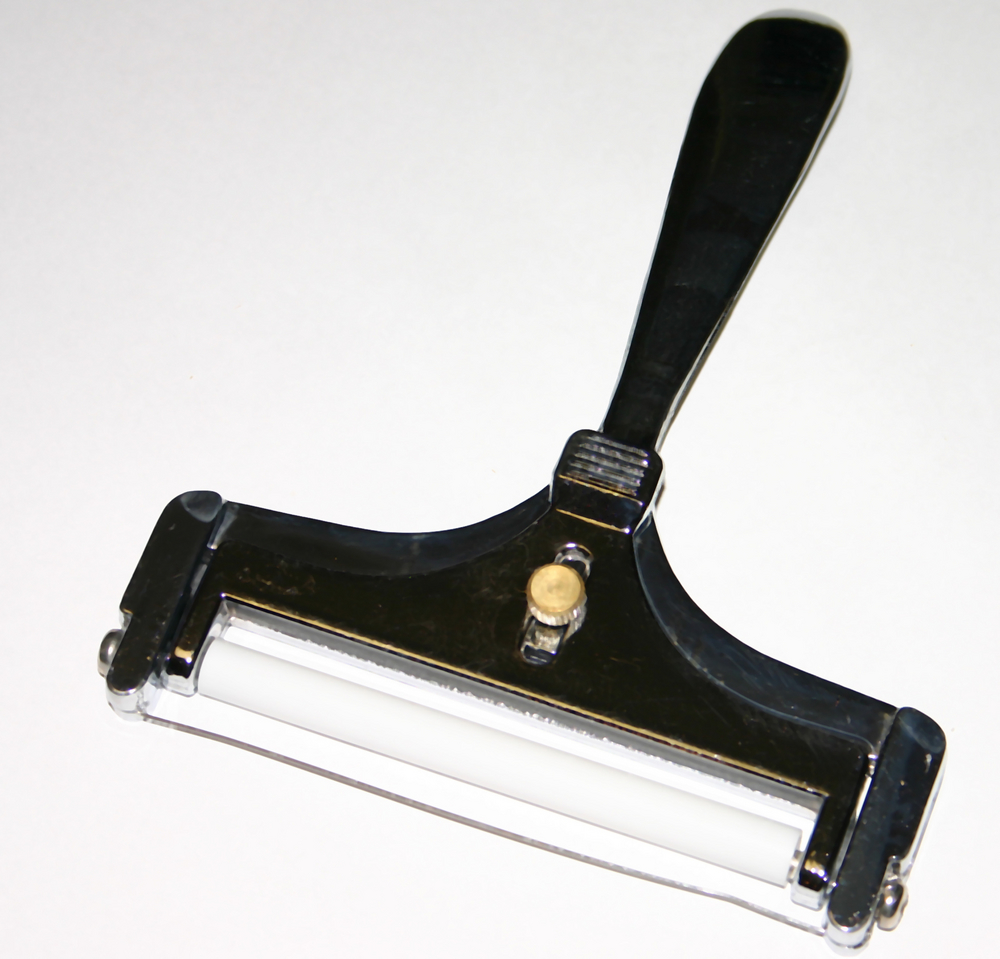
A handheld wire cheese cutter looks simple but was a staple in mid-century kitchens. Instead of blades, it used a tight metal wire stretched between a handle to slice through cheese with ease. Many had wooden grips and metal frames, giving them a rustic charm. The design allowed for clean, even cuts, especially with softer cheeses. These cutters required careful tensioning to keep the wire from snapping. While modern versions exist, original ones from the 1950s or earlier are sought after by collectors. They’re a reminder that the simplest designs often stand the test of time.
2. Butter Churn
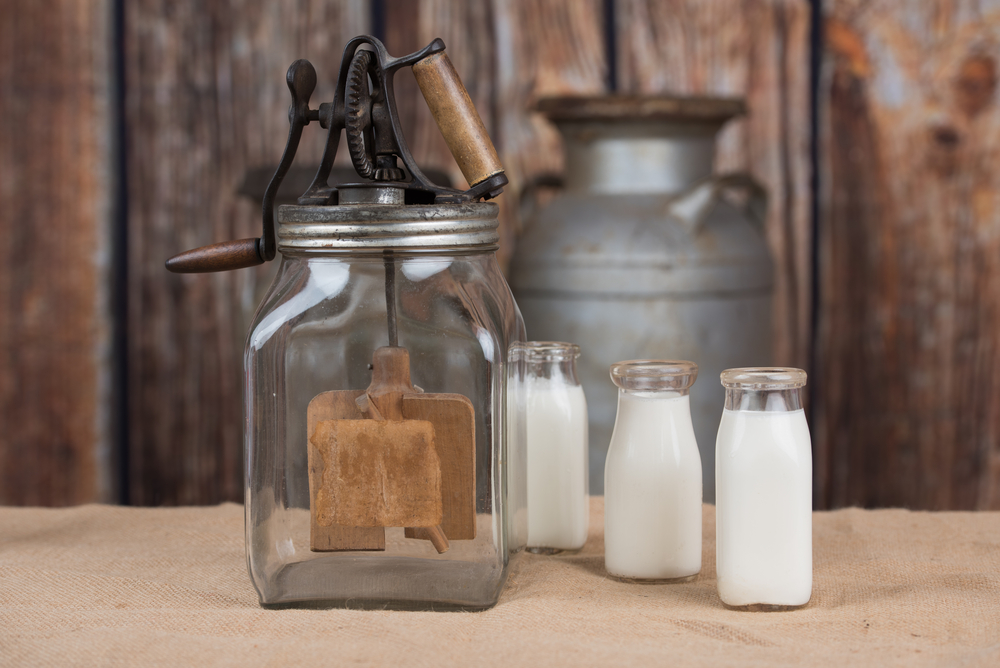
Image credit: Shutterstock
Before butter came neatly packaged, people used hand-cranked churns to whip cream into golden butter. These churns often had glass jars with wooden paddles inside, turned by a small metal handle. It could take nearly an hour to get the perfect consistency. Farmers and homemakers often added salt or herbs for flavor once the butter was ready. The process was slow but deeply satisfying. Today, antique butter churns are prized décor pieces that hint at old-fashioned self-sufficiency.
3. Cast Iron Muffin Pan
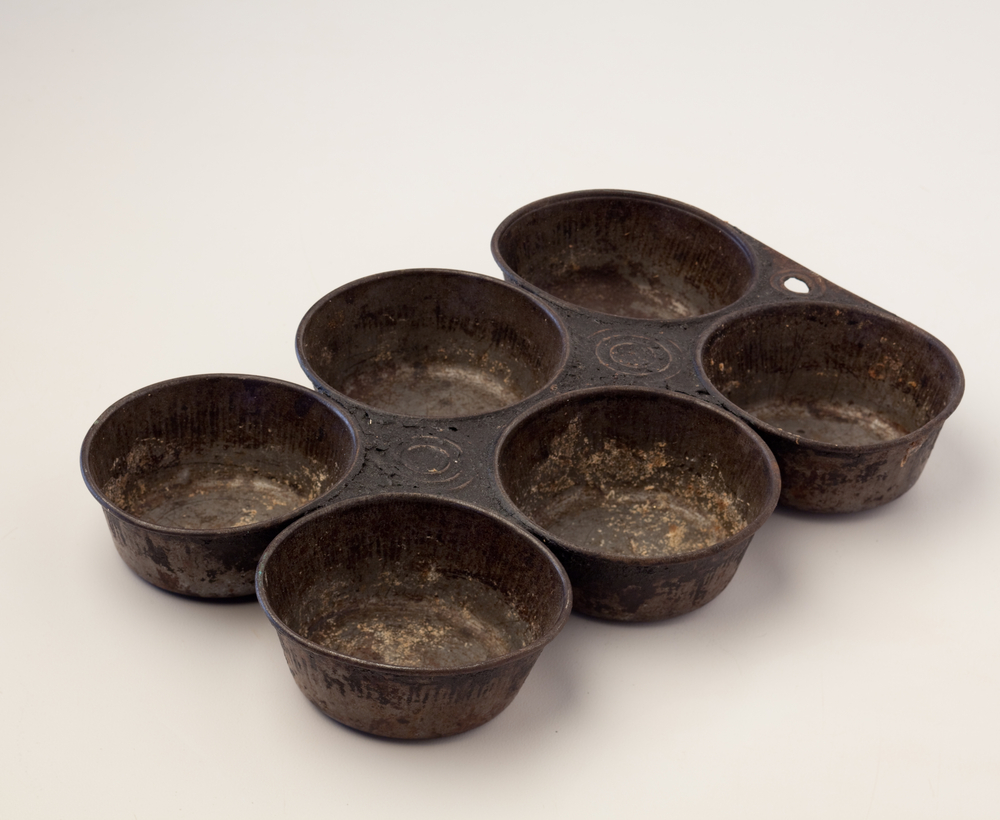
Image credit: Shutterstock
These heavy-duty pans baked muffins evenly long before silicone molds existed. Each cup was cast directly into the iron plate, creating perfect golden edges. Unlike modern nonstick pans, they required seasoning with oil to prevent sticking. Bakers loved their durability and how they retained heat. Many of these pans feature decorative patterns on the bottom, unique to the manufacturer. Collectors often hang them on kitchen walls as both art and history.
4. Meat Grinder Clamp
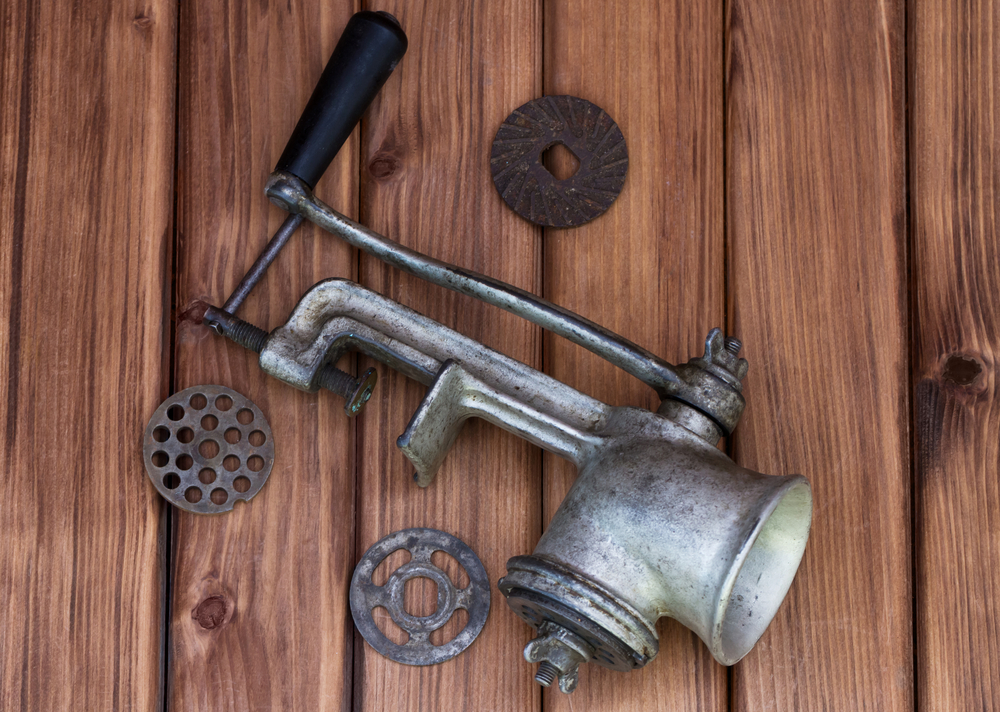
Before food processors, families used hand-cranked meat grinders that clamped onto the countertop. The metal grinder was fed chunks of meat, which came out minced through small perforations. Some grinders even came with different attachments for sausages. The crank required effort, but it gave people control over texture and freshness. Many vintage meat grinders still work flawlessly today.
5. Ice Cube Tray with Lever
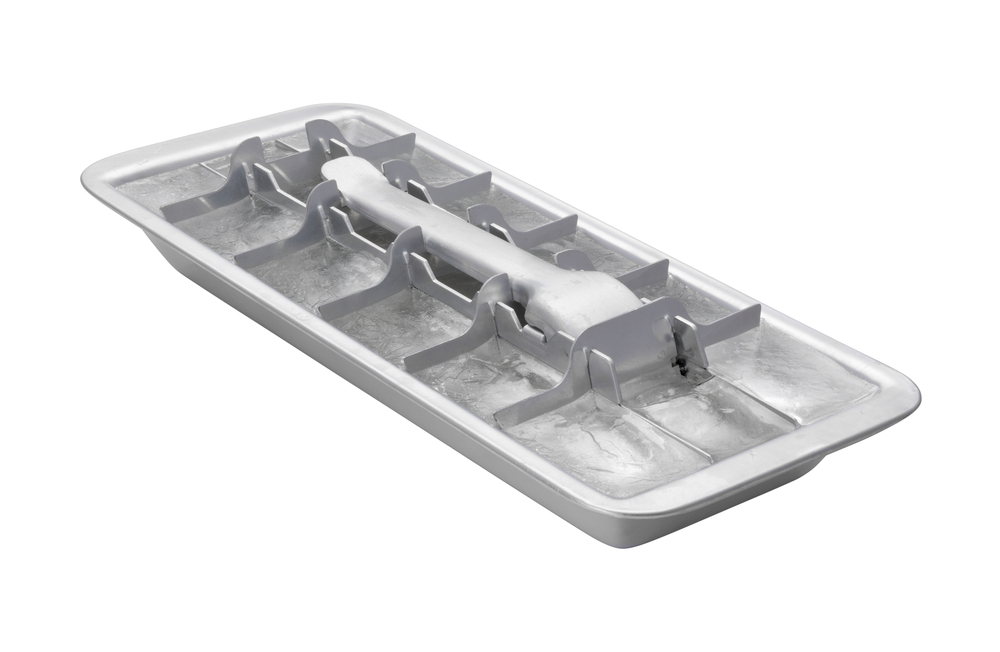
Long before plastic trays, ice cubes came from metal trays with a central lever. The handle broke the ice loose by twisting a grid of dividers. They were often made of aluminum and could be quite noisy when cracked open. Early freezers were small, so the trays were compact and efficient. Over time, the levers wore down, leaving many trays bent but beloved. Today, they’re a favorite among collectors of 1950s kitchenware.
6. Egg Beater Hand Mixer
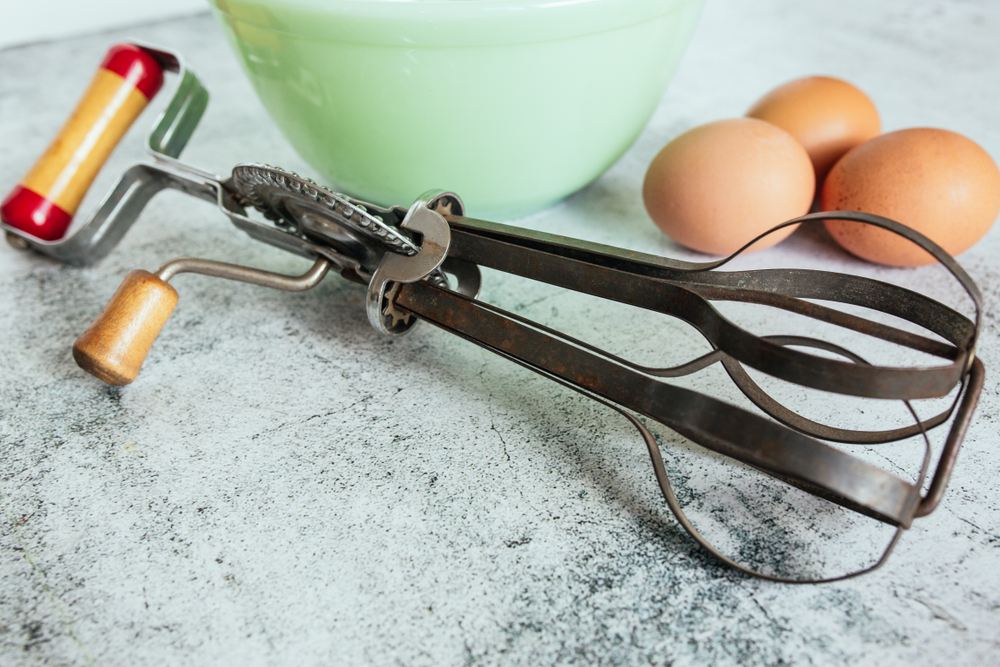
The egg beater was a simple device that made whisking less tiring. It featured twin metal whisks attached to rotating gears, powered by a hand crank. Housewives used it for batters, creams, and even scrambled eggs. The design made mixing smooth and surprisingly quick. Many had colorful enamel handles and chrome-plated gears. Even now, some bakers prefer the satisfying rhythm of a manual egg beater.
7. Potato Ricer
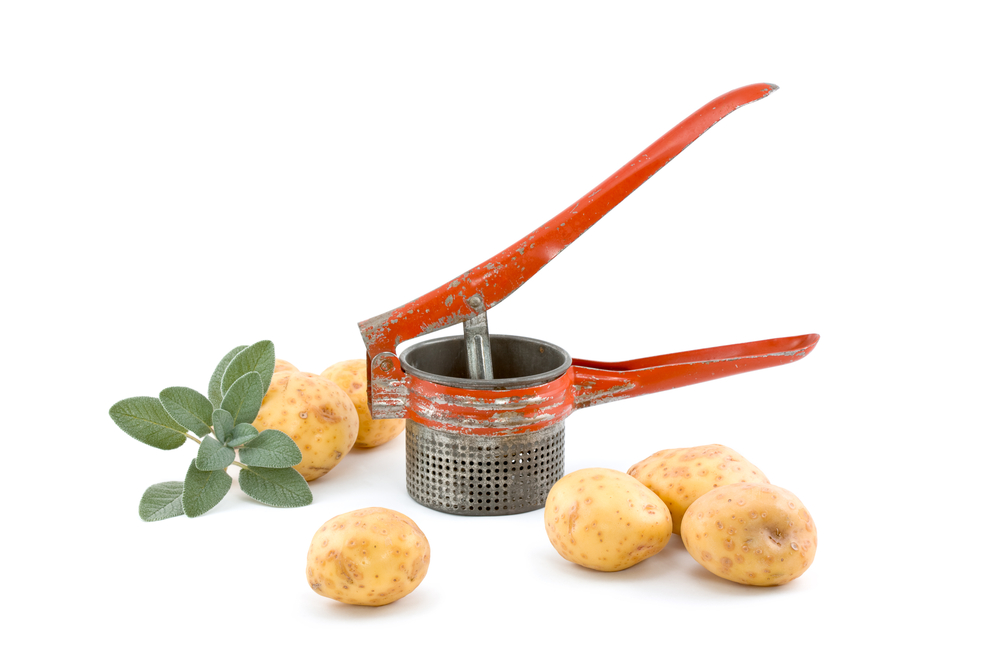
This curious-looking tool resembles a large garlic press but was used for potatoes. It transformed cooked potatoes into a fine, fluffy texture perfect for mashed dishes. The ricer was made from heavy metal with a perforated cup and a squeezing lever. It also worked well for baby food or purees. Although it looks industrial, the results were incredibly smooth. Vintage ricers are still useful and loved for their nostalgic charm.
8. Soda Syphon
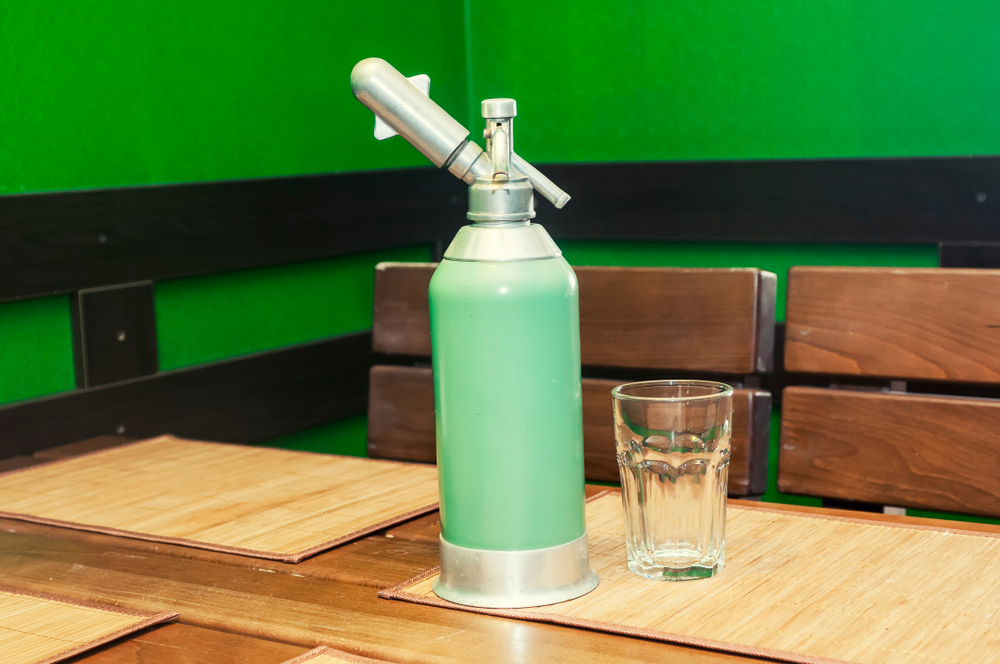
The soda syphon, or seltzer bottle, added fizz to water long before store-bought soda became common. It featured a glass or metal bottle with a pressurized gas cartridge. By pulling a trigger, the carbonated water was released in a sparkling stream. Many had etched glass designs or chrome tops. They were popular in home bars and restaurants alike. Original syphons remain collector favorites, especially those with bright art deco details.
9. Cherry Pitter
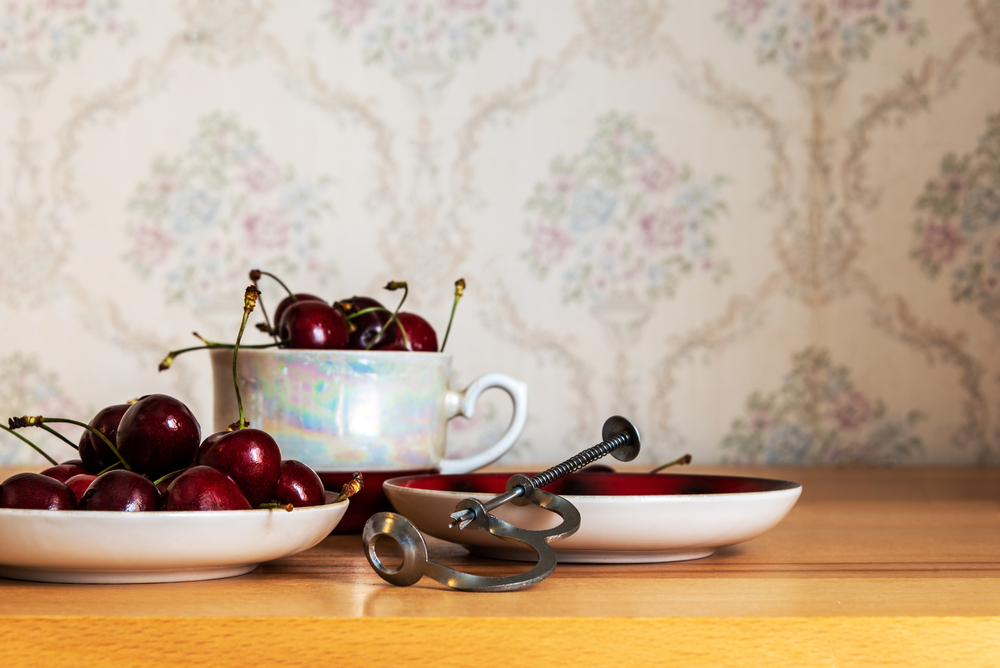
This small yet ingenious gadget saved countless bakers from tedious cherry preparation. It had a spring-loaded plunger that popped pits out one by one. Made from metal or wood, it often resembled a small clamp. Some even had built-in catchers for the pits. The tool made pie-making much faster and cleaner. Vintage cherry pitters now serve as quirky conversation starters in rustic kitchens.
10. Tin Flour Sifter
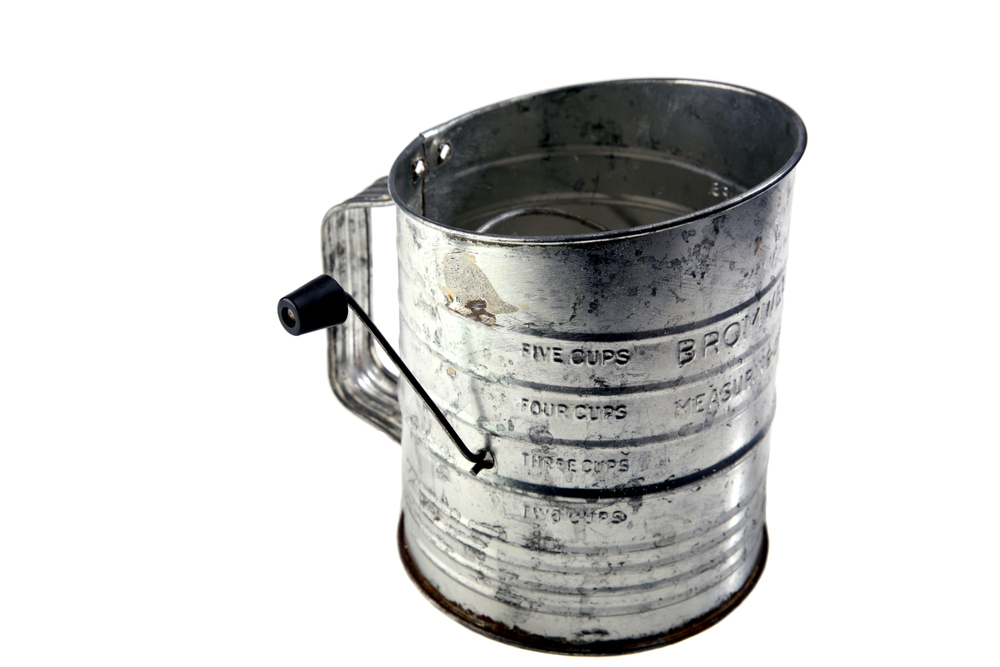
Image credit: Shutterstock
Tin sifters ensured baking ingredients were smooth and lump-free. A crank or squeeze handle rotated a mesh screen inside, aerating the flour. Some models had decorative cutouts or flour measurement markings. The light rattling sound was familiar in kitchens everywhere. Regular cleaning was important, as tin tended to rust. Today, many bakers still use modern versions inspired by these originals.
11. Butter Mold
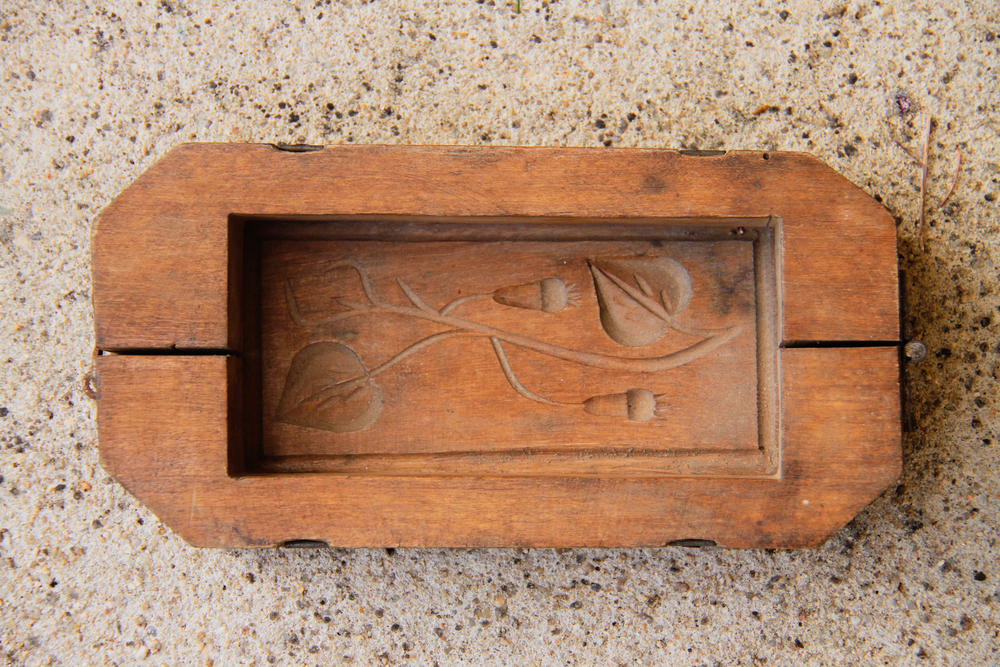
Image credit: Shutterstock
Butter molds were carved wooden blocks used to shape and decorate homemade butter. Patterns often included flowers, stars, or animals. The molds made presentation at family tables more special. After pressing butter into the mold, it was chilled until firm. These tools reflected local artistry, as each region had distinct designs. Collectors now display them as examples of folk craftsmanship.
12. Corn Grater
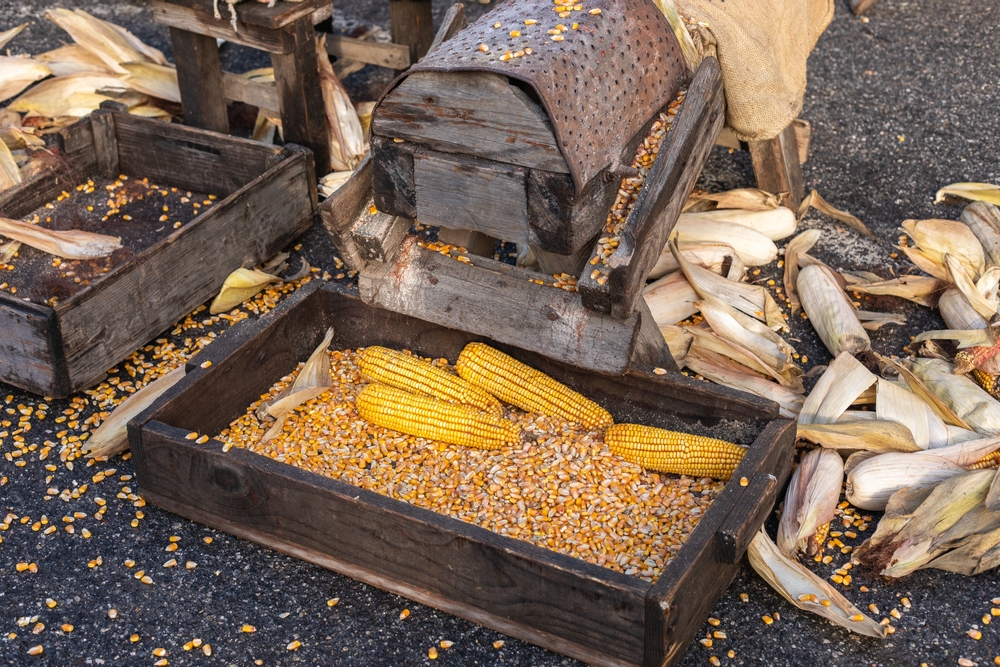
Before canned corn existed, people grated kernels off cobs by hand. Vintage corn graters had sharp metal teeth mounted on wooden boards. Some were flat, while others curved slightly to fit the cob. It was messy work but essential for soups and cornbread. Farmers’ wives often used them during harvest season. Though forgotten by most, these tools remind us of cooking’s seasonal roots.
13. Milk Bottle Carrier
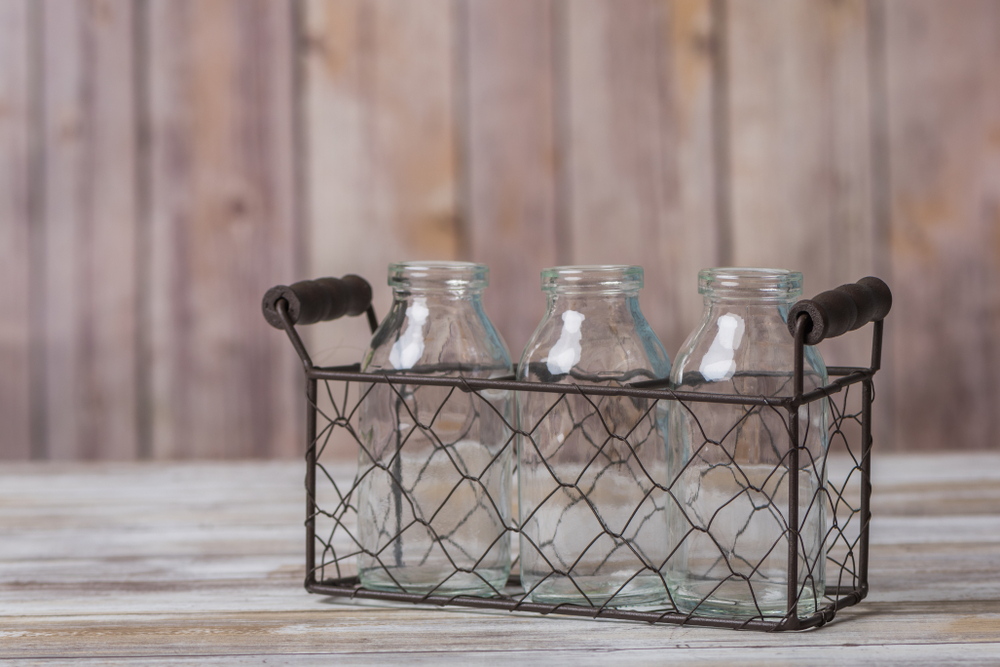
Image credit: Shutterstock
In the days of doorstep deliveries, milk came in glass bottles held by metal carriers. These carriers often had six compartments and a sturdy handle. They made it easier to return empties to the milkman. Most were made from galvanized steel or wire mesh. Some carriers included logos from local dairies, now prized by collectors. They capture the era before plastic took over household packaging.
14. Apple Peeler and Corer
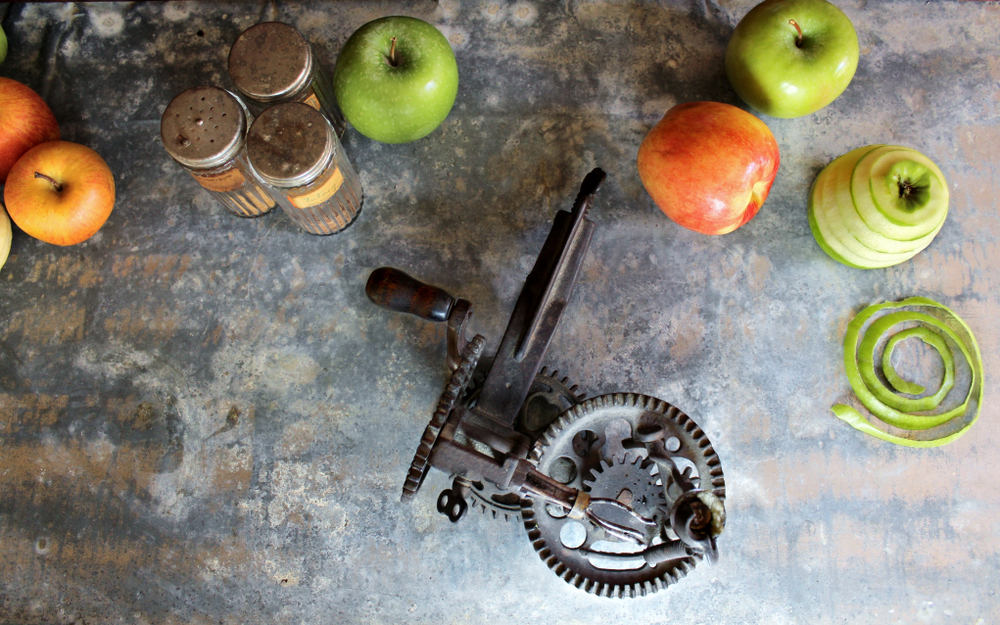
Image credit: Shutterstock
This mechanical wonder peeled, sliced, and cored apples all at once. A hand crank rotated the apple against sharp blades. It made pie prep far quicker and less messy. Many were made from iron with intricate gears and clamps. Some even doubled as potato peelers. These antique contraptions now grace farmhouse kitchens as functional décor.
15. Spice Set
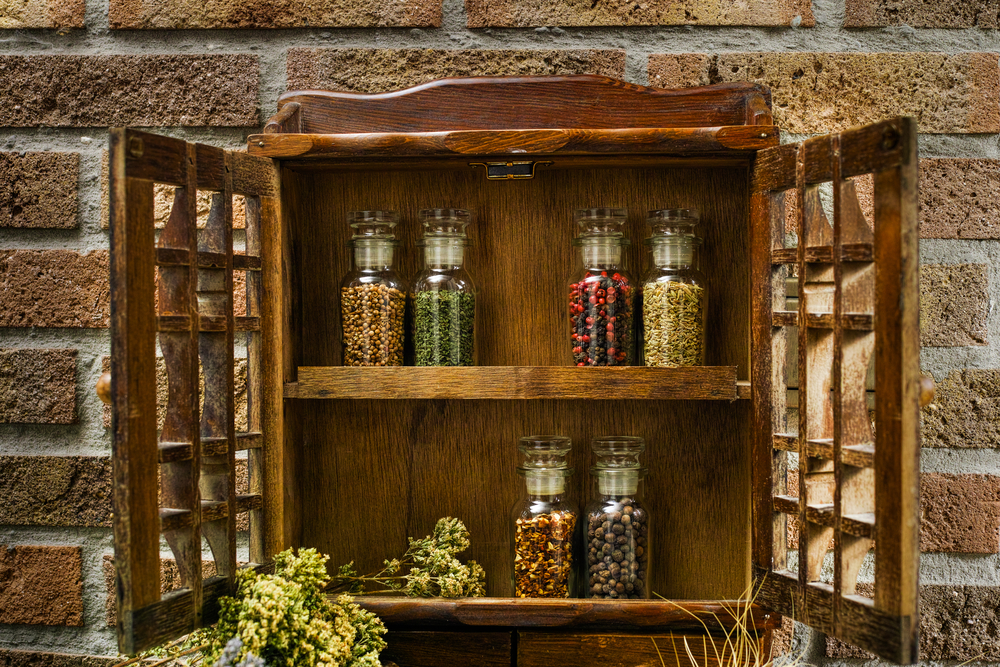
Before modern racks, spices came in small labeled tins or jars arranged in matching sets. These sets often sat on kitchen shelves or inside wooden boxes. The tins featured bold typography and colorful designs. Many households reused them for sewing needles or buttons later. The designs reflected mid-century graphic trends beautifully. Authentic spice tins remain popular for vintage collectors and interior stylists.
16. Egg Separator
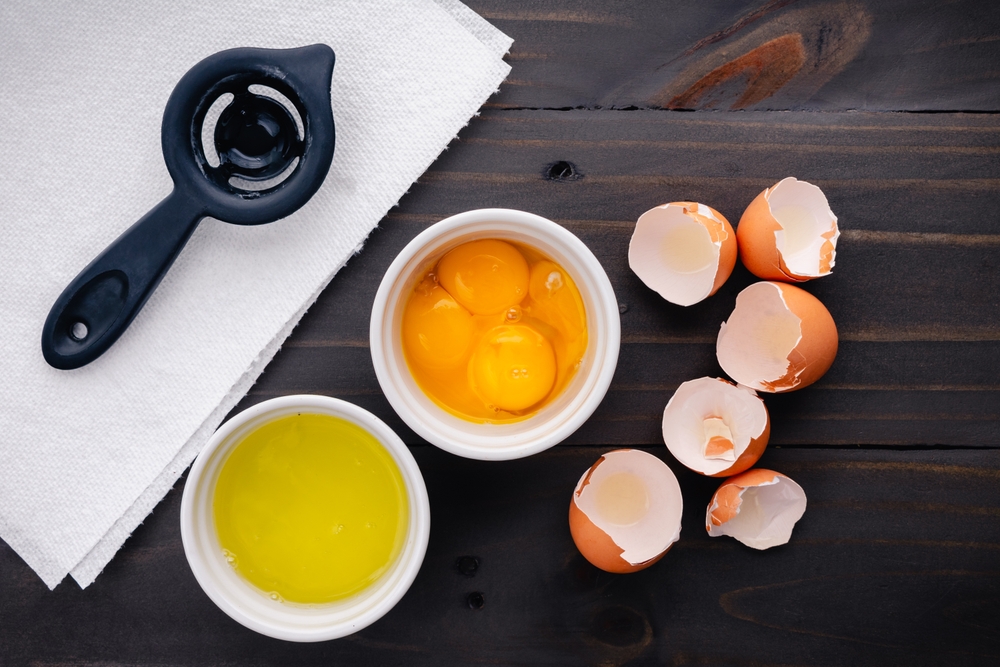
Image credit: Shutterstock
This small tool helped separate yolks from whites. It usually had a cup-shaped center with slits around the edges. Bakers relied on it for meringues and custards. Some separators had fun shapes, like smiling faces or hens. They prevented waste and kept things tidy. Vintage versions now add a whimsical touch to modern baking spaces.
17. Rolling Mincer
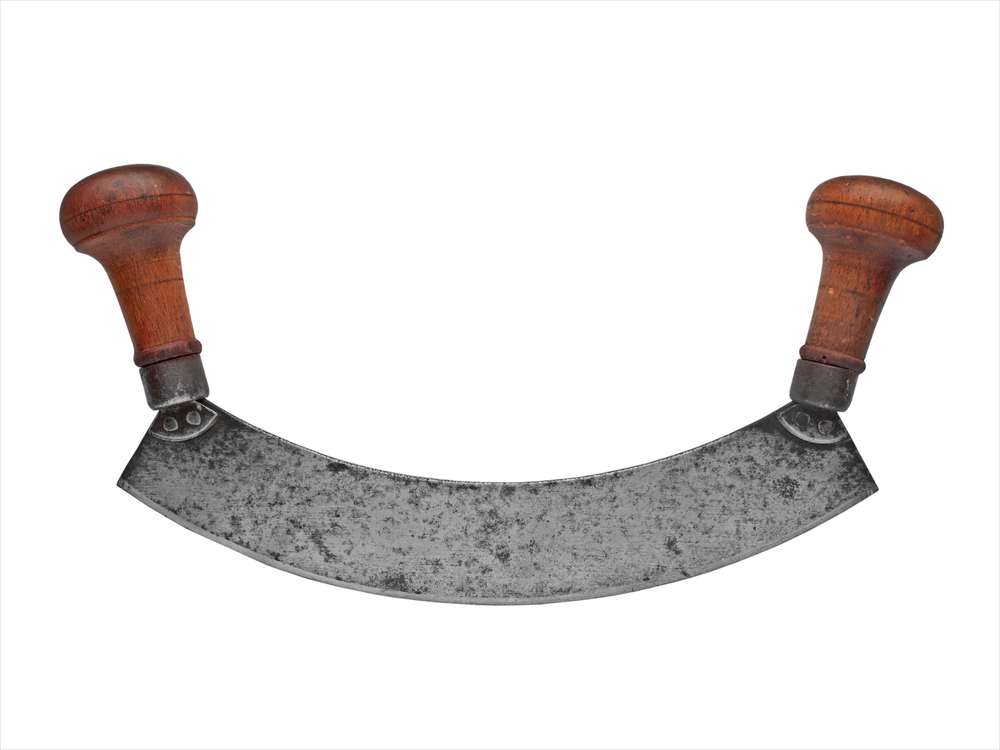
Image credit: Shutterstock
Before electric food processors, rolling mincers cut herbs, nuts, or vegetables by hand. They had long blades attached to a wooden handle. The cook rolled it side to side like a miniature see-saw. It required steady pressure but delivered finely chopped ingredients. Some models doubled as pastry cutters. Collectors enjoy their practical design and handmade quality.
18. Bread Box
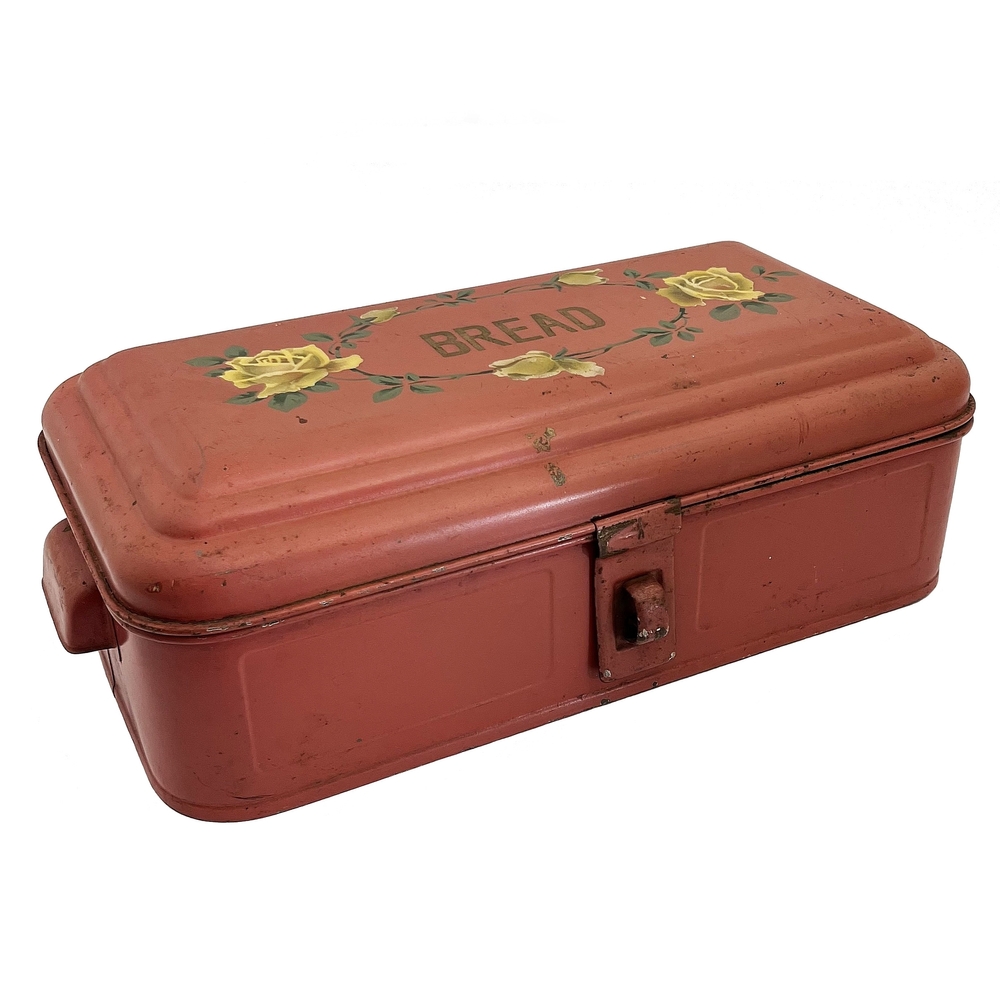
Image credit: Shutterstock
Every home once had a bread box to keep loaves fresh. Made from tin, enamel, or wood, it protected bread from pests and humidity. The lid often rolled up or swung open smoothly. Many featured cheerful pastel colors or brand logos. Bread boxes helped delay staleness before preservatives became common. Vintage ones now fit perfectly into retro-inspired kitchens.
19. Jelly Mold
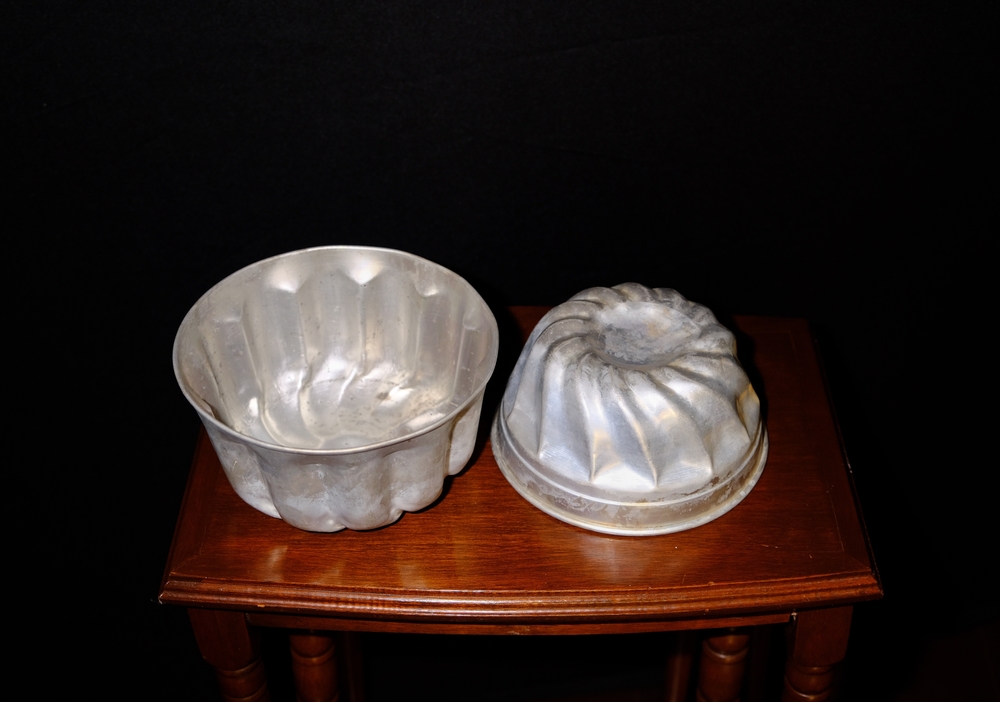
Before gelatin came in packets, cooks used decorative molds to create fancy desserts. The molds were often made of tin, copper, or glass. They came in intricate shapes like hearts, domes, or fruits. Once the jelly set, it was flipped onto a plate and served proudly. These desserts were centerpieces at dinner parties. Antique molds now serve as collectible kitchen ornaments.
20. Coffee Percolator
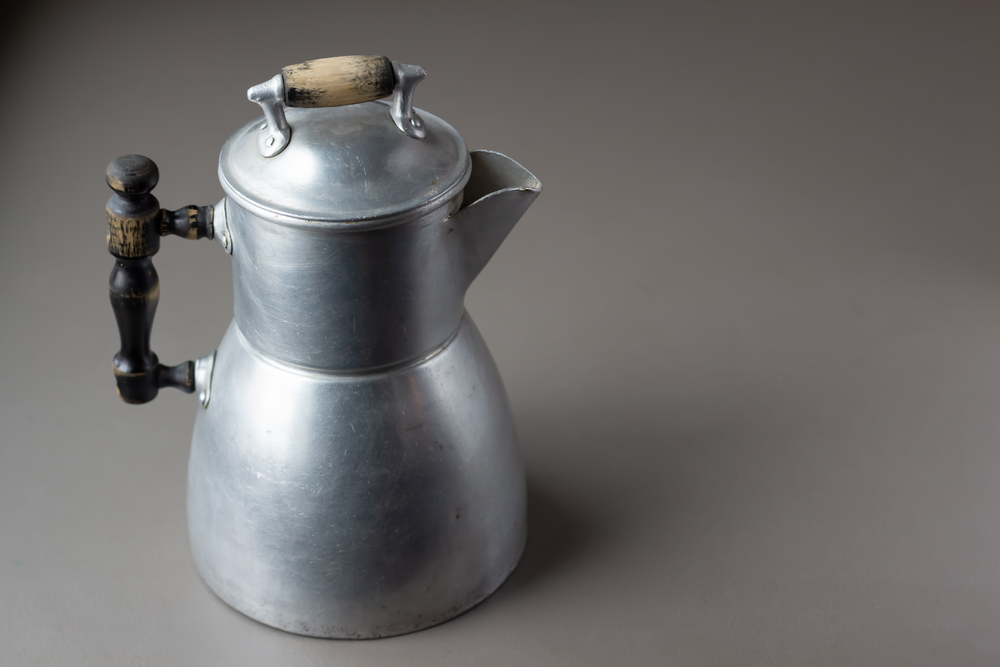
Image credit: Shutterstock
Before drip coffee machines, percolators brewed coffee on stovetops. Water boiled up through a metal tube and filtered through grounds repeatedly. The result was strong, aromatic coffee that filled the room. Many had glass tops so users could watch the bubbling brew. Early versions were made of enamel or aluminum. Though replaced by modern methods, vintage percolators still have dedicated fans.
21. Tin Biscuit Cutter Set
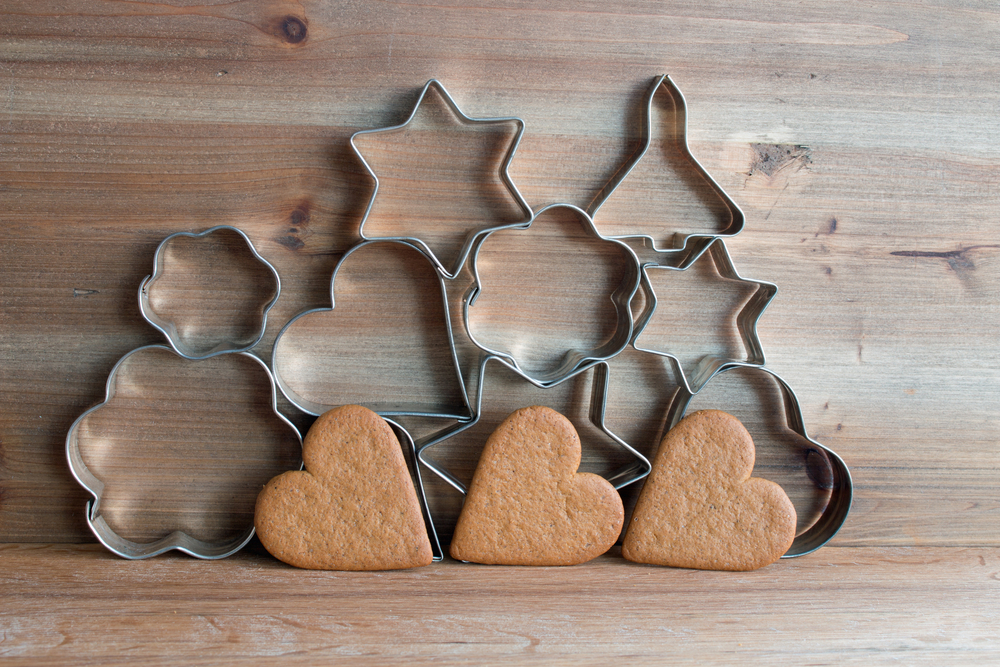
Image credit: Shutterstock
These cutters came in sets of circular or decorative shapes, perfect for cookies or biscuits. Each tin nested neatly inside the next for storage. Cooks used them for pies, pastries, and even sandwiches. The edges were sharp enough to cut cleanly without tearing dough. Over time, they developed a natural patina that collectors adore. They represent an era when baking was a cherished family ritual.
22. Kitchen Scales with Balance Weights
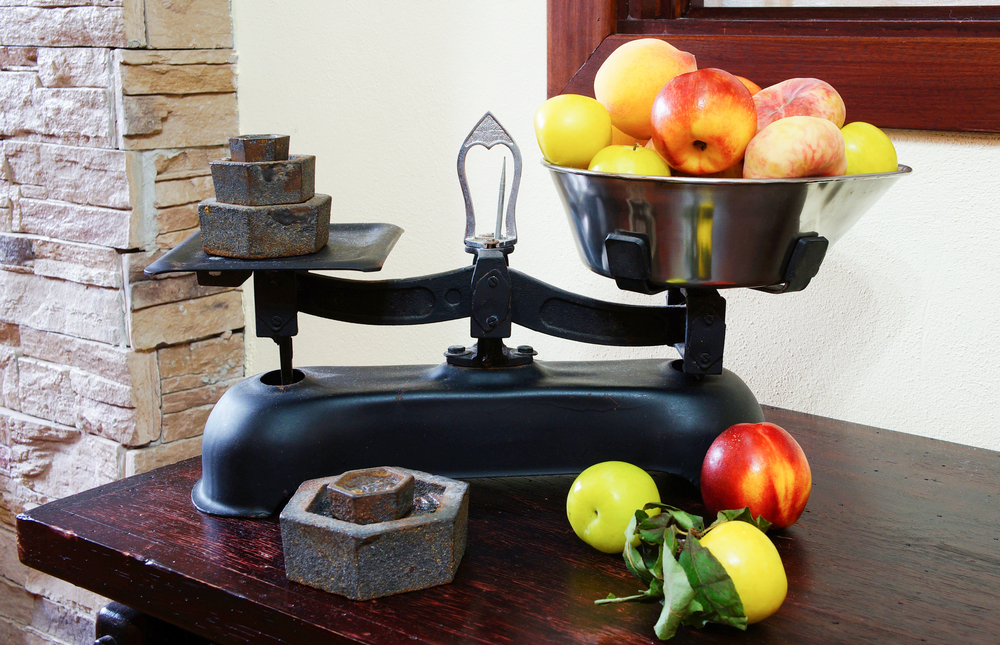
Before digital displays, cooks weighed ingredients using balance scales and small metal weights. The device had two pans suspended on a beam that had to align perfectly. Each weight corresponded to standard measurements in ounces or grams. It required patience but offered impressive accuracy. Many were beautifully made from brass and marble. Today, they’re admired as both functional antiques and stunning décor pieces.
When Tools Told Stories
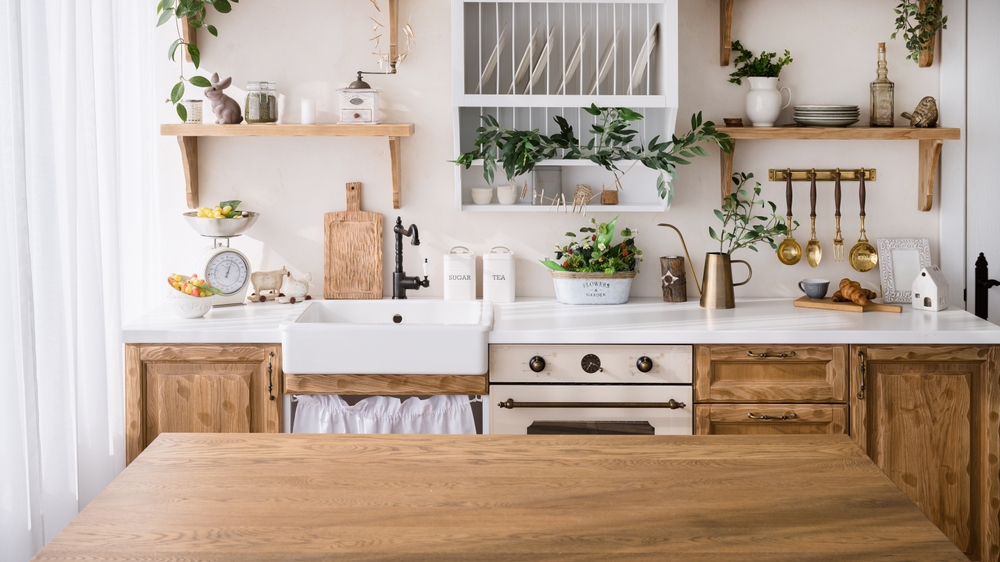
Every one of these vintage kitchen items holds more than just utility, it carries a story about daily life and craftsmanship. People once took pride in tools that lasted for decades, not just years. Cooking was slower but often more personal, connecting generations through shared meals and traditions. These objects remind us that the heart of every kitchen has always been human hands, not machines. Rediscovering them brings nostalgia, creativity, and maybe even inspiration for simpler living. The next time you spot one at a flea market, take a closer look, because that old gadget might still have a few stories left to tell.
Read More: 10 Toxic Kitchen Items That Could Be Harmful to Your Health
Disclaimer: This article was created with AI assistance and edited by a human for accuracy and clarity.