

Collider recently ranked the “10 most important movie sequels of all time,” and if you’ve spent any time arguing about movies at a dinner table, you already have opinions about what belongs on that list. The conversation about which sequels actually matter – not just which ones were good, but which ones changed the rules for everything that came after – has been happening for decades. A ranking like this, arriving in 2026 with 45 years of hindsight behind it, carries real weight, and the answer at the top is harder to argue with than ever.
Most fans cite The Empire Strikes Back, which turned 45 on May 21, 2025, as the greatest of the Star Wars films. But even beyond the franchise, the Irvin Kershner-directed chapter changed the world’s perception of what a movie sequel could be. The film didn’t just do its job. It rewrote what the job was. And before you can understand why it sits alone at the top of this list, it helps to understand what Hollywood thought sequels were capable of before 1980 – which was, in a word: not much.
The Ranked List
The Empire Strikes Back changed how blockbuster franchises are perceived — a case made by Nerdist and reinforced by Screen Rant, which places it at the top of their own ranking of the most important sequels of all time. ComicBook.com cites Aliens among the sci-fi sequels that shifted what the genre was allowed to attempt. Together, these films form a short list of follow-ups that didn’t just capitalize on what came before – they fundamentally altered cinema’s expectations of what a second chapter could do.
Most people thought direct sequels were low-rent ideas. When blockbusters like The Exorcist and Jaws received their sequels, moviegoers greeted them as cheap knockoffs that just attempted to replicate the first movies, but less effectively. The Empire Strikes Back was about to upend every one of those assumptions. Let’s look at the sequels that ranked high in this list, starting with number 1.
1. The Empire Strikes Back (1980)
Initially budgeted at $8 million, costs for The Empire Strikes Back had risen to $30.5 million by the project’s conclusion. Released by Twentieth Century-Fox on May 21, 1980, the highly anticipated sequel became the highest-grossing film that year. Across its initial release and subsequent theatrical re-releases, the film has earned approximately $549–$550 million worldwide. That’s the commercial argument. The artistic one is more interesting.
While the creator of Star Wars, George Lucas, directed A New Hope, filmmaker Irvin Kershner was chosen to direct The Empire Strikes Back. During an interview at the 2007 Star Wars Celebration, Kershner, who died in 2010 at the age of 87, said that he immediately understood the allure of Star Wars upon seeing A New Hope. He didn’t just want to direct a hit – he wanted to build on something he recognized as genuinely unusual. Kershner shared that he wasn’t initially interested in directing the film at all. “I had turned it down originally. I turned it down for a month,” he said. A month of saying no before agreeing to direct one of the most consequential films ever made.
The Empire Strikes Back essentially popularized two concepts in mainstream cinema: the movie trilogy arc, and the ongoing film franchise as ever-continuing narrative. Before this film, sequels either stood alone or repeated themselves. Empire did something nobody had tried at that scale: it picked up mid-story, made things considerably worse for everyone, ended on a cliffhanger, and dared audiences to come back for the resolution. The second film in George Lucas’ original Star Wars series set the template for the second part of three in any series to not only take a much darker turn but to leave audiences wanting more with a downbeat ending. To this day, movie trilogies and TV shows are often talked about in terms of their “Empire” moment.
No movie franchise in Hollywood history has heeded the lessons of The Empire Strikes Back more than the MCU. This should come as no shock, as Marvel Studios’ Kevin Feige is a self-proclaimed huge Star Wars fan. Ever since Nick Fury first appeared in the end credits of Iron Man, the MCU has been building each film on top of the last, always creating an Empire-style tease for what’s coming next. That post-credits scene you’ve been sitting through for 20 years? That’s Empire’s DNA.
2. The Godfather Part II (1974)
Before Empire existed, this one sparked the debate – and the argument between them has been running politely at dinner parties and impolitely on the internet for most of those 50 years. In addition to Best Picture, The Godfather Part II took home a further five Oscars, including Best Director and Best Supporting Actor. It bears the prestigious honor of being the first sequel to win the Academy Award for Best Picture. That alone earns it a place on any serious list of this kind.
When Francis Ford Coppola made The Godfather in 1972, nobody thought he’d be able to top it. Instead, he proved what a true genius he was behind the camera and made a sequel that, to this day, is still debated as the best movie sequel of all time. The Godfather Part II is not just as good as the original, but perhaps even better – it showcases the story of Michael Corleone’s slow fall into the depths of organized crime while using flashbacks to highlight how his father began the family’s story in the first place.
What Part II proved was that a sequel could add retrospective meaning to the original, not just extend it. The first film looks different after you’ve seen the second. Michael’s choices carry more weight; Vito’s origins make his son’s corruption feel inevitable rather than incidental. That loop between original and sequel – each one changing how you read the other – became a model for franchise storytelling that writers are still trying to replicate.
3. Aliens (1986)
This was the James Cameron sequel perhaps even more significant than Terminator 2: Judgment Day, just for how it felt like such a different movie to Alien while still being a weirdly logical follow-up. Fears that Aliens would be a mindless action movie that’d cheapen the slow-burn and horror-focused approach of the original were squashed by the execution.
Cameron has confirmed the story is true: he pitched Aliens to 20th Century Fox by writing “Alien” on a chalkboard, adding the “S,” and then converting the “S” into a “$.” With just one letter, the sequel to Alien tells you everything you need to know. The singular threat is now multiplied, and the stakes are immediately clear and higher than before.
Aliens put forward the idea that you could keep a series going while really mixing up the genres and still have it work – turning a horror film into a war movie and somehow improving it in the process. The xenomorphs went from a single terrifying unknown to an overwhelming horde. Ripley went from survivor to warrior. Many fans consider Aliens to be the best entry in the franchise, partly because the sequel helped establish the franchise in the first place. Ridley Scott made a great scary movie. Cameron made a franchise.
4. Terminator 2: Judgment Day (1991)
James Cameron appears twice on this list, which should tell you something about what he was doing in the 1980s and early 1990s that everyone else wasn’t. Terminator 2 was a technical trailblazer, from the T-1000’s liquid metal design to the endless array of masterfully choreographed action sequences. The movie blasted open the doors to the Terminator franchise, although later installments haven’t quite met the standards established by this legendary sequel. T2 essentially reshaped the concept of the action blockbuster without sacrificing a single moment of emotion.
As he did with Aliens, Cameron flipped the script on his own film with the sequel. Not only did he pull off the same magic trick again by moving the horror of The Terminator into an action spectacle, but he also proved how you can subvert the audience’s expectations entirely. The villain of the first film becomes the protector in the second. Arnold Schwarzenegger, who spent the original movie trying to kill a waitress, spends the sequel throwing himself in front of bullets to save a child. That’s not just a plot reversal – it’s a genuine reinvention of what the character meant.
Terminator 2: Judgment Day is one of, if not the single greatest action movie of all time. Tight pacing, curt moments of humanity, and unbelievable spectacle with both practical and digital effects will forever ensure the film’s legacy, which far eclipses anything else the other Terminator movies have done. Every sequel in the franchise since 1991 has essentially been a tribute band covering the same songs with diminishing enthusiasm.
5. The Dark Knight (2008)
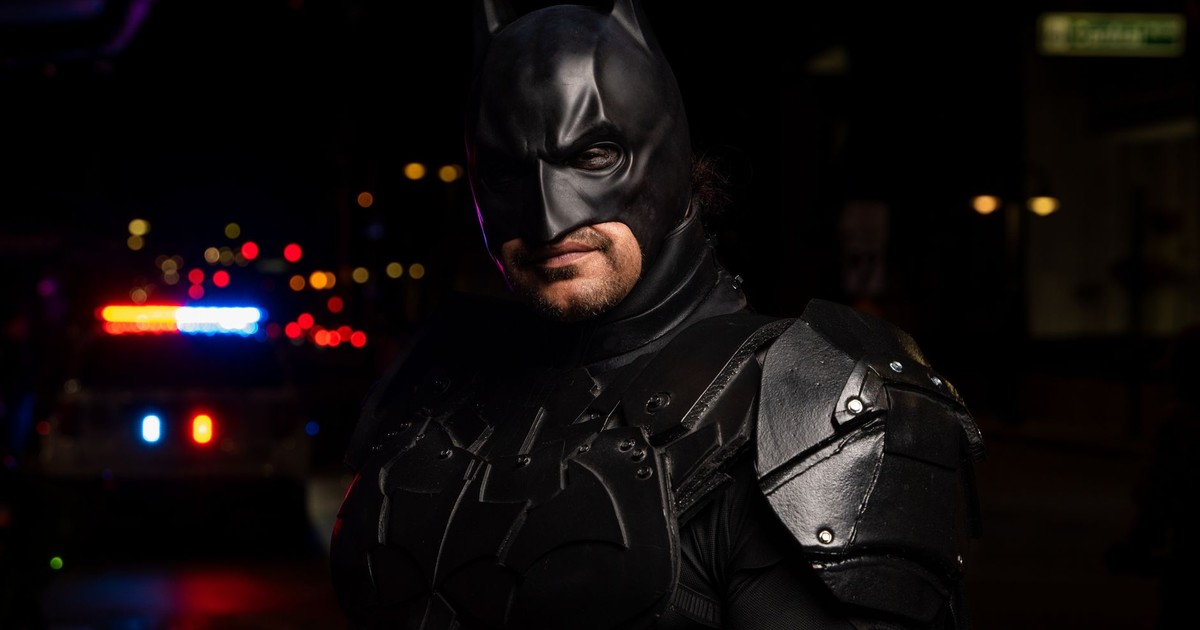
Batman Begins helped bring Batman into the real world, but The Dark Knight puts the mere idea of heroism under a microscope and asks its audience what exactly these heroes are fighting for and if their goals can truly remain pure. The Joker, even if he denies any sense of a greater plan, operates by his own sense of logic and morality. In the end, The Dark Knight draws no clear answer for its audience, but it still dares to go further with its questions than any other superhero sequel.
What Spider-Man 2 did in terms of elevating superhero movies, The Dark Knight did as well, albeit to a greater extent. Superhero movies were taken more seriously post-The Dark Knight, and it was almost too influential, with other high-intensity and “gritty” superhero movies not really being as good. Everyone who tried to make a dark, grounded superhero film after 2008 was chasing what Christopher Nolan had already done – and most of them are still chasing it now.
Nolan’s epic trilogy hit its peak with The Dark Knight, which was nominated for eight Academy Awards and managed to bring home two. The film is, of course, marked by an outstanding performance from Heath Ledger as Batman’s greatest foe. That performance, for which Ledger received a posthumous Oscar, redefined what a villain in a comic book film could be. The Joker wasn’t a supervillain in any traditional sense. He was a philosophical argument with a knife and a purple suit.
6. Mad Max: Fury Road (2015)
Few films have had a production cycle as troubled as Mad Max: Fury Road, which languished in development for decades before finally releasing in 2015 to continue the long-overdue Mad Max franchise. Director George Miller proved he hadn’t lost a step in all that time, releasing one of the most ambitious and brilliant action movies ever conceived. Essentially one long car chase, Fury Road portrays emotions through carnage, with sparse dialogue peppering the masterful exploration of a dizzying post-apocalypse. The film proved that even after a long time away, a sequel can return to outdo anything its predecessor films could have conceived.
Fury Road occupies a strange position on Collider’s ranking. It came out 30 years after the previous Mad Max film. It recast the lead role. It had effectively no plot in the conventional sense. And yet critics largely agreed it was not only one of the best films of 2015 but one of the best action films ever made. Since its release, Mad Max: Fury Road has been hailed as the best action movie of the 21st century, striking a delicate balance between the despair of the apocalypse and the beacons of hope that overthrow the yokes of oppression.
What it proved was something Hollywood keeps forgetting: you don’t need a complicated story to make a great film. You need a clear vision executed without compromise. Miller had both.
7. Spider-Man 2 (2004)
Spider-Man 2 is one of the best-written comic book and superhero films ever made. It’s a classically great sequel in the sense that it takes what was already a great movie and makes all the great things a little greater. Spider-Man (2002) was an expertly done origin story, and then Spider-Man 2 gets to hit the ground running and push everyone into further complex and interesting territory.
Peter Parker, in the first film, learns that with great power comes great responsibility. In the second, he tries to quit. He gives back the suit. He wants a normal life. He wants to eat a hot meal without swinging over a building to deliver it. That tension – between what you’re capable of and what you’d rather be doing – turned a superhero sequel into a surprisingly relatable story about burnout, and it’s one of the main reasons the film holds up two decades later.
Its inclusion on the list meant Toy Story 2 getting bumped from the ranking, but what Spider-Man 2 did in terms of elevating superhero movies was substantial – it demonstrated that the genre could be genuinely character-driven rather than just spectacle-driven, a lesson that took the rest of the industry another decade to fully absorb.
What This List Is Really Saying
This conversation could be purely about quality – which sequels are best made, most entertaining, most beautifully shot. That’s a different list entirely. What makes the “most important” framing interesting is that the word does a lot of work. It’s asking something more specific: which sequels actually changed what the films that came after them were allowed to do?
Almost everything in mainstream Star Wars now comes back to that central conceit – the blurring of the lines between good and evil that no one would have imagined from the 1977 original. In that sense, no sequel has ever done more for its respective original than The Empire Strikes Back did. That’s why many still consider it the absolute greatest movie sequel of all time.
But the deeper argument the list makes – whether it means to or not – is that the most important sequels are the ones that changed what the word “sequel” could mean. Empire proved it could be a narrative chapter. The Godfather Part II proved it could deepen a masterpiece. Aliens proved it could reinvent the genre. Terminator 2 proved it could be the superior film by any measure. The Dark Knight proved it could win Oscars and change an entire genre’s ambition. Mad Max: Fury Road proved it could arrive 30 years late and still be the best thing in the room.
As for the rest of the major Hollywood franchises? Don’t expect the impact of The Empire Strikes Back to fade away any time soon. Forty-five years in and counting, the Empire Strikes Back sequel that redefined what following up a great film could look like is still the measuring stick. Every franchise that wants to be taken seriously is, on some level, still trying to make its own version of it.
The Standard Nobody Has Beaten

The seven films on this list share one quality that separates them from the thousands of sequels made before and after: each one made the previous film more interesting in hindsight. You watch Star Wars differently after Empire. You watch The Godfather differently after Part II. You understand Alien better – what made it work, what it was actually doing – after Aliens turns it into a franchise. A sequel that accomplishes that isn’t a continuation. It’s a recontextualization of everything that came before it.
That’s the standard. It’s a brutal one, which is why this list is seven films long and not seventy. The rest of cinema has been trying to crack it ever since Kershner said yes after a month of saying no, and the result arrived in theaters on May 21, 1980. Forty-five years on, The Empire Strikes Back doesn’t just top the ranking. It explains why the ranking exists.
AI Disclaimer: This article was created with the assistance of AI tools and reviewed by a human editor.